Big Food's Tobacco Moment: Ultra-Processed Food Lawsuits Target Coca-Cola, PepsiCo, and Ten Industry Giants
Three coordinated lawsuits in six months. Ten of the world's biggest food companies named as defendants. The attorneys building these cases helped win $250 billion from tobacco. Here is what boards and investors need to understand now.
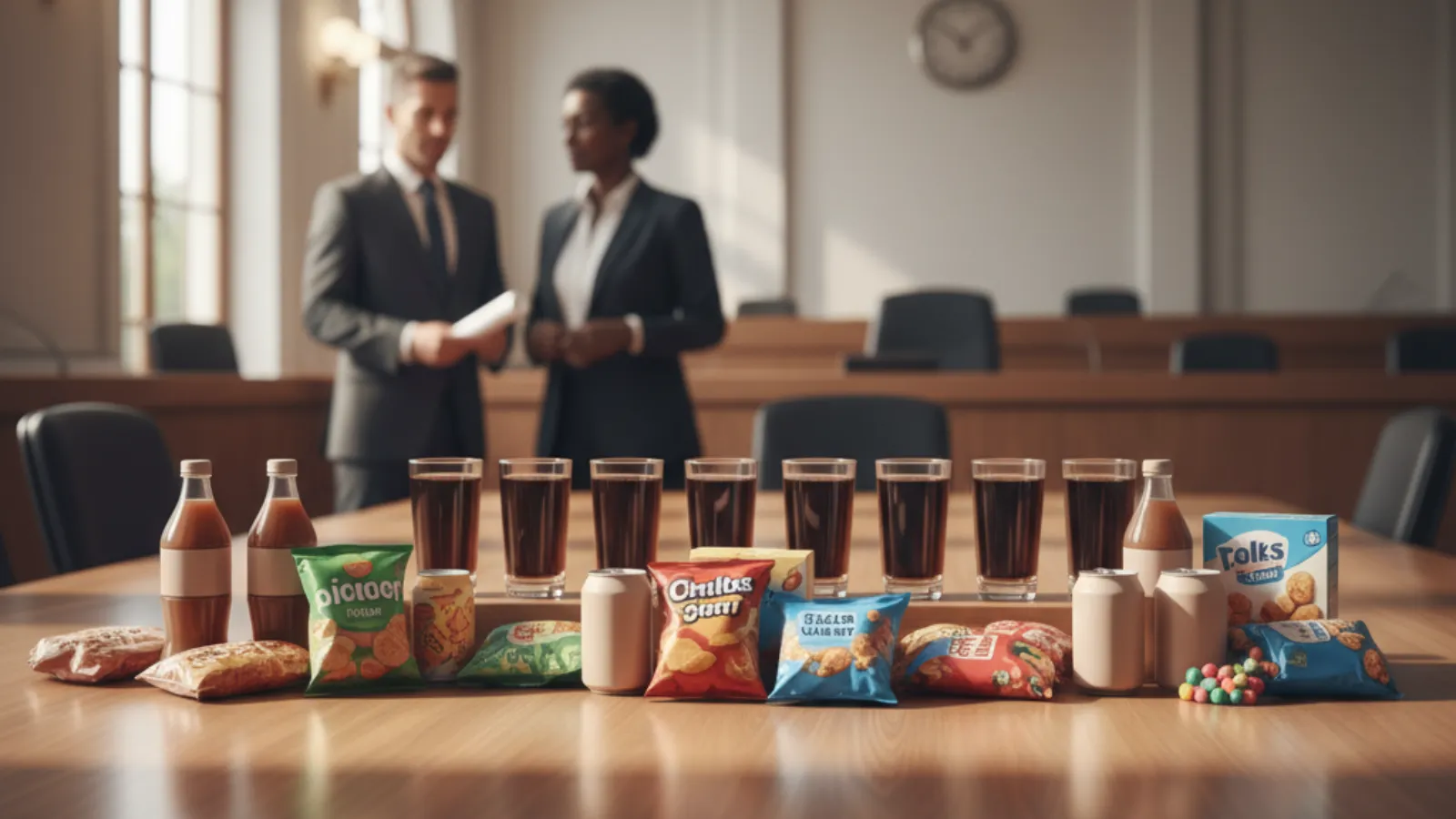
Tobacco companies paid out $250 billion after decades of hiding what they knew. The same legal playbook is now being run against the world's biggest food manufacturers — and the list of defendants reads like a who's who of Big Food.
Since December 2025, Coca-Cola, PepsiCo, Kraft Heinz, Mondelez, Mars, Nestlé, General Mills, Kellogg, Post Holdings, and ConAgra have been named in at least three separate lawsuits across the United States. Each case makes the same core argument: that these companies engineered ultra-processed foods to override the brain's natural hunger signals, drove chronic disease across millions of consumers, and did so knowingly.
The lawsuits are not coming from fringe litigants. The attorneys building these cases include the same firms and legal architects behind the tobacco and opioid mass torts — the two largest litigation campaigns in U.S. history, which extracted a combined $322 billion in settlements.
Three Fronts, One Strategy
In December 2025, San Francisco City Attorney David Chiu filed the first government-led action in U.S. history targeting ultra-processed food manufacturers. The suit — filed in San Francisco Superior Court against ten companies — claims they engaged in deceptive marketing and created a public health crisis that imposes direct costs on the city's healthcare system. A federal judge later remanded it back to California state court, where it will proceed.
In January 2026, a plaintiff in the U.S. District Court for the Eastern District of Louisiana alleged she developed Type 2 diabetes and non-alcoholic fatty liver disease from consuming ultra-processed foods. The complaint names the same roster of major manufacturers and argues they used internal research to engineer products that suppress satiety and drive compulsive consumption.
On April 27, 2026, a consumer class action seeking $1 billion in damages was filed in the U.S. District Court for the Eastern District of Wisconsin. It names twelve defendants — including Unilever, absent from the earlier suits — and makes nearly identical claims about addictive formulation and deliberate harm.
Three jurisdictions. Three legal theories. One core allegation: the companies knew, and they didn't stop.
Why the Tobacco Comparison Is More Than a Metaphor
The tobacco link is not just rhetorical. When RJ Reynolds acquired Nabisco in 1985 and Philip Morris bought Kraft in 1988, they brought with them internal research into dependency formation, reward conditioning, and sensory targeting. Plaintiffs' attorneys argue that this institutional knowledge was transferred directly into food product development — that the addiction-engineering that once sold cigarettes was applied to breakfast cereal and carbonated drinks.
The $250 billion Master Settlement Agreement tobacco companies signed in 1998 — and the $72 billion in opioid settlements since — are the benchmarks these attorneys are working toward. The legal infrastructure being built now mirrors the early phases of both campaigns: individual personal injury claims first, class consolidation next, state government suits alongside.
No settlements exist yet, but the pipeline is growing fast. At a major mass tort conference in early 2026, plaintiffs' attorneys explicitly called UPF litigation "the next tobacco." One early personal injury case was dismissed for failing to establish causation. Within months, more carefully constructed complaints appeared in its place. Courts are not killing this litigation — they are improving it.
The MAHA Effect: Political Tailwinds
The litigation arrives as Washington is formally hostile to ultra-processed food. In January 2026, the USDA's revised dietary guidelines called for "a dramatic reduction in highly processed foods" — the clearest official U.S. government statement yet that ultra-processed foods represent a public health crisis. The Make America Healthy Again initiative is applying direct political pressure on the sector from inside the federal government.
Regulatory condemnation creates a political context that emboldens plaintiffs and makes jury outcomes harder to predict. Tobacco plaintiffs benefited from exactly this dynamic: once the Surgeon General's office began treating tobacco as a public health emergency, jury sympathy shifted permanently.
The MDL Question Every Board Should Be Asking
The cases are not yet consolidated. As of mid-2026, the U.S. Judicial Panel on Multidistrict Litigation has not yet formed an MDL for ultra-processed food cases. Most observers expect this to change as the case count rises through 2026. An MDL would be a structural shift: one federal docket, coordinated discovery, shared expert witnesses, hundreds or thousands of plaintiffs moving in concert.
For defendants, MDL formation means losing the ability to fight cases jurisdiction by jurisdiction. Internal documents — research files, product testing records, marketing strategy memos — become shared across all cases simultaneously. This is the mechanism through which tobacco's internal documents became public. It is also how the opioid manufacturers' internal research destroyed their defences in court.
What Boards and Investors Need to Price In
These lawsuits will not resolve in 2026. Early cases will be dismissed, rewritten, and refiled. The process will be slow. But the lesson from tobacco and opioids is that the financial impact materialises long after the strategic window to respond has closed.
The companies named repeatedly across all three suits — Coca-Cola, PepsiCo, Kraft Heinz, Mars, and Mondelez — are now carrying unquantified contingent liabilities that do not yet appear in risk disclosures at the level tobacco companies eventually had to acknowledge.
Companies reformulating products, reducing additives, and building cleaner nutritional profiles are positioning themselves for both the litigation wave and the regulatory shift — not because the lawsuits will necessarily win, but because the political and consumer environment has already shifted permanently. The only open question is the size of the bill.
Global Aseptic Packaging Market Report 2026
148.4bn litres and 344bn packs in 2025. Aseptic volumes across dairy, dairy alternatives, beverages and food in 39 markets — 2025 actuals and forecasts to 2030. Buy online and receive it within 24 hours.
More information
Global Cheese Database 2026
Production, imports, exports and consumption for 39 cheese types across 48 countries, with actuals through 2025 and forecasts to 2030. Join the waitlist for early access, pre-launch pricing and a free sample country chapter.
Get early accessStrategic Insights
📊 Analytics & Strategic Insight
Big Food's Unquantified Liability: The $250 Billion Tobacco Clock Is Already Running
The decision most in this industry are avoiding:
👉 Treating this as a communications problem, not a legal one. Most food company boards are managing UPF litigation through their PR teams. That is exactly what tobacco companies did in the late 1980s. It bought them a decade — and cost them $250 billion.
👉 Assuming early case dismissals mean the risk is contained. The first personal injury UPF lawsuit was dismissed for failing to establish causation. Within months, more carefully constructed complaints appeared across three new jurisdictions. Courts are not killing this litigation — they are refining it into something harder to dismiss.
👉 Underestimating what MDL consolidation changes. Once cases are grouped into a multidistrict litigation, discovery is coordinated, internal documents become shared across all plaintiffs, and defendants lose their jurisdiction-by-jurisdiction defence. No board should wait for MDL formation to start preparing.
Here's the full context:
→ 1985–1988: RJ Reynolds acquires Nabisco; Philip Morris acquires Kraft. Internal tobacco research on addiction and sensory targeting is transferred into food product development — the foundation of today's addiction-engineering allegations.
→ 1998: Tobacco Master Settlement Agreement — $250 billion paid. The legal architecture of government plaintiffs, class actions, and MDL consolidation becomes the template for every major mass tort campaign that follows, including opioids ($72 billion in settlements).
→ December 2025: San Francisco files the first government-led UPF lawsuit in U.S. history. Ten defendants: Coca-Cola, PepsiCo, Kraft Heinz, Mondelez, Mars, Nestlé USA, General Mills, Kellogg, Post Holdings, ConAgra.
→ January–April 2026: Louisiana personal injury plaintiff files; Wisconsin $1 billion class action filed April 27 (twelve defendants, adding Unilever); Morgan & Morgan files new federal complaint in March. Case count accelerates across multiple jurisdictions.
→ Most recent: USDA January 2026 dietary guidelines formally condemn ultra-processed foods. MAHA political pressure adds structural tailwind to plaintiff arguments. MDL Panel consolidation widely expected as case volume rises through mid-2026.
What this means for food and beverage operators and investors:
✅ UPF exposure is now a material due diligence factor in any food M&A process. Acquiring a brand with heavy ultra-processed portfolio weighting means inheriting an unquantified litigation tail. Legal and deal teams must build this into risk frameworks before signing — not after MDL formation.
✅ Reformulation is the most credible hedge available right now. Companies demonstrating product changes, additive reductions, and cleaner ingredient profiles will have a defensible narrative in discovery and in front of juries. Mondelez, PepsiCo, and Nestlé have active reformulation programmes. Companies without one have no equivalent defence.
✅ Watch the MDL filing date as the structural inflection point. MDL formation is the functional equivalent of tobacco's class consolidation moment in the mid-1990s. Once it happens, defendant timelines accelerate and the financial calculus changes permanently for everyone named.
3 moves you can make this week:
1️⃣ Commission a NOVA classification audit of your portfolio. Identify which products in your portfolio — or any acquisition target's portfolio — meet the legal definition of ultra-processed under NOVA. This is your litigation exposure map, and it should exist before any deal closes.
2️⃣ Review your risk disclosures for adequacy. Ensure your annual report language adequately discloses UPF litigation as a contingent liability. Underreporting this risk is itself a legal exposure as institutional investors and plaintiffs' attorneys both scrutinise disclosure language.
3️⃣ Model the MDL scenario for your equity positions. Build scenario models now: what does a $50 billion or $100 billion Big Food settlement fund imply for positions in Coca-Cola, PepsiCo, Kraft Heinz, Mars, or Mondelez? The time to stress-test is before the MDL is formed — not after.
Take the Next Step
💧 Also covering the water dispense market?
Water dispense is one of the fastest-growing segments in food and beverage. Operator data, revenue benchmarks, and market intelligence across 32 countries.
→ Explore water dispense insights
Zenith Consulting
Submit your food & beverage project enquiry.
Share your requirements. If there is a strong fit, we’ll come back with an indicative investment range, project timeline and recommended strategic approach.
Reviewed by Zenith Consulting’s senior food & beverage strategy team.
Related analyses
- Health, Nutrition & Functional
Sports And Energy Drinks Reach 39,180 Million Litres, And Aseptic Filling Has Almost None Of It
Sports and energy drinks are the fastest growing group on the world drinks shelf at 39,180 million litres in 2025, up 7.2% a year since 2020. Zenith's Global Aseptic Packaging Market Report 2026 books just 100 million litres of the United States total as aseptic.
Read analysis → - Corporate Strategy & Portfolio
FDA Clears Salt Substitutes In 41 Cheese Standards, And The Last Sodium Push Moved The Median Just 3%
The FDA has opened 41 cheese standards to salt substitutes, with the rule effective 14 December 2026. The cheese part can still be objected to until 12 November, and the last US sodium push moved the median by 3%.
Read analysis → - Corporate Strategy & Portfolio
Large PET Fills 25,940 Million Litres Of Aseptic Drinks Against 14,500 Million In Family Cartons
Zenith's Global Aseptic Packaging Market Report 2026 puts large PET at 25,940 million litres of aseptic drinks in 2025, against 14,500 million litres in family cartons. Cartons still lead on pack count, which turns the format split into a pack size split.
Read analysis →
Share it with your peers
Pass this analysis to colleagues who track the food and beverage market.
Zenith Market Intel
Need a specific food or beverage market report?
Tell us which category, region or question would be useful for your team.
Sister Publication
Also follow our Water Dispense Market Intelligence
Category analyses, operator briefings, and investor signals across the global water dispense market.