JBS Just Abandoned Its 2040 Net-Zero Target. Big Food's Climate Retreat Is Now Impossible to Ignore
JBS, the world's largest meat company, has scrapped its 2040 net-zero pledge and cut the Scope 3 targets that cover more than 90% of its emissions. It joins PepsiCo, Coca-Cola and Unilever in quietly rewriting the climate promises big food made five years ago.
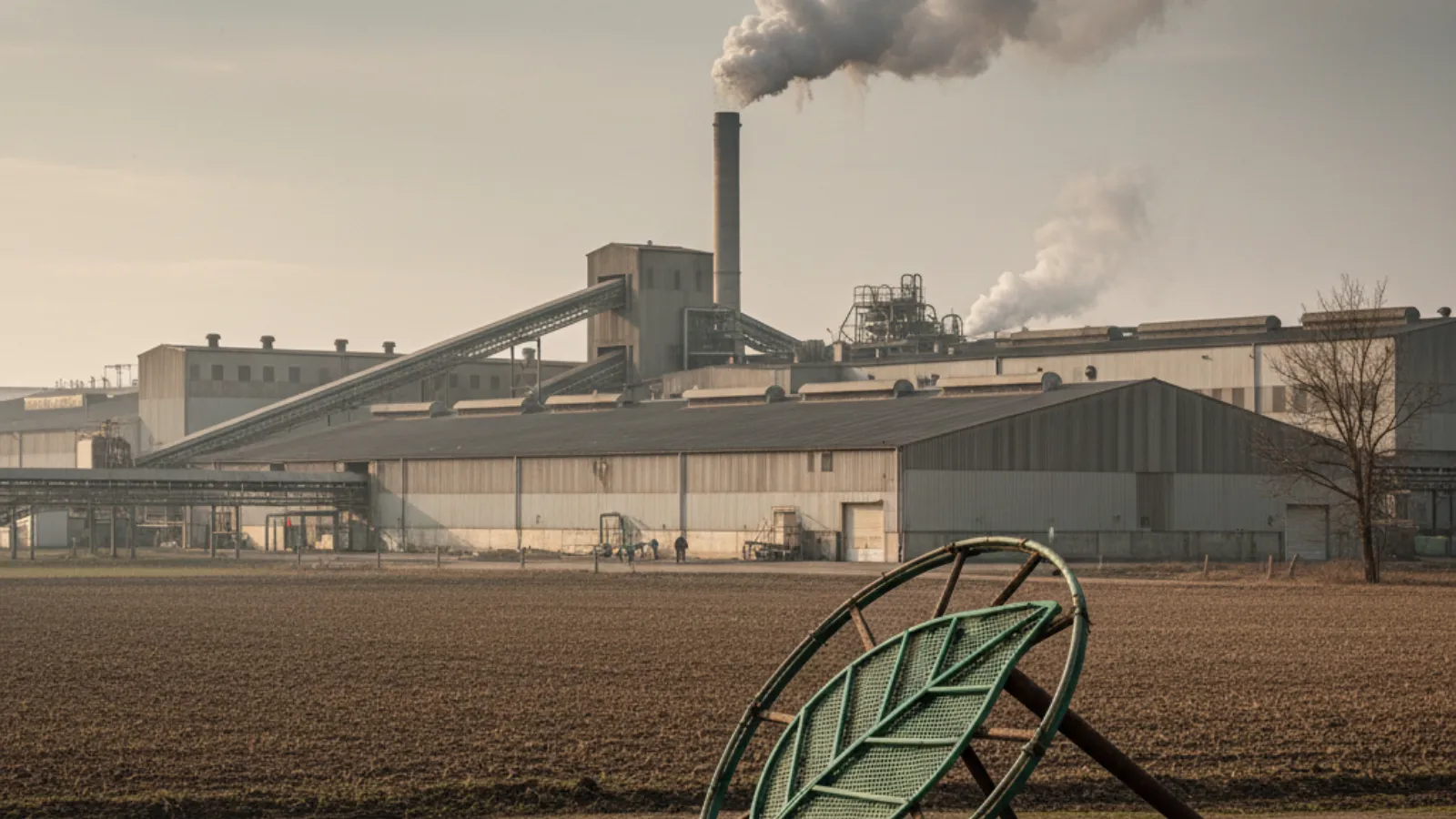
The world's biggest meat company just erased more than 90% of its carbon footprint. It did not shut a plant or change a single farm. It deleted the target.
JBS, the Brazil-based giant behind Seara, Swift and Friboi, has scrapped its pledge to reach net-zero emissions by 2040. Gone with it are the Scope 3 goals that cover the emissions from every animal it raises and slaughters, the part of its footprint that dwarfs everything else. On paper, most of JBS's climate problem has vanished. In the real world, its emissions have not fallen at all.
The 90% problem
Company emissions come in three buckets. Scope 1 is what a firm burns directly. Scope 2 is the power it buys. Scope 3 is everything else in the value chain, like the farms that raise the cattle and the trucks that carry the meat.
For a meat company, Scope 3 is almost the whole story. JBS says Scope 3 makes up more than 90% of its emissions, while the sites and power it controls sit under 4% of the total. That is why the 2040 pledge always looked shaky. To hit it, JBS needed millions of farmers and ranchers to change how they raise animals, and it has no direct control over any of them.
Its sustainability chief, Jason Weller, made that the whole argument. He told the Financial Times the company would now set goals only "where we have operational control". "Bold ambition is fine," he said, "but you now need to actually have really good, measurable, accountable goals." JBS is keeping a goal to cut the intensity of its own site and power emissions, the amount per unit of product, by 30% by 2030 and 70% by 2050, from a 2019 base. It is about a fifth of the way there.
JBS is not acting alone
The same retreat is spreading across big food. PepsiCo pushed its own net-zero date back by a decade last year, and both Coca-Cola and Unilever have quietly softened their climate goals. The Science Based Targets initiative, the body that validates these pledges, has itself loosened its rules on value-chain emissions in its latest 2026 standard.
The reason is the same everywhere. The easy part of a climate pledge is Scope 1 and 2, the emissions a company owns. The hard part is Scope 3, which a company can only nudge. When the deadline gets close and the value-chain cuts have not landed, the pledge turns into a liability. JBS failed to get its goals validated by the SBTi inside the required window, so the body now lists it as "commitment removed".
Wall Street changed the math
Timing matters here. JBS listed on the New York Stock Exchange in June 2025 at a value near $30 billion, which put its climate claims in front of US investors and, more importantly, US courts. Months later it settled a case with the New York attorney general, who had argued the company had "no viable plan" to reach its 2040 goal. JBS said the deal was not an admission of wrongdoing.
That case is the tell. A public net-zero target used to be a marketing asset. Now it is a document a regulator or a short-seller can hold against you. For a firm that earned $77.2 billion in revenue last year and answers to US shareholders, a promise it cannot keep is a risk it does not need. Critics see it differently. Greenpeace called the retreat "unspeakably reckless", noting that JBS's supply chain pumps out more methane than Shell and ExxonMobil combined.
What to watch next
The move quietly hands a problem to everyone who buys from JBS. A meat supplier's Scope 3 is a supermarket's and a food brand's Scope 3 too. Every retailer and manufacturer still holding a net-zero claim now has a bigger gap to explain, or a reason to shop for cleaner sourcing. Watch three things next: whether more big food names follow JBS and reset their targets to what they control, whether lenders and customers with their own goals apply the pressure that voluntary pledges never did, and whether "net zero" gives way to narrower promises a boardroom can defend. The lesson for any operator is blunt: in 2026, the climate target that survives is the one you can measure and own.
Global Aseptic Packaging Market Report 2026
148.4bn litres and 344bn packs in 2025. Aseptic volumes across dairy, dairy alternatives, beverages and food in 39 markets — 2025 actuals and forecasts to 2030. Buy online and receive it within 24 hours.
More information
Global Cheese Database 2026
Production, imports, exports and consumption for 39 cheese types across 48 countries, with actuals through 2025 and forecasts to 2030. Join the waitlist for early access, pre-launch pricing and a free sample country chapter.
Get early accessStrategic Insights
📊 Analytics & Strategic Insight
Net zero is being repriced from a badge into a legal liability, and Scope 3 is where it snaps
The decision most in this industry are avoiding:
👉 Keeping a target you cannot hit is now the bigger risk. For years the safe move was to pledge net-zero and worry about delivery later. Litigation and regulators flipped that logic, so an unbacked target is now an exposure a board may quietly drop before someone sues over it.
👉 Scope 3 belongs to the whole value chain at once. JBS's Scope 3 is a retailer's and a food brand's Scope 3 too. When the supplier stops counting those emissions, the customer's own numbers get harder to hit.
👉 The honest target and the ambitious target have split apart. Boards want a number they can defend to an auditor. Campaigners want the number that matches the science. Almost nobody is saying out loud that those are now two different numbers.
Here's the full context:
→ 2021: JBS pledges net-zero by 2040; CEO Gilberto Tomazoni calls climate change "the great challenge of our time".
→ 2024: Full-year net revenue reaches $77.2bn; Scope 3, mostly the livestock it buys and slaughters, makes up more than 90% of its emissions.
→ June 2025: JBS lists on the New York Stock Exchange at a value near $30bn, opening its climate claims to US investors and US courts.
→ Nov 2025: JBS settles with the New York attorney general, who had alleged the company had "no viable plan" to hit its 2040 goal.
→ Most recent: JBS drops the 2040 net-zero target and its Scope 3 goals, keeping only Scope 1 and 2 cuts it controls; the SBTi lists it as "commitment removed".
What this means for food and beverage operators and investors:
✅ The credible target is shrinking to what a company controls. Expect more firms to swap value-chain pledges for tight Scope 1 and 2 goals with real baselines they can prove year on year.
✅ Supply-chain buyers inherit the gap. If a major supplier drops Scope 3, every customer with its own net-zero claim has to redo the math or move to cleaner sourcing.
✅ Financing and retail contracts become the real lever. The pressure that sticks comes from lenders and customers who hold their own targets and expect suppliers to match them.
3 moves you can make this week:
1️⃣ Split your targets by control. Separate what you own (Scope 1 and 2) from what you only influence (Scope 3), and promise publicly on the first before the second.
2️⃣ Stress-test your claims for legal risk. Have a lawyer read every public climate target as if a regulator had written the complaint, then fix the ones you cannot defend.
3️⃣ Map your Scope 3 exposure to big suppliers. Know which of your emissions sit inside a supplier that may drop its own target next, and price that risk in now.
Take the Next Step
💬 You don't need a written brief.
Tell us what you are weighing up, and we will come back with the likely project scope, recommended direction and cost range.
→ Tell us what you're planning
Zenith Consulting
Submit your food & beverage project enquiry.
Share your requirements. If there is a strong fit, we’ll come back with an indicative investment range, project timeline and recommended strategic approach.
Reviewed by Zenith Consulting’s senior food & beverage strategy team.
Related analyses
- Sustainability, Regulation & Risk
Raw Milk Cheese Warning Label Petition: Parmigiano Reggiano And Roquefort Cannot Be Pasteurised
A draft FDA petition would put a warning label on every raw milk cheese sold in America, imported cheese included. The US took in 251.3 million pounds of cheese in seven months, and the biggest Italian and French names cannot be pasteurised at all.
Read analysis → - Sustainability, Regulation & Risk
Aseptic Bags Face The EU Recycling Test: ABMA Starts A Three-Year Programme Ahead Of PPWR Requirements
Europe's industrial aseptic bag makers have started a three-year project to make the pack recyclable before the PPWR deadline on 1 January 2030. Zenith puts 4,670 million litres of the world's aseptic food in bag-in-box, and 810 million litres of West European aseptic volume rides in the same format.
Read analysis → - M&A, Investment & Valuation
Parmigiano Reggiano Takes On Australian Parmesan: The EU Trade Deal Protected 53 Cheese Names And Left Parmesan Out
The Parmigiano Reggiano Consortium has opened a three-year campaign in Australia, where cheese output runs at 455,000 tonnes a year. Australia agreed to protect 53 EU cheese names, and parmesan is not one of them.
Read analysis →
Share it with your peers
Pass this analysis to colleagues who track the food and beverage market.
Zenith Market Intel
Need a specific food or beverage market report?
Tell us which category, region or question would be useful for your team.
Sister Publication
Also follow our Water Dispense Market Intelligence
Category analyses, operator briefings, and investor signals across the global water dispense market.