Ferrero Mapped 98% of Its Cocoa Farms. Here Is Why the EU's Deforestation Deadline Turns That Into a Moat
Ferrero can now trace 98% of its cocoa to the exact plot of land where it grew, and it mapped almost 230,000 farm plots to get there. Six months before a new EU law makes that level of tracking the price of selling chocolate in Europe, traceability has become a barrier to entry.
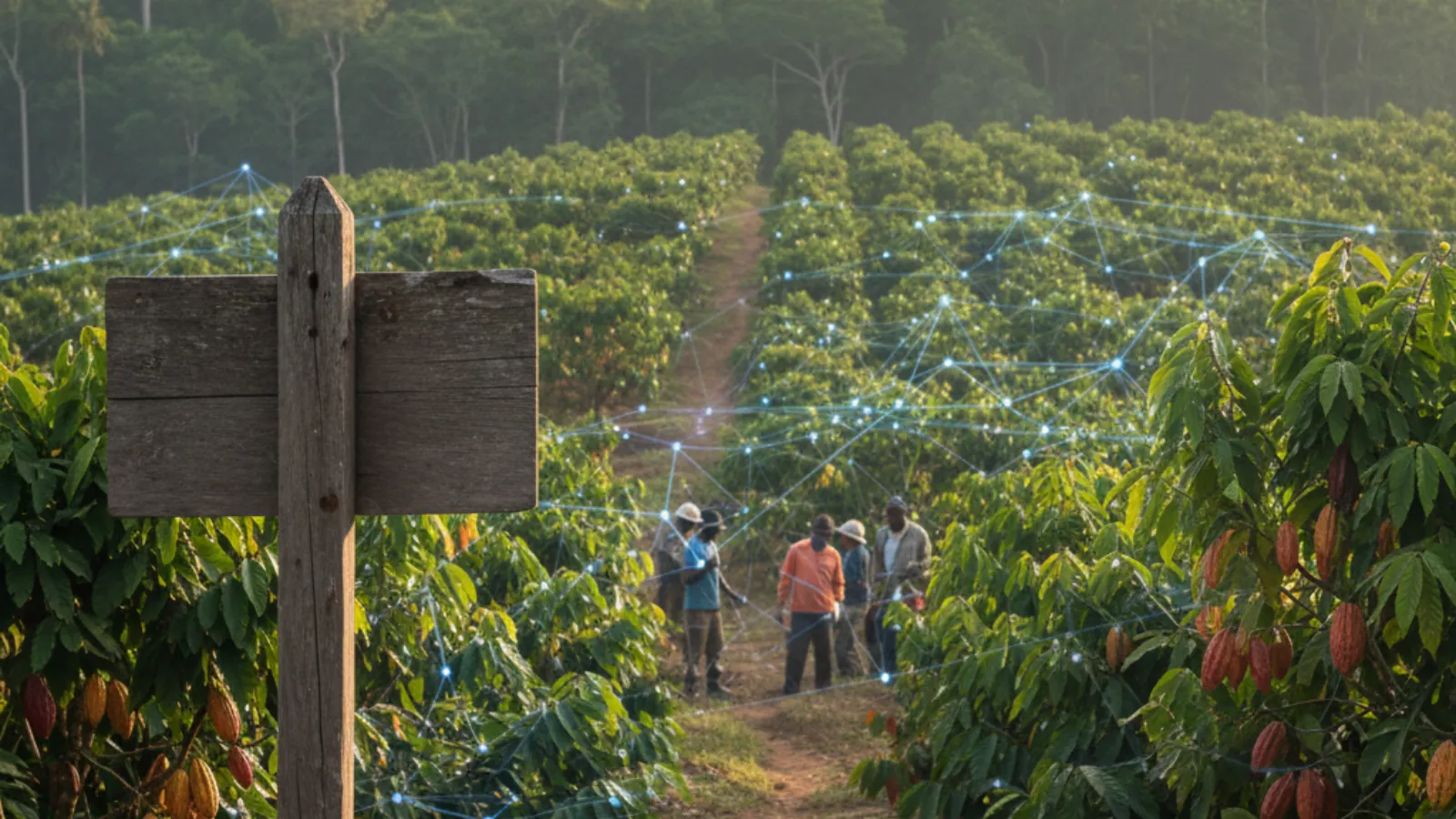
Ferrero can now point to the exact patch of land where 98% of its cocoa was grown. The maker of Nutella and Kinder released its yearly sustainability report on 30 June, timed to its 80th birthday, and the headline number is not about chocolate sales. It is about maps. The company says it has traced almost all of its cocoa back to the individual farm, plotting the boundary of each one on a satellite grid. That work sounds like a green public-relations exercise. It is closer to a compliance weapon.
A report built for a deadline
The timing is deliberate. A new European Union law, the EU Deforestation Regulation, takes full effect for large companies on 30 December 2026. From that date, any business selling cocoa, coffee, palm oil, soy, rubber, cattle or wood into the EU must prove the goods did not come from land cleared of forest after the end of 2020. Proof means GPS coordinates for every plot, a due-diligence statement for every shipment, and a paper trail regulators can check. Miss the standard and your goods can be fined, blocked at the border or seized. For a chocolate maker, that turns farm-level tracking from a nice-to-have into the price of shelf space in its biggest market.
What Ferrero actually built
The report shows how far ahead the company is. Ferrero says 98% of its cocoa is now traceable to farm polygon maps, and it buys 99% of its cocoa volume through certified or independently checked schemes such as Rainforest Alliance and Fairtrade. It analysed close to 230,000 supply-chain plots across cocoa, coffee and palm oil through a monitoring system built to match the new EU rules. Palm oil traceability sits at 98.6% and hazelnuts at 97%. Every one of those figures maps onto a box the law will ask companies to tick from December. Ferrero, a private group with turnover of 19.3 billion euros last year, has quietly turned its sustainability team into a customs department.
Why traceability is a moat
Here is the strategic part. Cocoa is one of the hardest supply chains on earth to trace. More than two million smallholder farmers grow it across West Africa, most on plots of one to three hectares, and Côte d'Ivoire and Ghana alone supply over 60% of the world's beans. Mapping that many tiny, scattered farms takes satellites, field teams, software and years of spend. Only the largest buyers can afford to build it, which is exactly why it favours them. When traceability becomes law, the giants who invested early keep buying and selling as normal. Smaller brands and traders who cannot show clean plot data risk losing access to the EU altogether. A rule written to protect forests ends up rewarding scale.
The 2% problem
The gap is the hard part. Getting from 98% to 100% means reaching the last, most remote farms, and those are often run by the poorest growers with the least paperwork. The farmers most likely to be cut out of the compliant supply chain are the ones who can least afford to lose the income. That is a live risk for the whole industry, not just Ferrero. The company is expanding a Save the Children programme to reach 235 cocoa communities in Côte d'Ivoire by 2030, a sign it knows the social cost of leaving farmers behind. Every major cocoa buyer is racing the same clock, and none has closed that final gap yet.
What comes next
The next six months will sort the industry into two groups: buyers who can trade in Europe on day one, and buyers scrambling to catch up. Watch which chocolate and coffee companies publish plot-level numbers this year and which stay quiet, because silence usually means they are behind. For operators, the lesson reaches past cocoa. Coffee, palm oil and soy face the same rule, so any company sourcing those commodities should treat traceability as core infrastructure rather than a reporting chore. For investors, supply-chain data is becoming a real asset that separates leaders from laggards. Ferrero spent years and a lot of money to be ready early. The market is about to find out who else did.

Global Aseptic Packaging Market Report 2026
148.4bn litres and 344bn packs in 2025. Aseptic volumes across dairy, dairy alternatives, beverages and food in 39 markets — 2025 actuals and forecasts to 2030. Buy online and receive it within 24 hours.
More information
Global Cheese Database 2026
Production, imports, exports and consumption for 39 cheese types across 48 countries, with actuals through 2025 and forecasts to 2030. Join the waitlist for early access, pre-launch pricing and a free sample country chapter.
Get early accessStrategic Insights
📊 Analytics & Strategic Insight
When a Rule Becomes a Moat: Why the EU's Deforestation Law Rewards the Companies That Prepared
The decision most in this industry are avoiding:
👉 Treating traceability as a cost centre instead of a competitive asset. Most firms file supply-chain data to satisfy auditors. The ones who mapped early now hold a market-access advantage rivals cannot buy overnight.
👉 Assuming another delay will save them. The EU pushed this deadline back twice, so many buyers are betting it slips again. Building around a delay that may not come is how you get caught at the border in January.
👉 Ignoring the farmers who fall outside the data. Racing to 98% is easier than facing what happens to the last 2%. The growers who cannot be mapped are a supply risk and a reputational one, and quietly dropping them stores up a bigger problem.
Here's the full context:
→ 2020: The EU sets 31 December 2020 as the cut-off date; cocoa grown on land cleared after it cannot be sold as compliant.
→ 2023: The EU Deforestation Regulation passes, covering cocoa, coffee, palm oil, soy, rubber, cattle and wood.
→ 2024-2025: Facing industry pushback, the EU delays the rules twice and softens some terms, but keeps the plot-level tracking requirement.
→ December 2025: The amended law enters into force with a firm deadline of 30 December 2026 for large and medium companies.
→ Most recent: On 30 June 2026, Ferrero's sustainability report shows 98% cocoa traceability and almost 230,000 mapped plots, six months before the rule bites.
What this means for food and beverage operators and investors:
✅ Compliance infrastructure is now a competitive line. Buyers with clean plot data will trade in Europe without friction while others stall, so treat traceability spend as growth capital.
✅ Scale is winning the sourcing game. Mapping millions of smallholders favours the biggest buyers, which points to more consolidation of cocoa and coffee supply toward a handful of players.
✅ Reputational risk is shifting to the supply tail. The story of the next two years will be the farmers left outside compliant chains, and companies that plan for them now will avoid the headlines later.
3 moves you can make this week:
1️⃣ Audit your deadline exposure. List every product that touches cocoa, coffee, palm oil or soy sold into the EU, and check how much of that volume you can trace to a mapped plot today.
2️⃣ Find your gap, not your average. A 90% traceability figure hides the risky 10%; identify the exact suppliers and regions you cannot yet map and put a plan on each.
3️⃣ Turn the data into a sales point. If your traceability is ahead of peers, tell EU retail buyers now, because guaranteed compliant supply is worth a premium as the deadline nears.
Take the Next Step
💧 Also covering the water dispense market?
Water dispense is one of the fastest-growing segments in food and beverage. Operator data, revenue benchmarks, and market intelligence across 32 countries.
→ Explore water dispense insights
Zenith Consulting
Submit your food & beverage project enquiry.
Share your requirements. If there is a strong fit, we’ll come back with an indicative investment range, project timeline and recommended strategic approach.
Reviewed by Zenith Consulting’s senior food & beverage strategy team.
Related analyses
- Sustainability, Regulation & Risk
Raw Milk Cheese Warning Label Petition: Parmigiano Reggiano And Roquefort Cannot Be Pasteurised
A draft FDA petition would put a warning label on every raw milk cheese sold in America, imported cheese included. The US took in 251.3 million pounds of cheese in seven months, and the biggest Italian and French names cannot be pasteurised at all.
Read analysis → - Sustainability, Regulation & Risk
Aseptic Bags Face The EU Recycling Test: ABMA Starts A Three-Year Programme Ahead Of PPWR Requirements
Europe's industrial aseptic bag makers have started a three-year project to make the pack recyclable before the PPWR deadline on 1 January 2030. Zenith puts 4,670 million litres of the world's aseptic food in bag-in-box, and 810 million litres of West European aseptic volume rides in the same format.
Read analysis → - M&A, Investment & Valuation
Parmigiano Reggiano Takes On Australian Parmesan: The EU Trade Deal Protected 53 Cheese Names And Left Parmesan Out
The Parmigiano Reggiano Consortium has opened a three-year campaign in Australia, where cheese output runs at 455,000 tonnes a year. Australia agreed to protect 53 EU cheese names, and parmesan is not one of them.
Read analysis →
Share it with your peers
Pass this analysis to colleagues who track the food and beverage market.
Zenith Market Intel
Need a specific food or beverage market report?
Tell us which category, region or question would be useful for your team.
Sister Publication
Also follow our Water Dispense Market Intelligence
Category analyses, operator briefings, and investor signals across the global water dispense market.