Europe's Drought Reaches the P&L: Apetit Cuts Guidance, Germany Warns on Feed, UK Grain Heads for a 1984 Low
A Finnish food group has cut its full-year profit outlook because it did not rain enough in Sweden, Berlin has warned of feed shortages, and the UK is on track for its worst grain harvest since records began in 1984. The dairy glut most buyers wrote into their 2027 plans is already being unwound by the weather.
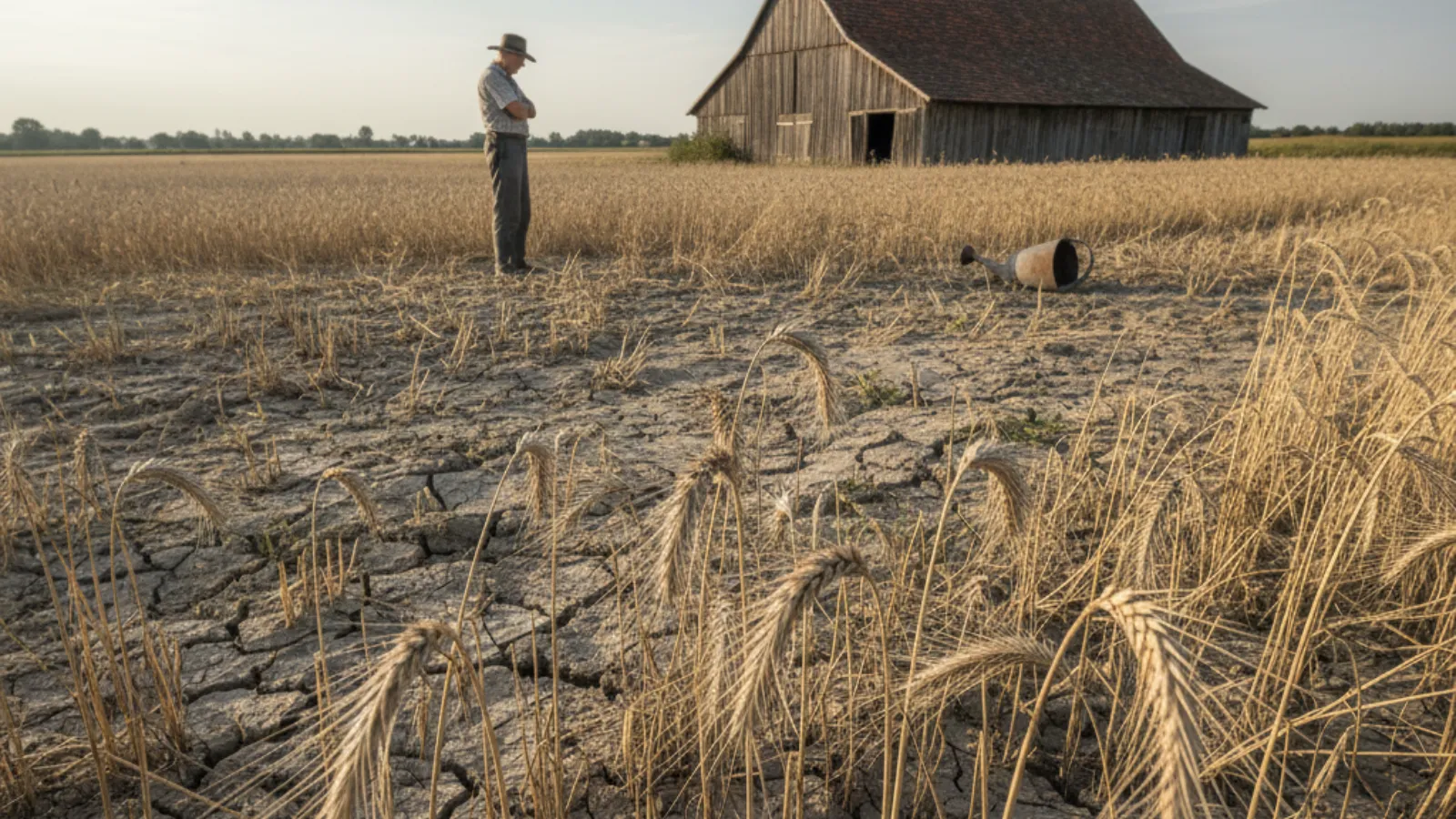
A Finnish food group cut its profit outlook this week because it did not rain in Sweden. Apetit now expects a full-year trading loss of up to €2m, against a €5.9m profit last year. The peas did not grow, so whole fields were left in the ground.
This is the second cut of the year. Apetit warned in April that 2026 would land well below 2025. It warned on the harvest in December before that. The group posted a €1.4m trading loss in the first quarter on sales of €46.1m. Its half-year report is due on 21 August.
One mid-sized firm missing a number is a small story. Three warnings in nine days is a cost curve.
Berlin says the feed has already run short
On 12 August, Germany's farm minister Alois Rainer set out an interim view of the drought. His line was blunt: "Persistent drought is already leading to significant bottlenecks in the feed supply."
He went further. If grass and fodder yields drop, farms buy feed at high prices. Some will cut herd numbers to cope. Berlin is readying relief money and cover for farms. The full harvest report lands at the end of August.
Herd size is the number to watch, because it sets milk supply two years out. A farm that sells cows this autumn does not put that milk back next spring.
The UK is on track for its worst grain harvest since 1984
The Energy and Climate Intelligence Unit works from AHDB estimates. It puts the UK grain and oilseed harvest at 19.5 million tonnes. That would be the worst since detailed records began in 1984. It sits about 2.5 million tonnes below what the USDA and Coceral had forecast.
UK arable farms stand to lose between £293m and £390m in sales at today's prices. Wheat is running at 6.8 tonnes a hectare, under the ten-year mark. More than half the wheat is already in.
The weather behind it was extreme. England and Wales had their driest July on record. England got 6.5mm of rain, a tenth of the long-run norm. Southern England had its driest month in a run of data that starts in 1836. This is the third poor UK harvest in a row.
Spot milk and the dairy glut now point different ways
AHDB counts 18.5 million litres of GB milk lost across three heatwaves. The UK passed 35°C in May, June and July for the first time. The second wave peaked at 37.7°C. By early July, the seven-day rolling figure sat 2.9% below the five-year mark.
Spot milk has risen by about 10 pence a litre. It now trades at 38 to 48 pence. The Defra farmgate price in May was 34.2 pence.
Most 2027 dairy plans were built the other way round. Milk powder prices crashed this year and the trade has spent months talking about a fat and skim glut. Both things can hold at once. Powder is a stock you can sit on. Fresh milk is not, and a cow that was too hot to eat gives less of it.
The risk is not spread evenly. Arla, DMK, Müller, FrieslandCampina and Lactalis all buy fresh milk from northern Europe. Those are the farms now short of grass. Bakery groups buying UK and German wheat face the other half of it. Frozen veg packers sit closest to the fire. A pea that was never picked cannot be bought back at any price.
What this means for operators and investors
A drought does not land as one big line in the accounts. It arrives as a dozen small ones. Lower yields, fields left standing, higher feed bills and thinner milk. Then more spot buying, and a plant that runs short weeks because the crop never came.
A hedge covers the price of grain. It does not cover the grain that was never grown. That gap is where this year's profit warnings are coming from. It is a sourcing problem, and it belongs with the buying team.
For buyers of assets, a weather warning is a screen. A firm that cuts guidance twice in one year on the same crop has a sourcing problem. Price it into the bid. The firms that hold their margin this year wrote weather into the contract before the weather arrived.

Global Aseptic Packaging Market Report 2026
148.4bn litres and 344bn packs in 2025. Aseptic volumes across dairy, dairy alternatives, beverages and food in 39 markets — 2025 actuals and forecasts to 2030. Buy online and receive it within 24 hours.
More information
Global Cheese Database 2026
Production, imports, exports and consumption for 39 cheese types across 48 countries, with actuals through 2025 and forecasts to 2030. Join the waitlist for early access, pre-launch pricing and a free sample country chapter.
Get early accessStrategic Insights
📊 Analytics & Strategic Insight
Weather has moved from the risk register to the cost line
The decision most in this industry are avoiding:
👉 Your weather risk sits two tiers up, in your growers' fields. Most risk registers stop at the factory gate. The yield loss happens where nobody wrote a clause.
👉 A glut and a shortage can run at the same time. Milk powder is cheap and spot milk is dear. Blending the two into one dairy view will cost you money on both sides of the trade.
👉 Three poor harvests in a row should change the base case. Planning off a ten-year yield now flatters your supply every single year.
Here's the full context:
→ May 2026: the UK passes 35°C in May for the first time. GB milk output drops by 5.8 million litres in that first heatwave.
→ June 2026: a second wave peaks at 37.7°C. Losses across the summer reach 18.5 million litres of GB milk.
→ July 2026: England and Wales record their driest July in the series. England gets 6.5mm of rain, a tenth of the long-run norm.
→ 5 August 2026: the ECIU puts the UK grain and oilseed harvest at 19.5 million tonnes. That is the lowest since 1984.
→ Most recent: Berlin warns of feed bottlenecks on 12 August. Apetit cuts its profit outlook on 13 August after the Swedish pea crop failed.
What this means for food and beverage operators and investors:
✅ Forward milk supply is the 2027 question. Feed cost drives herd cuts, and herd cuts show up in milk volumes long after the heat has gone.
✅ Price cover and crop cover are two different things. A hedge pays out when grain is dear. It pays nothing when the acres you booked were left standing.
✅ Weather warnings are a screen for buyers. Two cuts in one year on the same crop is a sourcing model, and it belongs in the bid price.
3 moves you can make this week:
1️⃣ List the five crops your top ten products rely on. Mark which ones came from a single country last year.
2️⃣ Re-run next year's volume plan on this year's yield. Put that number beside the ten-year one and show the board both.
3️⃣ Read your supply contracts for a failed-crop clause. If there is none, agree now who carries the loss.
Take the Next Step
💬 You don't need a written brief.
Tell us what you are weighing up, and we will come back with the likely project scope, recommended direction and cost range.
→ Tell us what you're planning
Zenith Consulting
Submit your food & beverage project enquiry.
Share your requirements. If there is a strong fit, we’ll come back with an indicative investment range, project timeline and recommended strategic approach.
Reviewed by Zenith Consulting’s senior food & beverage strategy team.
Related analyses
- Sustainability, Regulation & Risk
Raw Milk Cheese Warning Label Petition: Parmigiano Reggiano And Roquefort Cannot Be Pasteurised
A draft FDA petition would put a warning label on every raw milk cheese sold in America, imported cheese included. The US took in 251.3 million pounds of cheese in seven months, and the biggest Italian and French names cannot be pasteurised at all.
Read analysis → - Sustainability, Regulation & Risk
Aseptic Bags Face The EU Recycling Test: ABMA Starts A Three-Year Programme Ahead Of PPWR Requirements
Europe's industrial aseptic bag makers have started a three-year project to make the pack recyclable before the PPWR deadline on 1 January 2030. Zenith puts 4,670 million litres of the world's aseptic food in bag-in-box, and 810 million litres of West European aseptic volume rides in the same format.
Read analysis → - M&A, Investment & Valuation
Parmigiano Reggiano Takes On Australian Parmesan: The EU Trade Deal Protected 53 Cheese Names And Left Parmesan Out
The Parmigiano Reggiano Consortium has opened a three-year campaign in Australia, where cheese output runs at 455,000 tonnes a year. Australia agreed to protect 53 EU cheese names, and parmesan is not one of them.
Read analysis →
Share it with your peers
Pass this analysis to colleagues who track the food and beverage market.
Zenith Market Intel
Need a specific food or beverage market report?
Tell us which category, region or question would be useful for your team.
Sister Publication
Also follow our Water Dispense Market Intelligence
Category analyses, operator briefings, and investor signals across the global water dispense market.