Aseptic Bags Face The EU Recycling Test: ABMA Starts A Three-Year Programme Ahead Of PPWR Requirements
Europe's industrial aseptic bag makers have started a three-year project to make the pack recyclable before the PPWR deadline on 1 January 2030. Zenith puts 4,670 million litres of the world's aseptic food in bag-in-box, and 810 million litres of West European aseptic volume rides in the same format.
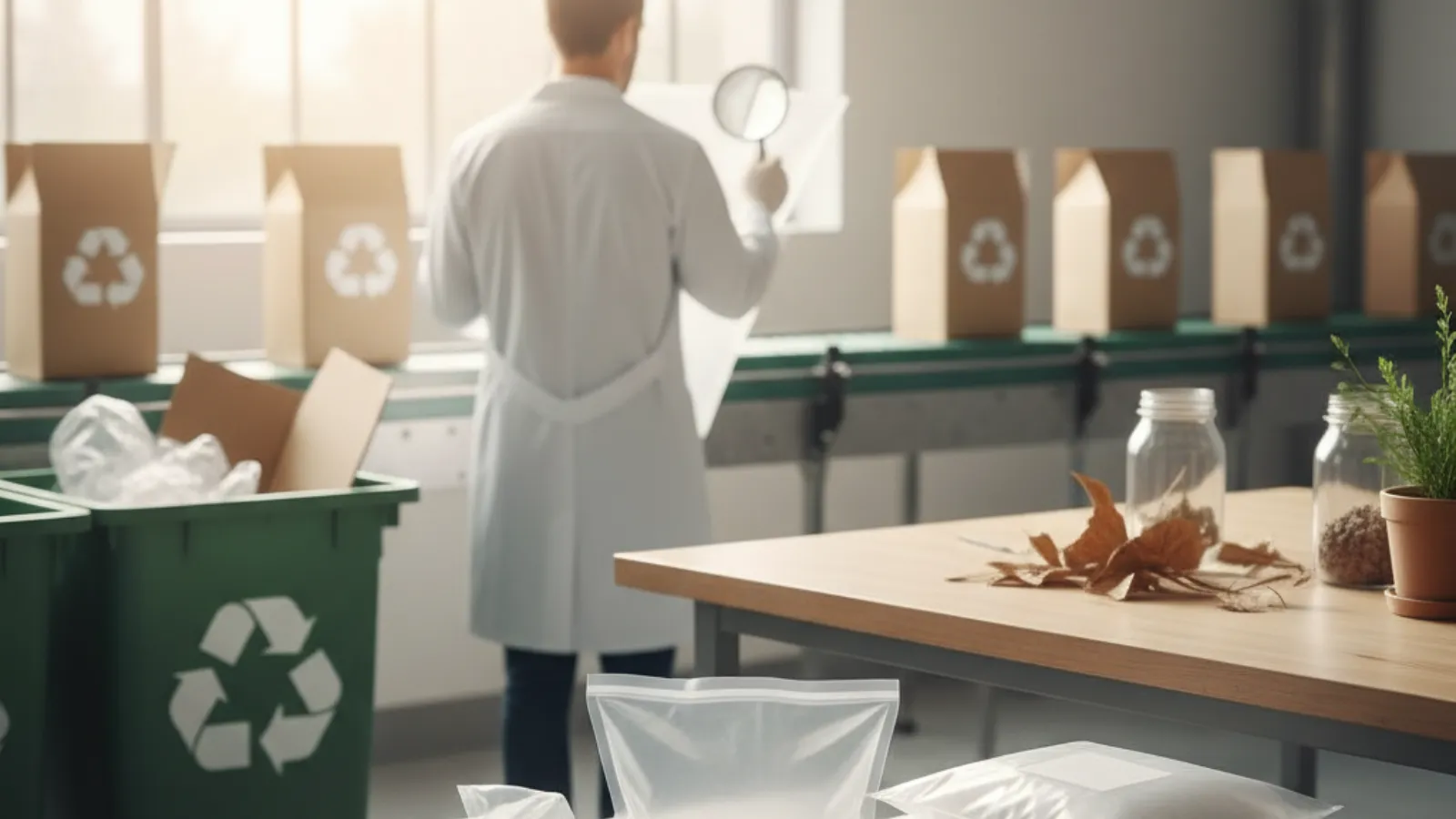
I keep seeing the same gap in packaging plans. Firms model the pack on the shelf. Almost nobody models the bag that moved the food to the filler.
What the bag makers announced
The Aseptic Bag Manufacturers Association has started a three-year project to make industrial aseptic bags recyclable. The trade body is based in Dusseldorf and sits under Flexible Packaging Europe. Its members hold about 90% of the world market for these bags. They include Aran Group, Goglio, Hansin, Kagome, Kraft Heinz, Smurfit Westrock and Tesseraux. The work was reported on 23 and 25 September 2026.
Why the bag fails the test
These bags hold 220 to 1,600 litres. They pair polyethylene with a barrier of metallised PET, aluminium foil or polyamide. That build gives up to 24 months of ambient shelf life. It also makes the bag a mixed material. Under the current design-for-recycling rules the pack scores as not recyclable.
The PPWR then bites. From 1 January 2030 packaging that fails the recycling test cannot be sold into the EU. The bag makers and Flexible Packaging Europe said so plainly earlier this year. Without a fix, they warned, the bags would lose EU market access from 2030.
The project has four parts. The association wants to qualify recycling routes for the material. It wants a collection system that fits producer responsibility rules. It wants design-for-recycling guidance written for these bags. And it wants to know whether the recovered plastic can return to food contact.
How much volume rides in bags
Zenith's Global Aseptic Packaging Market Report 2026 sizes the format. Bag-in-box carries 4,670 million litres of aseptic food worldwide in 2025. That is 56.4% of the whole aseptic food block. In West Europe the same format fills 810 million litres a year. Zenith forecasts 832 million litres there by 2030.
Bag-in-box is a quiet format. It never reaches a shopper and carries no brand name. It uses far less material than rigid containers of the same volume. It also needs no chilling in transit or in store. Zenith counts it inside a world aseptic market of 148.4 billion litres and 344 billion packs.
Why a swap is hard
Replacement builds are still in development. None yet holds paste or fruit pulp for the full 24 months. An EU-only bag would also break the trade. Tomato and fruit ingredients move worldwide in standard 220 and 1,000 litre bags. A separate European format would split every buyer's supply.
The food behind the pack
The world processing tomato crop is set at 39.1 million tonnes for 2026. That is 3.3% below the 40.4 million tonnes of 2025. Most of that fruit waits as paste in aseptic bags between the field and the sauce line. Sixteen tomato processors signed this year's industry letter to Brussels. Mutti, La Doria, CONESA and Sugal were among them.
The geography is lopsided. North America fills 11.1 billion litres of aseptic product a year. Food is 51.4% of that, at 5,695 million litres. Bag-in-box alone takes 4,272 million litres there, on Californian tomatoes. Europe's food block is far smaller.
What this means for the market
Several points follow for anyone weighing a European plant or supply deal. Europe is the smaller half of this format and the only regulated one. A converter that solves the barrier first earns a protected European position. Buyers should price the bag risk into any European paste contract running past 2028. They should also ask a seller today which structure the paste will arrive in.
For processors and converters, one commercial test now sits above the rest. How many of your European litres ride in a pack that fails the 2030 rule? Zenith's Global Aseptic Packaging Market Report 2026 splits 39 markets by category, pack type and pack size. That lets a buyer count the exposure rather than guess it. A free sample is on the page.
Global Aseptic Packaging Market Report 2026
148.4bn litres and 344bn packs in 2025. Aseptic volumes across dairy, dairy alternatives, beverages and food in 39 markets — 2025 actuals and forecasts to 2030. Buy online and receive it within 24 hours.
More information
Global Cheese Database 2026
Production, imports, exports and consumption for 39 cheese types across 48 countries, with actuals through 2025 and forecasts to 2030. Join the waitlist for early access, pre-launch pricing and a free sample country chapter.
Get early accessStrategic Insights
📊 Analytics & Strategic Insight
The pack nobody models is the one the rule will hit
The decision most in this industry are avoiding:
👉 The risk sits in a pack no shopper ever sees. Packaging reviews start at the shelf. The bag that moved the paste is left out of the model.
👉 A recycling rule is a sourcing rule here. If the bag cannot be sold, the paste inside it cannot arrive. The exposure sits with the buyer as much as the bag maker.
👉 Changing the bag costs shelf life, and shelf life is the product. Two years of ambient life is why the format exists. A thinner barrier changes what a processor can sell.
Here's the full context:
→ 2020: West European bag-in-box fills 801 million litres of aseptic product.
→ January 2026: EU recycling criteria class industrial aseptic bags as not recyclable.
→ May 2026: Sixteen tomato processors sign an industry letter asking Brussels to change the rules.
→ August 2026: The PPWR starts to apply across the EU.
→ Most recent: The bag makers start a three-year recycling project. The deadline is 1 January 2030.
What this means for aseptic fillers, converters and equipment suppliers:
✅ Converters should test barrier options now rather than in 2029. Qualifying a new build takes years of shelf-life trials. The rule date is fixed.
✅ Fillers should check which inputs arrive in these bags. Paste, pulp, juice concentrate and liquid egg all travel this way. The count is usually higher than expected.
✅ Equipment makers should expect demand for smaller aseptic formats. If the big bag gets harder, some volume moves to drums, cartons or on-site processing. Each choice buys different machines.
What this means for market decisions:
1️⃣ Europe is a small share of the format and all of the risk. West Europe fills 810 million litres of bag-in-box against 4,272 million in North America. The rule reaches only the smaller pool.
2️⃣ The first compliant structure will set the European price. Members holding 90% of the world market are working on it together. A supplier outside that group starts behind.
3️⃣ An entrant should price paste supply before it prices a plant. European sauce and juice plants depend on bagged input. A 2030 gap in that input changes the case.
The Zenith view:
This project proves the trade takes the 2030 date seriously. It does not prove a compliant bag will exist in time. What decides the European investment case is whether a barrier that holds 24 months can also pass the recycling test.
The data behind this story
📦 Global Aseptic Packaging Market Report 2026
148.4 billion litres and 344 billion packs across 39 markets, split by category, pack type and pack size, with 2025 actuals and forecasts to 2030. A free 17-page sample is on the page.
→ Read the free sample
Evaluating aseptic food packaging in Europe? Zenith helps food and beverage companies assess market size, growth, competitors, pricing and route to market before they invest.
→ Discuss your market
Zenith Consulting
Submit your food & beverage project enquiry.
Share your requirements. If there is a strong fit, we’ll come back with an indicative investment range, project timeline and recommended strategic approach.
Reviewed by Zenith Consulting’s senior food & beverage strategy team.
Related analyses
- Sustainability, Regulation & Risk
Raw Milk Cheese Warning Label Petition: Parmigiano Reggiano And Roquefort Cannot Be Pasteurised
A draft FDA petition would put a warning label on every raw milk cheese sold in America, imported cheese included. The US took in 251.3 million pounds of cheese in seven months, and the biggest Italian and French names cannot be pasteurised at all.
Read analysis → - M&A, Investment & Valuation
Parmigiano Reggiano Takes On Australian Parmesan: The EU Trade Deal Protected 53 Cheese Names And Left Parmesan Out
The Parmigiano Reggiano Consortium has opened a three-year campaign in Australia, where cheese output runs at 455,000 tonnes a year. Australia agreed to protect 53 EU cheese names, and parmesan is not one of them.
Read analysis → - M&A, Investment & Valuation
Parmigiano Reggiano Takes On Australian Parmesan: The EU Trade Deal Protected 53 Cheese Names And Left Parmesan Out
The Parmigiano Reggiano Consortium has opened a three-year campaign in Australia, where cheese output runs at 455,000 tonnes a year. Australia agreed to protect 53 EU cheese names, and parmesan is not one of them.
Read analysis →
Share it with your peers
Pass this analysis to colleagues who track the food and beverage market.
Zenith Market Intel
Need a specific food or beverage market report?
Tell us which category, region or question would be useful for your team.
Sister Publication
Also follow our Water Dispense Market Intelligence
Category analyses, operator briefings, and investor signals across the global water dispense market.