Raw Milk Cheese Warning Label Petition: Parmigiano Reggiano And Roquefort Cannot Be Pasteurised
A draft FDA petition would put a warning label on every raw milk cheese sold in America, imported cheese included. The US took in 251.3 million pounds of cheese in seven months, and the biggest Italian and French names cannot be pasteurised at all.
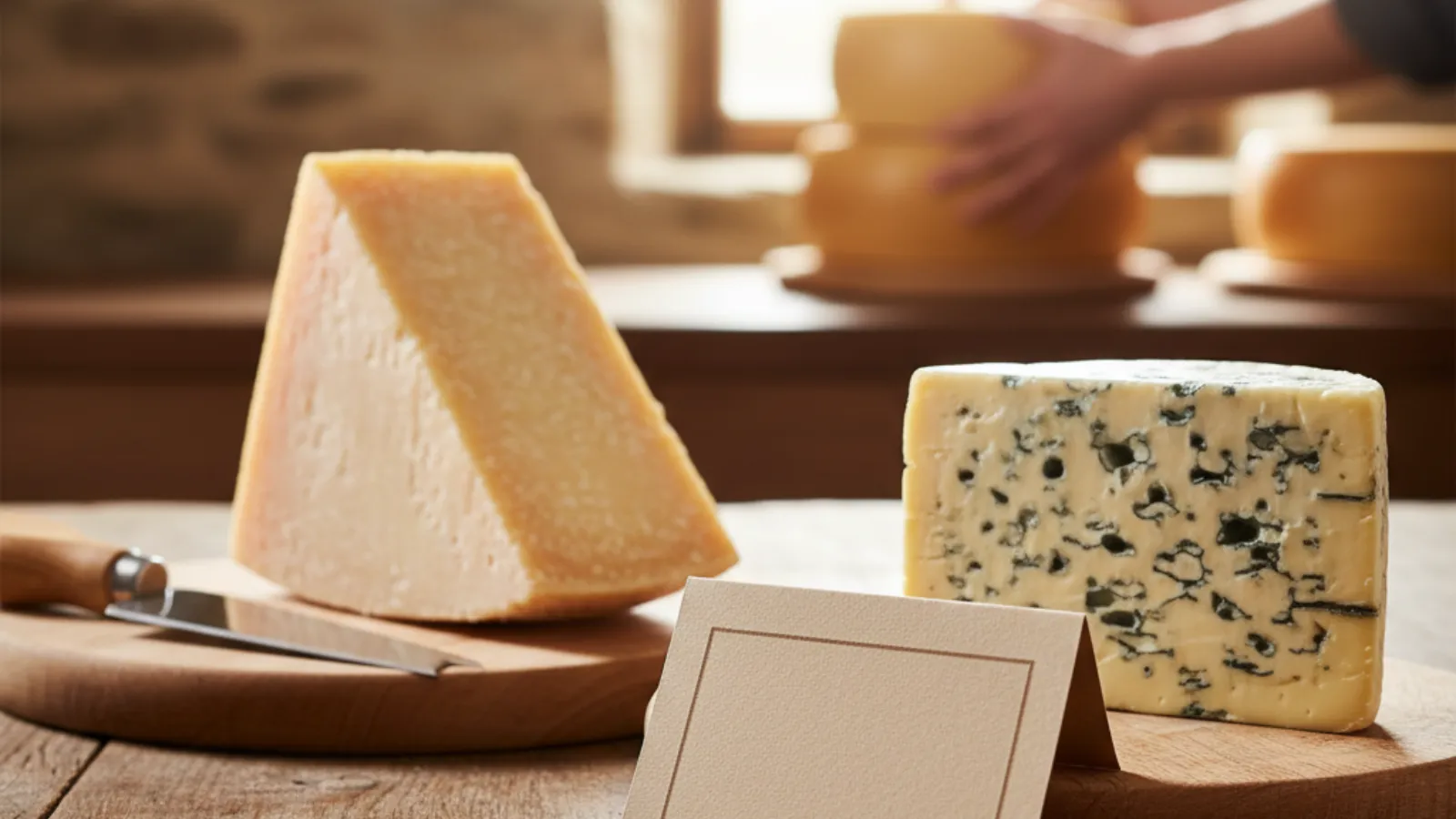
Most of the coverage reads this as a food safety story. I read it as a trade one. A draft FDA petition would put a warning label on every raw milk cheese sold in America. Imported cheese is included. The US took in 251.3 million pounds of cheese in the first seven months of 2026. Italy and France sent 87.8 million pounds of it. The most famous cheeses from both are raw milk by their own rules.
What the petition asks for
Bill Marler, a food safety lawyer at Marler Clark, published a draft petition on 27 September. He is asking for comments before he files it with the FDA. The draft would amend 21 CFR 101.17. Every raw milk cheese would carry a warning in bold capitals. Shops cutting cheese at the counter would need a placard where it is sold. The rule would cover American and imported cheese alike. Cheese made from heat treated milk would be exempt.
The outbreak behind it
The trigger is named. An E. coli O26:H11 outbreak was linked to Graziers raw milk cheese from Sierra Nevada Cheese Company. Thirteen people fell ill across nine states. Eight went to hospital. Three young children suffered kidney failure. Most of those affected were five or younger. The same plant had a Listeria recall in 2025.
The 1987 rule the petition targets
American law has allowed raw milk cheese across state lines since 1987. The cheese must age for at least 60 days at 35 degrees Fahrenheit or more. No label is asked for. Marler counts four outbreaks in 31 months. All of that cheese met the 60-day rule. He also cites the FDA's own 2015 risk work. It put the listeriosis risk from raw milk soft cheese at 50 to 160 times the heat treated level.
Where the label would land
Imports are the part of this market nobody is counting. US cheese imports ran to 251.3 million pounds in the seven months to July, worth 1.03 billion dollars. July alone brought in 37.8 million pounds, up 17% on a year earlier. Italy led the seven months with 53.8 million pounds, up 24%. France followed with 34.0 million pounds, up 11%. Those two origins are 35% of the import pool. Both are growing.
The rest of the pool is moving the other way. The Netherlands sent 19.1 million pounds, down 11%. Spain sent 18.0 million pounds, down 4%. Nicaragua fell 18% and Greece slipped 3%. Europe still leads the trade, and the growth inside it sits with Italy and France.
Why the PDO rulebook blocks the cheap answer
A label rule usually has a cheap answer. Heat the milk and the warning goes away. That answer is closed for the biggest imported names. The Parmigiano Reggiano rulebook calls for raw, partly skimmed milk. It bars any heat treatment of the milk at all. Minimum ageing runs to twelve months. The Roquefort rules, approved in November 2025, allow raw whole sheep's milk only. Warming is permitted to reach renneting temperature and no further. A maker who heats the milk loses the name.
What this means for the market
This is a market access question dressed as a label. The import lane it touches is defined, named and growing. Buyers of speciality cheese should know their raw milk share by line and by origin. European sellers should know what a warning does to shelf placement in American shops. The ink is the cheap part. The work sits in listings, own label specs and foodservice contracts that have to be reopened. An entrant pricing a US speciality launch should test two things. First, which of its lines are raw milk. Second, whether a warning changes the buyer's answer.
This also raises a wider question. How much of each country's cheese trade sits in types that cannot be heat treated? That is one of the areas we are tracking across cheese markets in our 2026 cheese research. The database splits production, imports, exports and consumption into 39 cheese types across 48 countries, in tonnes. Waitlist members get a free sample country chapter.
Global Aseptic Packaging Market Report 2026
148.4bn litres and 344bn packs in 2025. Aseptic volumes across dairy, dairy alternatives, beverages and food in 39 markets — 2025 actuals and forecasts to 2030. Buy online and receive it within 24 hours.
More information
Global Cheese Database 2026
Production, imports, exports and consumption for 39 cheese types across 48 countries, with actuals through 2025 and forecasts to 2030. Join the waitlist for early access, pre-launch pricing and a free sample country chapter.
Get early accessStrategic Insights
📊 Analytics & Strategic Insight
A trade measure with a food safety name
The decision most in this industry are avoiding:
👉 Most of the volume at risk sits offshore. American raw milk cheese output is small and scattered. The import flow is large, named and growing.
👉 Heat treating is off the table for the biggest names. Parmigiano Reggiano and Roquefort both call for raw milk in writing. A maker who heats the milk loses the name.
👉 The ageing rule is what the petition wants reopened. Marler asks the FDA to finish its review of the 60-day rule within a year. That review would reach every raw milk cheese sold in America.
Here's the full context:
→ 1987: American law allows raw milk cheese across state lines after 60 days of ageing.
→ 2015: FDA risk work compares raw milk soft cheese with the heat treated kind. The listeriosis risk is 50 to 160 times higher.
→ 2025: A Listeria recall hits Sierra Nevada Cheese Company in California.
→ 2026: An E. coli O26 outbreak linked to Graziers cheese makes 13 people ill in nine states. Three children suffer kidney failure.
→ Most recent: Marler Clark publishes a draft FDA petition on 27 September. Comments close on 9 October.
What this means for cheese producers, traders and buyers:
✅ Importers carry the first cost. Labels, placards and listings have to change before the cheese moves.
✅ PDO sellers cannot change the recipe. The name and the raw milk are locked together, so the answer has to be commercial.
✅ Own label buyers will ask for the raw milk share. Retail and foodservice specs will start naming it line by line.
What this means for market decisions:
1️⃣ A growing import lane picks up a new cost. US cheese imports reached 251.3 million pounds in seven months. July alone rose 17%.
2️⃣ Italy and France carry most of the exposure. They shipped 87.8 million pounds between them, 35% of the pool. Both grew.
3️⃣ An entrant should count its raw milk lines first. Then test whether a warning changes the buyer's answer, channel by channel.
The Zenith view:
This does not prove the FDA will act. A draft petition carries no force on its own. What decides the case is the share of each market's cheese trade that cannot be heat treated.
The data behind this story
🧀 Global Cheese Database 2026
Production, imports, exports and consumption for 39 cheese types across 48 countries, in tonnes, with actuals to 2025 and forecasts to 2030. The 2026 edition is being built market by market. Waitlist members get the pre-launch price and a free sample country chapter.
→ Join the waitlist
Evaluating a cheese market? Zenith helps food and beverage companies assess market size, growth, competitors, pricing and route to market before they invest.
→ Discuss your market
Zenith Consulting
Submit your food & beverage project enquiry.
Share your requirements. If there is a strong fit, we’ll come back with an indicative investment range, project timeline and recommended strategic approach.
Reviewed by Zenith Consulting’s senior food & beverage strategy team.
Related analyses
- Sustainability, Regulation & Risk
Aseptic Bags Face The EU Recycling Test: ABMA Starts A Three-Year Programme Ahead Of PPWR Requirements
Europe's industrial aseptic bag makers have started a three-year project to make the pack recyclable before the PPWR deadline on 1 January 2030. Zenith puts 4,670 million litres of the world's aseptic food in bag-in-box, and 810 million litres of West European aseptic volume rides in the same format.
Read analysis → - M&A, Investment & Valuation
Parmigiano Reggiano Takes On Australian Parmesan: The EU Trade Deal Protected 53 Cheese Names And Left Parmesan Out
The Parmigiano Reggiano Consortium has opened a three-year campaign in Australia, where cheese output runs at 455,000 tonnes a year. Australia agreed to protect 53 EU cheese names, and parmesan is not one of them.
Read analysis → - M&A, Investment & Valuation
Parmigiano Reggiano Takes On Australian Parmesan: The EU Trade Deal Protected 53 Cheese Names And Left Parmesan Out
The Parmigiano Reggiano Consortium has opened a three-year campaign in Australia, where cheese output runs at 455,000 tonnes a year. Australia agreed to protect 53 EU cheese names, and parmesan is not one of them.
Read analysis →
Share it with your peers
Pass this analysis to colleagues who track the food and beverage market.
Zenith Market Intel
Need a specific food or beverage market report?
Tell us which category, region or question would be useful for your team.
Sister Publication
Also follow our Water Dispense Market Intelligence
Category analyses, operator briefings, and investor signals across the global water dispense market.