Nestlé Puts Regenerative Wheat in 1.5 Billion KitKats a Year: Why 51% Is the Number That Matters
Nestlé is now making about 1.5 billion KitKat bars a year with "regeneratively farmed" wheat from UK supplier Wildfarmed. Only 51% of the wheat in each bar qualifies, and that figure shows how the regenerative race is really a fight for scarce supply.
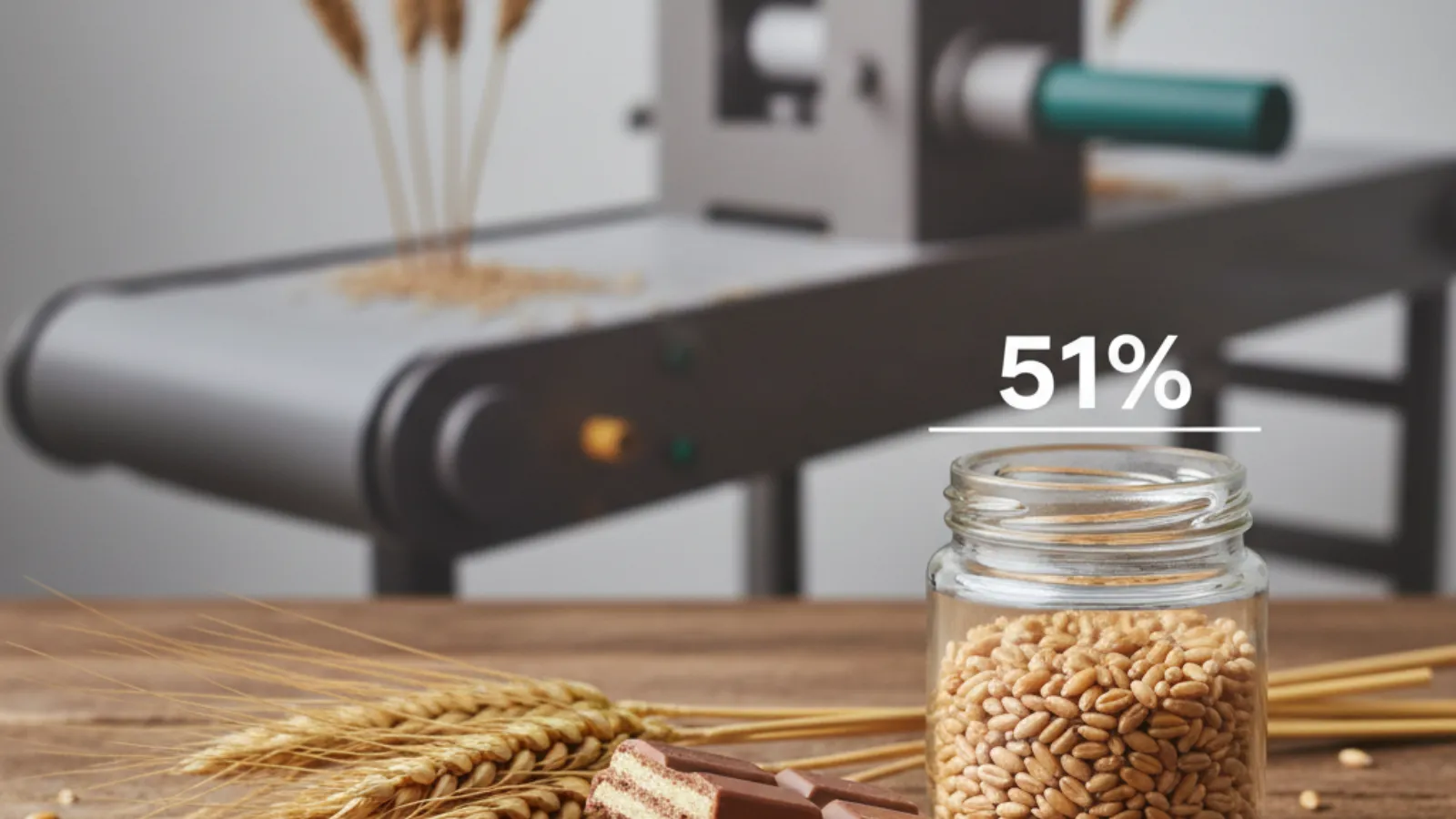
Nestlé just put "regenerative" wheat into about 1.5 billion KitKat bars a year. The number that matters most is not the billion-bar headline. It is 51%. The company has started using wheat from UK supplier Wildfarmed in KitKat bars made at its factory in York, in northern England. The new bars reach shelves within weeks. The taste, the snap and the wrapper stay the same.
Here is the catch. Just 51% of the wheat in each bar comes from Wildfarmed. The rest comes from Nestlé's existing suppliers. Nestlé was open about why. Moving to regenerative farming at scale takes time, the company said, and 51% lets it support the switch while it guards supply, quality and volume. Put plainly, it could not get enough certified wheat to go higher, even for one brand in one country.
A supply decision dressed as a green one
Regenerative agriculture has no single agreed definition. Nestlé describes it as a mix of low-input farming, agroecology and methods that protect soil. Wildfarmed, set up in 2018, says its approach lifts biodiversity, improves soil health and cuts carbon. The firm also sells its own bread in Tesco and Waitrose. Its co-founder and chief executive, Edd Lees, called the Nestlé deal a step toward making regenerative farming "the default, not the exception."
Strip away the marketing and a harder fact shows through. Certified regenerative wheat is scarce, and even a buyer the size of Nestlé can only take as much as farmers can grow. The 51% figure is a supply ceiling, not a stretch target. Locking in that half now is as much about securing a future input as it is about cutting emissions.
Why a chocolate bar is really a climate balance sheet
For a food maker, most carbon sits in the field, not the factory. The bulk of a large food company's footprint, often more than two-thirds, comes from farming and ingredients, the part it does not own. That is the hardest emissions line to cut, because it rests on thousands of separate growers. Nestlé has set a group goal to source half of its main ingredients from regenerative farming by 2030. Putting the method into KitKat, one of its most famous global brands, turns a slow back-office target into something a shopper can see on the shelf.
Big Food is chasing the same acres
Nestlé is not alone, and that is the point. The largest food companies are now competing for the same limited pool of regenerative farmland. PepsiCo has a 2030 goal to spread regenerative practices across about 7 million acres, close to its entire farming footprint. General Mills aims for 1 million acres by 2030 and says it is roughly halfway. Each fresh pledge raises demand for the same scarce thing: land and farmers that already meet the standard. The buyers who move first lock in supply and grower relationships. The ones who wait will pay more, or find the acres already taken.
What it means for operators, investors and suppliers
For operators, regenerative sourcing has moved from a page at the back of the annual review to a live buying problem. Treat it as supply-chain risk, not corporate goodwill. For investors, watch the gap between a company's 2030 pledge and the acres it has actually signed up, because that gap is where the cost and the risk hide. For ingredient suppliers and farmers, the signal is the clearest of all. The grower who already farms this way is becoming the asset everyone wants. The next scarce resource in food is not a brand or a plant. It is a field that already meets the rules.
Global Aseptic Packaging Market Report 2026
148.4bn litres and 344bn packs in 2025. Aseptic volumes across dairy, dairy alternatives, beverages and food in 39 markets — 2025 actuals and forecasts to 2030. Buy online and receive it within 24 hours.
More information
Global Cheese Database 2026
Production, imports, exports and consumption for 39 cheese types across 48 countries, with actuals through 2025 and forecasts to 2030. Join the waitlist for early access, pre-launch pricing and a free sample country chapter.
Get early accessStrategic Insights
📊 Analytics & Strategic Insight
Regenerative Sourcing Is a Supply Race, Not a Marketing Badge
The decision most in this industry are avoiding:
👉 Reading a 51% number as a half-measure. It is the most a brand this size can buy today, which means the constraint is supply, not ambition.
👉 Waiting for a clean definition before acting. There is no agreed standard for regenerative farming, and the buyers who wait for one will find the best acres already booked.
👉 Chasing a 100% claim instead of secured volume. Half the supply locked under contract beats all of it promised on a slide.
Here's the full context:
→ 2018: Wildfarmed is founded in the UK to scale regenerative grain and sell it to manufacturers, retailers and foodservice.
→ 2020-2021: Big Food sets long-range targets, including PepsiCo at about 7 million acres and General Mills at 1 million acres of regenerative farmland by 2030.
→ 2025: Nestlé trials Wildfarmed wheat in the wafer at its KitKat factory in York.
→ June 2026: Nestlé moves to full production, using 51% Wildfarmed wheat per bar across the roughly 1.5 billion KitKats made in York each year.
→ Most recent: The new bars are due on shelves within four weeks, with the recipe and packaging unchanged.
What this means for food and beverage operators and investors:
✅ Secured supply beats stated ambition. A signed contract for half the wheat is worth more than a press release promising all of it.
✅ The field is the real battleground. Most of a food company's carbon and cost risk sits upstream in farming, where it controls the least.
✅ First movers fence off scarce acres. Grower relationships, not factories, are turning into the moat in regenerative sourcing.
3 moves you can make this week:
1️⃣ Map your regenerative exposure. List your main ingredients and check how much certified supply actually exists for each one.
2️⃣ Read rival pledges against delivery. Compare acres promised by 2030 with acres signed up so far, and treat the gap as the risk.
3️⃣ Lock in a grower relationship now. Put a supply agreement in place before you need the headline, while the acres are still available.
Take the Next Step
🧾 Go deeper on a category.
See our latest deep-dive reports, like our THC beverage report and our China market report.
→ See the latest reports
Zenith Consulting
Submit your food & beverage project enquiry.
Share your requirements. If there is a strong fit, we’ll come back with an indicative investment range, project timeline and recommended strategic approach.
Reviewed by Zenith Consulting’s senior food & beverage strategy team.
Related analyses
- Sustainability, Regulation & Risk
Raw Milk Cheese Warning Label Petition: Parmigiano Reggiano And Roquefort Cannot Be Pasteurised
A draft FDA petition would put a warning label on every raw milk cheese sold in America, imported cheese included. The US took in 251.3 million pounds of cheese in seven months, and the biggest Italian and French names cannot be pasteurised at all.
Read analysis → - Sustainability, Regulation & Risk
Aseptic Bags Face The EU Recycling Test: ABMA Starts A Three-Year Programme Ahead Of PPWR Requirements
Europe's industrial aseptic bag makers have started a three-year project to make the pack recyclable before the PPWR deadline on 1 January 2030. Zenith puts 4,670 million litres of the world's aseptic food in bag-in-box, and 810 million litres of West European aseptic volume rides in the same format.
Read analysis → - M&A, Investment & Valuation
Parmigiano Reggiano Takes On Australian Parmesan: The EU Trade Deal Protected 53 Cheese Names And Left Parmesan Out
The Parmigiano Reggiano Consortium has opened a three-year campaign in Australia, where cheese output runs at 455,000 tonnes a year. Australia agreed to protect 53 EU cheese names, and parmesan is not one of them.
Read analysis →
Share it with your peers
Pass this analysis to colleagues who track the food and beverage market.
Zenith Market Intel
Need a specific food or beverage market report?
Tell us which category, region or question would be useful for your team.
Sister Publication
Also follow our Water Dispense Market Intelligence
Category analyses, operator briefings, and investor signals across the global water dispense market.