Campbell's Just Got Its Fourth Billion-Dollar Brand. Its Core Keeps Shrinking.
Campbell's crowned Rao's as its fourth billion-dollar brand the same week it reported a 4% drop in sales and an 8% fall in U.S. soup. The gap between bought growth and a shrinking core is the defining problem of Big Food in 2026.
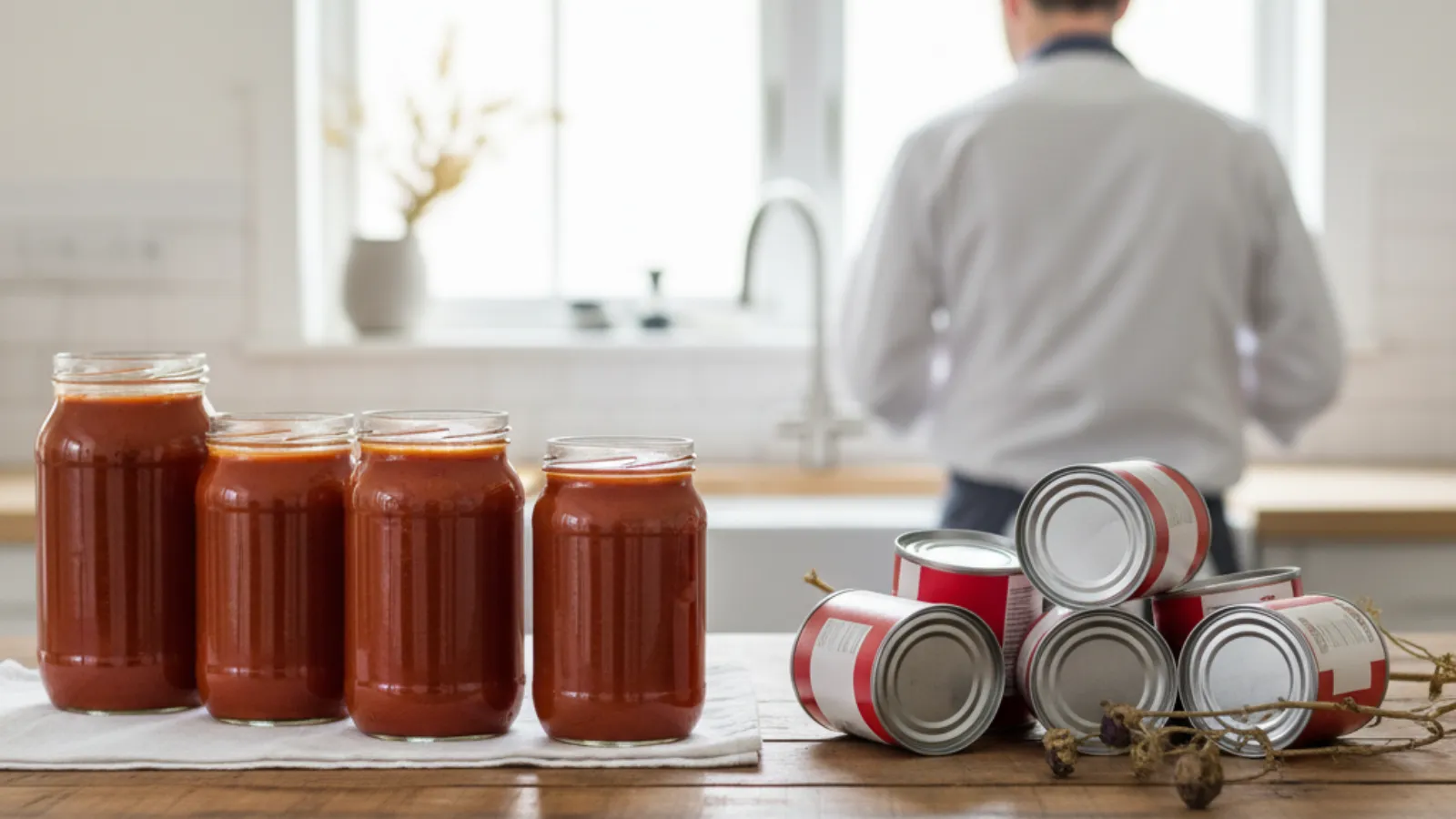
Campbell's just crowned a new billion-dollar brand. On the very same day, it told investors that sales fell again. Rao's pasta sauce has now passed $1 billion in yearly sales. Campbell's own soup business dropped 8%. That gap — a bought brand soaring while the core shrinks — is the clearest picture yet of Big Food's growth problem.
The deal that keeps paying off
In March 2024, Campbell's paid roughly $2.7 billion for Sovos Brands. The prize was Rao's, a premium Italian-style pasta sauce. At the time, Rao's was doing about $775 million in sales. Two years later it has crossed $1 billion. Rao's is now Campbell's fourth billion-dollar brand, sitting alongside Campbell's soup, Goldfish, and Pepperidge Farm.
Campbell's is not done buying. On May 4, 2026, it closed a deal to take 49% of La Regina, the family-owned Italian company that makes every jar of Rao's sauce. The price was $286 million — $146 million up front and $140 million a year later. By buying into its own supplier, Campbell's is locking up the supply chain behind its fastest-growing brand. La Regina was founded in 1972 in Scafati, near Naples, and has made Rao's sauces since 1993.
The core keeps slipping
The growth story sits on top of a weak base. On June 8, 2026, Campbell's reported third-quarter results. Net sales fell 4% to $2.4 billion. Adjusted earnings per share dropped 32% to $0.50, though that still beat the $0.48 that analysts expected. U.S. soup sales fell 8%, and the snacks unit fell 4% as crackers, salty snacks, and fresh bakery all lost ground.
Margins are under pressure too. Adjusted gross margin shrank 240 basis points to 27.7%, hit by cost inflation and tariff-related supply costs. Campbell's kept its full-year outlook in place: organic sales down 1% to 2%, adjusted operating profit down 17% to 20%, and adjusted earnings of $2.15 to $2.25 per share. In plain terms, the company expects to end the year smaller and less profitable than it started.
The growth paradox of Big Food
Campbell's is a clean snapshot of the whole industry. Older center-store brands — soup, crackers, canned goods — are losing shoppers. Premium, founder-built brands like Rao's are winning them. So the giants buy growth instead of building it. The danger is simple: you have to buy new growth faster than the old core falls away.
The math is getting harder. Rao's adds about $1 billion in sales. But soup and snacks together are far larger, and both are shrinking. One hot brand cannot yet outrun a declining base. That is why Campbell's keeps spending — first Pacific Foods for $700 million in 2017, then Sovos for $2.7 billion in 2024, now La Regina. Each deal buys time, but none of them fixes the core.
What This Means for Operators and Investors
For investors, the question is no longer whether Rao's works — it clearly does. The question is how many more Rao's-sized deals Campbell's needs to offset its falling legacy brands, and whether its balance sheet can keep funding them. For operators and founders, the message is brighter. A premium sauce brand built outside the system just became one of the most valuable things inside a 150-year-old food company. Big Food will keep paying up for brands that grow — and locking up the suppliers behind them. The next billion-dollar brand is probably one a giant has not bought yet.

Global Aseptic Packaging Market Report 2026
148.4bn litres and 344bn packs in 2025. Aseptic volumes across dairy, dairy alternatives, beverages and food in 39 markets — 2025 actuals and forecasts to 2030. Buy online and receive it within 24 hours.
More information
Global Cheese Database 2026
Production, imports, exports and consumption for 39 cheese types across 48 countries, with actuals through 2025 and forecasts to 2030. Join the waitlist for early access, pre-launch pricing and a free sample country chapter.
Get early accessStrategic Insights
📊 Analytics & Strategic Insight
The Acquisition Treadmill: Why Campbell's Keeps Buying Billion-Dollar Brands Its Core Cannot Replace
The decision most in this industry are avoiding:
👉 Most analysts read Rao's passing $1 billion as a win. The harder read is that it measures how fast the legacy core is failing. Campbell's now needs a new billion-dollar brand every few years just to stand still. Growth bought is not the same as growth built.
👉 Taking 49% of La Regina is not vertical integration for efficiency — it is defence. Campbell's is protecting the supply of its only real growth engine, because losing the maker of every Rao's jar would expose how thin the rest of the portfolio has become.
👉 The premium-acquisition playbook has a hidden ceiling. Each deal is bigger and pricier than the last — $700M, then $2.7B, now adding $286M — while the eroding base keeps growing relative to each new win.
Here's the full context:
→ 2017: Campbell's buys Pacific Foods for $700 million — its first move toward premium, better-for-you center-store brands.
→ March 2024: Campbell's completes the $2.7 billion acquisition of Sovos Brands, gaining Rao's, then doing roughly $775 million in annual sales.
→ 2024–2026: Rao's grows past $1 billion in trailing sales, becoming Campbell's fourth billion-dollar brand alongside Campbell's soup, Goldfish, and Pepperidge Farm.
→ May 4, 2026: Campbell's closes a $286 million deal for 49% of La Regina, the Italian supplier that produces all Rao's tomato-based sauces, securing supply behind its fastest grower.
→ Most recent: On June 8, 2026, Campbell's reports Q3 FY2026 net sales down 4% to $2.4 billion, U.S. soup down 8%, snacks down 4%, adjusted EPS down 32% to $0.50, and gross margin down 240 basis points.
What this means for food and beverage operators and investors:
✅ The value gap between premium and legacy brands is now structural, not cyclical. Strategic buyers will keep bidding up founder-built brands like Rao's while quietly writing down the value of canned and center-store lines. Model your portfolio on which side of that line each brand sits.
✅ Securing the maker, not just the brand, is the next M&A frontier. The La Regina stake shows that when a single supplier underpins a billion-dollar brand, the acquirer will move to lock it up. Watch for more upstream deals across sauces, snacks, and confectionery.
✅ Reaffirmed weak guidance means the deal pace will not slow. With organic sales set to fall again this year, Campbell's needs acquisitions to show growth — so watch leverage and free cash flow as the constraint on the next deal, not appetite.
3 moves you can make this week:
1️⃣ If you build a premium food brand approaching scale, benchmark against Rao's path to $1 billion. Document your growth rate, margin, and channel mix the way a strategic acquirer would value them — Big Food is paying premium multiples for exactly this profile.
2️⃣ If you invest, model Campbell's acquisition cadence against its core decline. Map deal size and price over time versus the dollar erosion in soup and snacks to judge whether bought growth is actually outrunning the shrinking base.
3️⃣ If you operate in center-store categories, treat soup's 8% drop as a planning signal. Decide now whether each legacy line gets reformulated and premiumised or managed for cash in a controlled decline — drift is the most expensive option.
Take the Next Step
📞 Need help with market entry, market research, or water source valuation?
Book a free 30-minute consultation with Akos Petri — strategic guidance across European and US markets, operator landscapes, and commercial positioning.
→ Book your free call
Zenith Consulting
Submit your food & beverage project enquiry.
Share your requirements. If there is a strong fit, we’ll come back with an indicative investment range, project timeline and recommended strategic approach.
Reviewed by Zenith Consulting’s senior food & beverage strategy team.
Related analyses
- Corporate Strategy & Portfolio
FDA Clears Salt Substitutes In 41 Cheese Standards, And The Last Sodium Push Moved The Median Just 3%
The FDA has opened 41 cheese standards to salt substitutes, with the rule effective 14 December 2026. The cheese part can still be objected to until 12 November, and the last US sodium push moved the median by 3%.
Read analysis → - Corporate Strategy & Portfolio
Large PET Fills 25,940 Million Litres Of Aseptic Drinks Against 14,500 Million In Family Cartons
Zenith's Global Aseptic Packaging Market Report 2026 puts large PET at 25,940 million litres of aseptic drinks in 2025, against 14,500 million litres in family cartons. Cartons still lead on pack count, which turns the format split into a pack size split.
Read analysis → - Corporate Strategy & Portfolio
Cheese Kingdom Shuts 84 Ukrainian Shops As Cheese Imports Hit 28,300 Tonnes, More Than Three Times Exports
Ukraine's largest specialist cheese chain has stopped trading at all 84 of its shops after 13 years. Cheese imports reached 28,300 tonnes in the seven months to July, more than three times exports, and European cheese now sits in ordinary supermarkets.
Read analysis →
Share it with your peers
Pass this analysis to colleagues who track the food and beverage market.
Zenith Market Intel
Need a specific food or beverage market report?
Tell us which category, region or question would be useful for your team.
Sister Publication
Also follow our Water Dispense Market Intelligence
Category analyses, operator briefings, and investor signals across the global water dispense market.