Coffee Just Posted Its Biggest One-Day Jump in 26 Years. Big Food Is Building Pure-Play Coffee Giants Right Into the Storm
Arabica coffee posted its biggest one-day gain since 2000 this month, then gave much of it back within days. The whipsaw lands just as Keurig Dr Pepper and Nestlé reshape around pure-play coffee, concentrating their bet on the one input they cannot control.
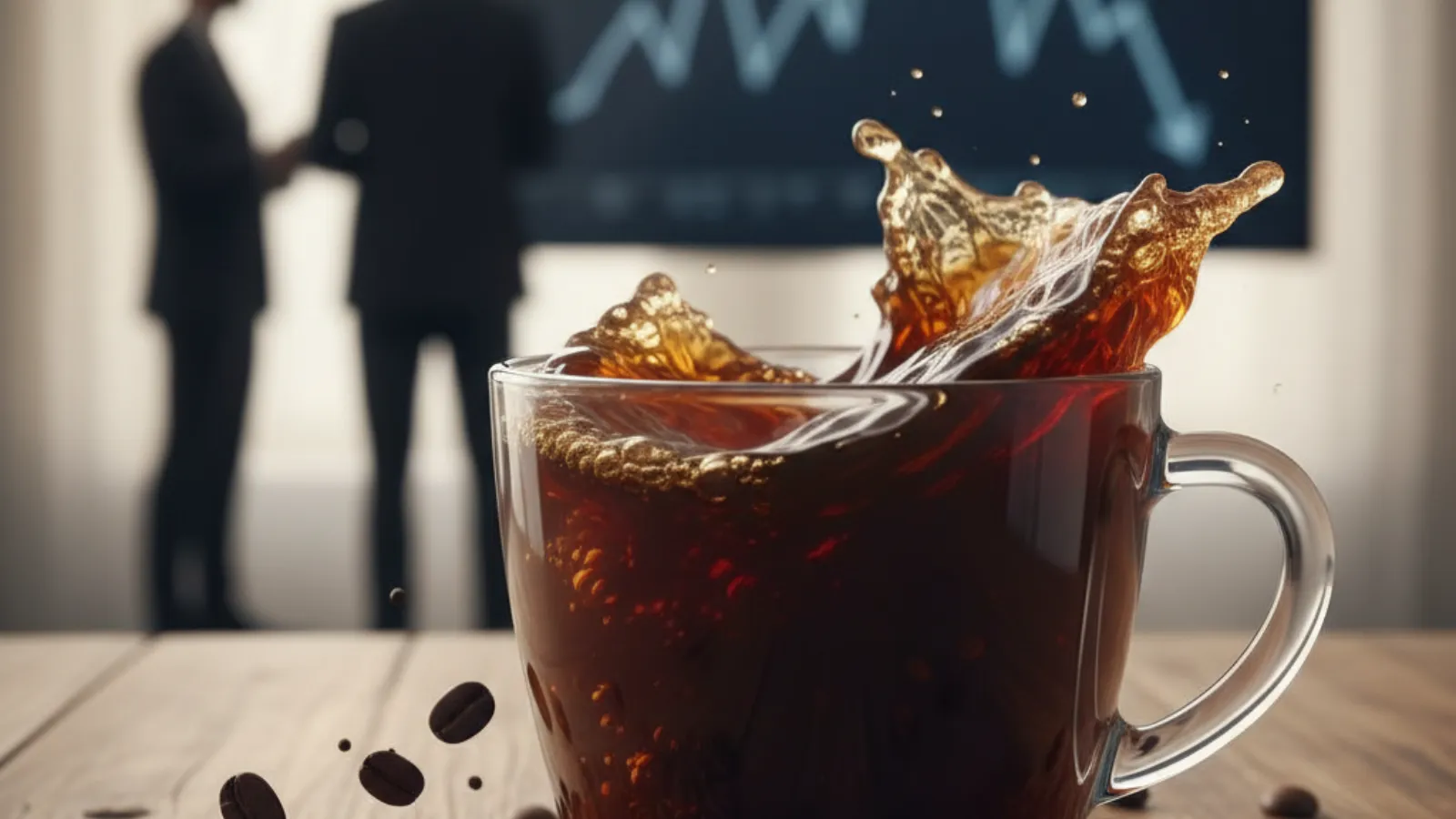
Coffee traders have not seen a week like this in a generation. On one day this month, Arabica coffee futures in New York jumped about 16% in a single session. That was the biggest one-day gain for coffee since 2000. Two days later, the price had handed much of it back.
The September contract added close to 49 cents a pound in that one surge. Arabica pushed past $3.50 a pound for the first time since January, up roughly 25% from its June low, then whipsawed straight back down. For anyone who buys, roasts or sells coffee, the swing was brutal.
What lit the fuse
Several things hit at once. Brazil, the world's largest coffee grower, is running late on its harvest. Only about half the crop was picked by early July, behind the usual pace, because rain kept slowing the work. Coffee held in exchange warehouses sits near multi-year lows, so every supply scare gets amplified.
Then came the weather fear. US forecasters put a high chance on a strong El Niño forming, which could disrupt the rains Brazil's trees need to flower in September and October. That flowering shapes next year's crop. On top of that, fresh US tariffs on Brazilian goods have started to reroute coffee trade, pushing American buyers toward other origins. Traders who had bet on falling prices rushed to cover their positions, and the buying fed on itself.
The timing could not be stranger
Here is what makes this week matter beyond the trading desk. The biggest names in the industry are busy turning coffee into a standalone business. Keurig Dr Pepper is buying JDE Peet's and plans to split into two companies, one of them a pure coffee giant it calls Global Coffee Co. Nestlé, under a new chief executive, is selling its water and ice cream arms and refocusing the group around a few core categories, with coffee at the centre.
A pure-play company is a focused bet. That is the whole point of a spin-off. It is also the danger. A standalone coffee company lives or dies by the price of green coffee, with no other categories to cushion a shock like this one.
Diversified players can absorb it. Focused ones cannot
Nestlé today spreads its risk across pet care, nutrition, confectionery and more. A bad coffee year hurts, but the rest of the group carries the load. Split coffee out into its own listed company and that cushion is gone. The new coffee business will show investors the full force of every price swing, quarter by quarter. Concentration is what makes a pure-play attractive when times are good and dangerous when the input market goes wild.
This is why hedging and pricing power now decide winners from losers. A roaster that locked in supply months ago, and can pass higher costs to shoppers, rides out the storm. One that buys hand to mouth on thin margins gets crushed. Origin matters too. With tariffs reshuffling Brazilian flows, buyers who source from many countries have more room to move than those tied to one.
What it means for operators and investors
The danger here is volatility. Prices are high, but the bigger problem is how fast they move. A whipsaw week wrecks planning and hedging far more than a steady high price ever would. Green-coffee stocks are thin, the weather risk is real, and the trade map is being redrawn by tariffs. That mix points to more big swings ahead.
For investors weighing the coming wave of pure-play coffee stocks, the question is simple. Does the company have the hedging discipline, the pricing power and the origin spread to survive a market that can move 16% in a day? For operators in any commodity-heavy category, coffee is a live warning. The moment you concentrate your business on one input, you inherit that input's worst days. Build the shock absorbers before you need them.
Global Aseptic Packaging Market Report 2026
148.4bn litres and 344bn packs in 2025. Aseptic volumes across dairy, dairy alternatives, beverages and food in 39 markets — 2025 actuals and forecasts to 2030. Buy online and receive it within 24 hours.
More information
Global Cheese Database 2026
Production, imports, exports and consumption for 39 cheese types across 48 countries, with actuals through 2025 and forecasts to 2030. Join the waitlist for early access, pre-launch pricing and a free sample country chapter.
Get early accessStrategic Insights
📊 Analytics & Strategic Insight
A pure-play is a focused bet on the one thing you cannot control
The decision most in this industry are avoiding:
👉 Watching volatility more closely than the headline price. Most coverage fixates on how high coffee has climbed. The sharper worry is the speed of the moves. A market that swings 16% in a day breaks hedges and budgets that a steady high price would survive.
👉 Seeing a coffee spin-off as risk concentration, as much as sharper focus. A pure-play coffee company is sold as a cleaner story. It also strips away the other categories that quietly absorb a bad bean year.
👉 Treating hedging and origin spread as core strategy. In a calm market these look like back-office detail. In a week like this they decide who keeps their margin and who issues a profit warning.
Here's the full context:
→ 2024 to 2025: Cocoa and coffee both spike as poor weather in West Africa and Brazil tightens global supply and squeezes chocolate and coffee makers.
→ August 2025: Keurig Dr Pepper agrees to buy JDE Peet's and lays out a plan to split into a beverage company and a pure coffee company.
→ Early 2026: Nestlé's new leadership starts selling water and ice cream to refocus the group around coffee, pet care and nutrition.
→ Early July 2026: Brazil's harvest runs late, exchange stocks sit near multi-year lows, and forecasters warn of a strong El Niño.
→ Most recent: Arabica posts its biggest one-day jump since 2000, around 16%, then gives much of it back within two sessions.
What this means for food and beverage operators and investors:
✅ Volatility rewards the prepared. Roasters with locked-in supply and real pricing power will ride this out. Those buying hand to mouth on thin margins will not.
✅ Pure-play coffee stocks carry pure-play coffee risk. The coming wave of standalone coffee companies will show investors every price swing, with no other business to soften it.
✅ Tariffs are redrawing the coffee map. Buyers tied to a single origin have less room to move than those who can shift between countries.
3 moves you can make this week:
1️⃣ Check your input concentration. Add up how much of your cost base rides on one commodity or one country. If a single line can swing your whole year, you are running a pure-play whether you meant to or not.
2️⃣ Pressure-test your hedge book. Model a 15% overnight jump in your biggest input. If your margin cannot take it, extend cover or renegotiate pricing terms now, while you still have a choice.
3️⃣ Map a second origin. Line up at least one alternative source for your most exposed ingredient, so a tariff or a drought in one country does not set your cost base on its own.
Take the Next Step
🧭 Got a project in mind?
Send us your thoughts and project requirements and our consultants will build you a project plan.
→ Start a project enquiry
Zenith Consulting
Submit your food & beverage project enquiry.
Share your requirements. If there is a strong fit, we’ll come back with an indicative investment range, project timeline and recommended strategic approach.
Reviewed by Zenith Consulting’s senior food & beverage strategy team.
Related analyses
- Corporate Strategy & Portfolio
Greatview Faces Hong Kong Delisting: The Aseptic Carton Maker Sold 11.7 Billion Packs Against 30 To 34 Billion Of Chinese Capacity
Greatview Aseptic Packaging has asked for a review of the Hong Kong exchange decision to cancel its listing. The carton maker sold 11.7 billion packs in 2025 against Chinese plants Zenith rates at roughly 30 to 34 billion.
Read analysis → - Corporate Strategy & Portfolio
Oji Liquid Pak's USD 110 Million Vietnam Aseptic Carton Plant Adds 8 Billion Packs To A Region Already At 62 Billion
Oji Liquid Pak broke ground on a USD 110 million aseptic carton material plant in Dong Nai, rated at up to 8 billion packs a year from 2028. Zenith puts Vietnam at 10,358.7 million aseptic packs in 2025, and South East Asia already holds about 62 billion packs of documented converting capacity.
Read analysis → - Corporate Strategy & Portfolio
Spain Swaps HDPE Milk Bottles For Aseptic PET: 170 Million Litres Left And Only Three Aseptic PET Dairy Lines
Spanish UHT milk in large HDPE bottles fell from 307 million litres in 2020 to 170 million in 2025, and Zenith's model takes it to 88.5 million by 2030. Aseptic PET is taking the volume, and only three aseptic PET dairy lines have been documented in the country.
Read analysis →
Share it with your peers
Pass this analysis to colleagues who track the food and beverage market.
Zenith Market Intel
Need a specific food or beverage market report?
Tell us which category, region or question would be useful for your team.
Sister Publication
Also follow our Water Dispense Market Intelligence
Category analyses, operator briefings, and investor signals across the global water dispense market.