Mars Is Closing a Nature's Bakery Plant While the Brand Booms: Inside Big Food's Manufacturing Footprint Reset
Mars is shutting a Nature's Bakery plant and cutting 345 jobs, a year after opening a new $237 million factory for the same brand. The reason is not weak sales. It is a bigger company deciding it now runs more plants than it needs.
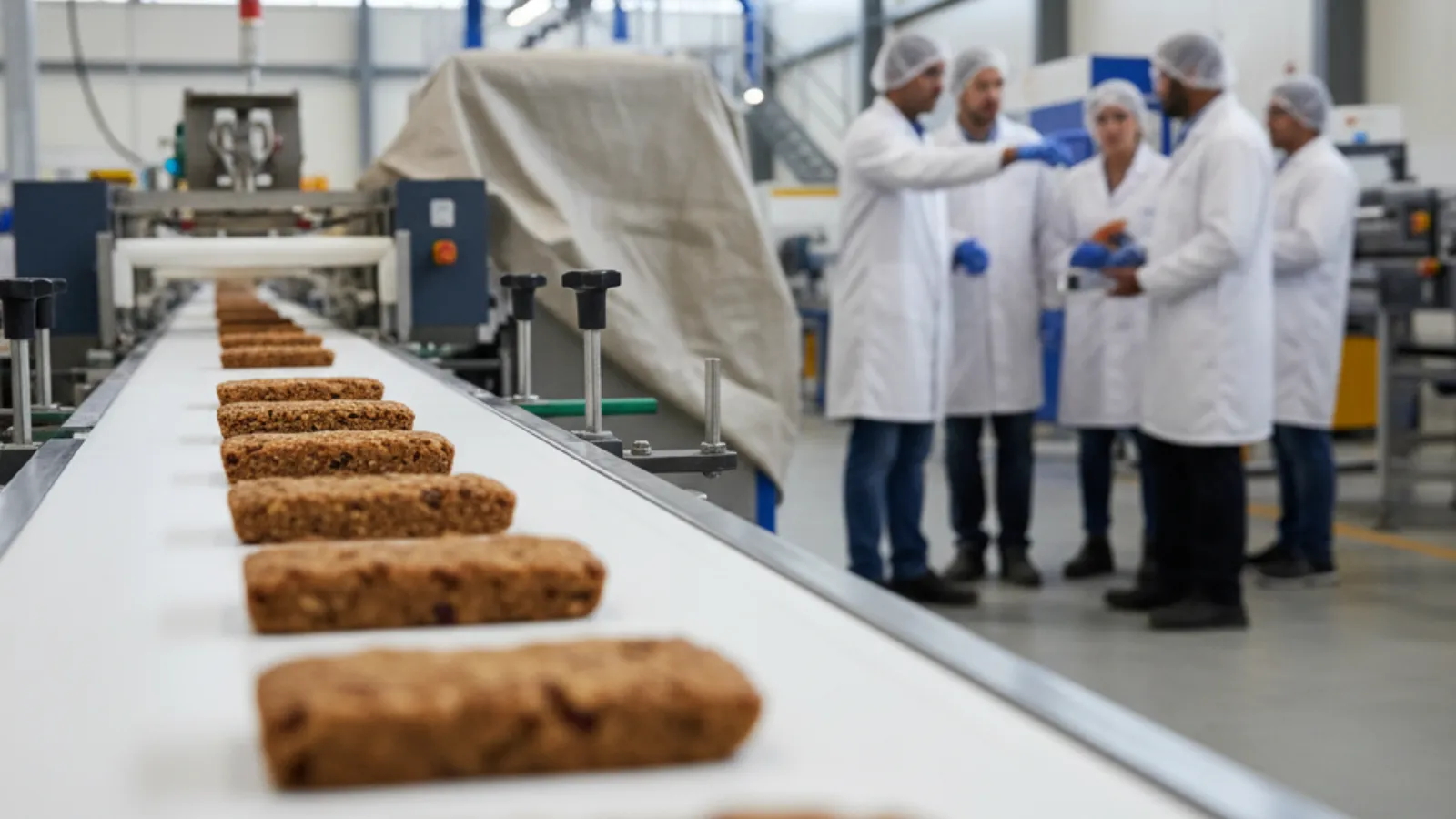
One of Mars's fastest-growing snack brands just lost a factory. Sales are not the problem. The company simply has more plants than it needs.
What Mars is actually doing
Mars is closing a Nature's Bakery production plant in Hazelwood, Missouri. The plan came to light through a WARN notice filed with the state, the legal warning companies must give before large layoffs. The move will cut 345 jobs. The plant keeps running through 2026 and shuts for good in September 2027, with layoffs staged in September 2026 and February 2027.
Mars is not closing this plant because the brand is failing. It is closing it because it now runs more factories than it needs. The work does not disappear. Nature's Bakery is moving that production to its other sites in Salt Lake City, Utah, and Carson City, Nevada. Mars said affected staff can apply for other roles inside Nature's Bakery and the wider group.
A strong brand still lost a plant
Here is the part that looks odd at first. Nature's Bakery is a winner. Mars bought the soft snack-bar maker in 2020, just after buying Kind, and turned it into one of the fastest-growing bar brands in the US. To keep up with demand, Mars spent $237 million on a new Salt Lake City plant that opened around a year ago.
A brand does not usually gain a $237 million factory and lose another one in the same breath. That is the signal worth reading. When a healthy brand still sheds a plant, the story sits in the shape of the network. The product is doing fine.
The Kellanova effect
The math changed when Mars agreed to buy Kellanova, the maker of Pringles, Cheez-It and RXBar, for close to $36 billion. That deal turned Mars into one of the largest snacking companies on earth, sitting alongside Nutella, M&M's, Snickers, Kind and now a wall of cereal and salty snacks.
A bigger company does not need more plants. It needs the right ones. When two large snack businesses combine, they inherit overlapping bar lines, overlapping warehouses and overlapping capacity. The savings that justify a mega-deal come from closing that overlap. A newer, more efficient plant like Salt Lake City absorbs volume, and an older site like Hazelwood carries the cut.
Why even the winners are shrinking their footprint
Mars is far from alone here. Across food and beverage, the biggest names are trimming their factory networks rather than expanding them. Shoppers have traded down for longer than the industry expected, input costs stayed high, and health scrutiny is pushing money toward reformulation instead of new lines. The response is the same everywhere: fewer, better plants running fuller.
Closing a plant is a permanent decision, and permanent decisions signal conviction. A company does not spend to reopen a factory a year later. When Mars picks a hard, lasting cut over a temporary pause, it is telling the market it expects the pressure on margins to last.
What operators and investors should take from it
The lesson is to judge a closure by where the work goes. If volume shifts to a newer, cheaper plant, the company is getting stronger. If volume simply vanishes, that is a demand warning. The two look almost identical in a press release and mean opposite things.
For the winners, the next phase of growth is about taking cost out rather than adding steel. Every large food merger of the past two years carries plants that will be rationalised within three to four years, and Mars is showing how that plays out in practice. The gate closing in Hazelwood is not a sign that snack bars are cooling. It is a sign that scale, once bought, has to be squeezed for every point of margin it can give.
Global Aseptic Packaging Market Report 2026
148.4bn litres and 344bn packs in 2025. Aseptic volumes across dairy, dairy alternatives, beverages and food in 39 markets — 2025 actuals and forecasts to 2030. Buy online and receive it within 24 hours.
More information
Global Cheese Database 2026
Production, imports, exports and consumption for 39 cheese types across 48 countries, with actuals through 2025 and forecasts to 2030. Join the waitlist for early access, pre-launch pricing and a free sample country chapter.
Get early accessStrategic Insights
📊 Analytics & Strategic Insight
Even a booming brand can lose a factory
The decision most in this industry are avoiding:
👉 Treating a shiny new plant as proof you need every old one. Capacity you do not run full is a cost. It only feels like a safety net. Mars kept the $237m site and cut the one that no longer earned its keep.
👉 Waiting for a merger to settle before cutting overlap. The savings that pay for a big deal come from acting early. Letting two networks run side by side for years just burns the cash.
👉 Reading every closure as a demand warning. Network consolidation and falling sales look the same on a WARN notice and mean opposite things. The tell is where the volume goes next.
Here's the full context:
→ 2020: Mars buys Nature's Bakery, months after buying Kind, betting on the snack-bar boom.
→ 2024-2025: Mars agrees to buy Kellanova (Pringles, Cheez-It, RXBar) for close to $36bn, becoming one of the world's largest snacking companies.
→ 2025: Mars opens a $237m Nature's Bakery plant in Salt Lake City to keep up with surging demand.
→ Mid-2026: Big Food broadly trims its manufacturing footprint as softer volumes, high costs and health scrutiny bite.
→ Most recent: On 8 July 2026, a WARN notice shows Mars will close its Hazelwood, Missouri plant, cutting 345 jobs, with production moving to Salt Lake City and Carson City.
What this means for food and beverage operators and investors:
✅ Judge a closure by where the work goes. If output shifts to newer, cheaper plants, that is strength. If it simply disappears, that is a demand problem. Do not confuse the two.
✅ Expect more of this from recent acquirers. Every large food merger of the past two years carries overlapping plants that get rationalised within three to four years.
✅ Capital is moving to fewer, better sites. The winners are concentrating volume to lift margins rather than spreading it thin across an inherited network.
3 moves you can make this week:
1️⃣ Map your own plant overlap. Rank your sites by cost per unit and how full they run, then flag the one a rival would close first.
2️⃣ Model consolidation before you need it. Run the numbers on moving volume to your best plants, including freight, severance and the cost of lost flexibility.
3️⃣ Watch WARN notices in your category. They are a free, early signal of where competitors are cutting capacity and where talent is about to come loose.
Take the Next Step
🧭 Facing a decision like this in your own category?
Describe it in a few lines. Selected enquiries receive an initial strategic assessment: direction, likely scope and indicative investment range.
→ Start a project enquiry
Zenith Consulting
Submit your food & beverage project enquiry.
Share your requirements. If there is a strong fit, we’ll come back with an indicative investment range, project timeline and recommended strategic approach.
Reviewed by Zenith Consulting’s senior food & beverage strategy team.
Related analyses
- Corporate Strategy & Portfolio
Oji Liquid Pak's USD 110 Million Vietnam Aseptic Carton Plant Adds 8 Billion Packs To A Region Already At 62 Billion
Oji Liquid Pak broke ground on a USD 110 million aseptic carton material plant in Dong Nai, rated at up to 8 billion packs a year from 2028. Zenith puts Vietnam at 10,358.7 million aseptic packs in 2025, and South East Asia already holds about 62 billion packs of documented converting capacity.
Read analysis → - Corporate Strategy & Portfolio
Spain Swaps HDPE Milk Bottles For Aseptic PET: 170 Million Litres Left And Only Three Aseptic PET Dairy Lines
Spanish UHT milk in large HDPE bottles fell from 307 million litres in 2020 to 170 million in 2025, and Zenith's model takes it to 88.5 million by 2030. Aseptic PET is taking the volume, and only three aseptic PET dairy lines have been documented in the country.
Read analysis → - Corporate Strategy & Portfolio
US Parmesan Output Jumps 25.9% While Cheddar Slips: Italian Cheese Takes Four In Five Pounds Of Growth
USDA figures published on 5 October show US Parmesan output up 25.9% in August while cheddar fell 0.9%. Italian types have supplied nearly four in every five pounds of US cheese growth so far in 2026.
Read analysis →
Share it with your peers
Pass this analysis to colleagues who track the food and beverage market.
Zenith Market Intel
Need a specific food or beverage market report?
Tell us which category, region or question would be useful for your team.
Sister Publication
Also follow our Water Dispense Market Intelligence
Category analyses, operator briefings, and investor signals across the global water dispense market.