Nestlé Made Cocoa-Free Chocolate Permanent. Now Barry Callebaut and Cargill Sell It to Everyone
The world's biggest food company just put cocoa-free chocolate on shelves for good, and the two largest chocolate suppliers now sell it too. Here is why Big Chocolate is engineering cocoa out of its own product, and what that means for the cocoa supply chain.
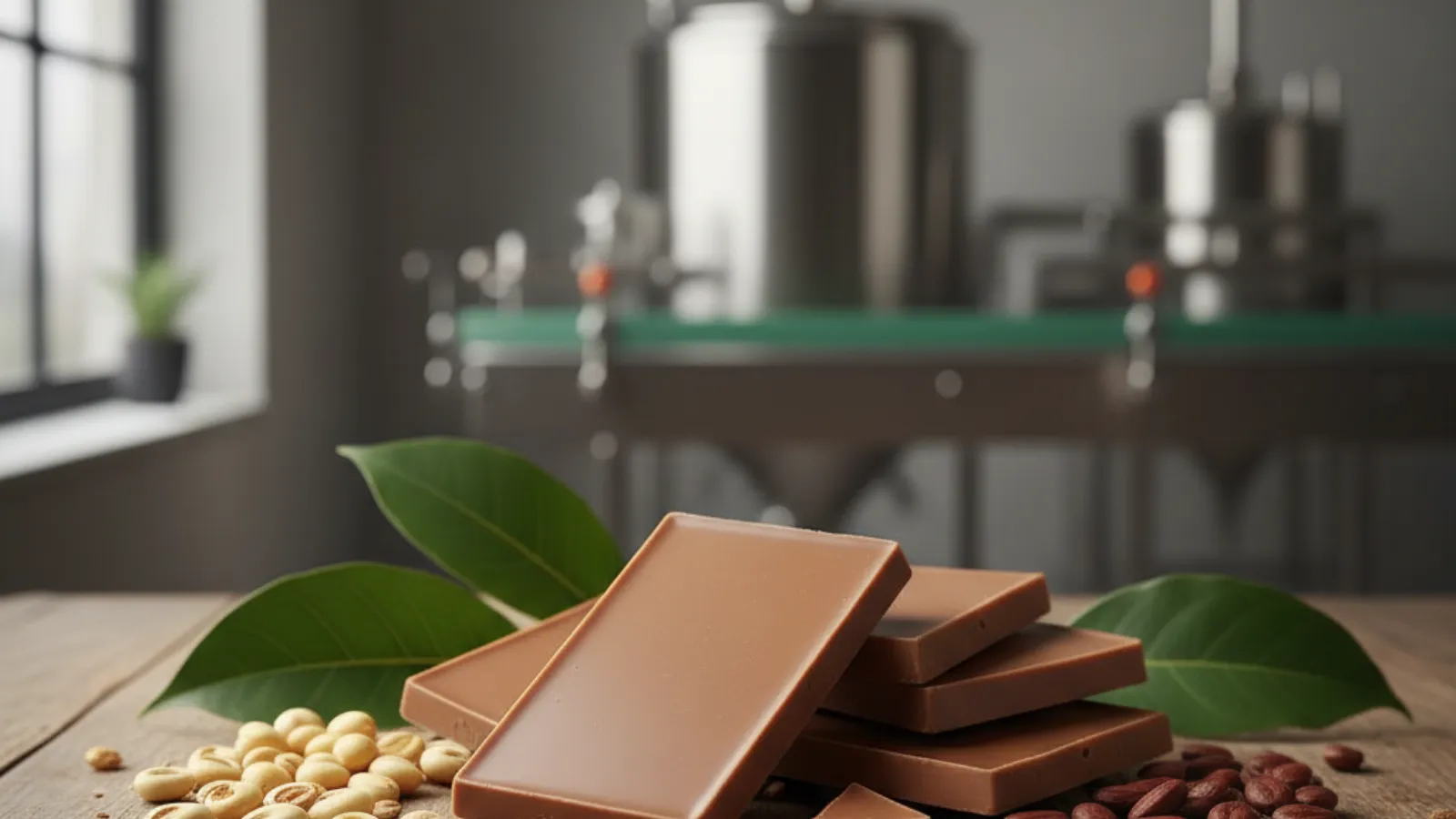
For the first time, the world's biggest food company is selling chocolate that has no cocoa in it. Nestlé's new Choco Crossies Snack Vibes launched in Germany this year as a permanent line, not a one-off test. It is made from sunflower and grape seeds. And Nestlé is far from alone.
The cocoa price whiplash that started this
Cocoa put chocolate makers through two brutal years. Prices hit a record above $11,000 a tonne at the end of 2024. Then they crashed. By early 2026, New York cocoa had fallen to about $2,846 a tonne, roughly 65% below the peak, before bouncing back near $4,262 by late May. The market flipped from shortage to glut. The International Cocoa Organization logged a 75,000-tonne surplus for the 2024/25 season.
Grinders, brands and retailers all felt it. Margins tightened, hedging desks scrambled, and some products shrank in size to protect their price points.
Even with prices down two-thirds, the swings themselves are the real problem. You cannot plan a factory or set a shelf price around a raw material that doubles and halves inside a year. So the biggest names are building a way out.
What cocoa-free actually means
The star ingredient is ChoViva, made by German startup Planet A Foods. It puts sunflower and grape seeds through fermentation and roasting to copy the taste and feel of cocoa. It uses up to 94% less water and makes 80% less carbon dioxide than cocoa. ChoViva is already in more than 120 products across 10 countries.
Nestlé built a permanent range on it and aimed it at Gen Z. Mars is running a pilot in German Rewe stores through October. Lindt has used ChoViva before, and it has also put money into Food Brewer, a Swiss firm growing cocoa from cell cultures.
The real shift is upstream
The launches grab the headlines, but the supplier moves change the market. Barry Callebaut, the largest business-to-business chocolate maker in the world, signed a long-term deal to scale and sell ChoViva through its network. Cargill, another giant, launched its own cocoa-free line, NextCoa, with Voyage Foods in North America this year.
When the two biggest chocolate suppliers both sell a cocoa substitute, the technology stops being a niche and becomes a catalogue item. Any mid-size manufacturer can now buy cocoa-free chocolate the same way it buys the real thing. The message across Big Chocolate is the same: keep cocoa, but stop depending on it alone.
Who wins and who loses
For chocolate brands, cocoa-free works as a hedge against wild prices and a lower-carbon story for younger buyers. It also gives them a backup source when harvests fail. That is a strong hand to hold.
For cocoa farmers in Ghana and Côte d'Ivoire, it is a warning. Their crop has already crashed in price. A lasting move to substitutes would cut demand on top of that. For a company like Ferrero, which built an edge on clean, traceable cocoa ahead of EU deforestation rules, cocoa-free chips away at the value of that work.
There is a catch. Rules limit what these products can be called. In many markets you cannot put the word chocolate on the pack. Taste is still the gate. And if cocoa stays cheap, the cost case for switching gets weaker.
What to watch next
The signal to track is adoption, not press releases. Watch whether Nestlé and Mars push their cocoa-free lines beyond Germany. Watch how much volume Barry Callebaut and Cargill actually move. And watch the labelling fights, because the right to use the word chocolate will decide how big this gets.
Cocoa-free will not replace cocoa. It does not have to. Even a small, steady slice of substitute products hands chocolate makers a lever they control the next time the cocoa market goes wild.

Global Aseptic Packaging Market Report 2026
148.4bn litres and 344bn packs in 2025. Aseptic volumes across dairy, dairy alternatives, beverages and food in 39 markets — 2025 actuals and forecasts to 2030. Buy online and receive it within 24 hours.
More information
Global Cheese Database 2026
Production, imports, exports and consumption for 39 cheese types across 48 countries, with actuals through 2025 and forecasts to 2030. Join the waitlist for early access, pre-launch pricing and a free sample country chapter.
Get early accessStrategic Insights
📊 Analytics & Strategic Insight
Big Chocolate is buying an insurance policy against its own raw material
The decision most in this industry are avoiding:
👉 The real question is not whether cocoa-free tastes as good. It is how much raw-material price risk your business is willing to carry into the next cycle. Most boards still frame this as a taste test when it is a risk-management call.
👉 The moat is moving. Traceable-cocoa sourcing was the differentiator that separated the disciplined players from the rest. Substitutes shift the contest to brand and flavour, where the sourcing advantage counts for less.
👉 Cheap cocoa today is a trap. A soft price weakens the switching case at the exact moment you should be building the option, so the tooling is ready before the next spike hits.
Here's the full context:
→ 2024: Cocoa hits a record above $11,000 a tonne, squeezing every chocolate profit line.
→ Early 2026: Price crashes to about $2,846 a tonne, roughly 65% below the peak, as the market flips to surplus.
→ March 2026: Nestlé launches a permanent cocoa-free Choco Crossies line in Germany using ChoViva, a Big Food first.
→ May 2026: Cargill launches NextCoa with Voyage Foods, while Barry Callebaut scales ChoViva through its global network.
→ Most recent: July 2026 trade coverage frames an alt-cocoa boom across Mars, Nestlé, Lindt, Barry Callebaut and Mondelez.
What this means for food and beverage operators and investors:
✅ Treat cocoa-free as a hedge line, not a fad. Its value is steadier costs and a second source, even if it never becomes the main product.
✅ Watch the suppliers, not the brands. Barry Callebaut and Cargill selling substitutes off the shelf is the real adoption curve, because it reaches thousands of mid-size makers at once.
✅ Price the label risk. The naming rules on what counts as chocolate will set the ceiling for how far this can go in each market.
3 moves you can make this week:
1️⃣ Stress-test your cocoa exposure. Model your margin at $3,000 and again at $10,000 a tonne, and mark where it breaks.
2️⃣ Call your ingredient supplier. Ask what cocoa-free or blended options they can ship now, and at what cost against real cocoa.
3️⃣ Check the labelling rules. Confirm what you can legally claim in your top three markets before you build a product around it.
Take the Next Step
🧭 Got a project in mind?
Send us your thoughts and project requirements and our consultants will build you a project plan.
→ Start a project enquiry
Zenith Consulting
Submit your food & beverage project enquiry.
Share your requirements. If there is a strong fit, we’ll come back with an indicative investment range, project timeline and recommended strategic approach.
Reviewed by Zenith Consulting’s senior food & beverage strategy team.
Related analyses
- Corporate Strategy & Portfolio
Oji Liquid Pak's USD 110 Million Vietnam Aseptic Carton Plant Adds 8 Billion Packs To A Region Already At 62 Billion
Oji Liquid Pak broke ground on a USD 110 million aseptic carton material plant in Dong Nai, rated at up to 8 billion packs a year from 2028. Zenith puts Vietnam at 10,358.7 million aseptic packs in 2025, and South East Asia already holds about 62 billion packs of documented converting capacity.
Read analysis → - Corporate Strategy & Portfolio
Spain Swaps HDPE Milk Bottles For Aseptic PET: 170 Million Litres Left And Only Three Aseptic PET Dairy Lines
Spanish UHT milk in large HDPE bottles fell from 307 million litres in 2020 to 170 million in 2025, and Zenith's model takes it to 88.5 million by 2030. Aseptic PET is taking the volume, and only three aseptic PET dairy lines have been documented in the country.
Read analysis → - Corporate Strategy & Portfolio
US Parmesan Output Jumps 25.9% While Cheddar Slips: Italian Cheese Takes Four In Five Pounds Of Growth
USDA figures published on 5 October show US Parmesan output up 25.9% in August while cheddar fell 0.9%. Italian types have supplied nearly four in every five pounds of US cheese growth so far in 2026.
Read analysis →
Share it with your peers
Pass this analysis to colleagues who track the food and beverage market.
Zenith Market Intel
Need a specific food or beverage market report?
Tell us which category, region or question would be useful for your team.
Sister Publication
Also follow our Water Dispense Market Intelligence
Category analyses, operator briefings, and investor signals across the global water dispense market.