KFC Is Rolling Its Own Drinks Brand Into 3,000 Stores: The Quiet Threat to Coca-Cola and PepsiCo's Fountain Empire
KFC is rolling its own Kwench drinks brand into roughly 3,000 stores this year, backed by £38 million of UK and Ireland investment. Restaurant chains are turning into beverage companies, and that changes the away-from-home math for Coca-Cola, PepsiCo and Keurig Dr Pepper.
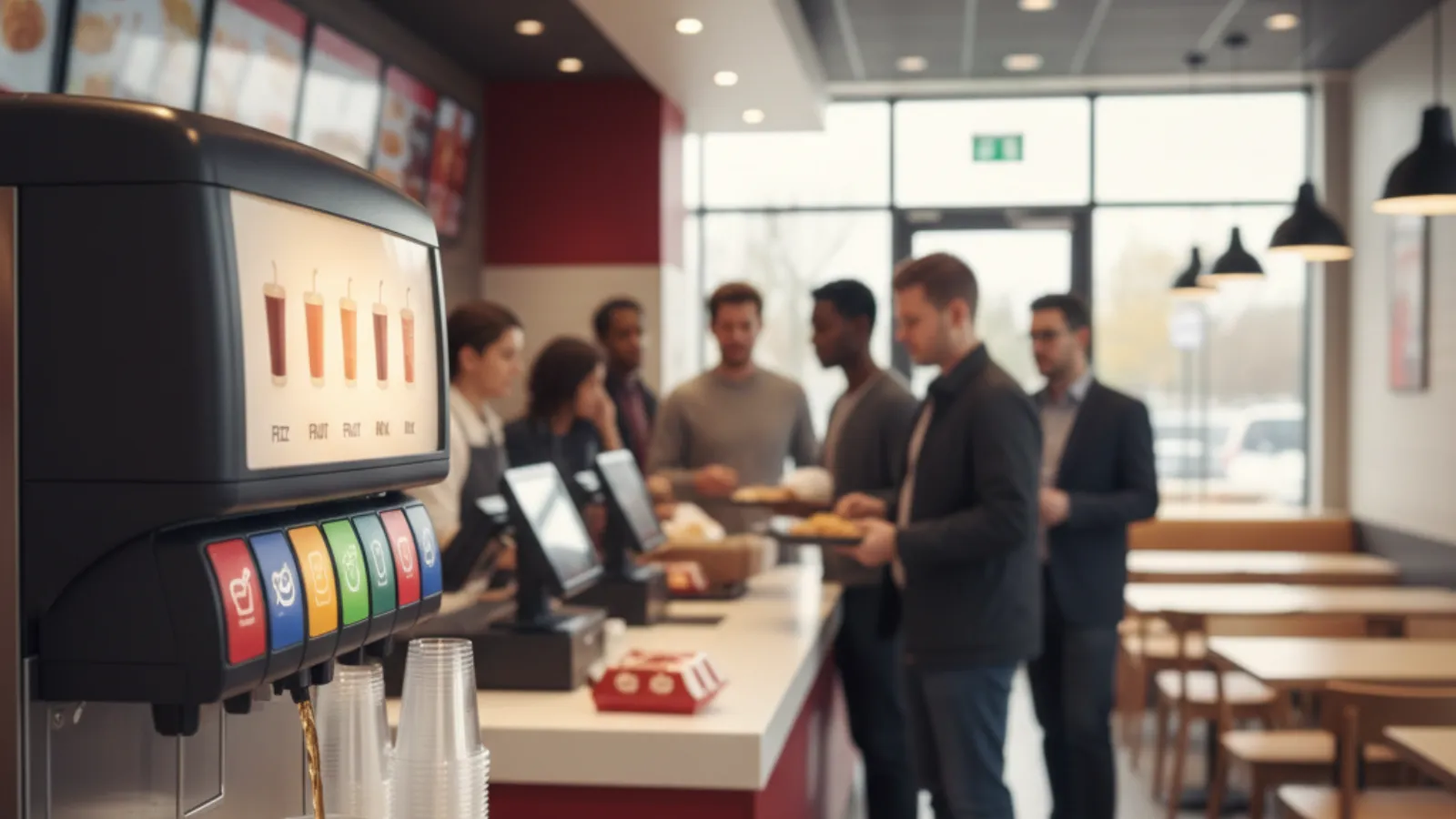
About half of the people who tried KFC's new drinks said they would come back just for the drinks. That finding came from a 38-store pilot in the UK and Ireland. It changed how the world's biggest chicken chain thinks about its business. On 15 June, KFC launched its largest brand overhaul in decades, with a new menu and a new store design. The quiet headline sat in the drinks section.
Kwench, KFC's own drinks brand, is heading to roughly 3,000 stores this year. Yum! Brands told investors as much in its February earnings call. Last month KFC went further. Kwench moved from pilot to permanent menu in Australia and Canada, and the first US version will appear at a new-format store in McKinney, Texas, later this year.
What KFC is actually building
Kwench is a sub-brand. It sells 11 freshly made drinks across four lines: Boba Refreshers, Krunch Shakes, Sparkling Lemonades and Iced Coffees. In stores like Liverpool and Rome it gets its own counter and its own branding, almost a shop within the shop. KFC's global chief concept officer Christophe Poirier is direct about the ambition: "The plan for Kwench is to become an additional global growth engine."
The money tells the same story. In the UK and Ireland alone, franchisees and the company plan to spend £38 million (about $45 million) fitting stores with Kwench counters, milkshake machines and dedicated fixtures. Franchisees do not put £38 million into a side project. They put it into things they expect to pay back.
The numbers behind the bet
The pilot data explains the confidence. Kwench sales more than doubled between the start of the pilot and the decision to scale it. More than 90 percent of users said they "loved" the drinks. About half said they would visit KFC just for them.
Now add KFC's scale. The chain ended 2025 with 33,897 restaurants in more than 100 countries. KFC opens a new restaurant roughly every 3.5 hours. It also produces 51 percent of Yum!'s divisional operating profit. A drinks line that lifts the average ticket by even a small amount compounds across that base very quickly. So what? A chicken chain just became one of the fastest-scaling beverage launches of 2026.
Every big chain wants the cup
Every large US chain is now building a drinks line it owns. Taco Bell opened 31 Live Mas Cafe locations in 2025. McDonald's is running a 500-store test that serves CosMc's drinks inside regular restaurants. Chick-fil-A rebuilt a Georgia site as Daybright, a venue dedicated to beverages. In June, the Wall Street Journal reported that McDonald's wants custom sodas, refreshers and Red Bull energy drinks on its menus, which tests the edges of its 70-year Coca-Cola relationship.
McDonald's CEO Chris Kempczinski has called beverages a $100 billion category with better margins than much of the food menu. That sentence explains the whole trend. Specialty drinks are cheap to make and pull in younger customers who pay full price. The chains have done the math.
Why Coca-Cola and PepsiCo should read this twice
PepsiCo owned KFC, Taco Bell and Pizza Hut until 1997, when it spun them off into what became Yum! Brands. The pouring relationship survived the split and became the template for the whole industry. For decades, the fountain contract made restaurants the beverage industry's cheapest route to the customer. The supplier got locked-in volume and millions of daily samplings. The restaurant got a rebate and a drinks menu it never had to think about.
That trade is starting to break down. Kwench drinks are made in the store, branded by KFC and sold at specialty prices. Every Krunch Shake that replaces a fountain cola shifts revenue from the supplier's brand to the chain's. The pouring contract may stay signed while the branded share of each ticket quietly shrinks. The customer is turning into a competitor.
Set this next to last week's news, where Marriott moved about 10,000 hotels from PepsiCo to Coca-Cola, and the away-from-home picture sharpens. Suppliers are fighting harder than ever over the contracts that remain, while the biggest food-service customers build drinks brands of their own.
For beverage makers, the cola volume inside pouring deals still looks safe. The growth categories do not. Refreshers, shakes, iced coffee and energy are exactly where the chains want their own labels, and exactly where Coca-Cola, PepsiCo and Keurig Dr Pepper have been betting their next decade. For ingredient and equipment suppliers, every house platform is a new customer. The big chains have decided the next profit pool is in the cup, and they intend to own it. Anyone selling drinks through restaurants should plan for a channel that competes back.
Global Aseptic Packaging Market Report 2026
148.4bn litres and 344bn packs in 2025. Aseptic volumes across dairy, dairy alternatives, beverages and food in 39 markets — 2025 actuals and forecasts to 2030. Buy online and receive it within 24 hours.
More information
Global Cheese Database 2026
Production, imports, exports and consumption for 39 cheese types across 48 countries, with actuals through 2025 and forecasts to 2030. Join the waitlist for early access, pre-launch pricing and a free sample country chapter.
Get early accessStrategic Insights
📊 Analytics & Strategic Insight
The away-from-home channel is closing at both ends
The decision most in this industry are avoiding:
👉 Mix erosion never shows up at renewal time. A pouring contract can stay in force while the branded share of every ticket falls. Suppliers track contract wins and losses closely. Almost none track what share of each restaurant ticket their brands still hold, because that number is uncomfortable.
👉 Supplying the house brand may beat fighting it. Someone sells the boba, the syrups, the dairy bases and the machines behind every Kwench counter. Most branded suppliers avoid that choice because it feels like surrender. The first mover will treat it as a second revenue line with locked-in demand.
👉 Pilot discipline is the hidden lesson. KFC scaled Kwench on hard pilot evidence: doubled sales and stated revisit intent. Most food and beverage launches still scale on internal enthusiasm. Writing a kill threshold before launch is the decision most operators keep postponing.
Here's the full context:
→ 1997: PepsiCo spins off KFC, Taco Bell and Pizza Hut into what becomes Yum! Brands. The pouring deal survives and sets the model for supplier and restaurant relationships worldwide.
→ 2023: McDonald's launches CosMc's, a standalone drinks-led format, testing whether a burger chain can run a beverage brand of its own.
→ 2024 to 2025: Taco Bell opens 31 Live Mas Cafe locations. McDonald's folds CosMc's drinks into a 500-store in-restaurant test. Chick-fil-A opens Daybright, a dedicated drinks venue, in Georgia. KFC pilots Kwench in 38 UK and Ireland stores.
→ February 2026: Yum! Brands tells investors Kwench is heading to roughly 3,000 KFC stores this year, backed by £38 million of planned UK and Ireland investment from franchisees and the company.
→ Most recent: KFC makes Kwench permanent in Australia and Canada inside its 15 June global relaunch, and the Wall Street Journal reports McDonald's wants custom sodas, refreshers and Red Bull energy drinks on its menus.
What this means for food and beverage operators and investors:
✅ Pouring contracts need new clauses. Category definitions written for cola wars do not cover boba, shakes or house refreshers. Suppliers renewing food-service deals should define exclusivity against sub-brands explicitly, and price the account differently if they cannot get it.
✅ The picks-and-shovels position is wide open. Syrups, dairy bases, coffee, boba pearls and dispensing equipment for house platforms form a growth market that barely existed at scale three years ago. Ingredient makers can win from this trend without owning a single consumer brand.
✅ Beverage attach is becoming a QSR valuation input. KFC's pilot showed drinks alone can drive visits. Investors comparing restaurant chains should start tracking drinks mix and margin per ticket the way they track digital mix today.
3 moves you can make this week:
1️⃣ Score your away-from-home accounts. Pull your top food-service customers and answer one question for each: are they building a house beverage or snack brand? Flag the five biggest by revenue and reread those contracts first.
2️⃣ Write the supply pitch before you need it. Decide now which ingredients, formats or equipment you could sell into a customer's house drinks line, and at what margin. Having the answer ready beats improvising after their pilot succeeds.
3️⃣ Copy the pilot math. Before your next launch, put the scale threshold and the kill threshold in writing, the way KFC did with doubled sales and revisit intent. Enthusiasm is a bad substitute for a number.
Take the Next Step
🧾 Go deeper on a category.
See our latest deep-dive reports, like our THC beverage report and our China market report.
→ See the latest reports
Zenith Consulting
Submit your food & beverage project enquiry.
Share your requirements. If there is a strong fit, we’ll come back with an indicative investment range, project timeline and recommended strategic approach.
Reviewed by Zenith Consulting’s senior food & beverage strategy team.
Related analyses
- Corporate Strategy & Portfolio
Oji Liquid Pak's USD 110 Million Vietnam Aseptic Carton Plant Adds 8 Billion Packs To A Region Already At 62 Billion
Oji Liquid Pak broke ground on a USD 110 million aseptic carton material plant in Dong Nai, rated at up to 8 billion packs a year from 2028. Zenith puts Vietnam at 10,358.7 million aseptic packs in 2025, and South East Asia already holds about 62 billion packs of documented converting capacity.
Read analysis → - Corporate Strategy & Portfolio
Spain Swaps HDPE Milk Bottles For Aseptic PET: 170 Million Litres Left And Only Three Aseptic PET Dairy Lines
Spanish UHT milk in large HDPE bottles fell from 307 million litres in 2020 to 170 million in 2025, and Zenith's model takes it to 88.5 million by 2030. Aseptic PET is taking the volume, and only three aseptic PET dairy lines have been documented in the country.
Read analysis → - Corporate Strategy & Portfolio
US Parmesan Output Jumps 25.9% While Cheddar Slips: Italian Cheese Takes Four In Five Pounds Of Growth
USDA figures published on 5 October show US Parmesan output up 25.9% in August while cheddar fell 0.9%. Italian types have supplied nearly four in every five pounds of US cheese growth so far in 2026.
Read analysis →
Share it with your peers
Pass this analysis to colleagues who track the food and beverage market.
Zenith Market Intel
Need a specific food or beverage market report?
Tell us which category, region or question would be useful for your team.
Sister Publication
Also follow our Water Dispense Market Intelligence
Category analyses, operator briefings, and investor signals across the global water dispense market.