Olipop Hires Electrolit Chief Christian Patiño Webb as CEO: Inside the Fight for Cold Shelf Space Against PepsiCo and Coca-Cola
Olipop sells close to $500m of soda from about 50,000 shops, while PepsiCo's Poppi grew shelf sales more than 45% to almost $745m. Its new chief executive spent four years growing Electrolit on Keurig Dr Pepper's delivery network, and that hire tells you where the next fight in prebiotic soda gets won.
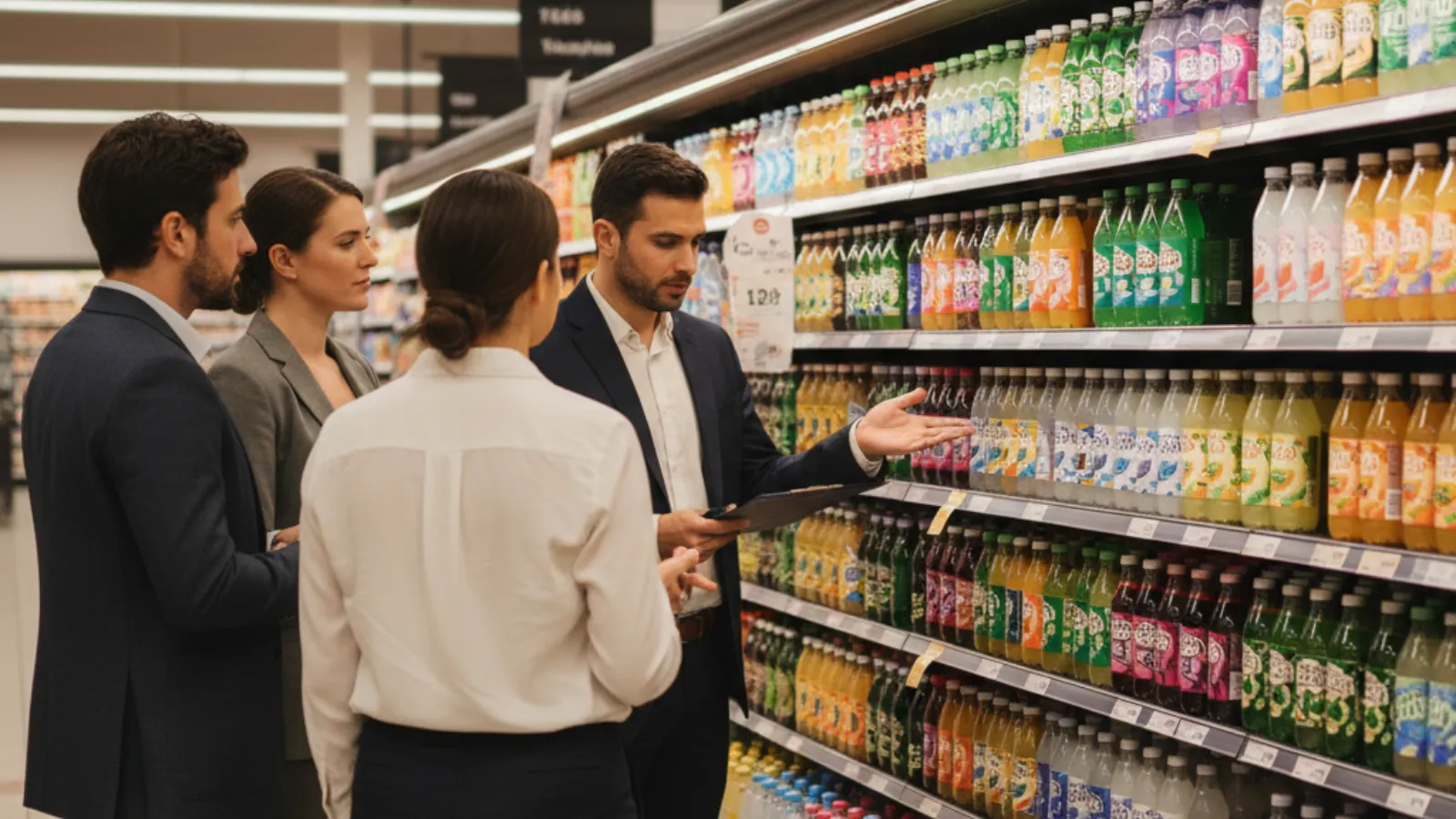
Olipop sells close to half a billion dollars of soda from about 50,000 shops. Its founder has said that drinks brands doing $200m to $250m are usually in 80,000 to 100,000 shops. Put those two numbers side by side and you get this week's story. Olipop is under-shelved by choice. Today it handed the chief executive job to a man whose last brand solved that exact problem.
Christian Patiño Webb starts at Olipop today. He spent four years running Electrolit, the Mexican sports drink brand. Ben Goodwin, who co-founded Olipop in 2018, becomes executive chairman and head of new products. The founder keeps the recipes. Someone else gets the trucks.
The growth left is shelf space
Olipop guided to roughly $500m of sales in 2025. That is up from about $400m in 2024 and about $200m in 2023. Sales doubled, then grew by a quarter. The brand sits in more than 50,000 shops, and by some counts over 65,000. Either way it sells far more per shop than a normal drinks brand does.
That is a good problem to have. The next leg of growth is cold shelf space in places Olipop barely reaches. Fridges at petrol stations. Corner shops. Gyms. Work canteens. Single cans bought cold and drunk on the spot. Olipop has only just started there, with slim cans in Wawa, Casey's, Kum & Go and Circle K.
What Electrolit proved about trucks
Electrolit grew more than ten times in five years without owning a delivery network. It rented one. In October 2023 Keurig Dr Pepper signed a long term deal with Electrolit. It agreed to sell, deliver and stock the brand across most of its own US areas. Electrolit was already past $400m of US shelf sales at that point. It sat in the top five of a sports drink segment worth about $11bn at retail.
Cold single serve is the hardest shelf in drinks. It needs daily delivery, chilled space and a fight for every fridge door. Grocery is a weekly pallet drop. A forecourt fridge is a daily job. Very few brands under $1bn can pay for that on their own.
That is why this hire is worth reading closely. Patiño Webb ran a brand that bought its way onto the cold shelf. He did it by signing with a big soda company rather than building a fleet.
Olipop is the last big independent in the aisle it created
PepsiCo completed its purchase of Poppi in May 2025. The headline price was $1.95bn. PepsiCo put the net cost near $1.65bn after roughly $300m of tax benefits, plus an earn-out. In 2025 Poppi shelf sales grew more than 45% to almost $745m, on PepsiCo's own numbers.
Coca-Cola launched Simply Pop in early 2025. PepsiCo then put fibre into Pepsi itself and moved that onto shelves in early 2026. Both of Olipop's main rivals now sit inside a big soda system. Each one comes with its own trucks, fridges and shelf deals. Olipop has to buy or borrow all three.
What the founder's new title tells you
Founders who hand over the top job and keep the product usually do it for one of two reasons. Either the company is about to be pushed much harder, or it is being readied for sale. Both look the same from the outside, and both need an operator in the chair. Olipop raised $50m in February 2025 at a price of $1.85bn, led by J.P. Morgan Private Capital's growth arm. Backers at that level want a path to a number.
What to watch next
The thing to watch is whether Olipop copies Electrolit. The fastest way to get cold cans into 100,000 fridges is to sign the deal Electrolit signed. Keurig Dr Pepper already carries Electrolit, and it already knows the man now running Olipop. Coca-Cola and PepsiCo are closed doors, because both of them sell a rival. For anyone building a drinks brand, the lesson is plain. Recipes get copied within a year. Cold shelf space takes a decade to build, or one signature to rent.
Global Aseptic Packaging Market Report 2026
148.4bn litres and 344bn packs in 2025. Aseptic volumes across dairy, dairy alternatives, beverages and food in 39 markets — 2025 actuals and forecasts to 2030. Buy online and receive it within 24 hours.
More information
Global Cheese Database 2026
Production, imports, exports and consumption for 39 cheese types across 48 countries, with actuals through 2025 and forecasts to 2030. Join the waitlist for early access, pre-launch pricing and a free sample country chapter.
Get early accessStrategic Insights
📊 Analytics & Strategic Insight
In drinks, the recipe is the cheap part
The decision most in this industry are avoiding:
👉 Renting a delivery network is a real plan, and boards keep reading it as defeat. Electrolit grew more than ten times in five years on a rented one. Owning trucks is slow and costs a fortune.
👉 Past $300m of sales, doors beat flavours. Most brand teams keep paying for the next flavour. It is the work they enjoy and the work they can control.
👉 The founder is usually the wrong person for the door fight. Moving them sideways early is kinder and quicker than waiting through two flat years first.
Here's the full context:
→ 2018: Ben Goodwin and David Lester start Olipop and build a fizzy drink around fibre.
→ 2023: Keurig Dr Pepper agrees to sell and deliver Electrolit across most of its US areas.
→ 2025: PepsiCo completes its $1.95bn purchase of Poppi in May. Coca-Cola launches Simply Pop.
→ 2025: Olipop raises $50m in February at $1.85bn and guides to about $500m of sales.
→ Most recent: Christian Patiño Webb takes the Olipop chief executive job on 17 August 2026.
What this means for food and beverage operators and investors:
✅ Score your brand on sales per shop rather than total sales. A brand in 50,000 shops doing $500m is a different asset from one in 100,000 shops doing the same.
✅ Treat a delivery deal as an asset with a price on it. It has a term, a cost per case and a switching bill. Put all three in the plan.
✅ Watch who a company hires, because it tells you the plan before the plan is public. A brand chief means the next fight is share of mind. A delivery chief means the next fight is shelf.
3 moves you can make this week:
1️⃣ Work out your sales per shop. Divide sales by live shops. Compare it with two rivals. The gap between you is your shelf upside.
2️⃣ Count every fridge door you hold. Cold single serve is a separate business from the grocery pallet. Most firms cannot count theirs.
3️⃣ Price the rent option. Ask one large delivery partner what they would charge to carry you. Compare it with your own cost per case.
Take the Next Step
🧭 Facing a decision like this in your own category?
Describe it in a few lines. Selected enquiries receive an initial strategic assessment: direction, likely scope and indicative investment range.
→ Start a project enquiry
Zenith Consulting
Submit your food & beverage project enquiry.
Share your requirements. If there is a strong fit, we’ll come back with an indicative investment range, project timeline and recommended strategic approach.
Reviewed by Zenith Consulting’s senior food & beverage strategy team.
Related analyses
- Corporate Strategy & Portfolio
Oji Liquid Pak's USD 110 Million Vietnam Aseptic Carton Plant Adds 8 Billion Packs To A Region Already At 62 Billion
Oji Liquid Pak broke ground on a USD 110 million aseptic carton material plant in Dong Nai, rated at up to 8 billion packs a year from 2028. Zenith puts Vietnam at 10,358.7 million aseptic packs in 2025, and South East Asia already holds about 62 billion packs of documented converting capacity.
Read analysis → - Corporate Strategy & Portfolio
Spain Swaps HDPE Milk Bottles For Aseptic PET: 170 Million Litres Left And Only Three Aseptic PET Dairy Lines
Spanish UHT milk in large HDPE bottles fell from 307 million litres in 2020 to 170 million in 2025, and Zenith's model takes it to 88.5 million by 2030. Aseptic PET is taking the volume, and only three aseptic PET dairy lines have been documented in the country.
Read analysis → - Corporate Strategy & Portfolio
US Parmesan Output Jumps 25.9% While Cheddar Slips: Italian Cheese Takes Four In Five Pounds Of Growth
USDA figures published on 5 October show US Parmesan output up 25.9% in August while cheddar fell 0.9%. Italian types have supplied nearly four in every five pounds of US cheese growth so far in 2026.
Read analysis →
Share it with your peers
Pass this analysis to colleagues who track the food and beverage market.
Zenith Market Intel
Need a specific food or beverage market report?
Tell us which category, region or question would be useful for your team.
Sister Publication
Also follow our Water Dispense Market Intelligence
Category analyses, operator briefings, and investor signals across the global water dispense market.