Keurig Dr Pepper's $18 Billion Coffee Bet: Why Splitting Into Two Companies Is the Biggest Beverage Gamble of 2026
Keurig Dr Pepper closed its $18.3 billion acquisition of JDE Peet's on April 1, 2026 — and immediately set a clock running to split itself into two independent publicly traded companies by year-end. Here's what operators, investors, and brand partners need to know before the separation lands.
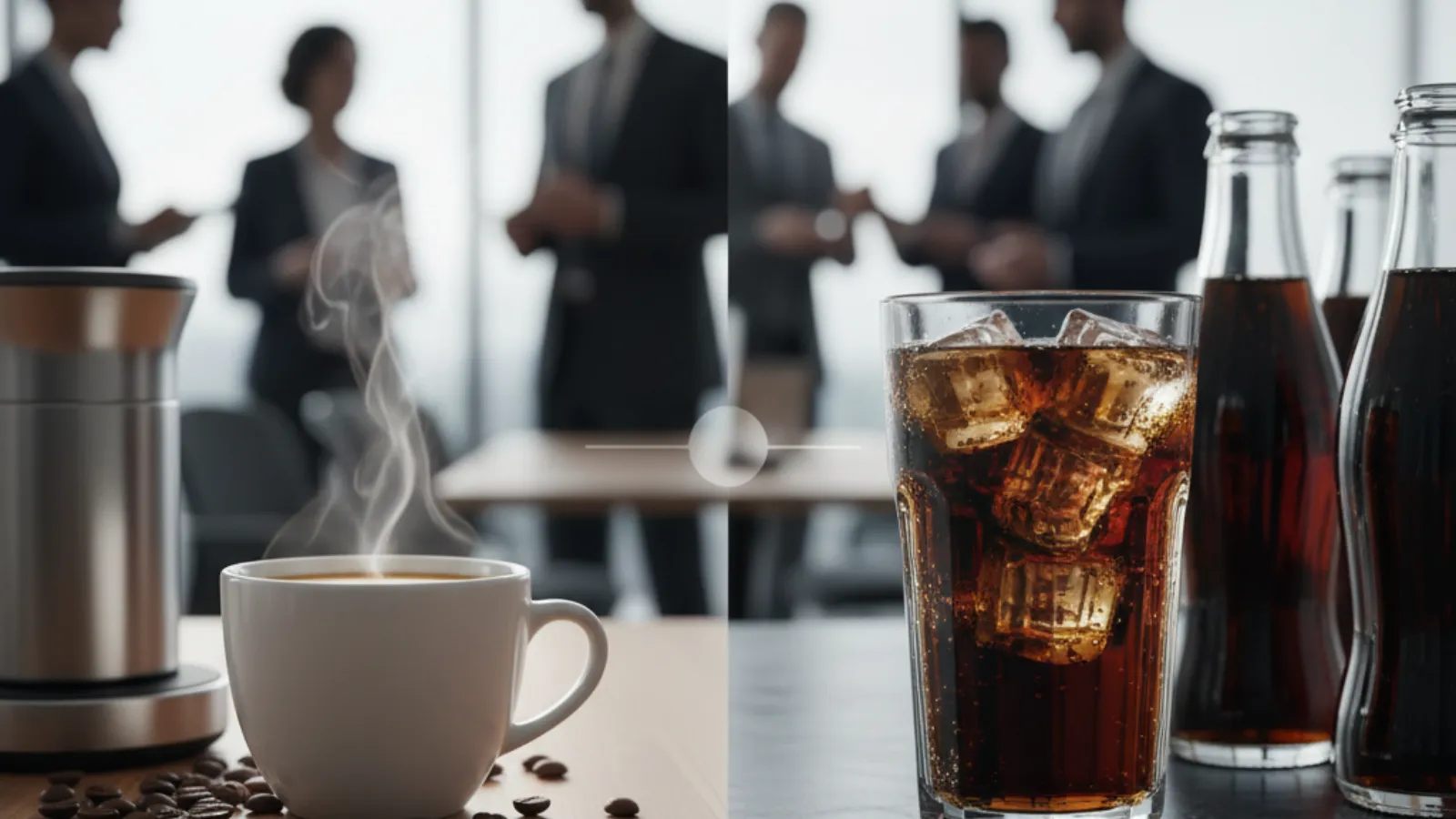
One company. Eighteen billion dollars. And a plan to split itself in two before the year is out. When Keurig Dr Pepper closed its acquisition of JDE Peet's on April 1, 2026, it did not just buy one of the world's largest coffee businesses — it set a countdown to dismantling itself and rebuilding as two separate, US-listed publicly traded companies. For investors and operators watching the global beverage sector, this is the restructuring that redraws the map.
What KDP Actually Bought
JDE Peet's is not a niche acquisition. It owns Jacobs, Douwe Egberts, Tassimo, L'OR, Senseo, and Peet's Coffee — brands spanning out-of-home, retail, and premium single-serve across Europe, Asia-Pacific, and North America. KDP paid approximately $18.3 billion for its 96.22% stake, funded through roughly $9 billion in new long-term debt, $8.5 billion in equity capital, and the assumption of around $5 billion in existing JDE Peet's bonds. That puts projected combined net leverage at 4.5 times EBITDA — a significant load that the planned separation is partly designed to address.
JDE Peet's shares stopped trading on Euronext Amsterdam on April 29, 2026, and were delisted the following day — ending a five-year run as a European public company that had valued the business at around €15.6 billion at its 2021 IPO.
Two Companies, Two Strategies
The plan is to separate through a tax-free spin-off into two distinct businesses. Global Coffee Co will combine KDP's Keurig hardware and Green Mountain brand portfolio with the full JDE Peet's stable — creating one of the largest global coffee platforms by brand reach and geographic footprint. Beverage Co retains Dr Pepper, 7UP, Snapple, Canada Dry, and the rest of KDP's North American refreshment portfolio.
Rafael Oliveira, who led JDE Peet's as CEO, has been named CEO of the future Global Coffee Co and now sits on KDP's Executive Leadership Team reporting to Tim Cofer. Cofer, KDP's current CEO, will lead Beverage Co after separation. The separation is targeting operational readiness by year-end 2026, though the actual timing will hinge on achieving appropriate leverage levels at each company and supportive market conditions.
The Strategic Logic
Coffee and carbonated soft drinks are structurally different businesses. Coffee is driven by origin sourcing, single-serve hardware ecosystems, and café-quality premiumisation. CSD is driven by retail execution, brand equity, and distribution density. Investors value them on different multiples, analysts cover them through different lenses, and management teams run them on different cadences.
KDP's argument is that combining the businesses long enough to execute the JDE Peet's acquisition — and then cleanly separating — is the fastest route to unlocking value in both. The $200 million in identified supply chain savings during the integration period supports the near-term financial case. The long-term case is that two focused pure-play companies will trade at higher multiples than a single sprawling conglomerate. That argument has real precedent: the Kraft Heinz separation from Mondelez in 2012 created two companies with sharper identities, even if execution in both cases proved harder than the initial logic suggested.
What the Market Should Watch
The primary risk is leverage. At 4.5 times EBITDA with a still-undefined separation timeline, KDP is carrying more debt than either standalone entity will be comfortable holding independently. Commodity exposure compounds this: arabica prices surged over 80% between 2023 and early 2025 before partially retreating, adding earnings volatility to an already complex balance sheet at the worst possible moment.
The opportunity is scale. Global Coffee Co, once fully constituted, would compete directly with Nestlé's Nescafé, Nespresso, and Starbucks RTD portfolio — and with JAB Holdings' remaining assets — for dominance in both at-home and out-of-home coffee globally. Per-capita coffee consumption continues to rise across Asia-Pacific, and premium single-serve is displacing traditional filter coffee in most developed markets. That structural tailwind gives Global Coffee Co a credible growth story independent of execution on the separation itself.
For Beverage Co investors, the sharper question is whether Dr Pepper and its portfolio can sustain momentum as a pure-play North American refreshment business — or whether the stripped-down structure surfaces valuation gaps the conglomerate structure had been masking.
The beverages sector is sorting itself by focus. Across ingredients, dairy, and now coffee, the pattern in 2026 is identical: conglomerates are splitting, simplifying, and doubling down on what they know best. KDP's twin-company bet is the boldest version of that trade this year. The execution window is tight, the debt load is real, and the outcome — for operators, brand partners, and investors across the entire global coffee supply chain — will define a significant part of the industry's next three years.
Global Aseptic Packaging Market Report 2026
148.4bn litres and 344bn packs in 2025. Aseptic volumes across dairy, dairy alternatives, beverages and food in 39 markets — 2025 actuals and forecasts to 2030. Buy online and receive it within 24 hours.
More information
Global Cheese Database 2026
Production, imports, exports and consumption for 39 cheese types across 48 countries, with actuals through 2025 and forecasts to 2030. Join the waitlist for early access, pre-launch pricing and a free sample country chapter.
Get early accessStrategic Insights
📊 Analytics & Strategic Insight
KDP's Split Creates Two High-Stakes Pure-Plays — and a Leverage Problem Neither Company Can Ignore
The decision most in this industry are avoiding:
👉 Most beverage executives underestimate how hard it is to run combined coffee and CSD under one roof. KDP's willingness to admit this structurally — not just operationally — by planning a full separation is unusual and revealing. It signals that the conglomerate model in beverages has reached its practical ceiling.
👉 The $200 million supply chain saving is a distraction from the real story. At 4.5x leverage, both future entities will face commodity cycles and macro headwinds with thin coverage ratios. The deal's success will be judged on deleveraging speed, not synergy headlines.
👉 The year-end 2026 separation target is aspirational, not contractual. Investors pricing this as a firm date are taking on execution risk that KDP's own language — "targeting operational readiness" and "supportive market conditions" — explicitly qualifies. A slip to H1 2027 is entirely plausible.
Here's the full context:
→ 2015: JAB Holdings begins aggressive coffee M&A, assembling Keurig, Douwe Egberts, Peet's, and Jacobs into what becomes JDE Peet's — redefining the scale possible in global branded coffee.
→ 2021: JDE Peet's lists on Euronext Amsterdam at ~€15.6 billion valuation, giving JAB a partial exit and giving the market its first public read on consolidated coffee platform economics.
→ 2025: KDP announces intention to acquire JDE Peet's and subsequently separate into two independent companies — signalling that the coffee-plus-CSD conglomerate structure has hit its strategic limit.
→ February 2026: KDP updates its financing plan — $9B new long-term debt, $8.5B equity, ~$5B assumed JDE bonds — projecting 4.5x net leverage post-close and naming Rafael Oliveira CEO of the future Global Coffee Co.
→ Most recent: Acquisition closes April 1, 2026. JDE Peet's delists from Euronext Amsterdam on April 30. Integration workstreams begin with separation target of year-end 2026.
What this means for food and beverage operators and investors:
✅ Coffee supply chain partners should prepare for dual counterparty management. Post-separation, Global Coffee Co and Beverage Co will make purchasing, volume, and logistics decisions independently. Co-manufacturers, packaging suppliers, and logistics partners with exposure to KDP today should map which entity holds each relationship — and begin scenario planning now.
✅ Premium single-serve and out-of-home coffee competitors have a window. While Global Coffee Co is in integration mode, it cannot deploy its full combined resources against category rivals. Brands competing with Jacobs, L'OR, or Peet's Coffee in retail or foodservice should use the next 12–18 months to deepen trade relationships and build switching costs before the new entity stabilises.
✅ PE and strategic investors should model Beverage Co on a standalone basis now. The separation will surface clean EBITDA, leverage, and free cash flow data for a North American-focused refreshment business that has not existed as an independent entity before. Early modelling will identify whether the stripped structure is a buying opportunity or a valuation trap.
3 moves you can make this week:
1️⃣ Map your coffee-side brand exposure. If any part of your distribution, co-manufacturing, or retail programme touches JDE Peet's brands, document the relationship now and begin preparing for two separate commercial counterparties once the spin completes.
2️⃣ Build a leverage bridge from KDP's Q1 2026 filings. Download KDP's most recent earnings materials and model the pace of deleveraging from 4.5x toward separation-ready levels. The trajectory will tell you whether year-end 2026 is real — or whether the market is pricing in a timetable management cannot deliver.
3️⃣ Watch arabica pricing as the leading indicator for Global Coffee Co's standalone credibility. Coffee commodity pricing will be the single largest earnings lever for Global Coffee Co in its first year of independence. Any sustained arabica rally above $3 per pound will test management's margin guidance before the company has even begun independent trading.
Zenith Consulting
Submit your food & beverage project enquiry.
Share your requirements. If there is a strong fit, we’ll come back with an indicative investment range, project timeline and recommended strategic approach.
Reviewed by Zenith Consulting’s senior food & beverage strategy team.
Related analyses
- Corporate Strategy & Portfolio
Oji Liquid Pak's USD 110 Million Vietnam Aseptic Carton Plant Adds 8 Billion Packs To A Region Already At 62 Billion
Oji Liquid Pak broke ground on a USD 110 million aseptic carton material plant in Dong Nai, rated at up to 8 billion packs a year from 2028. Zenith puts Vietnam at 10,358.7 million aseptic packs in 2025, and South East Asia already holds about 62 billion packs of documented converting capacity.
Read analysis → - Corporate Strategy & Portfolio
Spain Swaps HDPE Milk Bottles For Aseptic PET: 170 Million Litres Left And Only Three Aseptic PET Dairy Lines
Spanish UHT milk in large HDPE bottles fell from 307 million litres in 2020 to 170 million in 2025, and Zenith's model takes it to 88.5 million by 2030. Aseptic PET is taking the volume, and only three aseptic PET dairy lines have been documented in the country.
Read analysis → - Corporate Strategy & Portfolio
US Parmesan Output Jumps 25.9% While Cheddar Slips: Italian Cheese Takes Four In Five Pounds Of Growth
USDA figures published on 5 October show US Parmesan output up 25.9% in August while cheddar fell 0.9%. Italian types have supplied nearly four in every five pounds of US cheese growth so far in 2026.
Read analysis →
Share it with your peers
Pass this analysis to colleagues who track the food and beverage market.
Zenith Market Intel
Need a specific food or beverage market report?
Tell us which category, region or question would be useful for your team.
Sister Publication
Also follow our Water Dispense Market Intelligence
Category analyses, operator briefings, and investor signals across the global water dispense market.