From Hellmann's to Gummies: Unilever's $1.2B Grüns Acquisition Is the Clearest Signal FMCG Capital Has Left Food
Unilever sold $42.7 billion worth of food brands to McCormick on March 31, 2026 — and five days later agreed to pay $1.2 billion for a gummy supplement brand founded in 2023. The deal isn't a distraction; it's the sharpest signal yet that FMCG capital has structurally reallocated from food to wellness.
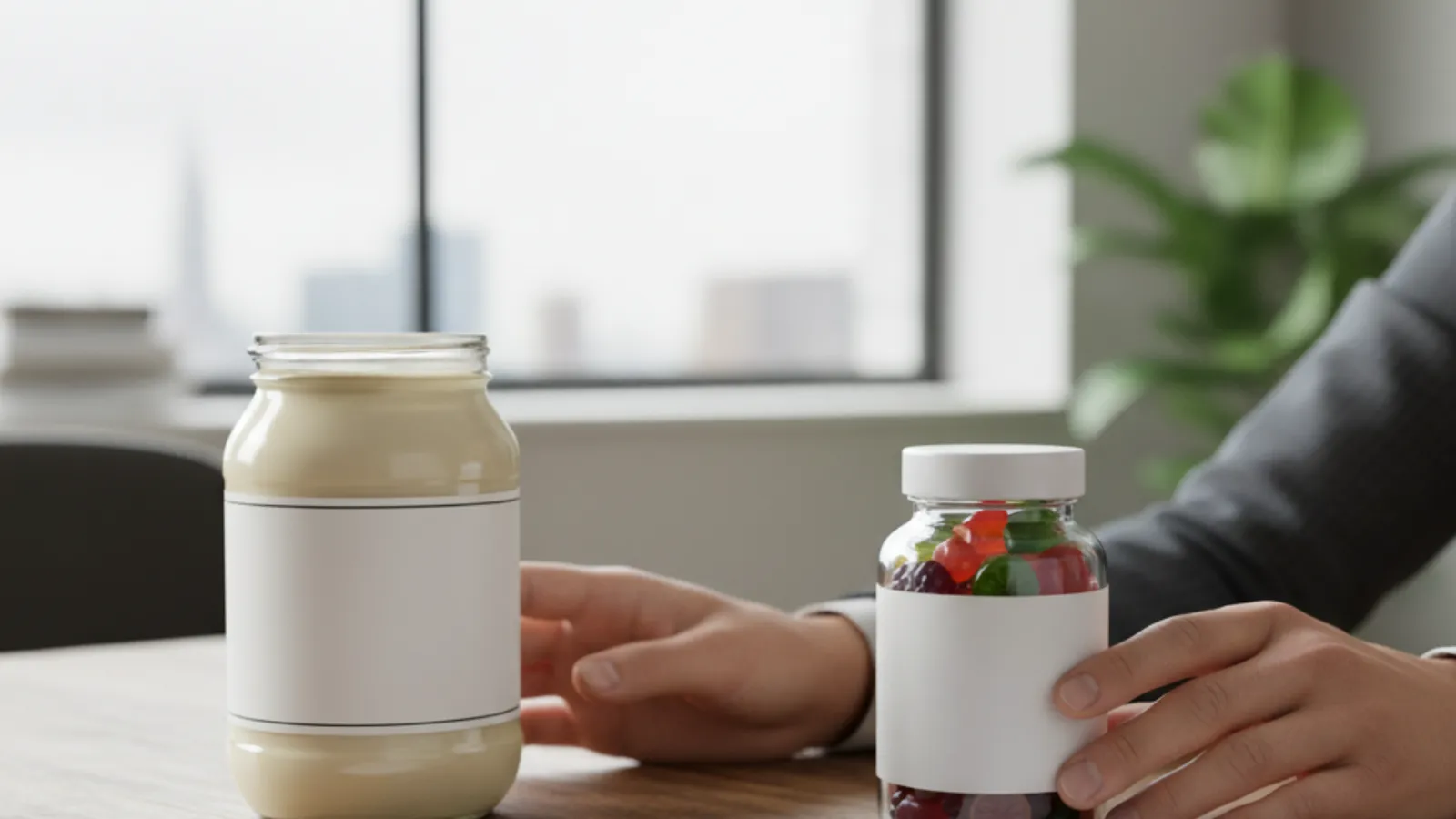
The same company that agreed to sell Hellmann's, Knorr, and roughly 150 years of food heritage for $42.7 billion to McCormick on March 31, 2026, returned to the dealmaking table five days later — and paid $1.2 billion for a gummy supplement brand that did not exist three years ago.
That is not a contradiction. It is a strategy.
The Grüns Deal, in Numbers
Grüns was founded in August 2023 by Chad Janis with a single idea: make daily greens supplementation enjoyable enough that people actually do it. Within two years, the brand exceeded $300 million in annual revenue, shipped 10 million gummies per day, and became the number-one greens supplement on Amazon and in U.S. retail. When Unilever's acquisition closes later in 2026, it will have paid approximately four times trailing revenues — a multiple that reflects not just current performance, but strategic optionality in a category that traditional FMCG has barely touched.
The deal was confirmed on April 4 and announced publicly on April 9. Unilever CEO Hein Schumacher described Grüns as "one of the fastest-growing health and wellbeing businesses in the United States," adding that its distribution architecture — direct-to-consumer, Amazon, Sprouts, Target, Walmart, and Costco — represents the modern multi-channel model that legacy food brands have spent billions trying to replicate.
Why Wellness, Why Now
The U.S. supplement market was valued at $69 billion in 2024 and is projected to reach $87 billion by 2028 — a category growing at roughly twice the rate of conventional packaged food. Within that, greens supplements, functional gummies, and condition-specific VMS (vitamins, minerals, and supplements) products are the fastest-growing segment, driven by three structural tailwinds: rising health consciousness, an aging consumer base, and the GLP-1 effect.
That last factor is the one most industry leaders are underestimating. Consumers on GLP-1 medications — Ozempic, Wegovy, and their successors — eat significantly less. But reduced caloric intake creates documented micronutrient deficiencies. The most commercially logical response is a high-frequency, enjoyable, daily supplement product. Grüns sits precisely in that intersection.
Unilever is not alone in reading this signal. Nestlé has flagged its medical and active nutrition segment as a core priority under its restructuring plan, even as it exits water and coffee brands. PepsiCo acquired Siete Foods and Poppi — both built on functional-food positioning — for a combined $3.15 billion. The direction of capital in FMCG is unmistakable.
The DTC-to-Retail Playbook as a Valuation Event
What separates Grüns from the hundreds of wellness brands competing in the same category is its distribution trajectory. The company launched direct-to-consumer in August 2023, built Amazon dominance within months, and within two years secured shelf space at Sprouts, Target, Walmart, and Costco — four retailers representing entirely different consumer demographics and purchasing occasions. That distribution stack, not the product itself, is what justified the $1.2 billion exit price.
This is the modern CPG acquisition template: build DTC to prove the consumer proposition, use Amazon to scale at lower customer acquisition cost, then convert that data into retail placement negotiations. By the time a strategic acquirer arrives, the brand is not a startup — it is a shelf-optimised, multi-channel business with three years of consumer repeat purchase data. Unilever is not buying a bet. It is acquiring a proven model.
What This Means for the Competitive Landscape
Unilever now holds a portfolio anchored in functional health, personal care, and prestige beauty — not food. The $15.7 billion in cash proceeds from the McCormick deal give it significant acquisition optionality through 2027. With a declared wellness mandate and substantial capital, Unilever will remain the most active strategic acquirer in the VMS and functional health space for the next 18 months.
The contrast with food is not accidental. Hellmann's and Knorr — brands with 100-plus year histories and billions in annual revenue — were sold at $42.7 billion enterprise value. Grüns — three years old, $300 million in revenue — was acquired for $1.2 billion. On a revenue multiple basis, Grüns commanded approximately 4x trailing revenue; legacy food assets in the McCormick deal implied roughly 2.5x. Capital markets are paying a growth premium for wellness that conventional food simply cannot command.
For operators, investors, and strategic buyers in food and beverage: the question is no longer whether wellness is a strategic priority. It is whether you are building, buying, or being left behind.
Global Aseptic Packaging Market Report 2026
148.4bn litres and 344bn packs in 2025. Aseptic volumes across dairy, dairy alternatives, beverages and food in 39 markets — 2025 actuals and forecasts to 2030. Buy online and receive it within 24 hours.
More information
Global Cheese Database 2026
Production, imports, exports and consumption for 39 cheese types across 48 countries, with actuals through 2025 and forecasts to 2030. Join the waitlist for early access, pre-launch pricing and a free sample country chapter.
Get early accessStrategic Insights
📊 Analytics & Strategic Insight
The Fastest FMCG Capital Rotation in a Generation: How Unilever's Exit from Food and Entry into Wellness Resets the Valuation Playbook
The decision most in this industry are avoiding:
👉 Most F&B M&A analysis is focused on the McCormick deal. Almost none is focused on what Unilever did five days later. The $1.2B Grüns acquisition reveals more about where institutional capital is moving in FMCG than any divestiture story — it shows the destination, not just the departure.
👉 The GLP-1 micronutrient gap is a structural demand driver that most F&B strategists still treat as a consumer trend. Consumers on GLP-1 medications have documented deficiencies in iron, B12, calcium, and zinc from reduced caloric intake. A daily functional gummy is the highest-compliance delivery format for that replacement need. This demand will not reverse as GLP-1 adoption continues to scale.
👉 The "food brand with 100-year heritage" is now a lower-multiple asset than a 3-year-old supplement brand with strong repeat purchase data. This valuation inversion — wellness at ~4x revenue vs. legacy food at ~2.5x — will reshape portfolio construction decisions for PE sponsors and strategic buyers across the rest of this decade.
Here's the full context:
→ 2018: Unilever sells its Spreads division to KKR for €6.8 billion — the first major food exit.
→ 2024: Unilever announces separation of its ice cream division (Ben & Jerry's, Magnum, Wall's), cutting 7,500 jobs — the second food category exit.
→ March 31, 2026: Unilever announces sale of all core foods (Hellmann's, Knorr, Frank's RedHot) to McCormick for $42.7B via Reverse Morris Trust — the largest food exit of the decade.
→ April 4–9, 2026: Unilever agrees to acquire Grüns, a U.S. greens supplement brand founded August 2023, for $1.2B. Revenue exceeded $300M by its second anniversary; 10 million gummies shipped per day.
→ Most recent: Grüns expected to close in H2 2026, completing the most decisive FMCG category transition of the last decade — from food empire to wellness-anchored consumer health company.
What this means for food and beverage operators and investors:
✅ The DTC-to-retail distribution trajectory is now a premium valuation event. Brands that prove consumer retention direct, scale on Amazon, then convert to Walmart/Target/Costco shelf placement are operating the exact model strategic acquirers will continue to pay above-market multiples for. Building this pipeline is more valuable than optimising a legacy food brand.
✅ GLP-1 adjacency is the single most underleveraged strategic lens in functional food and beverage right now. Brands that reposition around micronutrient support, convenient daily nutrition, and reduced-portion meal enhancement will capture a structurally growing consumer segment that existing FMCG players are not yet serving well.
✅ For PE sponsors holding conventional food brands, the Unilever-Grüns valuation contrast signals that exit timing matters enormously. Food brands in non-premium, price-elastic categories should be exited into the current seller's market. Wellness brands should be held or scaled further before exit.
3 moves you can make this week:
1️⃣ Map your portfolio's GLP-1 adjacency. Identify which products or SKUs could be repositioned as micronutrient support for calorie-restricted consumers. This is a framing and channel strategy task — not a product reformulation task — requiring no capex.
2️⃣ Audit your DTC-to-retail conversion data. If you have DTC traction but limited retail placement, compile the repeat purchase, cohort retention, and basket penetration data that retail buyers and M&A advisors need. Grüns' exit was enabled by this data stack.
3️⃣ Review Unilever's VMS acquisition pipeline. With $15.7B in McCormick proceeds and an explicit wellness mandate, Unilever will be actively acquiring in functional foods, VMS, and health-adjacent personal care through 2027. If you operate in any of these categories, this is the most qualified strategic buyer in your space right now.
Take the Next Step
🌊 Interested in owning a stake in one of Earth's largest secured natural spring sources?
A rare asset-backed investment opportunity: 50+ year water and land rights, carbon-neutral infrastructure, B2B and white-label focus, and a 33% projected IRR. USD 28M raise, USD 80M post-money valuation.
→ View the investment opportunity
Zenith Consulting
Submit your food & beverage project enquiry.
Share your requirements. If there is a strong fit, we’ll come back with an indicative investment range, project timeline and recommended strategic approach.
Reviewed by Zenith Consulting’s senior food & beverage strategy team.
Related analyses
- M&A, Investment & Valuation
Parmigiano Reggiano Takes On Australian Parmesan: The EU Trade Deal Protected 53 Cheese Names And Left Parmesan Out
The Parmigiano Reggiano Consortium has opened a three-year campaign in Australia, where cheese output runs at 455,000 tonnes a year. Australia agreed to protect 53 EU cheese names, and parmesan is not one of them.
Read analysis → - M&A, Investment & Valuation
Parmigiano Reggiano Takes On Australian Parmesan: The EU Trade Deal Protected 53 Cheese Names And Left Parmesan Out
The Parmigiano Reggiano Consortium has opened a three-year campaign in Australia, where cheese output runs at 455,000 tonnes a year. Australia agreed to protect 53 EU cheese names, and parmesan is not one of them.
Read analysis → - M&A, Investment & Valuation
Müller Closes Sachsenmilch Semi-Hard Cheese Dairy At Leppersdorf: Mozzarella And Acid Curd Lines Stay
Müller will close the semi-hard cheese dairy at Sachsenmilch Leppersdorf on 31 December 2026, with about 160 staff affected. Mozzarella and acid curd cheese carry on at a site that takes 1.7 billion kg of milk a year.
Read analysis →
Share it with your peers
Pass this analysis to colleagues who track the food and beverage market.
Zenith Market Intel
Need a specific food or beverage market report?
Tell us which category, region or question would be useful for your team.
Sister Publication
Also follow our Water Dispense Market Intelligence
Category analyses, operator briefings, and investor signals across the global water dispense market.