Kingsmill Owner ABF Wins the Hovis Bread Merger: How the 'Failing Firm' Argument Cleared a Deal Regulators Usually Block
The UK's competition watchdog has cleared Associated British Foods to buy Hovis, handing the Kingsmill owner about a quarter of the bread market. The clearance rests on a rare 'failing firm' argument that shows how regulators may treat consolidation across shrinking food categories.

A competition regulator just cleared a deal that hands one company about a quarter of the UK bread market. The reason is the surprising part. The watchdog decided that blocking the deal would not protect shoppers, because one of Britain's biggest bakers was already heading for the exit.
On 16 June 2026, the UK's Competition and Markets Authority (the CMA, Britain's competition watchdog) cleared Associated British Foods, known as ABF, to buy Hovis. ABF already owns Kingsmill. Putting Hovis and Kingsmill under one roof would normally set off alarm bells. The regulator said yes anyway, after a deep six-month investigation.
The deal nobody expected to clear
ABF agreed to buy Hovis in August 2025 from Endless, a private equity firm. The plan was to combine Hovis with ABF's own bakery arm, Allied Bakeries, which makes Kingsmill, Allinson's and Sunblest. On paper, the merger looked like the kind of deal regulators love to block. Two of the three big wrapped-bread brands in the country would answer to the same owner.
The CMA took it seriously. It skipped the usual first stage and sent the deal straight to an in-depth phase 2 review, the level reserved for the trickiest cases. Then it cleared the deal with no conditions at all.
Bread is a brutal business now
To understand the decision, look at the state of the category. Bread is one of the hardest businesses in British grocery right now. People are eating less of it. Shoppers who do buy bread increasingly reach for cheaper supermarket own-label loaves, which earn the makers very little. At the same time, the cost of wheat, energy and delivery has jumped.
The numbers show the damage. Kingsmill sales fell from £107.6 million to £73.7 million in a single year, a drop of nearly a third, pushing the brand down to fourth place. Hovis slid 8.8% to £341.1 million. Only Warburtons, the market leader, held firm, with record sales of £598.3 million. Allied Bakeries has lost money for 14 straight years.
The argument that almost never works
ABF won clearance on a legal argument that hardly ever succeeds: the failing firm defence. The idea is simple. If a business is going to leave the market anyway, then a rival buying it does not really reduce competition, because that competitor was about to vanish on its own.
Regulators treat this claim with deep suspicion, because every buyer would love to use it. Companies rarely clear the bar. ABF did. The CMA found that if the deal were blocked, the most likely outcome was that Allied Bakeries would shut down across Great Britain and Northern Ireland. With Allied gone either way, the regulator concluded the merger took nothing away from competition.
Cyrus Mehta, who chaired the inquiry, put it plainly. He said the evidence showed Allied Bakeries would likely leave the market entirely if the deal did not proceed, so the deal did not raise competition concerns.
What ABF actually gets
The merger creates the biggest bread maker in the UK. Hovis holds roughly 18% of packaged sliced bread and Allied around 6%, so the combined business lands in the low-to-mid twenties by share, level with Warburtons. Cost matters more than share here. Joining two loss-heavy bakery networks lets ABF close gaps and cut the duplication that was bleeding both sides. This deal is a bet that scale can save a shrinking business.
What it means next
The bigger story sits above bread. The CMA has shown it will allow heavy consolidation when a category is shrinking and players are failing. That is a signal to every boardroom sitting on a tired, low-growth business: a merger that looked impossible two years ago may now clear, if the decline is real and documented.
For operators, the move is to build the evidence early. Falling demand, rising costs and a long loss record are the raw material of a failing firm case. For investors and buyers, distressed assets in mature categories like ambient grocery and packaged dairy may be easier to consolidate than the market assumes. The hardest merger argument in the book just worked on a loaf of bread, and dealmakers across food and drink were watching.

Global Aseptic Packaging Market Report 2026
148.4bn litres and 344bn packs in 2025. Aseptic volumes across dairy, dairy alternatives, beverages and food in 39 markets — 2025 actuals and forecasts to 2030. Buy online and receive it within 24 hours.
More information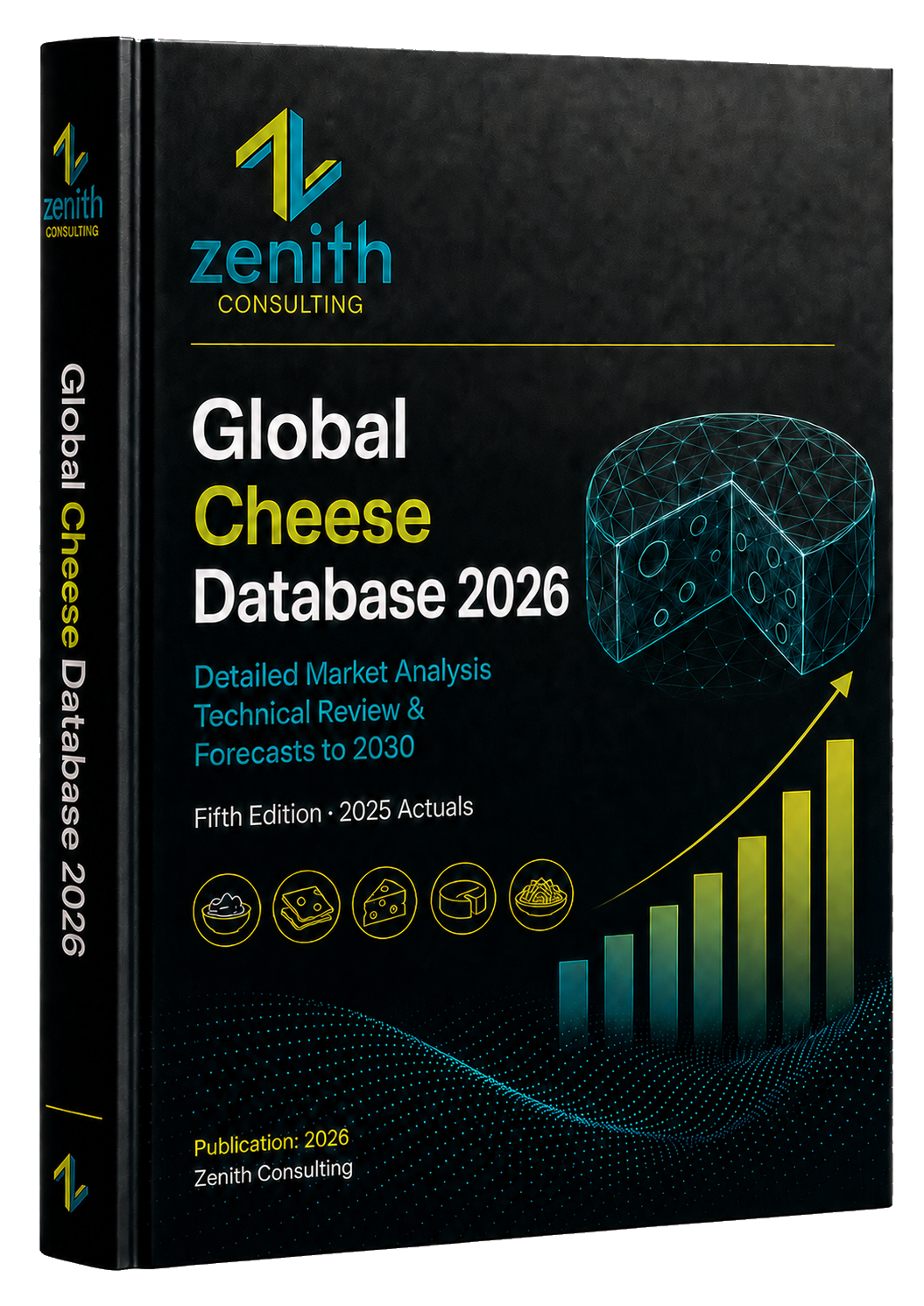
Global Cheese Database 2026
Production, imports, exports and consumption for 39 cheese types across 48 countries, with actuals through 2025 and forecasts to 2030. Join the waitlist for early access, pre-launch pricing and a free sample country chapter.
Get early accessStrategic Insights
📊 Analytics & Strategic Insight
How a failing-firm clearance rewrites the rules for consolidating shrinking categories
The decision most in this industry are avoiding:
👉 Hoping scale alone fixes a falling category. Scale lowers cost, but it does not bring eaters back to bread. The real prize is a slower, cheaper decline, and leaders who admit that plan better.
👉 Assuming a dominant share will always be blocked. Regulators weigh the counterfactual, meaning what happens if they say no. When the answer is a collapse, even a big combined share can clear.
👉 Treating a loss record as only a problem. A long, documented run of losses is painful, yet it is also the evidence that unlocks a merger rivals could never attempt.
Here's the full context:
→ 2010s onward: UK bread demand drifts lower as diets change and shoppers move to cheaper own-label loaves.
→ Past 14 years: ABF's Allied Bakeries, maker of Kingsmill, loses money every year despite repeated attempts to fix it.
→ August 2025: ABF agrees to buy Hovis from private equity firm Endless and combine it with Allied Bakeries.
→ Early 2026: The CMA sends the deal straight to an in-depth phase 2 review, skipping the usual first stage.
→ Most recent: On 16 June 2026 the CMA clears the deal with no conditions, after finding Allied would likely exit the market without it.
What this means for food and beverage operators and investors:
✅ The counterfactual is the whole game. In a declining category, your merger case lives or dies on what the regulator thinks happens if it says no.
✅ Distressed scale is back on the table. Deals that looked un-clearable in the growth years can pass when decline is real and the evidence is solid.
✅ Documentation is strategy. Clean records of falling demand, rising costs and multi-year losses are the raw material of a clearance, so keep them audit-ready.
3 moves you can make this week:
1️⃣ Map your declining lines. List the categories where volume and margin are both falling, and mark which could justify a failing-firm case.
2️⃣ Build the evidence file. Pull the multi-year data on demand, costs and losses that a regulator would want to see before clearing a tie-up.
3️⃣ Scan for distressed targets. Identify weak rivals in your mature categories who may welcome a buyer before they run out of road.
Take the Next Step
🧾 Go deeper on a category.
See our latest deep-dive reports, like our THC beverage report and our China market report.
→ See the latest reports
Zenith Consulting
Submit your food & beverage project enquiry.
Share your requirements. If there is a strong fit, we’ll come back with an indicative investment range, project timeline and recommended strategic approach.
Reviewed by Zenith Consulting’s senior food & beverage strategy team.
Related analyses
- M&A, Investment & Valuation
Parmigiano Reggiano Takes On Australian Parmesan: The EU Trade Deal Protected 53 Cheese Names And Left Parmesan Out
The Parmigiano Reggiano Consortium has opened a three-year campaign in Australia, where cheese output runs at 455,000 tonnes a year. Australia agreed to protect 53 EU cheese names, and parmesan is not one of them.
Read analysis → - M&A, Investment & Valuation
Parmigiano Reggiano Takes On Australian Parmesan: The EU Trade Deal Protected 53 Cheese Names And Left Parmesan Out
The Parmigiano Reggiano Consortium has opened a three-year campaign in Australia, where cheese output runs at 455,000 tonnes a year. Australia agreed to protect 53 EU cheese names, and parmesan is not one of them.
Read analysis → - M&A, Investment & Valuation
Müller Closes Sachsenmilch Semi-Hard Cheese Dairy At Leppersdorf: Mozzarella And Acid Curd Lines Stay
Müller will close the semi-hard cheese dairy at Sachsenmilch Leppersdorf on 31 December 2026, with about 160 staff affected. Mozzarella and acid curd cheese carry on at a site that takes 1.7 billion kg of milk a year.
Read analysis →
Share it with your peers
Pass this analysis to colleagues who track the food and beverage market.
Zenith Market Intel
Need a specific food or beverage market report?
Tell us which category, region or question would be useful for your team.
Sister Publication
Also follow our Water Dispense Market Intelligence
Category analyses, operator briefings, and investor signals across the global water dispense market.