Beef Tallow's $1.1 Billion Comeback: Why Conagra, Utz and PepsiCo Are Rethinking the Fat in Your Snacks
Sales of food made with beef tallow hit $1.1 billion, up 275% in three years, after a federal guideline change endorsed the once-shunned fat. Conagra, Utz and PepsiCo are now rethinking the oil in the fryer, but shopper data suggests the trend is louder than it is real.
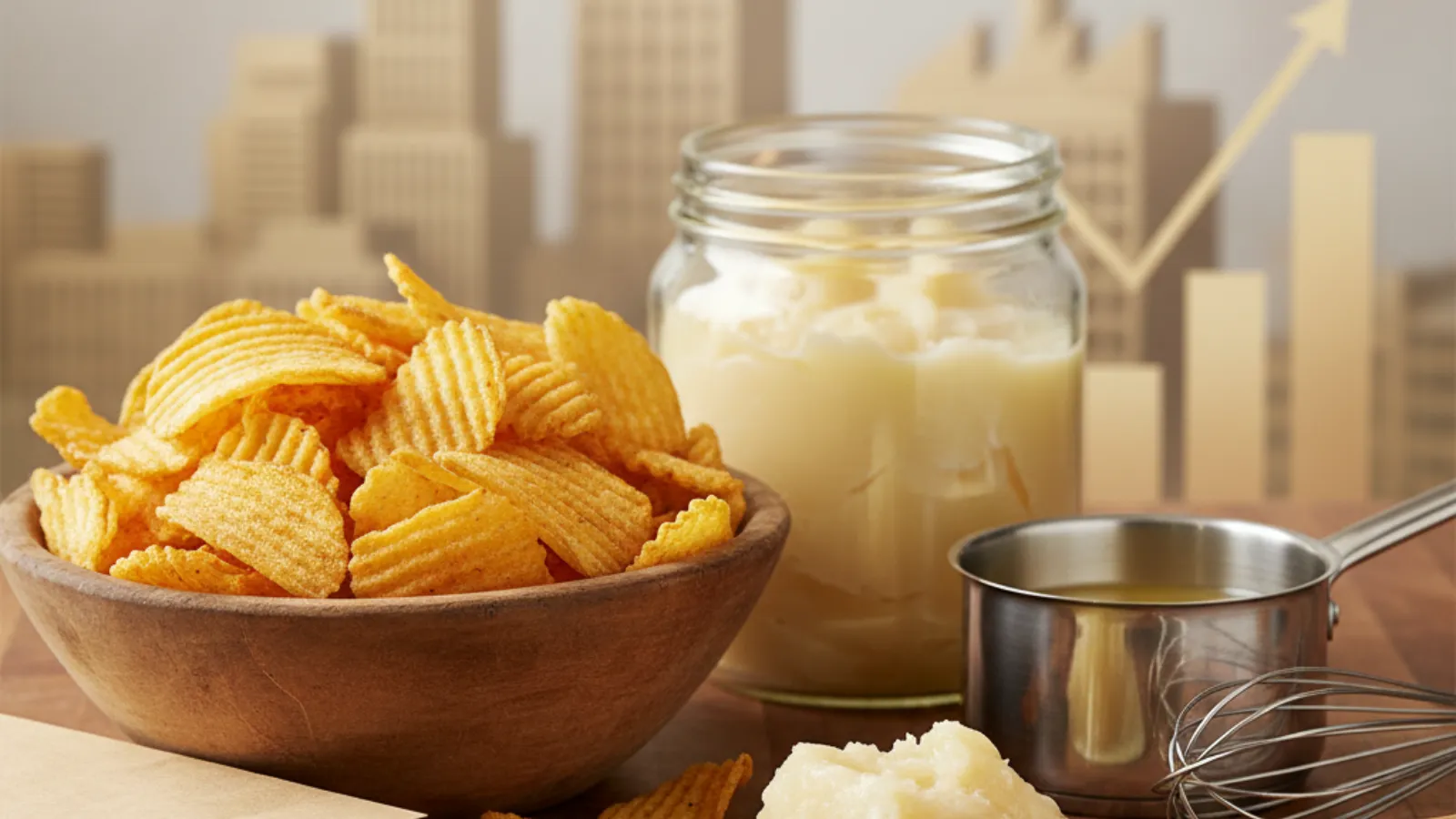
Beef tallow, the fat your grandmother fried with, is now a $1.1 billion business. For decades it sat at the back of the pantry while cheap vegetable oils took over the kitchen. Now it is back on snack shelves, and the biggest names in packaged food are deciding how hard to bet on it.
The number behind the trend
Sales of food made with beef tallow reached $1.1 billion in the year to 22 March 2026, up 275% from three years earlier, according to data firm Spins. That is the kind of growth rate that makes a category chief stop and look. The fat has gone from a niche pick for small "better for you" startups to a feature on packs from companies most shoppers recognise.
Why tallow, why now
The trigger was political, not culinary. In January 2026 the federal government updated its dietary guidelines to list beef tallow, butter and olive oil as healthy fats. The change was pushed by Health and Human Services Secretary Robert F. Kennedy Jr., who has made seed oils a target of his Make America Healthy Again agenda. Kennedy has called for a return to animal fats and once deep-fried a turkey in tallow to make the point. Whole Foods named tallow its top food trend for 2026. A fat that cardiologists spent forty years warning against suddenly carried a government endorsement.
Big Food makes its move
The early adopters were small brands. Now the giants are testing the water. Conagra double-cooks its Rebel Roots fries in beef tallow and prints the word in large type on the front of the pack. Utz has launched a tallow version of its Boulder Canyon chips, its second product to use the fat after Grandma Utz kettle chips. On the other side of the same trade, PepsiCo is pulling canola and soybean oil out of Lay's and Tostitos and moving to olive and avocado oil. Kraft Heinz, General Mills and Nestlé have made their own pledges to cut seed oils. The whole industry is rethinking what goes in the fryer.
The catch nobody is saying out loud
Here is the problem with the story. The shopper data does not match the headlines. Close to 70% of consumers say they have not changed how they use seed oils at all, according to Innova Market Insights. Of the small group that has cut back, only 10% switched to tallow. Most chose olive oil instead. The American Heart Association has restated its warning that tallow is high in saturated fat and raises heart disease risk. Morningstar analysts expect tallow to stay a niche product that "falls flat" at mass retailers like Walmart, where shoppers do not want to pay a premium for a fat they cannot explain.
The strategic read
So Big Food is caught between a loud trend and quiet sales. The smart response is a small bet you can walk away from, not a factory you have to rebuild. A limited tallow line in premium and natural channels costs little and signals that a brand is listening. It also buys a marketing story in a crowded aisle. The danger is reading a political moment as a permanent shift. Guidelines can change again, and the science behind the old warning has not gone away. A company that re-tools a plant around tallow is exposed if the wind turns.
What it means for operators and investors
For operators, the lesson is to treat ingredient politics as a set of cheap experiments rather than one big swing. Test where the trend is real, keep the supply chain flexible, and stay ready to switch back. For investors, watch which companies spend real capital on tallow and which simply run a clever limited edition. The first group is taking a policy risk. The second is buying optionality for almost nothing. The beef tallow story is less about fat and more about how a food company places a bet when the data and the politics point in different directions.
Global Aseptic Packaging Market Report 2026
148.4bn litres and 344bn packs in 2025. Aseptic volumes across dairy, dairy alternatives, beverages and food in 39 markets — 2025 actuals and forecasts to 2030. Buy online and receive it within 24 hours.
More information
Global Cheese Database 2026
Production, imports, exports and consumption for 39 cheese types across 48 countries, with actuals through 2025 and forecasts to 2030. Join the waitlist for early access, pre-launch pricing and a free sample country chapter.
Get early accessStrategic Insights
📊 Analytics & Strategic Insight
A Loud Trend With Quiet Sales: How to Bet on Ingredient Politics Without Getting Burned
The decision most in this industry are avoiding:
👉 Treating a political endorsement as proven demand. The guideline change made headlines, but about 70% of shoppers have not changed a thing. Reading the noise as a market is the trap.
👉 Picking a side in the seed-oil fight too early. The science is contested and the politics can flip with the next administration. Committing capital now locks you into one answer before the question is settled.
👉 Confusing a marketing story with a category shift. Tallow on the front of a pack sells a story today. It does not prove a durable change in what people actually buy.
Here's the full context:
→ 2010s: Seed oils such as canola and soybean dominate the fryer as cheap, stable, plant-based fats.
→ 2024-2025: Anti-seed-oil messaging spreads online, and small "better for you" brands adopt beef tallow to stand out.
→ January 2026: Federal dietary guidelines, pushed by RFK Jr., list beef tallow, butter and olive oil as healthy fats.
→ Early 2026: PepsiCo moves Lay's and Tostitos off canola and soybean oil; Kraft Heinz, General Mills and Nestlé pledge seed-oil cuts; Whole Foods names tallow its top 2026 trend.
→ Most recent: On 22 June 2026, data shows tallow product sales at $1.1 billion, up 275% in three years, as Conagra and Utz put tallow-fried snacks on shelves, even while about 70% of shoppers say nothing has changed.
What this means for food and beverage operators and investors:
✅ A trend with thin follow-through rewards optionality. A limited tallow line tests real demand for almost no cost and keeps your options open.
✅ Channel beats category. Tallow sells at natural and specialty retailers, not the mass aisle, so match the product to where the buyer already is.
✅ Input bets carry policy risk. Re-tooling a plant around an ingredient a regulator just endorsed can reverse the moment the regulator changes.
3 moves you can make this week:
1️⃣ Map your seed-oil exposure. List the products that rely on canola or soybean oil and price out what a switch would cost in ingredients and supply.
2️⃣ Run one reversible test. Launch a single tallow or olive-oil version in a natural channel before you touch the core line.
3️⃣ Track the policy, not the noise. Watch the dietary-guideline process and the 2028 race, and assume any endorsement you build on can be undone.
Take the Next Step
📈 Prefer it visual?
Get our free food and beverage infographics. Clear, shareable snapshots of the trends moving the industry.
→ Get the free infographics
Zenith Consulting
Submit your food & beverage project enquiry.
Share your requirements. If there is a strong fit, we’ll come back with an indicative investment range, project timeline and recommended strategic approach.
Reviewed by Zenith Consulting’s senior food & beverage strategy team.
Related analyses
- Corporate Strategy & Portfolio
Oji Liquid Pak's USD 110 Million Vietnam Aseptic Carton Plant Adds 8 Billion Packs To A Region Already At 62 Billion
Oji Liquid Pak broke ground on a USD 110 million aseptic carton material plant in Dong Nai, rated at up to 8 billion packs a year from 2028. Zenith puts Vietnam at 10,358.7 million aseptic packs in 2025, and South East Asia already holds about 62 billion packs of documented converting capacity.
Read analysis → - Corporate Strategy & Portfolio
Spain Swaps HDPE Milk Bottles For Aseptic PET: 170 Million Litres Left And Only Three Aseptic PET Dairy Lines
Spanish UHT milk in large HDPE bottles fell from 307 million litres in 2020 to 170 million in 2025, and Zenith's model takes it to 88.5 million by 2030. Aseptic PET is taking the volume, and only three aseptic PET dairy lines have been documented in the country.
Read analysis → - Corporate Strategy & Portfolio
US Parmesan Output Jumps 25.9% While Cheddar Slips: Italian Cheese Takes Four In Five Pounds Of Growth
USDA figures published on 5 October show US Parmesan output up 25.9% in August while cheddar fell 0.9%. Italian types have supplied nearly four in every five pounds of US cheese growth so far in 2026.
Read analysis →
Share it with your peers
Pass this analysis to colleagues who track the food and beverage market.
Zenith Market Intel
Need a specific food or beverage market report?
Tell us which category, region or question would be useful for your team.
Sister Publication
Also follow our Water Dispense Market Intelligence
Category analyses, operator briefings, and investor signals across the global water dispense market.