Boston Beer Sold 6% Less While 54% Of Americans Still Drink: Two Iced Teas Explain The Gap
Gallup says the US drinking rate held flat at 54% while Boston Beer's volumes fell 6%. Two hard iced teas in the same portfolio went opposite ways, and the split is not about bubbles.
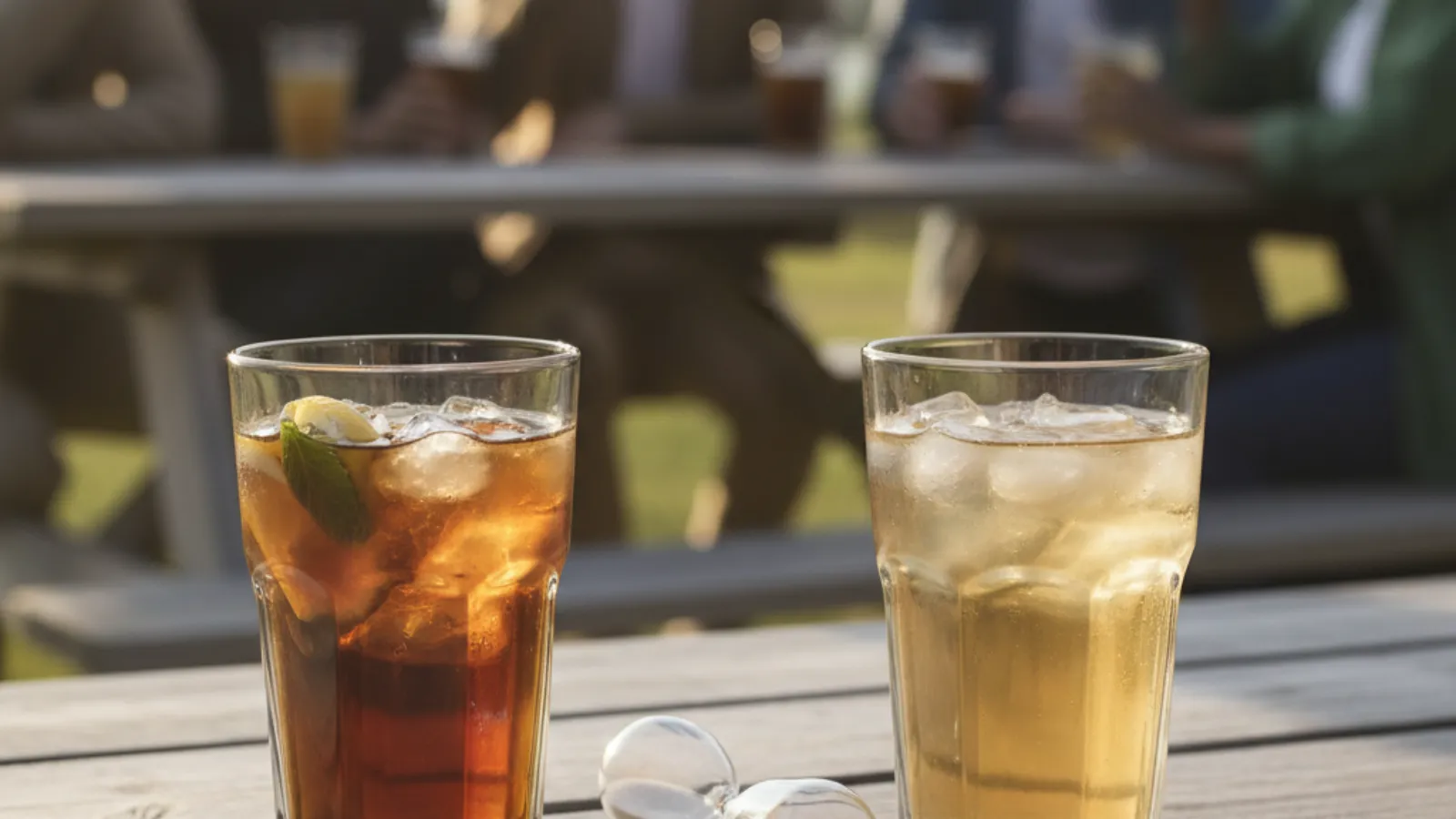
If this were my drinks business, I would stop blaming the drinking rate. I would look at what is inside the can instead. Boston Beer sold 6% less last quarter, while the share of Americans who drink held flat.
Gallup put that share at 54% in 2026. It is the lowest reading since Gallup started asking in 1939. It is also unchanged from last year.
The pool of drinkers stopped shrinking
The drinking rate did not fall this year, and that changes what a volume drop means. Gallup fielded the poll between 1 and 19 July. Three years of decline have now flattened out. A rate above 50% may simply be the new floor.
The age story is also wrong in most plans. IWSR found the Gen Z drinking rate at 74%, up from 66% three years ago. The whole adult rate is 76%. Boomers fell the most, down two points in three years. Marten Lodewijks, who runs IWSR, said the idea of Gen Z as a sober age group is now dead.
So the buyer is still there. Something else took the volume.
Two iced teas, one owner, opposite results
Boston Beer reported on 23 July that its volumes fell 6% in the second quarter. Shipments came in near 2.0 million barrels, down 4.5%. Sales fell 3.3%. Gross margin still rose to 50.4% from 49.8%.
The list of losers is long. Twisted Tea, Truly, Samuel Adams, Hard Mountain Dew and Dogfish Head all fell. Only Sun Cruiser and Angry Orchard grew. Sun Cruiser grew by triple digits in the same three months that Twisted Tea shrank.
Both of those brands are hard iced tea. Both are flat. Neither has bubbles. They sit in one firm, under one sales team, on one shelf plan.
Look at the base spirit
Most of the coverage this month reads the shift as a move away from fizzy drinks. Bloomberg ran a piece on 3 September on young drinkers leaving bubbly booze. The Boston Beer split says the bubbles are not the variable.
What differs is the base. Twisted Tea is a malt drink and has been since 2001. Sun Cruiser is made with real vodka and launched in March 2024. It runs at 4.5% alcohol, with 100 calories and 1 gram of sugar a can. One sits on the beer licence and the beer shelf. The other sits with spirits.
Gallup now puts liquor ahead of wine as the drink Americans reach for. Beer leads at 36%, liquor follows at 32%, wine sits at 30%. Global spirits volumes passed wine for the first time this summer. The move is down the shelf from malt to spirits. That takes a different licence, a different tax and a different route to the shop.
A shrinking market is the cheapest excuse in a plan
When the buyer pool holds and your volume falls, you have lost share. That is a harder sentence to write into a board pack than "the market is down". It is also the only one that leads to a fix.
The occasion did get smaller. IWSR put drinks per sitting at 3.9, down from 4.4 in 2024 and 2025. Gallup found drinkers had 3.2 drinks in the past week, against a five year average of 3.9. Fewer servings per head is real, and it will not reverse.
That pushes the money into two places. The first is what you charge per serving. The second is winning the serving that is left. Boston Beer held margin at 50.4% while volumes fell, so the pricing half is working.
The same misread sits in food
Swap the words and the pattern repeats. Soda firms blame sugar rules. Cereal firms blame breakfast habits. Dairy firms blame plant milk. In each case the shopper is still buying. The money has moved to a rival with a different base, licence or aisle.
The test is simple and cheap. Split your own brands into growth and decline, then ask what the two halves share. If the answer is not the flavour or the pack, look at what the drink is made from. Then check where that puts it in the shop.
What happens next
Boston Beer is now a case study in a slow fix. One young brand is carrying a portfolio of older ones. Sun Cruiser has to grow faster than Twisted Tea falls, and it has been on sale for barely two years.
For buyers and operators the read is the same. Stop pricing the drinks trade off the drinking rate. Price it off the base spirit, the licence and the shelf, because that is where the money is moving. Read the base rather than the mood.

Global Aseptic Packaging Market Report 2026
148.4bn litres and 344bn packs in 2025. Aseptic volumes across dairy, dairy alternatives, beverages and food in 39 markets — 2025 actuals and forecasts to 2030. Buy online and receive it within 24 hours.
More information
Global Cheese Database 2026
Production, imports, exports and consumption for 39 cheese types across 48 countries, with actuals through 2025 and forecasts to 2030. Join the waitlist for early access, pre-launch pricing and a free sample country chapter.
Get early accessStrategic Insights
📊 Analytics & Strategic Insight
When the buyer pool holds and your volume falls, the market is not the problem
The decision most in this industry are avoiding:
👉 Naming the loss as share rather than weather. Every plan that opens with "the market is in decline" buys a year of calm. It also blocks the work that would fix the number.
👉 Checking whether the growth brand grew on merit or on new shelf space. Sun Cruiser had a lot of new doors to fill. A brand with room to add doors will beat one with none, even on a worse product.
👉 Pricing the licence as well as the liquid. Malt and spirits bases pay different tax and reach different shops. That choice is made in the lab and paid for in the trade.
Here's the full context:
→ 2001: Twisted Tea launched as a malt hard iced tea. It sat on the beer licence and the beer shelf.
→ March 2024: Boston Beer launched Sun Cruiser with real vodka. It went out in 17 markets first, at 100 calories a can.
→ July 2026: IWSR put the Gen Z drinking rate at 74%, up from 66% three years earlier. Boomers fell the most.
→ 23 July 2026: Boston Beer reported volumes down 6%. Sun Cruiser and Angry Orchard grew; five other brands fell.
→ Most recent: Gallup put the US drinking rate at 54%, flat on last year and the lowest since 1939. Liquor now ranks above wine.
What this means for food and beverage operators and investors:
✅ A flat buyer pool turns a volume miss into a share miss. That changes who owns the problem inside the firm. It moves from the planner to the brand team.
✅ Format language is hiding the real split. Flat against fizzy explains nothing here. The base spirit and the shelf it buys do.
✅ Margin can hold while volume falls, for a while. Boston Beer lifted gross margin to 50.4% on lower volume. Price cover buys time and does not buy shelf.
3 moves you can make this week:
1️⃣ Sort your brands by growth, then find what the risers share. Ignore flavour and pack at first. Look at base, licence, tax band and which shop aisle they land in.
2️⃣ Separate real growth from new doors. Take last year's shelf gains out of your growth brand's numbers. What is left is the true rate.
3️⃣ Rewrite one line in your plan. Change "the market is down" to a share number against a named rival. Then make someone own it.
Take the Next Step
🧭 Facing a decision like this in your own category?
Describe it in a few lines. Selected enquiries receive an initial strategic assessment: direction, likely scope and indicative investment range.
→ Start a project enquiry
Zenith Consulting
Submit your food & beverage project enquiry.
Share your requirements. If there is a strong fit, we’ll come back with an indicative investment range, project timeline and recommended strategic approach.
Reviewed by Zenith Consulting’s senior food & beverage strategy team.
Related analyses
- Corporate Strategy & Portfolio
FDA Clears Salt Substitutes In 41 Cheese Standards, And The Last Sodium Push Moved The Median Just 3%
The FDA has opened 41 cheese standards to salt substitutes, with the rule effective 14 December 2026. The cheese part can still be objected to until 12 November, and the last US sodium push moved the median by 3%.
Read analysis → - Corporate Strategy & Portfolio
Large PET Fills 25,940 Million Litres Of Aseptic Drinks Against 14,500 Million In Family Cartons
Zenith's Global Aseptic Packaging Market Report 2026 puts large PET at 25,940 million litres of aseptic drinks in 2025, against 14,500 million litres in family cartons. Cartons still lead on pack count, which turns the format split into a pack size split.
Read analysis → - Corporate Strategy & Portfolio
Cheese Kingdom Shuts 84 Ukrainian Shops As Cheese Imports Hit 28,300 Tonnes, More Than Three Times Exports
Ukraine's largest specialist cheese chain has stopped trading at all 84 of its shops after 13 years. Cheese imports reached 28,300 tonnes in the seven months to July, more than three times exports, and European cheese now sits in ordinary supermarkets.
Read analysis →
Share it with your peers
Pass this analysis to colleagues who track the food and beverage market.
Zenith Market Intel
Need a specific food or beverage market report?
Tell us which category, region or question would be useful for your team.
Sister Publication
Also follow our Water Dispense Market Intelligence
Category analyses, operator briefings, and investor signals across the global water dispense market.