The Ozempic Effect: 35% of US Food and Beverage Sales Will Come from GLP-1 Users by 2030 — Who's Winning and Who's Not
One in eight American adults is now on a GLP-1 weight-loss drug — and by 2030, GLP-1 households will account for 35% of all US food and beverage units sold. This is not a wellness trend. It is a structural demand shift, and the food industry's response will separate winners from casualties over the next decade.
Hershey beat first-quarter 2026 earnings estimates last week. Its protein bar sales rose 17%. Its Ice Breakers mints brand grew 8%. Neither of those wins came from product reformulation, brand repositioning, or a new marketing campaign. They came from a pharmaceutical side effect. GLP-1 drugs — Ozempic, Wegovy, Mounjaro — slow digestion, which in large numbers of users triggers chronic bad breath. Hershey's mint business is benefiting from Ozempic breath. That is where the food industry is in May 2026.
The broader numbers are harder to dismiss. According to Food Dive citing industry research, by 2030, households with at least one GLP-1 user will represent 35% of all food and beverage units sold in the United States. Today, approximately one in eight American adults is already taking a GLP-1 drug. Among that population, roughly 70% report snacking significantly less. Spending on savory snacks has fallen approximately 10% among GLP-1 users, with similar contractions in sweets, baked goods, and cookies.
The Demand Destruction Hitting Traditional Categories
The impact is not uniform — and that is precisely the strategic problem. A food company with heavy exposure to traditional confectionery or mid-tier salty snacks faces a structurally different market than one positioned in protein, hydration, or functional formats. The category disruption is real, it is accelerating, and the companies that adapted earliest are already separating on earnings.
Consider what is declining among GLP-1 users: standard portion-size snack packs, sugary confectionery, calorie-dense bakery, and conventional beverage formats that compete on flavour without nutritional utility. These are not niche categories. They represent the core revenue base of the largest packaged food companies in the world.
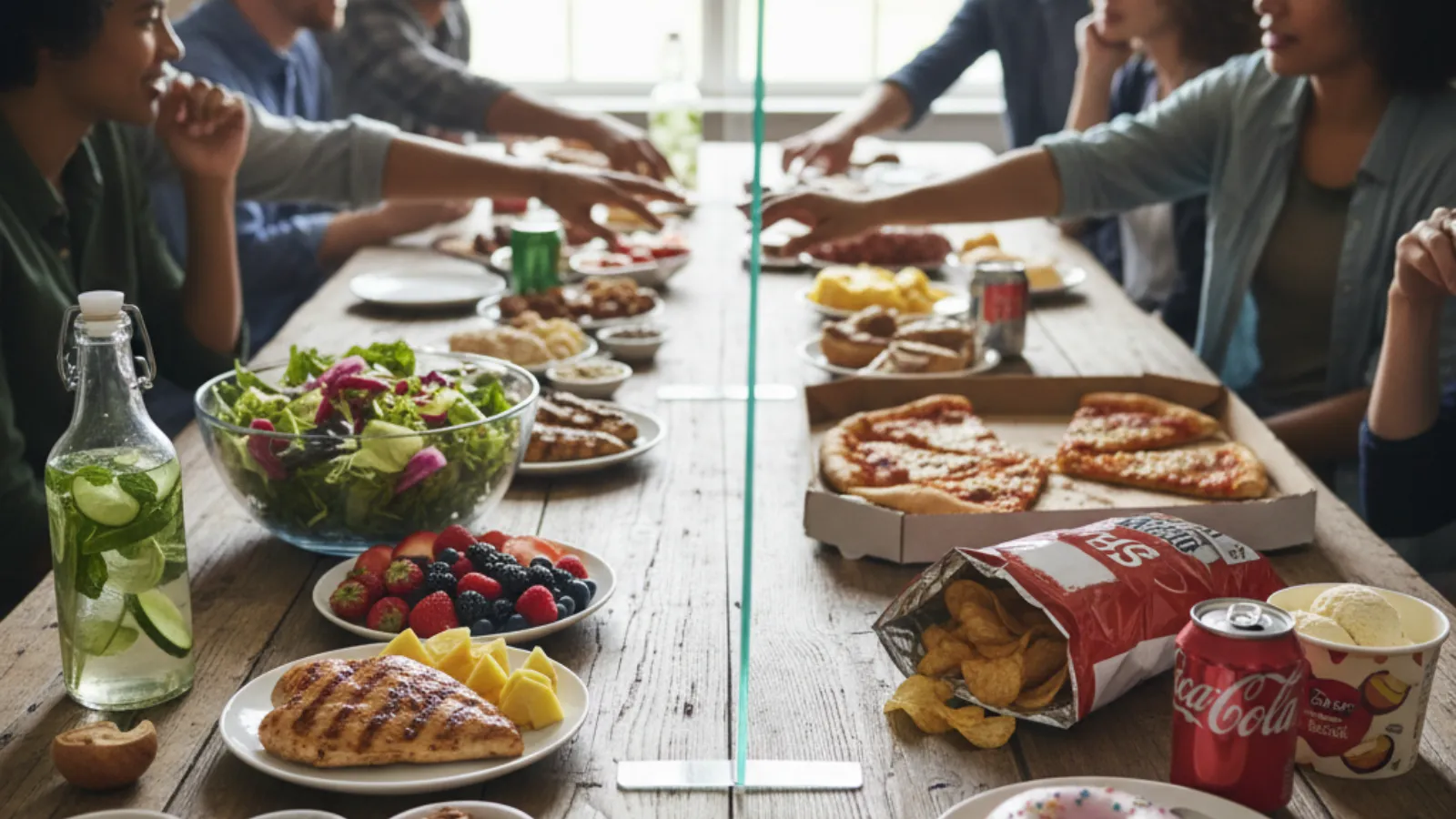
GLP-1 users are not simply eating less. They are eating differently. High-protein formats, high-fibre foods, low-sugar functional beverages, and small-portion premium products are gaining disproportionate share. The GLP-1-friendly hydration drinks market alone is forecast to reach USD 3.48 billion by 2033, growing at a 12.8% compound annual rate. Protein sodas — clean-label, zero-sugar, whey-enriched carbonates — are moving from specialty channels into mainstream retail. Electrolyte drinks are outperforming their conventional counterparts in every major US market.
The Playbook Emerging from the Q1 2026 Earnings Season
The companies disclosing results this past week are — intentionally or not — publishing a roadmap. Hershey's pivot is the clearest example: protein bars, clean-label popcorn through its LesserEvil acquisition, and the incidental mint tailwind from Ozempic breath. Its North America salty snacks organic volumes rose 5%, with LesserEvil contributing 20 percentage points of that growth. The message is not subtle. Hershey is pivoting its portfolio toward formats that GLP-1 users will still reach for.
General Mills has made protein and fibre the explicit centre of its 2026 innovation agenda, projecting a 25% increase in net sales from new products in fiscal 2026 on the back of bold flavours, better-for-you positioning, and protein fortification. The company revised its full-year organic net sales outlook downward — the broader category headwinds are real — but its innovation pipeline is deliberately GLP-1-aligned.
Mondelez is taking a different approach. Facing a USD 500 million cocoa cost headwind in Q1 alone, the company is betting on premiumisation — the thesis being that GLP-1 users who still indulge in chocolate will trade up to smaller, higher-quality formats rather than eliminate the category entirely. Mondelez's chocolate segment still grew organic revenue 5.5% in Q1 2026, even as volumes declined 2.1 percentage points.
What Private Equity and Strategic Buyers Should Be Watching
The M&A implications are significant. Categories that are structurally exposed to GLP-1 demand destruction — conventional confectionery, high-calorie snack formats, full-sugar carbonated soft drinks — face sustained multiple compression. Categories that are structurally aligned — protein, functional hydration, premium small-portion formats, clean-label salty snacks, mints and oral care adjacencies — are attracting premium valuations and accelerating deal flow.
Celsius Holdings' USD 1.8 billion acquisition of Alani Nu, the energy drink brand built around female consumers, reflects this logic. Alani Nu's positioning — low-calorie, functional, gym-culture-adjacent — is almost perfectly engineered for the GLP-1 consumer cohort. Brands that speak to active lifestyle, lean protein, and hydration are trading at premiums that would have seemed absurd against conventional FMCG multiples three years ago.
The Decade Ahead
The food industry's GLP-1 problem is not a short-cycle trend to manage. It is a long-duration structural shift requiring portfolio decisions that are difficult to reverse. The companies that move now — through acquisition, reformulation, or partnership — will enter 2030 positioned for the market as it will actually exist. Those that wait for category volume data to confirm the obvious will find the best assets already acquired, and the window for repositioning substantially narrowed.
For food and beverage operators, the question is not whether GLP-1 drugs will reshape demand. They already are. The question is how fast to move, and in which direction.

Global Aseptic Packaging Market Report 2026
148.4bn litres and 344bn packs in 2025. Aseptic volumes across dairy, dairy alternatives, beverages and food in 39 markets — 2025 actuals and forecasts to 2030. Buy online and receive it within 24 hours.
More information
Global Cheese Database 2026
Production, imports, exports and consumption for 39 cheese types across 48 countries, with actuals through 2025 and forecasts to 2030. Join the waitlist for early access, pre-launch pricing and a free sample country chapter.
Get early accessStrategic Insights
📊 Analytics & Strategic Insight
GLP-1 Adoption Is Not a Health Trend — It Is a Demand Architecture Shift, and Most Food Portfolios Are Not Built for It
The decision most in this industry are avoiding:
👉 Most operators are treating GLP-1 as a consumer trend to monitor, not a structural event to act on. That is a category mistake. When 35% of US food and beverage units will flow through GLP-1 households by 2030, the question is not whether to respond — it is whether there is still time to build the right portfolio before acquisition premiums make it prohibitively expensive.
👉 The biggest risk is not in the snacking aisle — it is in the mid-tier, mid-calorie mass market. Premium formats and functional categories will attract GLP-1 users who still indulge selectively. Value formats will hold through price sensitivity. The squeeze is in the undifferentiated middle: standard calorie-dense, brand-name snacks that can't justify a price premium and don't offer a functional reason to stay in the basket.
👉 Pharma is setting product design briefs that food R&D teams have not been asked to meet. GLP-1 users need protein to preserve muscle mass, fibre to manage satiety, and electrolytes to manage hydration as the drugs suppress fluid intake alongside caloric intake. The companies that embed these formulation priorities into mainstream SKUs — not just specialty lines — will be the ones with volume staying in the category.
Here's the full context:
→ 2023–2024: GLP-1 prescription volumes surged. Novo Nordisk and Eli Lilly reported supply shortages as demand for Ozempic and Wegovy exceeded production capacity. Food analysts initially treated this as a healthcare story with limited CPG implications.
→ 2024: Circana and McKinsey began tracking basket data for GLP-1 households. Results showed savory snack spending down approximately 10%, confectionery and bakery contracting, and protein and functional beverage formats outperforming. The category shift became visible in retail data.
→ Early 2026: An estimated 1 in 8 US adults is on a GLP-1 drug. By 2030, GLP-1 households are projected to represent 35% of all US food and beverage units sold, according to Food Dive citing industry research. The global GLP-1-friendly hydration segment alone is forecast at USD 3.48 billion by 2033.
→ April–May 2026: Q1 earnings season surfaces the divergence in real numbers. Hershey posts 17% protein bar growth, 8% Ice Breakers growth, and 5% organic volume growth in clean-label salty snacks. Mondelez absorbs a USD 500 million cocoa cost headwind while betting on premiumisation. General Mills cuts its full-year sales outlook while prioritising protein-forward innovation.
→ Most recent: Hershey specifically attributed Ice Breakers mint growth to "Ozempic breath" — a documented GLP-1 side effect — on its Q1 2026 earnings call (April 30, 2026). This is the first time a major food company has disclosed a named GLP-1 side effect as a direct revenue driver, signalling how deep the pharmaceutical-consumer link now runs in category behaviour.
What this means for food and beverage operators and investors:
✅ Portfolio exposure to GLP-1 risk should now be part of every investment thesis and asset review. Any business generating more than 40% of revenue from conventional snacking, standard confectionery, or high-calorie mainstream formats faces a structural demand headwind over the 2026–2030 horizon that will not be reversed by marketing investment alone.
✅ The acquisition window for GLP-1-aligned assets is narrowing fast. Protein bars, clean-label popcorn, functional hydration, electrolyte beverages, and premium small-portion formats are all attracting strategic buyers at elevated multiples. Celsius-Alani Nu at USD 1.8 billion, Hershey-LesserEvil, and the broader functional beverage M&A wave are compressing available targets. The second-tier opportunities will be acquired in 2026–2027.
✅ Reformulation is not enough — distribution and brand architecture need to follow. Adding protein to an existing SKU in a confectionery brand does not solve the positioning problem for GLP-1 users who are actively seeking foods designed for their new nutritional needs. Category entry through standalone brands or acquisitions is likely to be more effective than reformulation of legacy lines.
3 moves you can make this week:
1️⃣ Run a GLP-1 exposure audit on your portfolio or acquisition target. Map revenue by category and identify what percentage of sales flows from formats likely to be structural losers (mid-calorie confectionery, standard snack packs, full-sugar beverages) versus structural winners (protein, functional hydration, clean-label, premium small-portion). This single exercise will clarify where strategic investment is needed and where divestiture should be considered.
2️⃣ Track the prescription penetration curve in your key markets. GLP-1 adoption in Europe is running approximately 18–24 months behind the US curve. European food operators have a window — closing now — to reposition ahead of the demand shift rather than in reaction to it. Regulatory approvals for Wegovy in major EU markets are already in place; the limiting factor is reimbursement, which is expanding.
3️⃣ Stress-test your 2027–2030 volume forecasts against a 35% GLP-1 household penetration scenario. Most food company financial models are not yet incorporating this. The companies whose boards are running this scenario now will make better capital allocation decisions on innovation, M&A, and divestiture than those running models built on pre-2023 consumer behaviour assumptions.
Take the Next Step
♻️ Looking for a high-growth investment in sustainable beverage technology?
An iF Design Award-winning, IoT-enabled product line solving the single-use plastic crisis from the inside — designed for the home and B2B market. Strong structural tailwinds as plastic regulations tighten across Europe.
→ Request the investor deck: info@zenithglobalcommercial.com
Zenith Consulting
Submit your food & beverage project enquiry.
Share your requirements. If there is a strong fit, we’ll come back with an indicative investment range, project timeline and recommended strategic approach.
Reviewed by Zenith Consulting’s senior food & beverage strategy team.
Related analyses
- Health, Nutrition & Functional
Dreher Adds A 12,000 Carton An Hour Elopak Aseptic Line Into A German Juice Market Down To 1,915 Million Litres
Dreher Group has started filling its own aseptic cartons at Stockach on an Elopak E-PS120AH running up to 12,000 cartons an hour. It joins a German market where Zenith's own data shows aseptic volume falling 2.6% a year and juices and nectars down to 1,915 million litres.
Read analysis → - Health, Nutrition & Functional
SIG Targets 85% Paper In Aseptic Cartons: Aluminium-Free Still Has Enormous Room To Scale
SIG says it is working towards 85% paper content in its aseptic cartons, with polymer and fibre barriers doing the work aluminium used to do. Set against the 344 billion aseptic packs filled worldwide in 2025, the aluminium-free carton is still a rounding error.
Read analysis → - Health, Nutrition & Functional
Saputo Creates A Dairy Ingredients Division: Cheese Plants Are Now Judged On Their Whey
Saputo has split dairy ingredients into its own division under Steve Douglas. US cheese output rose 2.1% in July while whey protein concentrate output fell 2.3%.
Read analysis →
Share it with your peers
Pass this analysis to colleagues who track the food and beverage market.
Zenith Market Intel
Need a specific food or beverage market report?
Tell us which category, region or question would be useful for your team.
Sister Publication
Also follow our Water Dispense Market Intelligence
Category analyses, operator briefings, and investor signals across the global water dispense market.