Coca-Cola Takes Marriott From PepsiCo After 34 Years: What the 10,000-Hotel Switch Says About the Away-From-Home Beverage War
Coca-Cola replaced PepsiCo as Marriott's global beverage partner on 1 July, ending a 34-year relationship across roughly 10,000 hotels in 146 countries. The contract covers hydration and functional drinks as well as cola, and it shows how away-from-home exclusivity has become a portfolio war.
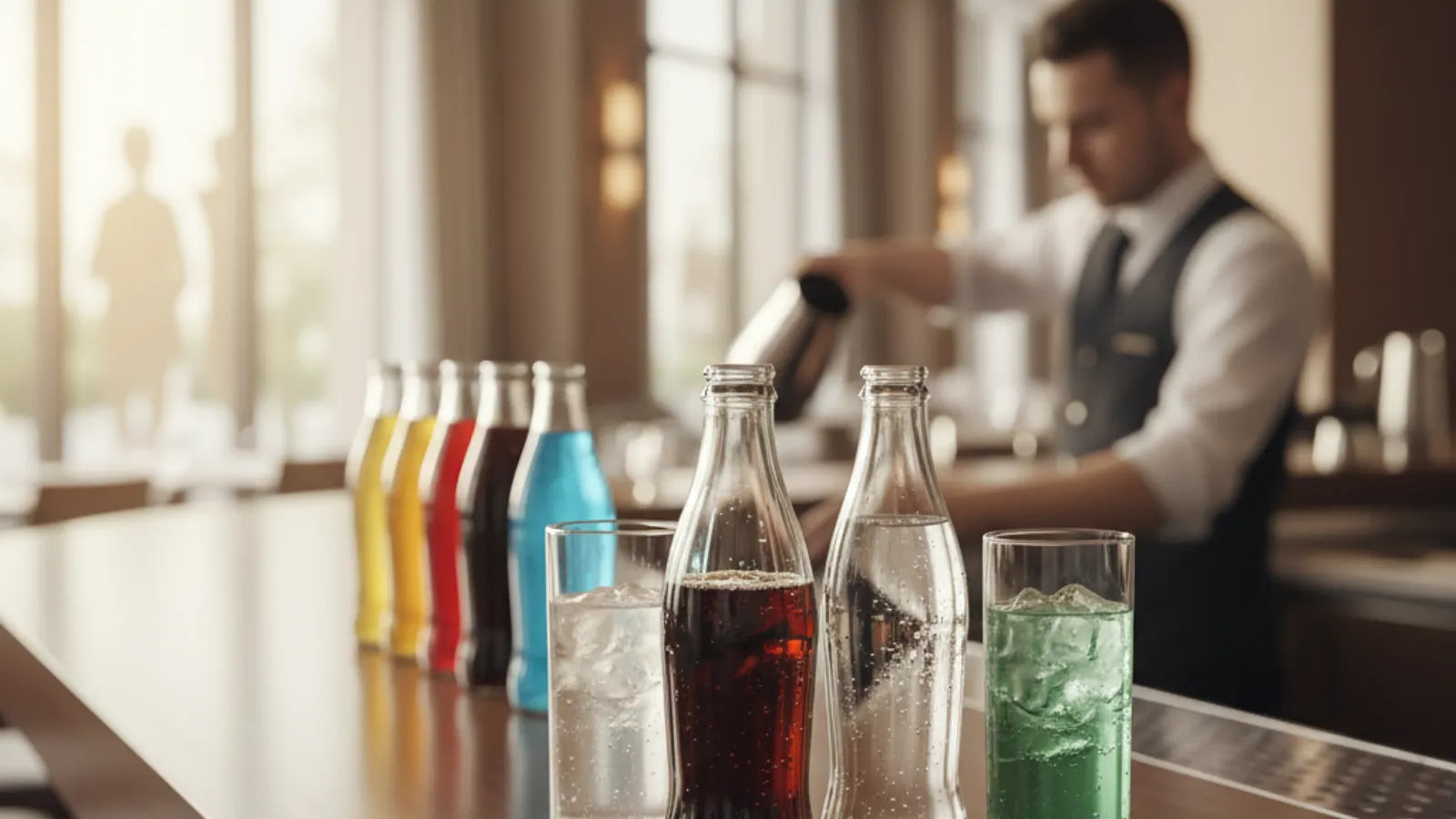
PepsiCo held the Marriott account for 34 years. It took one press release to end it. On 1 July, Marriott International and The Coca-Cola Company announced a global agreement that makes Coke the beverage partner across roughly 10,000 hotels in 146 countries and territories. Coca-Cola just took one of the most visible hospitality accounts in the world away from PepsiCo. The rollout started in the United States on day one and reaches the rest of the world over the coming months.
What the deal covers
The agreement puts Coca-Cola products into Marriott guestrooms, restaurants, bars, lounges, meetings and events. It covers carbonated soft drinks plus what the companies call "a growing range of hydration and functional beverages." Neither side disclosed the length of the contract or the money involved. Marriott CEO Anthony Capuano said the deal will create "economic benefits for owners and franchise operators across our system." Coca-Cola CEO Henrique Braun called it "a great day" for the Coca-Cola system.
The scale is worth pausing on. When PepsiCo last renewed the Marriott contract in August 2018, Marriott had about 4,000 properties in North America and just over 800 elsewhere. The estate Coca-Cola is walking into is roughly double that. The account PepsiCo lost is about twice the size of the one it renewed in 2018.
Why Marriott switched
Marriott gave its owners a plain answer. In a letter to franchisees, group president Satya Ananda wrote that the Coca-Cola portfolio "is preferred globally by a margin of 2:1 and is favored by more than 70% of Marriott's guests." Hotel owners pay for the beverages, so Marriott needed to convince them the switch pays. Marriott justified ending a 34-year supplier relationship with two consumer preference numbers. That detail should worry every incumbent supplier in every channel.
There is a neat historical note in the fine print. The deal was negotiated through Hot Shoppe International, Marriott's global procurement arm. The name goes back to the root beer stand J. Willard Marriott opened in 1927. Marriott started life as a beverage business. A century later, its beverage contract is one of the most fought-over accounts in hospitality.
The quiet prize: hydration and functional drinks
The headline reads as Coke versus Pepsi. The strategic story is everything else on the truck. The agreement explicitly covers hydration and functional beverages, the fastest-growing categories both companies are fighting over. An exclusivity deal like this closes the hotel channel to rival water, sports and functional drink brands in 10,000 buildings at once. A traveler who picks up a Coke-system water or sports drink in a hotel lobby is sampling the portfolio. Hotel guests also skew toward exactly the higher-income consumers that new functional brands are chasing.
A pattern PepsiCo cannot ignore
The switch fits a pattern. Panda Express moved from Pepsi to Coke in 2018. Arby's did the same that year. Costco moved its food courts back to Coke in 2025 after twelve years with Pepsi. The big away-from-home accounts have been sliding in one direction for most of a decade. The loss also lands at an awkward moment. PepsiCo has been pushing hard into foodservice through its away-from-home unit and used its 2026 World Cup presence to court venues and restaurant chains. Losing a 34-year hotel flagship cuts against that story.
What operators and investors should watch
Watch three things from here. First, whether PepsiCo defends its remaining marquee accounts with sharper pricing, which would squeeze margins across the channel and strengthen buyers' hands in renewals. Second, how fast Coca-Cola uses the hotel estate to push its hydration and functional brands, since distribution wins like this feed the preference data that wins the next contract. Third, whether other global hotel groups reopen their own beverage deals now that the biggest one has moved. Exclusive channel contracts have become the quiet battleground of the beverage industry, and the next round of renewals will show whether Marriott started a chain reaction.

Global Aseptic Packaging Market Report 2026
148.4bn litres and 344bn packs in 2025. Aseptic volumes across dairy, dairy alternatives, beverages and food in 39 markets — 2025 actuals and forecasts to 2030. Buy online and receive it within 24 hours.
More information
Global Cheese Database 2026
Production, imports, exports and consumption for 39 cheese types across 48 countries, with actuals through 2025 and forecasts to 2030. Join the waitlist for early access, pre-launch pricing and a free sample country chapter.
Get early accessStrategic Insights
📊 Analytics & Strategic Insight
Away-from-home exclusivity is now a portfolio war, and the scoreboard is public
The decision most in this industry are avoiding:
👉 Channel contracts are marketing budgets wearing a sales badge. Judged on unit margin, a hotel or foodservice deal looks unattractive, so many suppliers underbid on them. Judged as paid sampling in front of millions of captive, higher-income consumers, the same contract is cheap. Most companies still score these deals on the wrong ledger.
👉 Preference data wins the room before the pitch starts. Marriott sold the switch to its owners with a 2:1 global preference claim and a 70% guest preference figure. Few suppliers invest in account-level preference evidence until the renewal is already live, and by then the side with the numbers has set the terms.
👉 The bundle decides who is even allowed to bid. These agreements now span cola, water, sports and functional drinks in one contract. A single-category supplier gets filtered out before commercial terms are discussed, yet most challenger brands still plan channel growth as if each category were tendered separately.
Here's the full context:
→ 1992: PepsiCo signs its global beverage agreement with Marriott International, taking the hotel giant's lobby markets, restaurants, bars and in-room dining.
→ 2013: Costco switches its food court fountain business from Coca-Cola to PepsiCo, one of the few big away-from-home accounts moving in Pepsi's direction.
→ 2018: Marriott renews with PepsiCo when it counts about 4,000 North American properties and just over 800 international hotels. The same year, Panda Express and Arby's both move from Pepsi to Coke.
→ 2025: Costco moves its food courts back to Coca-Cola after twelve years, returning the most symbolic Pepsi channel win of the decade.
→ Most recent: On 1 July 2026, Coca-Cola becomes Marriott's global beverage partner across roughly 10,000 properties in 146 countries, covering carbonated soft drinks plus hydration and functional beverages.
What this means for food and beverage operators and investors:
✅ Channel wins compound. Visibility creates sampling, sampling creates preference data, and preference data wins the next contract. That flywheel explains why the big away-from-home accounts have drifted one way for a decade, and why losing a flagship account costs more than its direct revenue.
✅ A defensive price war would hand buyers the advantage. PepsiCo now has strong reasons to protect its remaining marquee accounts. Venue owners, hotel groups and restaurant chains with contracts expiring in the next 24 months should expect sharper bids and should test the market rather than auto-renew.
✅ The hotel wall just rose for challenger brands. Emerging water, energy and functional brands lost access to a 10,000-building channel in one announcement. Retail listings and DTC will not replace locked venues, so distribution partnerships with a major system get more important, and more expensive.
3 moves you can make this week:
1️⃣ Build the contract calendar. List your ten biggest away-from-home accounts, plus the ten you want, with incumbent supplier and expiry date. Flag everything inside 18 months.
2️⃣ Assemble a preference pack. Pull together consumer preference and velocity evidence for your top accounts now, before a renewal starts. One page the buyer can forward internally beats a forty-slide deck.
3️⃣ Price your bundle gap. Map which categories the next big tender will cover and mark where your portfolio cannot answer. Decide whether to build, license or partner to fill each gap, and cost each route before the tender lands.
Take the Next Step
💧 Also covering the water dispense market?
Water dispense is one of the fastest-growing segments in food and beverage. Operator data, revenue benchmarks, and market intelligence across 32 countries.
→ Explore water dispense insights
Zenith Consulting
Submit your food & beverage project enquiry.
Share your requirements. If there is a strong fit, we’ll come back with an indicative investment range, project timeline and recommended strategic approach.
Reviewed by Zenith Consulting’s senior food & beverage strategy team.
Related analyses
- Health, Nutrition & Functional
Dreher Adds A 12,000 Carton An Hour Elopak Aseptic Line Into A German Juice Market Down To 1,915 Million Litres
Dreher Group has started filling its own aseptic cartons at Stockach on an Elopak E-PS120AH running up to 12,000 cartons an hour. It joins a German market where Zenith's own data shows aseptic volume falling 2.6% a year and juices and nectars down to 1,915 million litres.
Read analysis → - Health, Nutrition & Functional
SIG Targets 85% Paper In Aseptic Cartons: Aluminium-Free Still Has Enormous Room To Scale
SIG says it is working towards 85% paper content in its aseptic cartons, with polymer and fibre barriers doing the work aluminium used to do. Set against the 344 billion aseptic packs filled worldwide in 2025, the aluminium-free carton is still a rounding error.
Read analysis → - Health, Nutrition & Functional
Saputo Creates A Dairy Ingredients Division: Cheese Plants Are Now Judged On Their Whey
Saputo has split dairy ingredients into its own division under Steve Douglas. US cheese output rose 2.1% in July while whey protein concentrate output fell 2.3%.
Read analysis →
Share it with your peers
Pass this analysis to colleagues who track the food and beverage market.
Zenith Market Intel
Need a specific food or beverage market report?
Tell us which category, region or question would be useful for your team.
Sister Publication
Also follow our Water Dispense Market Intelligence
Category analyses, operator briefings, and investor signals across the global water dispense market.