The FDA Sent Its Ultra-Processed Food Definition to the White House as a White Paper. Food Manufacturers Just Lost the Preemption They Were Counting On
The FDA filed its proposed definition of ultra-processed food with the White House budget office on 3 August as a white paper rather than a proposed rule. That choice strips the definition of legal force, and with it any power to override California, Texas and the 38 states now writing their own ingredient laws.
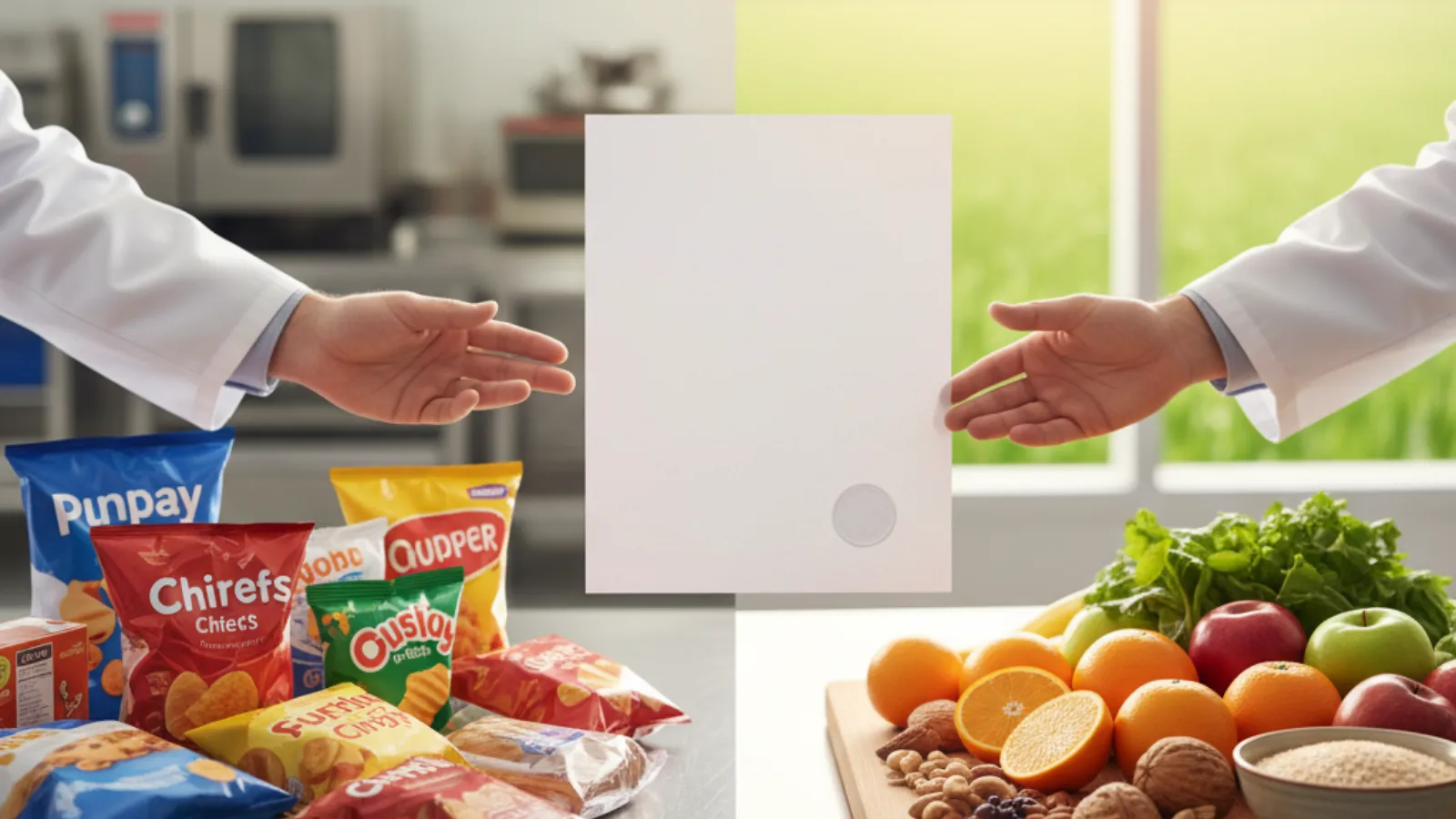
Fifty-five percent of every calorie eaten in the United States comes from ultra-processed food. Among children aged six to eleven it is 64.8%. Until this month, no federal agency had a written definition of what that phrase actually means.
On 3 August the Food and Drug Administration sent one to the White House. It now sits with the Office of Information and Regulatory Affairs under the title "White Paper: Proposed Definition of Ultra Processed Food". It is logged as a notice. It is marked not economically significant. It is not a proposed rule, and that single choice changes everything the definition can do.
A document with no legal force is also a document with nothing to sue
A proposed rule follows a set path. It goes in the Federal Register. It names the legal authority behind it. It takes public comment. Years later it becomes enforceable. Along the way industry can comment, litigate and shape it. And once it lands, federal law generally sits above state law.
A white paper does none of that. There is no comment period to file into. There is no final rule to challenge in court. There is no preemption. The industry spent two years asking for one federal standard, and got a definition that overrides nothing.
That matters because the fight so far has been fought on legal ground. Food trade groups went to court in December 2025 over the Texas warning label law. The FRESH Act was introduced in April 2026, with backing from large manufacturers. It was written to override state ingredient rules. Both moves assume the argument gets settled by law. A white paper moves the argument somewhere else.
The state patchwork just became the operating reality
California already has a legal definition. Assembly Bill 1264 took effect on 1 January 2026. The test has two parts. A food is ultra-processed if it holds a listed additive, such as a dye, an emulsifier or an artificial sweetener. It also has to be high in saturated fat, added sugar or sodium.
The California timetable is long and specific. Experts had to name the most harmful products by 1 July 2026. Vendors selling into California schools file an annual report from 1 February 2027. Schools start removing the worst products on 1 January 2028. The state health department must define "ultra-processed foods of concern" by 1 June 2029. Vendors are barred from offering them by 1 July 2032, and schools by 1 July 2035. California is the working national standard already, because almost nobody bakes a separate biscuit for one state.
Texas took a different route. Its warning label law names 44 additives and sets the exact wording that has to appear on pack. In 2025 alone, 35 states introduced 93 bills on food additives, part of more than 140 bills across 38 states. A federal definition that preempts nothing adds one more standard to a pile that already runs past fifty.
The pressure will not arrive as a statute
Look at what happened with synthetic dyes. There was no ban. There was an understanding between the health secretary and manufacturers, and the reformulation started anyway. A definition works the same way, only faster and at almost no cost to the regulator.
Once a federal reference point exists, it gets picked up by people who do not need a statute. School districts write it into tenders. Retailers write it into own-brand specifications. Plaintiff lawyers put it in front of juries. State legislators copy the wording. Investors ask what share of revenue sits inside it. A voluntary standard is cheap for the government and expensive for the manufacturer.
Front-of-pack labels are the slower half
Health secretary Robert F Kennedy Jr wants a traffic light label. He has also said he wants a mark for ultra-processed products, once a shared definition exists. The proposal already on the table is a plain black and white box. It shows low, medium or high for a handful of nutrients.
Those are two different systems. Amaru Sanchez, an attorney at Akin Gump, has set out the problem. Adding a colour scheme and an ultra-processed claim to the current proposal would fail the "logical outgrowth" test under the Administrative Procedure Act. The FDA would have to start a fresh round of rulemaking. The label is years out. The definition is weeks out.
What operators should plan against
One number is worth holding on to. The share of adult calories from ultra-processed food is falling. It was 55.8% in 2013 to 2014. It is 53.0% in the most recent survey. The category has been shrinking as a share of the American diet since well before any of this started. Reformulation, protein claims and the move to fresh were already doing the work.
So the planning error is to wait for a compliance date. There may never be one. The definition itself is the event. From the day it publishes, every buyer, retailer, lawyer and legislator has one shared way to sort a shelf. The sorting starts at once. Manufacturers who can already say which of their products fall inside the California test know their exposure today. Everyone else finds out when a retail buyer tells them.
Global Aseptic Packaging Market Report 2026
148.4bn litres and 344bn packs in 2025. Aseptic volumes across dairy, dairy alternatives, beverages and food in 39 markets — 2025 actuals and forecasts to 2030. Buy online and receive it within 24 hours.
More information
Global Cheese Database 2026
Production, imports, exports and consumption for 39 cheese types across 48 countries, with actuals through 2025 and forecasts to 2030. Join the waitlist for early access, pre-launch pricing and a free sample country chapter.
Get early accessStrategic Insights
📊 Analytics & Strategic Insight
The rule that is not a rule is the one that moves the shelf
The decision most in this industry are avoiding:
👉 Compliance plans start at a deadline, so a rule without one gets no owner. No date means no project, no budget and no name against it. The definition still reprices the shelf on the day it publishes.
👉 The industry asked for the wrong prize. One federal standard was the goal. A standard that cannot override a state law is a fifty-first standard. It also arrived with no comment period, so nobody gets to argue with it.
👉 Almost no manufacturer has scored its own range. Very few can say what share of revenue meets the California test. Skip that work and a retail buyer does it for you.
Here's the full context:
→ 2013 to 2014: ultra-processed food accounts for 55.8% of adult calories in the United States. No federal definition of the term exists anywhere.
→ 2025: 35 states introduce 93 bills on food additives. Texas passes a warning label law naming 44 ingredients. Trade groups sue over it in December.
→ 1 January 2026: California Assembly Bill 1264 takes effect. The country has its first legal definition of ultra-processed food, plus a school phase-out running to 2035.
→ April 2026: the FRESH Act is introduced in Congress to override state ingredient laws. Its path through the Senate stays unclear.
→ Most recent: on 3 August 2026 the FDA sends its definition to the budget office as a white paper. It is logged as a notice and it binds nobody.
What this means for food and beverage operators and investors:
✅ Score your own range before someone else does. The California test is public. You can run it on a spreadsheet. The answer is a revenue number, and it belongs in the forecast.
✅ Buyers move faster than legislators. School boards, hospital groups, caterers and own-brand teams can adopt a definition the week it lands. None of them wait for a rule.
✅ Reformulation is already priced into the category. The share of calories from ultra-processed food has fallen for a decade with no federal rule at all. Treat this as a product question. The brands treating it as paperwork are behind.
3 moves you can make this week:
1️⃣ Run the California test across your top 20 products. Flag each one that pairs a listed additive with high saturated fat, sugar or sodium. Put the revenue total on one line.
2️⃣ Reread the last three tenders you answered. Look for wording on additives, dyes or processing. That is where a definition enters your business first, long before any law does.
3️⃣ Ask your two largest customers what their own standard says. Retailers and caterers are writing these rules now. A copy this quarter is cheaper than a recipe change next year.
Take the Next Step
💬 You don't need a written brief.
Tell us what you are weighing up, and we will come back with the likely project scope, recommended direction and cost range.
→ Tell us what you're planning
Zenith Consulting
Submit your food & beverage project enquiry.
Share your requirements. If there is a strong fit, we’ll come back with an indicative investment range, project timeline and recommended strategic approach.
Reviewed by Zenith Consulting’s senior food & beverage strategy team.
Related analyses
- Health, Nutrition & Functional
Dreher Adds A 12,000 Carton An Hour Elopak Aseptic Line Into A German Juice Market Down To 1,915 Million Litres
Dreher Group has started filling its own aseptic cartons at Stockach on an Elopak E-PS120AH running up to 12,000 cartons an hour. It joins a German market where Zenith's own data shows aseptic volume falling 2.6% a year and juices and nectars down to 1,915 million litres.
Read analysis → - Health, Nutrition & Functional
SIG Targets 85% Paper In Aseptic Cartons: Aluminium-Free Still Has Enormous Room To Scale
SIG says it is working towards 85% paper content in its aseptic cartons, with polymer and fibre barriers doing the work aluminium used to do. Set against the 344 billion aseptic packs filled worldwide in 2025, the aluminium-free carton is still a rounding error.
Read analysis → - Health, Nutrition & Functional
Saputo Creates A Dairy Ingredients Division: Cheese Plants Are Now Judged On Their Whey
Saputo has split dairy ingredients into its own division under Steve Douglas. US cheese output rose 2.1% in July while whey protein concentrate output fell 2.3%.
Read analysis →
Share it with your peers
Pass this analysis to colleagues who track the food and beverage market.
Zenith Market Intel
Need a specific food or beverage market report?
Tell us which category, region or question would be useful for your team.
Sister Publication
Also follow our Water Dispense Market Intelligence
Category analyses, operator briefings, and investor signals across the global water dispense market.