Kirin's Vitamins Out-Earn Its Soft Drinks: Inside the C$2.5bn Jamieson Wellness Deal
Kirin's health science arm now earns twice the profit of its Japanese soft drinks business on roughly the same sales. That gap explains the C$2.5bn it just agreed to pay for Canada's Jamieson Wellness, and why Nestle is selling the same kind of asset.
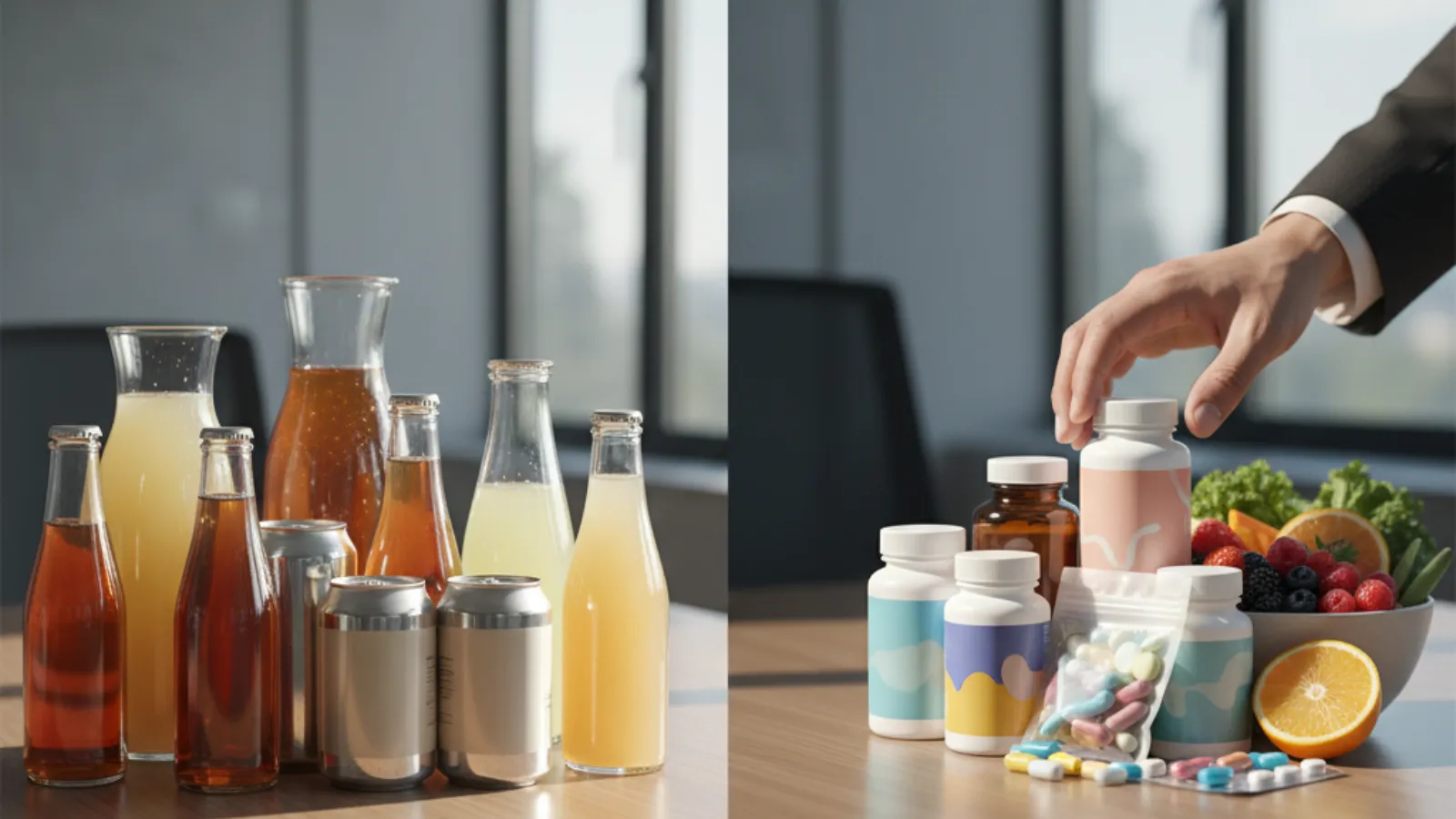
Two numbers from the same group, over the same six months. Kirin's soft drinks arm made 121.8bn yen of sales and 5.2bn yen of profit. Its health science arm made 128.8bn yen of sales and 10.4bn yen of profit. The two arms are now about the same size, and the vitamins make twice the money. Five days ago Kirin agreed to pay C$2.5bn for more of the second one.
The deal
On 6 August Jamieson Wellness agreed to be bought by Kirin Holdings. Kirin will pay C$45.75 a share in cash. That values Jamieson at about C$2.0bn for the shares. It works out at about C$2.5bn once debt is counted. The price sits 27% above the average traded price of the prior 20 days. It sits 32% above the 60-day figure. Both are measured to 24 June.
Jamieson sold C$822.1m last year, up 12%. About 65% of that came from North America. It sells in more than 50 countries. The board backed the deal. It still needs shareholder, court and antitrust clearance. Kirin expects to close in the fourth quarter.
This is the third health and wellness firm Kirin has bought in three years. Blackmores in Australia in 2023. FANCL in Japan in 2024. Jamieson in Canada now. President and COO Takeshi Minakata said the group had been hunting a North American target since 2020.
The half year that explains it
Kirin Beverage sold 121.8bn yen in the first half, down 2.8%. Its normalised operating profit fell 30.2% to 5.2bn yen. Kirin blamed lower volume, dearer raw materials and processing, and heavier spend on ads and promotions.
Health science went the other way. Sales rose 1.3% to 128.8bn yen. Profit rose 20.8% to 10.4bn yen. Soft drinks in Japan is now the smaller earner in its own house.
Nestle reached the opposite answer
Nestle has moved its mainstream vitamin brands into assets held for sale, alongside ice cream. It booked a CHF1.3bn write-down against that move. In 2021 it paid $5.75bn for those brands. The list included Nature's Bounty, Osteo Bi-Flex and Puritan's Pride. The US own-label arm came too. Nestle is keeping the premium names: Solgar, Garden of Life and Pure Encapsulations.
One giant is buying its third vitamin business while another writes one down and sells. Same shelf. Opposite calls.
What separates the two calls
The split sits one level below the shelf, in what each buyer owns. Nestle bought big mainstream brands. Those brands fight on price against store labels in a crowded aisle. Every year you rent the space again.
Kirin owns two things it can move around. LC-Plasma is an immune postbiotic. Citicoline is sold for brain health. Kirin can put both in drinks, in food, in pills, and in other people's packs. Jamieson gives it a North American shelf to run them through. That work has already started with Blackmores. The two launched a joint immune sachet in Taiwan in March 2025. Two Blackmores brain products followed in Australia and New Zealand last month.
The line most readers will miss
Kirin's health arm made money for the first time in FY2025. Sales rose 43.4% to 251.4bn yen. Profit swung from a 10.9bn yen loss to an 11.1bn yen gain. Then look inside. FANCL made 9.6bn yen and Blackmores made 6.3bn yen. Two bought brands made 15.9bn yen while the whole arm made 11.1bn yen. The rest of it lost about 4.8bn yen.
The bought brands are paying for the science. The science does not yet pay for itself. So Kirin needs a North American shelf for two ingredients, and Jamieson has one.
What to watch
Kirin wants 500bn yen of health science sales by 2035 at a 15% margin. FY2025 was 251.4bn yen at about 4.4%. Jamieson adds roughly 90bn yen. The sales gap closes with deals. The margin gap does not.
C$2.5bn for C$822m of sales is about three times sales. That price works only if the ingredients travel. Three things will tell you inside 18 months. Whether LC-Plasma shows up in Jamieson packs. Whether Kirin fixes its Japanese drinks arm or lets it shrink. And what Nestle gets for its mainstream brands. That number sets the floor for every mainstream vitamin business on sale.
Global Aseptic Packaging Market Report 2026
148.4bn litres and 344bn packs in 2025. Aseptic volumes across dairy, dairy alternatives, beverages and food in 39 markets — 2025 actuals and forecasts to 2030. Buy online and receive it within 24 hours.
More information
Global Cheese Database 2026
Production, imports, exports and consumption for 39 cheese types across 48 countries, with actuals through 2025 and forecasts to 2030. Join the waitlist for early access, pre-launch pricing and a free sample country chapter.
Get early accessStrategic Insights
📊 Analytics & Strategic Insight
The vitamin aisle has split into two businesses, and most groups still buy it as one
The decision most in this industry are avoiding:
👉 Owning a brand and owning an ingredient are different jobs. A brand rents shelf space every year. An ingredient can be sold through drinks, food, pills and other people's packs. Most groups buy brands and then wonder why the margin never turns up.
👉 The bought brands are carrying the science. FANCL and Blackmores made 15.9bn yen last year. The whole health arm made 11.1bn yen. The rest of it, the part built around Kirin's own ingredients, lost about 4.8bn yen.
👉 A shrinking core is a deal signal, and boards keep filing it as a cost problem. Kirin's soft drinks profit fell 30.2% in the half. That number is why this deal got signed. It appears nowhere in the deal papers.
Here's the full context:
→ 2021: Nestle pays $5.75bn for the Bountiful vitamin brands and the US own-label arm.
→ 2023: Kirin buys Blackmores in Australia. Its first health shelf outside Japan.
→ 2024: Kirin buys FANCL at home in Japan. Sales in the arm jump 43.4% the year after.
→ 2026, July: Nestle books a CHF1.3bn write-down and moves its mainstream vitamin brands to assets held for sale.
→ Most recent: On 6 August Kirin agrees to buy Jamieson Wellness at C$45.75 a share, about C$2.5bn with debt. Days earlier its own soft drinks profit fell 30.2%.
What this means for food and beverage operators and investors:
✅ Price what travels. A brand that sells in one aisle is worth less. A brand that carries something you can put in five formats is worth more. Ask which one you are buying before you agree a number.
✅ A weak core makes buyers pay up. Kirin paid about three times sales. Sellers can read a 30% profit fall as well as you can, and they price it in.
✅ Watch what Nestle gets for its mainstream brands. That price sets the floor for every mainstream vitamin business on the market this year. It also tells you what your own tail brands are worth.
3 moves you can make this week:
1️⃣ Put sales and profit side by side for every business unit. If a small arm out-earns a big one, you have a portfolio question on your hands. A cost programme will not answer it.
2️⃣ List everything you own that can travel across formats. A strain, a process, a licence, a health claim. If the list is empty, every deal you do is a shelf purchase.
3️⃣ Work out what your last three deals earn on their own. Strip them out and look at what is left. Kirin's remainder loses money, and it took two bought brands to hide that.
Take the Next Step
🧭 Facing a decision like this in your own category?
Describe it in a few lines. Selected enquiries receive an initial strategic assessment: direction, likely scope and indicative investment range.
→ Start a project enquiry
Zenith Consulting
Submit your food & beverage project enquiry.
Share your requirements. If there is a strong fit, we’ll come back with an indicative investment range, project timeline and recommended strategic approach.
Reviewed by Zenith Consulting’s senior food & beverage strategy team.
Related analyses
- Health, Nutrition & Functional
Dreher Adds A 12,000 Carton An Hour Elopak Aseptic Line Into A German Juice Market Down To 1,915 Million Litres
Dreher Group has started filling its own aseptic cartons at Stockach on an Elopak E-PS120AH running up to 12,000 cartons an hour. It joins a German market where Zenith's own data shows aseptic volume falling 2.6% a year and juices and nectars down to 1,915 million litres.
Read analysis → - Health, Nutrition & Functional
SIG Targets 85% Paper In Aseptic Cartons: Aluminium-Free Still Has Enormous Room To Scale
SIG says it is working towards 85% paper content in its aseptic cartons, with polymer and fibre barriers doing the work aluminium used to do. Set against the 344 billion aseptic packs filled worldwide in 2025, the aluminium-free carton is still a rounding error.
Read analysis → - Health, Nutrition & Functional
Saputo Creates A Dairy Ingredients Division: Cheese Plants Are Now Judged On Their Whey
Saputo has split dairy ingredients into its own division under Steve Douglas. US cheese output rose 2.1% in July while whey protein concentrate output fell 2.3%.
Read analysis →
Share it with your peers
Pass this analysis to colleagues who track the food and beverage market.
Zenith Market Intel
Need a specific food or beverage market report?
Tell us which category, region or question would be useful for your team.
Sister Publication
Also follow our Water Dispense Market Intelligence
Category analyses, operator briefings, and investor signals across the global water dispense market.