The FDA Just Put Caffeine on Its 2026 Agenda: What New Labeling Guidance Means for Celsius, Monster and the Energy Drink Boom
The FDA has added caffeine labeling to its 2026 guidance agenda, its first real move toward the energy drink boom that Celsius, Monster and Red Bull have ridden for years. Here is what clearer caffeine rules would mean for the fastest-growing category in beverages, and which brands carry the most risk.
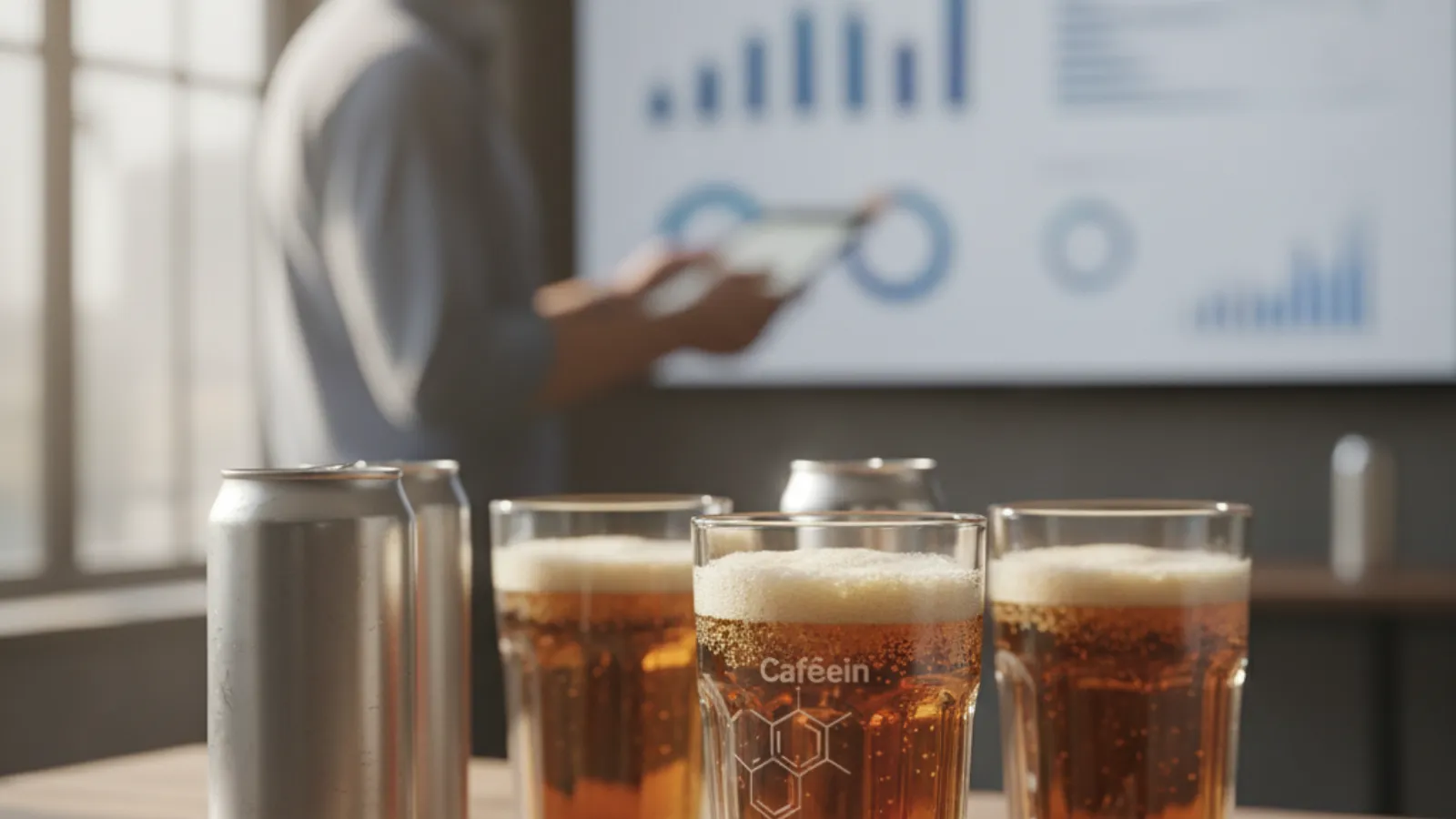
Energy drinks have been the fastest-growing corner of the beverage aisle for years. Now they have drawn the one thing a booming category never wants: federal attention. The FDA has added caffeine labeling to its 2026 list of guidance under development, its first real move to put energy drinks in its sights. The step is small on paper and large in signal. It tells every high-caffeine brand that the rules of the road are about to be written down.
What the FDA actually said
At the end of June, the FDA updated the guidance agenda for its Human Foods Program. Two items stand out for drinks makers. The agency is considering new guidance on how caffeine content is labeled on food and drinks. It is also reworking the rules for calling a product "healthy." Guidance is softer than a binding rule, but it is the step that usually comes right before one. The same 2026 agenda also includes a plan to define ultra-processed food and a push to lower added sugar. Read together, they point one way: more disclosure, and less benefit of the doubt.
Why now
The timing is not an accident. In June, Texas Attorney General Ken Paxton opened an investigation into Celsius Holdings after a 17-year-old who drank Alani Nu died from an enlarged heart, which the family links to heavy caffeine intake. Alani Nu is now a Celsius brand, bought for $1.8 billion and closed in April 2025, so the case lands on the market leader's doorstep. Celsius and Alani Nu together hold close to 21% of the US energy drink market by dollars. When the biggest player in a category draws a state probe, a federal look tends to follow.
The gap the guidance would close
Here is what surprises most people. Right now, a drink maker does not have to tell you how much caffeine is in the can. Federal rules only require caffeine to be listed when it is added on its own, and no rule forces a brand to print the milligram amount. If the caffeine rides in on an ingredient like coffee or guarana, it may not even appear. Many energy brands print the number by choice. Plenty of pre-workout powders, sodas and snacks do not. New guidance would push the whole shelf toward one clear number per serving. That sounds simple. For a brand built on a big hit of energy, it changes the story on the front of the pack.
Who has the most to lose
The exposure is not spread evenly. The brands most at risk are the ones that sell a high caffeine load to young buyers and lean on social media to do it. Celsius, Alani Nu and a wave of newer names built their growth on gym culture and short-form video, where the audience skews young. A clear milligram label plus a possible warning on high-caffeine products would bite them harder than it bites coffee, where the caffeine is expected and the buyer is older. Monster and Red Bull sit in between: huge, global and long used to scrutiny, yet still exposed on the teen-marketing question.
The money still says growth
None of this has scared off capital yet. Days before the FDA news, Nutrabolt, the maker of C4 Energy, picked banks for a US listing, a sign investors still read the category as a growth story. That is the tension operators now have to hold. Demand is real and rising. The regulatory floor is rising too. The winners will be the brands that treat clear labeling as a feature they chose rather than a punishment they fought.
What to watch next
Draft guidance can take months to appear and longer to bite, so the near-term risk is legal and reputational rather than a hard rule change. Watch whether more states follow Texas, and whether large retailers start asking for caffeine caps or clearer labels before the FDA forces the point. Retailers move faster than regulators when a safety story reaches parents. For any brand selling a strong jolt in a bright can, the smart play is to get ahead of the number now, while it is still a choice.
Global Aseptic Packaging Market Report 2026
148.4bn litres and 344bn packs in 2025. Aseptic volumes across dairy, dairy alternatives, beverages and food in 39 markets — 2025 actuals and forecasts to 2030. Buy online and receive it within 24 hours.
More information
Global Cheese Database 2026
Production, imports, exports and consumption for 39 cheese types across 48 countries, with actuals through 2025 and forecasts to 2030. Join the waitlist for early access, pre-launch pricing and a free sample country chapter.
Get early accessStrategic Insights
📊 Analytics & Strategic Insight
Regulation is the tax a category pays for winning, and the energy aisle's bill just arrived
The decision most in this industry are avoiding:
👉 Most energy brands still treat a caffeine number as a weakness to hide. Disclosing it first, on your own terms, is far cheaper than being forced to later after a headline decides the framing for you.
👉 Boards price demand growth into the model and leave the regulatory line blank. A category this hot always draws rules in the end. The only real question is when, and whether you moved before or after the rule did.
👉 The teen-marketing question is a brand-safety issue, not a compliance footnote. It quietly decides which large retailers keep stocking you once parents and attorneys general start paying attention.
Here's the full context:
→ 2018: Alani Nu launches, aimed at young women and built on gym culture and social media.
→ April 2025: Celsius closes its $1.8 billion purchase of Alani Nu, a brand that soon clears $1 billion in yearly sales.
→ Q1 2026: Celsius and Alani Nu together reach about 21% of the US energy drink market by dollars.
→ June 2026: Texas AG Ken Paxton opens an investigation into Celsius after a 17-year-old Alani Nu drinker dies from an enlarged heart.
→ Most recent: At the end of June 2026 the FDA adds caffeine labeling and a tighter "healthy" claim to its 2026 guidance agenda.
What this means for food and beverage operators and investors:
✅ Regulatory risk now belongs in the deal model. Anyone buying or funding a high-caffeine brand should price in labeling changes, possible warnings and limits on marketing to minors before agreeing a multiple.
✅ Clear labels favour scale. A large player can absorb a print and reformulation change across a whole portfolio, while a small challenger feels the cost on every single product.
✅ The "healthy" rewrite is the quieter threat. Functional drinks that lean on a health halo could lose the exact words that sell them, so watch that line as closely as the caffeine one.
3 moves you can make this week:
1️⃣ Put the milligram number on your front of pack before you are told to. Turn a forced disclosure into a trust message that you chose to send.
2️⃣ Audit your marketing for anything that reads as aimed at under-18s. Fix it now, before a regulator or a big retailer fixes it for you.
3️⃣ Model a high-caffeine warning and a lost "healthy" claim against your top five products. Know the cost while it is still a planning exercise, not a recall.
Take the Next Step
🎯 This is the thinking we bring to client projects.
If today's topic touches a decision on your desk this quarter, start the conversation before the window closes.
→ Start the conversation
Zenith Consulting
Submit your food & beverage project enquiry.
Share your requirements. If there is a strong fit, we’ll come back with an indicative investment range, project timeline and recommended strategic approach.
Reviewed by Zenith Consulting’s senior food & beverage strategy team.
Related analyses
- Health, Nutrition & Functional
Dreher Adds A 12,000 Carton An Hour Elopak Aseptic Line Into A German Juice Market Down To 1,915 Million Litres
Dreher Group has started filling its own aseptic cartons at Stockach on an Elopak E-PS120AH running up to 12,000 cartons an hour. It joins a German market where Zenith's own data shows aseptic volume falling 2.6% a year and juices and nectars down to 1,915 million litres.
Read analysis → - Health, Nutrition & Functional
SIG Targets 85% Paper In Aseptic Cartons: Aluminium-Free Still Has Enormous Room To Scale
SIG says it is working towards 85% paper content in its aseptic cartons, with polymer and fibre barriers doing the work aluminium used to do. Set against the 344 billion aseptic packs filled worldwide in 2025, the aluminium-free carton is still a rounding error.
Read analysis → - Health, Nutrition & Functional
Saputo Creates A Dairy Ingredients Division: Cheese Plants Are Now Judged On Their Whey
Saputo has split dairy ingredients into its own division under Steve Douglas. US cheese output rose 2.1% in July while whey protein concentrate output fell 2.3%.
Read analysis →
Share it with your peers
Pass this analysis to colleagues who track the food and beverage market.
Zenith Market Intel
Need a specific food or beverage market report?
Tell us which category, region or question would be useful for your team.
Sister Publication
Also follow our Water Dispense Market Intelligence
Category analyses, operator briefings, and investor signals across the global water dispense market.