Danone's A$2bn Australia Double Deal: Made Group, the Saputo Buyout, and Big Food's Protein and Gut-Health Land Grab
Danone has agreed two Asia-Pacific deals in a single day, buying Australia's Made Group for a reported A$2 billion and taking full control of its Saputo fresh dairy joint venture. The double swoop shows how Big Food is paying growth-stock prices to own the protein and gut-health brands it cannot build fast enough.
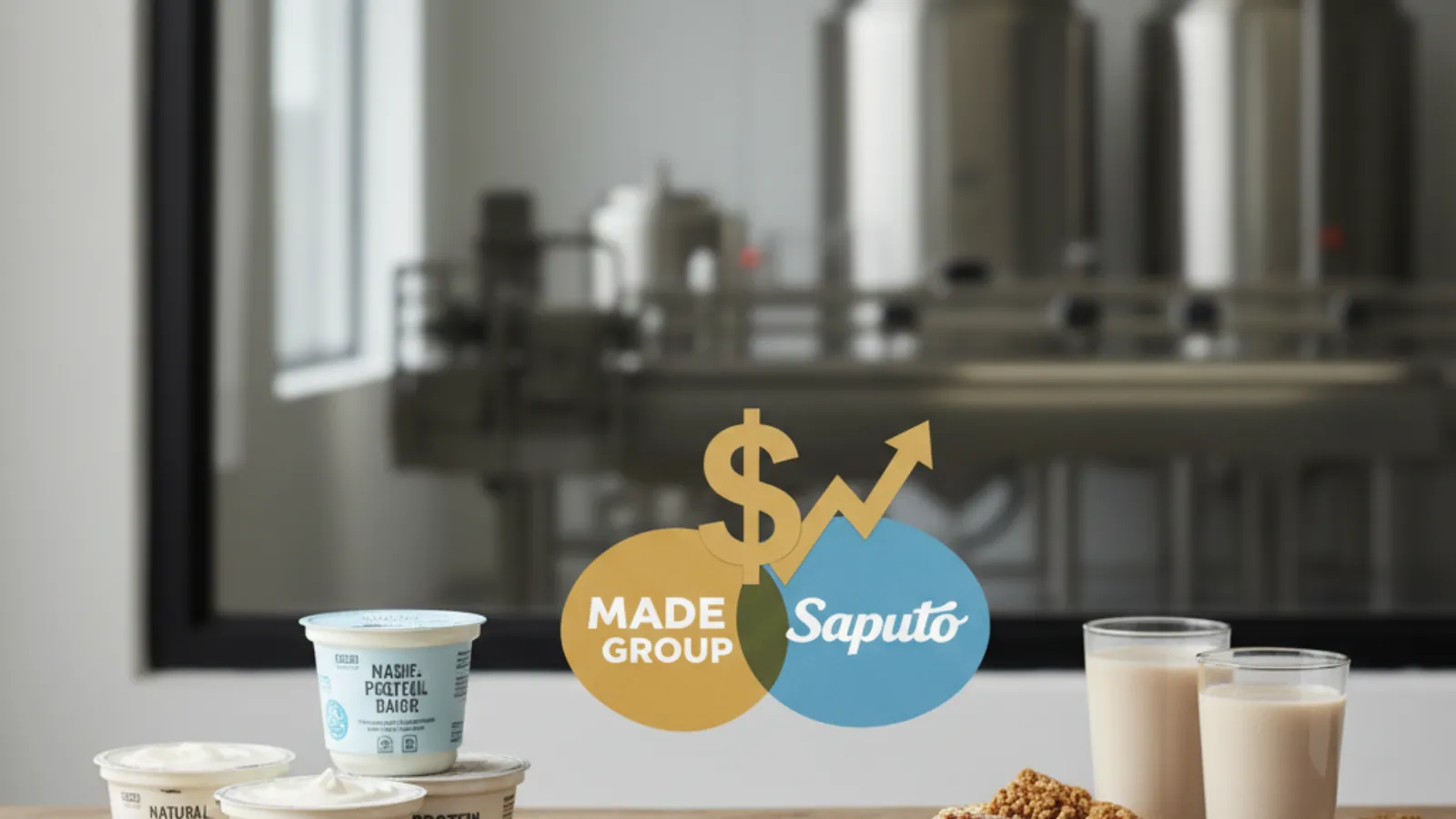
Danone just agreed to pay a reported A$2 billion for an Australian drinks business that booked about €300 million in sales last year. That works out to roughly four times revenue for a maker of coconut water, protein smoothies and gut-health yoghurt.
On 22 June 2026, Danone announced two Asia-Pacific deals on the same day. It agreed to buy Made Group, a fast-growing Australian beverage company. It also moved to take full control of its Australian fresh dairy joint venture with Saputo. The message is hard to miss: Danone is buying its next phase of growth, and it is buying it in Asia.
Two deals in one day
Made Group was founded in 2005 and has built a portfolio of health-focused drinks. It owns Cocobella, the coconut water and yoghurt brand, Rokeby, a protein smoothie line, Impressed cold-pressed juices, and Nutrientwater, billed as Australia's first enhanced water. The company sells across Australia, New Zealand and Southeast Asia. Danone said Made delivered double-digit growth and strong margins, with sales topping €300 million ($344 million) for the year ending June 2026.
The reported price tells you how Danone sees it. Australia's Financial Review put the deal at about A$2 billion, though Danone did not confirm terms. At that level, Danone paid a growth-stock price for growth it could not generate fast enough on its own. Coconut water and protein shakes do not usually trade at four times sales. Functional drinks that are still compounding double digits do.
Why Danone paid up
The logic sits in two words that run through almost every Big Food deal this year: protein and gut health. Made's range plugs straight into both. High-protein ready-to-drink products and gut-friendly yoghurts are two of the fastest-moving corners of nutrition, lifted by GLP-1 weight-loss drugs that push users toward protein and lighter, functional foods. Danone is buying a ready-made answer to the question every food maker is now asking: where is the healthy growth.
It also buys a bigger footprint in a region where Danone has been thin. Made's presence across Australia, New Zealand and Southeast Asia gives Danone distribution and local brands it would take years to build from scratch. The company called Made a meaningful contributor to its Essential Dairy and Plant-based business in the Asia-Pacific.
Taking full control of the Saputo brands
The second deal is quieter but just as telling. Danone will buy the 49% of its Australian fresh dairy joint venture it does not already own from Saputo. That hands it sole ownership of YoPRO, Activia and Ultimate, the functional yoghurt brands the partnership built. Buying out Saputo gives Danone every cent of upside from its fastest-selling Australian yoghurts instead of half. For Saputo, selling the stake fits a wider tidy-up of a dairy portfolio it has been pruning for two years.
Bolt-ons under the radar
There is a regulatory lesson buried in the timing. Danone's €1 billion bid for UK meal-replacement brand Huel is stuck in a Competition and Markets Authority review, with a market consultation that closed on 10 June feeding a formal investigation. The Australian deals, by contrast, are small enough to clear quietly while the headline acquisition draws the scrutiny. Big Food is learning that a string of digestible bolt-ons can rebuild a portfolio faster than one trophy deal that regulators can freeze for a year.
What it means next
For Danone, this is chief executive Antoine de Saint-Affrique's strategy in plain view: trade slow categories for fast ones, and pay up where the growth is real. Expect more bolt-ons in protein, gut health and functional drinks, especially in Asia, where the company is under-represented and the middle class is still expanding.
For everyone else in food and beverage, the read is sharper. When a category grows faster than you can build, the cheapest entry ticket is often the one you buy. The brands compounding double digits in protein and gut health are getting bid up now, while they are still independent. Operators sitting on one of those assets have rarely had more leverage, and buyers who wait will pay even more than four times sales.
Global Aseptic Packaging Market Report 2026
148.4bn litres and 344bn packs in 2025. Aseptic volumes across dairy, dairy alternatives, beverages and food in 39 markets — 2025 actuals and forecasts to 2030. Buy online and receive it within 24 hours.
More information
Global Cheese Database 2026
Production, imports, exports and consumption for 39 cheese types across 48 countries, with actuals through 2025 and forecasts to 2030. Join the waitlist for early access, pre-launch pricing and a free sample country chapter.
Get early accessStrategic Insights
📊 Analytics & Strategic Insight
Big Food is buying the protein and gut-health growth it cannot build
The decision most in this industry are avoiding:
👉 Waiting for functional brands to get cheaper. They are getting more expensive. Every quarter of double-digit growth raises the multiple a buyer has to pay.
👉 Treating Asia-Pacific as a later problem. Danone just paid up to enter now, because local brands with regional distribution are scarce and disappearing into bigger hands.
👉 Reading the Saputo buyout as housekeeping. Taking full control of a joint venture is a growth decision: you stop sharing the upside on your best-selling lines.
Here's the full context:
→ 2005: Made Group is founded in Australia and starts building health-focused drink brands led by Cocobella coconut water.
→ April 2026: Danone agrees to buy UK meal-replacement brand Huel for about €1 billion, signalling a deeper push into functional nutrition.
→ May 2026: Danone expands its Oikos ready-to-drink protein range in North America, chasing the same protein demand.
→ June 2026 (early): Danone's Huel deal enters a UK Competition and Markets Authority review after a market consultation closes on 10 June.
→ Most recent: On 22 June 2026, Danone agrees to buy Made Group for a reported A$2 billion and to take full control of its Saputo fresh dairy joint venture in Australia.
What this means for food and beverage operators and investors:
✅ Functional assets are repricing upward. A double-digit grower in protein or gut health now commands a growth multiple, so budget for it or move first.
✅ Bolt-ons beat trophy deals on speed. Smaller, regional purchases clear regulators while a single large deal can sit in review for a year.
✅ Joint ventures are worth a second look. Owning all of a winning brand captures every bit of the upside and removes a partner who may not share your ambition.
3 moves you can make this week:
1️⃣ List your functional winners. Flag every brand in your portfolio growing double digits in protein, gut health or hydration, and value it as if a buyer called tomorrow.
2️⃣ Map the independents. Build a short list of fast-growing regional brands in your category that still lack a big parent, before a rival buys them.
3️⃣ Review your joint ventures. Check which partnerships hold your best growth, and decide whether full control is worth buying out the other side.
Take the Next Step
🧭 Got a project in mind?
Send us your thoughts and project requirements and our consultants will build you a project plan.
→ Start a project enquiry
Zenith Consulting
Submit your food & beverage project enquiry.
Share your requirements. If there is a strong fit, we’ll come back with an indicative investment range, project timeline and recommended strategic approach.
Reviewed by Zenith Consulting’s senior food & beverage strategy team.
Related analyses
- Health, Nutrition & Functional
Dreher Adds A 12,000 Carton An Hour Elopak Aseptic Line Into A German Juice Market Down To 1,915 Million Litres
Dreher Group has started filling its own aseptic cartons at Stockach on an Elopak E-PS120AH running up to 12,000 cartons an hour. It joins a German market where Zenith's own data shows aseptic volume falling 2.6% a year and juices and nectars down to 1,915 million litres.
Read analysis → - Health, Nutrition & Functional
SIG Targets 85% Paper In Aseptic Cartons: Aluminium-Free Still Has Enormous Room To Scale
SIG says it is working towards 85% paper content in its aseptic cartons, with polymer and fibre barriers doing the work aluminium used to do. Set against the 344 billion aseptic packs filled worldwide in 2025, the aluminium-free carton is still a rounding error.
Read analysis → - Health, Nutrition & Functional
Saputo Creates A Dairy Ingredients Division: Cheese Plants Are Now Judged On Their Whey
Saputo has split dairy ingredients into its own division under Steve Douglas. US cheese output rose 2.1% in July while whey protein concentrate output fell 2.3%.
Read analysis →
Share it with your peers
Pass this analysis to colleagues who track the food and beverage market.
Zenith Market Intel
Need a specific food or beverage market report?
Tell us which category, region or question would be useful for your team.
Sister Publication
Also follow our Water Dispense Market Intelligence
Category analyses, operator briefings, and investor signals across the global water dispense market.