PepsiCo's 'House of Treats' and the Battle for Restaurant Drinks: Why Chains Want to Become Beverage Companies
PepsiCo has launched Pepsi 'House of Treats,' a drinks platform for restaurants and venues, to fight back as chains like Taco Bell turn drinks into a high-profit business. Here is why the next cola war will be won inside restaurants, not on the supermarket shelf.
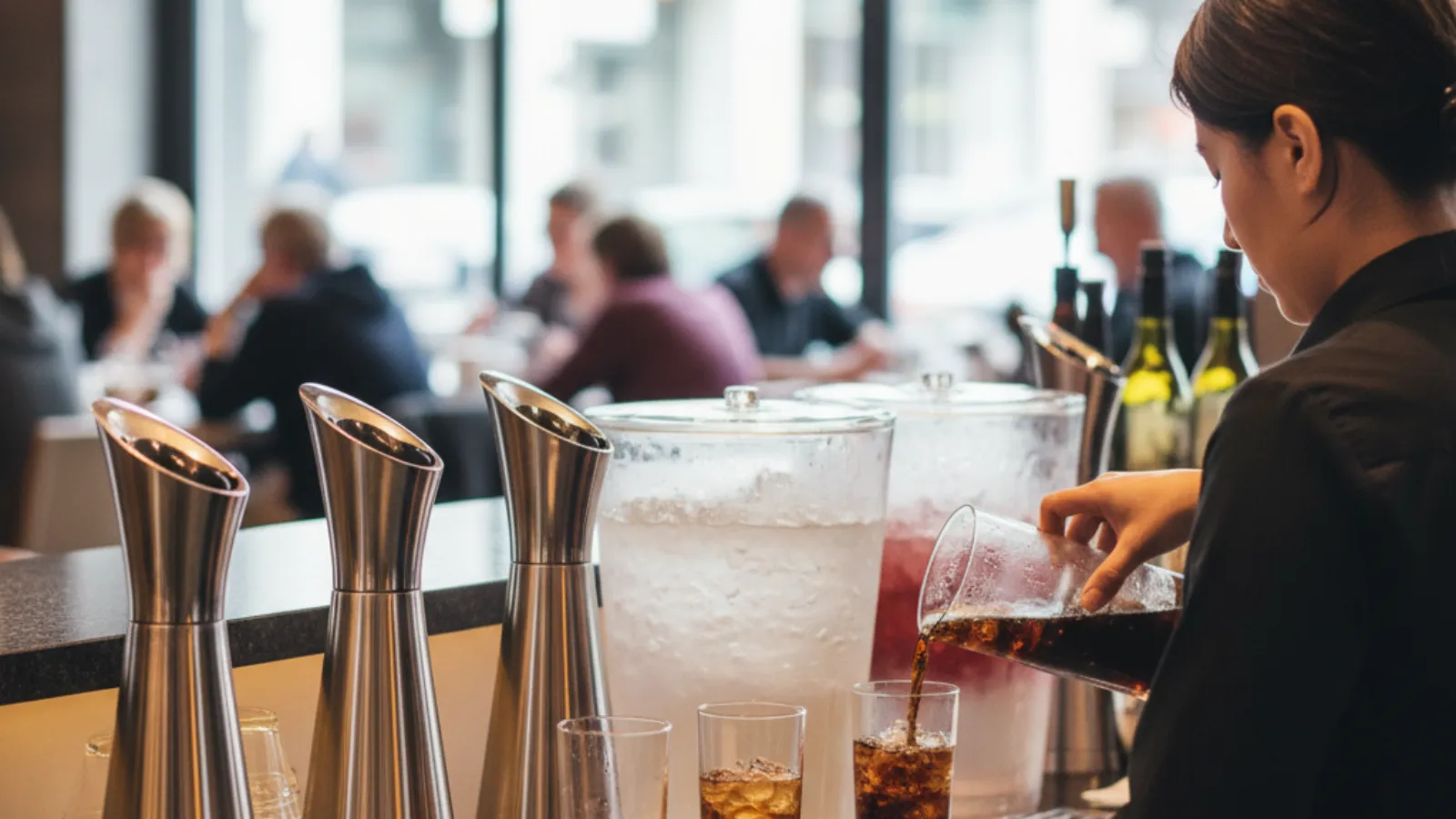
A fountain drink costs a few cents to make. It sells for a few dollars. At gross margins of 60 to 80 percent, the drink is the most profitable thing most restaurants sell. That one fact is changing the whole beverage business.
On 10 June, PepsiCo launched Pepsi 'House of Treats.' It is a new 'Away From Home' drinks platform for cinemas, stadiums, restaurants and live events. The pitch sounds playful: Yuzu Lychee, White Peach Sangria, and a trend the company calls 'treatanomics.'
But the real reason is defence. For a century, PepsiCo's main rival was Coca-Cola. Now there is a new threat. The restaurants that sell its drinks want to become drinks companies themselves.
The threat is coming from restaurants
For a hundred years the drinks trade ran on a simple deal. Companies like Coca-Cola and PepsiCo made the drink. Restaurants poured it under exclusive 'pouring rights' contracts. That deal is breaking down, because owners have worked out that the drink, not the burger, is where the money is.
Taco Bell has gone the furthest. Its Live Más Café wants to build a $5 billion drinks business by 2030. On its own, that would rank among the biggest drink sellers in the United States. Early cafés lifted sales by about 40 percent, and one California store sells more than 900 specialty drinks a day.
The growth is real. Taco Bell has already sold over 600 million drinks this year, up 16 percent. McDonald's used its CosMc's spin-off to test drinks. Chick-fil-A has launched Frosted Sodas and a drinks-only brand called Daybright.
Why drinks beat food on profit
The math is simple. Most restaurants keep only 3 to 6 cents of profit on each dollar of sales, going by data from Toast. A specialty drink is mixed in seconds from cheap parts and sold at a high price. So a drink drops far more profit to the bottom line than another sandwich does.
For an owner facing high wages, rent and food costs, drinks are the easiest way to make more money without a bigger kitchen.
Shoppers are helping. About 60 percent of people say they like drinks they can customize. Social media has turned 'dirty sodas' and custom builds into free advertising.
The drink has become content, and that gives power to whoever owns the moment the customer builds it. That has not usually been the company that sells the syrup.
What PepsiCo is doing about it
House of Treats is PepsiCo's way to own that moment. The platform lets venues offer lots of custom drinks fast. It is built to beat Coca-Cola's Freestyle machine, which only mixes basic flavours.
PepsiCo is selling it as an easy tool. A venue can serve eye-catching, high-profit drinks without much extra work.
'The role of beverages is evolving from functional refreshment into a much more experiential and culturally-relevant occasion,' said Eugene Willemsen, PepsiCo's CEO of International Beverages. The first event ran at a Pepsi MAX show at SXSW London. More are planned for Poland, Romania and the Czech Republic. PepsiCo is starting in away-from-home venues and overseas, the same places where energy brands like Monster and Celsius have been winning share.
What is at stake
This is a fight over who keeps the drink profit in restaurants and venues. If restaurants build their own drink brands and mixing machines, the soda giants get pushed down to selling plain syrup. They stay on the menu but go invisible to the customer, and they get squeezed on price at renewal. If PepsiCo and Coca-Cola can put their own platforms inside those venues, they keep the brand and the higher price.
For owners and investors, the message is clear. The next stage of the cola war will be fought inside restaurants and venues, not on the supermarket shelf. It will be won on the drink experience and the profit it brings. Watch who controls the moment a customer builds a drink. That is where the money is moving, and it is moving fast.

Global Aseptic Packaging Market Report 2026
148.4bn litres and 344bn packs in 2025. Aseptic volumes across dairy, dairy alternatives, beverages and food in 39 markets — 2025 actuals and forecasts to 2030. Buy online and receive it within 24 hours.
More information
Global Cheese Database 2026
Production, imports, exports and consumption for 39 cheese types across 48 countries, with actuals through 2025 and forecasts to 2030. Join the waitlist for early access, pre-launch pricing and a free sample country chapter.
Get early accessStrategic Insights
📊 Analytics & Strategic Insight
The fight for restaurant drinks: where the profit goes next
The decision most in this industry are avoiding:
👉 Stop seeing restaurants as customers. Start seeing them as rivals. The soda giants still treat restaurants as a way to sell drinks. The fastest operators now see drinks as their best profit line, and they want the customer, not just the syrup.
👉 The real prize is the build-your-drink moment, not the brand. Whoever owns the screen, the machine and the mix gets the data, the upsell and the loyalty. PepsiCo is paying to own that step before restaurants lock it up.
👉 Fancy drinks in restaurants are a profit defence, not a fad. 'Treatanomics' sounds like fluff. But it is how a thin-margin restaurant grows profit without a bigger kitchen. Writing it off as a gimmick misreads the numbers.
Here's the full context:
→ 2023–24: McDonald's tests CosMc's as a drinks-first concept. Specialty drinks become the hottest growth area in restaurants.
→ 2024: Taco Bell opens its first Live Más Café in San Diego. Early stores post about 40% sales lifts.
→ 2025: McDonald's closes CosMc's but keeps the lessons. Chick-fil-A launches Frosted Sodas and the Daybright drinks brand. Taco Bell sets a $5bn-by-2030 drinks goal.
→ Early 2026: Taco Bell passes 600 million drinks sold this year, up 16%. The model is working.
→ Most recent: On 10 June 2026, PepsiCo launches Pepsi 'House of Treats' for venues, a direct answer to restaurants building their own drinks business.
What this means for food and beverage operators and investors:
✅ Drink profit is moving into restaurants. Growth and pricing power are shifting from the shop shelf to the venue. The winner is whoever owns the build-your-drink moment.
✅ Pouring-rights deals no longer protect you. Restaurants with their own drink brands can push for better terms or walk away. Suppliers must offer a platform and good economics, not just a brand and rebates.
✅ Watch the energy and functional brands. Monster and Celsius already do well in venues and overseas. The custom-drink fight is now bigger than Coke versus Pepsi.
3 moves you can make this week:
1️⃣ Check your drink profit by channel. Split drink profit between shops and venues. Find where custom drinks could lift the average order without more staff.
2️⃣ Review your pouring-rights risk. If you run venues, work out what an own-brand or platform deal is worth at renewal. If you supply drinks, list the accounts most likely to go in-house.
3️⃣ Test 'treatanomics' on your own range. Pick a few premium drinks that people can customize. Trial them in one busy venue and see if the higher price sticks.
Take the Next Step
💧 Also covering the water dispense market?
Water dispense is one of the fastest-growing segments in food and beverage. Operator data, revenue benchmarks, and market intelligence across 32 countries.
→ Explore water dispense insights
Zenith Consulting
Submit your food & beverage project enquiry.
Share your requirements. If there is a strong fit, we’ll come back with an indicative investment range, project timeline and recommended strategic approach.
Reviewed by Zenith Consulting’s senior food & beverage strategy team.
Related analyses
- M&A, Investment & Valuation
EEX Hands Its Dairy Market To CME: Europe Makes 10.8 Million Tonnes Of Cheese And Cannot Hedge Any Of It
CME Group will take over the European Energy Exchange dairy business before the end of 2027, including the weekly cheese indexes for cheddar curd, mild cheddar, young gouda and mozzarella. Europe makes 10.8 million tonnes of cheese a year and still has no cheese futures contract behind it.
Read analysis → - M&A, Investment & Valuation
Chobani's $1.2bn Allentown Plant Would Take A Third Of Pennsylvania's Milk: Keurig Dr Pepper Sold The Building For $125m
Keurig Dr Pepper is selling its Chobani stake for $800m and its Allentown plant for $125m to cut debt before its 2027 split. Chobani will spend $1.2bn on the site, which at full run would draw more than three billion pounds of Pennsylvania milk a year, close to a third of the whole state's output.
Read analysis → - M&A, Investment & Valuation
USDA's Ranchers First Puts 20% Of US Beef Processing In Play: The Purchase Order Matters More Than The Loan
USDA says nearly 20% of US beef processing will come free as the herd grows, and it is offering backed loans to fill it. The cheaper win sits in the buying line, because a purchase order fills a plant and a loan only builds one.
Read analysis →
Share it with your peers
Pass this analysis to colleagues who track the food and beverage market.
Zenith Market Intel
Need a specific food or beverage market report?
Tell us which category, region or question would be useful for your team.
Sister Publication
Also follow our Water Dispense Market Intelligence
Category analyses, operator briefings, and investor signals across the global water dispense market.