PepsiCo Has No FIFA Rights. It Just Launched 40 World Cup Flavours Anyway.
Coca-Cola has held exclusive FIFA beverage rights since 1978. PepsiCo has no official role in the 2026 World Cup at all — and just activated four snack brands, 40 new flavours, and one of the largest celebrity rosters attached to the tournament. The non-official portfolio strategy has outrun the moat.
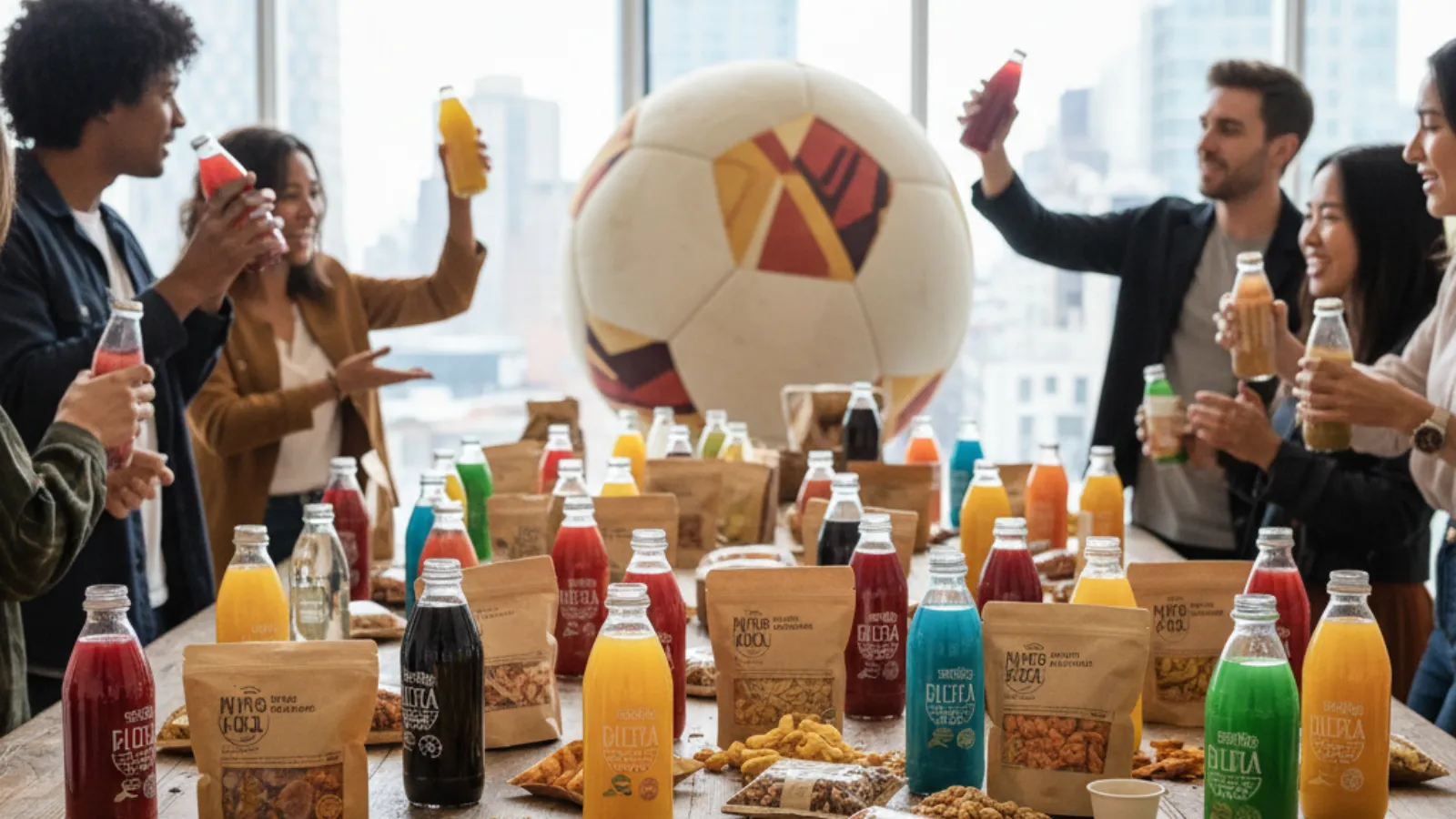
Coca-Cola has held exclusive FIFA beverage rights since 1978. PepsiCo has no official role in the 2026 World Cup at all. And yet PepsiCo has activated four snack brands simultaneously — Walkers, Doritos, Wotsits, Lay's — with one of the largest ambassador rosters attached to the tournament, running from May to August across nearly three months of commercial activity. Pepsi is not at the table. Frito-Lay is building its own.
The FIFA World Cup 2026 kicks off on June 11. With 104 matches across 39 days — 40 more games than Qatar 2022 — this is the largest commercial tournament FIFA has ever staged. Projected revenue hits $13 billion, up from approximately $7.5 billion in the previous cycle. Sponsorship income is forecast to exceed $2.8 billion, more than double Qatar 2022's $1.1 billion. Every one of FIFA's 16 global sponsorship packages is sold out. For food and beverage executives, the question is not whether to activate. It is which brands to activate, and what the six-week footprint looks like when it's over.
The Beverage Monopoly and the Snack Workaround
Coca-Cola's exclusive beverage category rights mean no rival soft drink brand can associate with the tournament as an official partner. Powerade activates under the Coca-Cola umbrella. On the alcohol side, AB InBev's Michelob Ultra holds the official beer position — a full-tournament activation with Erling Haaland and Jürgen Klopp fronting the Budweiser campaign, a $1 million fan prize pool, and the newly designed Superior Player of the Match trophy for each fixture.
Pepsi's absence from the official roster is structural, not a choice. But the Frito-Lay portfolio has no such restriction. PepsiCo's response is the most aggressive portfolio-wide activation deployed by any food company at a single tournament. Messi, Beckham, Thierry Henry, Alexia Putellas and Steve Carell all appear in campaign activity across Walkers, Doritos, Wotsits and Lay's. The programme runs from May through August — nearly three months of tournament-linked commercial activity from a company that holds zero FIFA rights.
The Portfolio Pivot
The 2026 World Cup marks a structural shift in how food companies use major sporting events. The traditional model — attach one flagship brand to the tournament, run a single campaign, measure brand recall — has been replaced by a portfolio strategy in which manufacturers activate entire product lines simultaneously.
PepsiCo has launched a 40-flavour Lay's programme inspired by the cuisines of participating nations — from Brazilian Garlic Sauce to Argentinian Steak with Chimichurri to Canadian Maple Caramel to French Onion Soup. Across 48 competing nations and 39 days of matches, the product is the tournament, not the ad. Supporting promotions include ticket giveaways, home-viewing bundles, food delivery vouchers and cash prizes. The activation window nearly doubles the tournament's duration.
Kellanova, the Mars-owned snacking giant, is activating Pringles, Cheez-It, Pop-Tarts, Rice Krispies Treats and Town House simultaneously. Limited-edition variants include Pringles Spicy Loaded Nachos and Italian Meatball, Cheez-It Flags and Stars, Pop-Tarts Star-Spangled Blueberry, and flag-shaped Town House crackers — spanning breakfast, shared snacking, and late-night occasions in one portfolio sweep. Mars Snacking describes the aim as capturing the "energy and passion" of football fans across every daypart.
Mondelez is running a Summer of Soccer campaign across Chips Ahoy!, Ritz, Sour Patch Kids, Swedish Fish and BelVita, backed by Christian Pulisic, Alex Morgan, Sophia Wilson and Pitbull. Collectively, three of the world's largest snack companies are activating more than a dozen brands around a single tournament — a level of portfolio coordination that was not visible at Qatar 2022.
Diageo's Spirits Strategy: The Most Underrated Activation at This Tournament
While attention focuses on the snack versus beverage activation battle, Diageo is building a parallel strategy across spirits. Named the Official Spirits Supporter across North, Central and South America, Diageo is deploying Don Julio, Casamigos, Buchanan's, Johnnie Walker and Smirnoff across all 16 host cities. In travel retail, the company has activated more than 100 installations across 34 airports in the Americas — the largest airport-led spirits activation mounted around a single sporting event.
Limited-edition Don Julio 1942 bottles inspired by the FIFA trophy are available in global travel retail. Buchanan's has partnered with Latin GRAMMY winner Rauw Alejandro to capture the Latin American consumer base across the US, Mexico, and Caribbean host markets. Diageo's tournament coverage spans retail, on-premise, travel retail, and digital — a four-channel activation that no beer or soft drink brand at this tournament is matching in spirits. The structure is also replicable: regional category sponsorship (Americas-only spirits rights, not global) with global activation mechanics, delivering a superior ROI structure relative to a full global deal.
The Commercial Arithmetic
FIFA estimates that around 5 billion people engaged with the 2022 World Cup. The 2022 final drew between 1.4 and 1.5 billion viewers. Social media impressions reached 262 billion across the tournament. Over 500 million ticket requests have reportedly been submitted for the 2026 edition — ten times the combined total of the previous two tournaments.
NielsenIQ research finds that 76% of US viewers and 80% of Canadian viewers are planning World Cup watch parties. That translates into six weeks of snacking demand across shared consumption occasions — not a Super Bowl-style single peak. Each of the 104 matches is a separate watch-party occasion, a separate promotional mechanic trigger, and a separate sales window. For a company running a 40-flavour programme tied to national teams, each match creates a distinct reason to purchase.
The commercial case for portfolio activation over official beverage rights is visible in the numbers. Coca-Cola has held exclusivity for 48 years. PepsiCo has none. The question Q3 2026 earnings calls will answer is whether Frito-Lay's incremental volume during June and July outperforms Coca-Cola's comparable period — and whether the $2.8 billion sponsorship market accurately reflects who is winning in the aisle rather than on the billboard.
What Happens After the Final Whistle
The first match kicks off on June 11. The real test for PepsiCo, Kellanova, Mondelez, Coca-Cola, AB InBev and Diageo is not which brand ran the best campaign — it is which portfolio generated incremental category sales across 39 days of continuous consumer engagement. For operators managing category allocations and shelf space, the data will start arriving in Q3 earnings calls from late July. For investors, the World Cup is the most visible commercial test of whether portfolio-wide activation commands a sustained ROI premium over single-brand tournament association. The answer will arrive at almost exactly the same time as Mondelez's Q2 results and PepsiCo's Q2 volume read. The tournament outcome and the earnings outcome will land together.
Global Aseptic Packaging Market Report 2026
148.4bn litres and 344bn packs in 2025. Aseptic volumes across dairy, dairy alternatives, beverages and food in 39 markets — 2025 actuals and forecasts to 2030. Buy online and receive it within 24 hours.
More information
Global Cheese Database 2026
Production, imports, exports and consumption for 39 cheese types across 48 countries, with actuals through 2025 and forecasts to 2030. Join the waitlist for early access, pre-launch pricing and a free sample country chapter.
Get early accessStrategic Insights
📊 Analytics & Strategic Insight
From Single-Brand Sponsorship to Portfolio Tournament Play: Why the World Cup ROI Logic Just Changed
The decision most in this industry are avoiding:
👉 Paying for official FIFA rights may now be the inferior commercial model. PepsiCo, Kellanova and Mondelez are activating more brands, more product launches, more ambassador relationships and more promotional mechanics than any official beverage sponsor — at a fraction of what Coca-Cola pays for category exclusivity. The non-official portfolio strategy has outrun the moat.
👉 Single-brand tournament activation is a rounding error at scale. Brands that activate one product for six weeks earn awareness metrics. Brands that activate five or more products for 14 or more weeks in 100-plus retail markets generate incremental sales, new trial, and shelf resets. The difference will appear in Q3 2026 category data. Most executives are still using the awareness metric to justify the investment decision.
👉 Diageo's regional category rights model is the template that no one else is copying yet. Americas-only spirits sponsorship at lower cost than a global beverage deal, yielding 34 airports, 16 host cities, 100-plus on-premise activations, limited-edition premium SKUs and Latin music partnerships. Regional category sponsorship with global activation mechanics is now structurally superior to global exclusivity for mid-tier and PE-backed operators.
Here's the full context:
→ 1978: Coca-Cola begins its FIFA partnership — one of the longest-running sports sponsorships in commercial history. Category exclusivity has kept every rival soft drink brand off the official sponsor roster for 48 years.
→ 2022 (Qatar): FIFA generates approximately $7.5 billion in revenue across the cycle. Beverage and beer brands dominate the official sponsorship conversation. Snack brand portfolio activation at tournament level is nascent. Social media impressions reach 262 billion. The final draws 1.4 to 1.5 billion viewers.
→ 2025: FIFA sells all 16 global sponsorship packages for the 2026 tournament. Sponsorship income projected at $2.8 billion-plus. AB InBev locks Michelob Ultra in as the official beer. Diageo signs as Official Spirits Supporter across the Americas. Food companies begin building multi-brand activation infrastructure.
→ Early 2026: PepsiCo commits to a May-August activation window — nearly three months, nearly double the tournament duration. Kellanova (Mars-owned) activates five brands simultaneously. Mondelez deploys five brands under a Summer of Soccer umbrella. Over 500 million ticket requests submitted — ten times the combined total of the previous two World Cups.
→ Most recent: On June 3, 2026, trade coverage confirms PepsiCo, Kellanova and Mondelez are collectively activating more than a dozen brands — the largest multi-brand food company activation ever mounted around a single FIFA tournament. The tournament kicks off June 11.
What this means for food and beverage operators and investors:
✅ Portfolio coherence is the new sponsorship currency. The World Cup is rewarding companies that can activate multiple categories simultaneously — not those with rights to a single brand on the billboard. Operators with fragmented or under-rationalised portfolios cannot replicate this model. Portfolio focus pays dividends in marketing leverage; this is now empirically visible at the biggest commercial sporting event in the world.
✅ Q3 2026 earnings calls will reveal which activation model actually delivered volume. Watch for incremental volume growth in salty snacks, biscuits and cookies, and spirits across North America, UK and Mexico during the June-July period. PepsiCo's Frito-Lay North America volume is the most important commercial read — the World Cup is the first large-scale test of whether PepsiCo's price-cut-and-volume-recovery strategy compounds over a sustained event window.
✅ Regional category sponsorship is now a viable alternative to global official partnership. Diageo's Americas-only spirits rights delivered a four-channel activation at cost structures unavailable to global deal holders. PE-backed or mid-tier beverage and spirits operators should model regional category rights as a structural alternative to expensive global slots. The next cycle of FIFA sponsorship negotiations begins in late 2026.
3 moves you can make this week:
1️⃣ Audit your tournament shelf presence before June 9. The watch-party purchasing window runs June 5-11. Pre-tournament stocking decisions are made this week. If your brand has no on-shelf activation, limited-edition SKU or promotional mechanic live before kick-off, you are missing the largest consumer shopping occasion of the tournament.
2️⃣ Benchmark your activation depth against PepsiCo's 40-flavour programme. The commercial question is not "did we activate" but "how many repeat-purchase occasions did our activation create?" A flavour programme tied to 104 matches creates 104 distinct consumer moments. If your promotional mechanic has a single entry point, restructure it for the next major calendar event now.
3️⃣ Commission a post-tournament attribution study by August 15. Most brands will measure World Cup activity by impressions and reach. The companies that will learn the most will measure category-level volume change, new buyer penetration, and brand-switching data during June-July versus the same period in 2025. Structure the measurement framework now, before the data window closes.
Take the Next Step
💧 Also covering the water dispense market?
Water dispense is one of the fastest-growing segments in food and beverage. Operator data, revenue benchmarks, and market intelligence across 32 countries.
→ Explore water dispense insights
Zenith Consulting
Submit your food & beverage project enquiry.
Share your requirements. If there is a strong fit, we’ll come back with an indicative investment range, project timeline and recommended strategic approach.
Reviewed by Zenith Consulting’s senior food & beverage strategy team.
Related analyses
- Corporate Strategy & Portfolio
Krones Opens Its Largest Plant Outside Germany In China: An Aseptic Laboratory Lands As Local Line Builders Take The Orders
Krones has opened a second plant at Taicang, giving it 74,000 square metres of buildings and its largest site outside Germany. It arrives in a market where Zenith puts aseptic drinks at 17,950 million litres and local line builders hold more than 30 aseptic lines on order.
Read analysis → - Corporate Strategy & Portfolio
US Cheese Exports Rise 9% To 59,007 Tonnes: Mexico And The Americas Supplied All Of August's Growth
US cheese exports reached 59,007 tonnes in August, up 9% on a year earlier. Mexico, South America and Central America added more than the whole net gain while South Korea fell 12%.
Read analysis → - Corporate Strategy & Portfolio
Greatview Faces Hong Kong Delisting: The Aseptic Carton Maker Sold 11.7 Billion Packs Against 30 To 34 Billion Of Chinese Capacity
Greatview Aseptic Packaging has asked for a review of the Hong Kong exchange decision to cancel its listing. The carton maker sold 11.7 billion packs in 2025 against Chinese plants Zenith rates at roughly 30 to 34 billion.
Read analysis →
Share it with your peers
Pass this analysis to colleagues who track the food and beverage market.
Zenith Market Intel
Need a specific food or beverage market report?
Tell us which category, region or question would be useful for your team.
Sister Publication
Also follow our Water Dispense Market Intelligence
Category analyses, operator briefings, and investor signals across the global water dispense market.