Unilever Puts Colman's Up For Sale To Clear Its $42.7bn McCormick Food Deal
Unilever has put Colman's on the market to head off UK worries about its $42.7bn McCormick food deal. One shelf in one country is now shaping the terms.
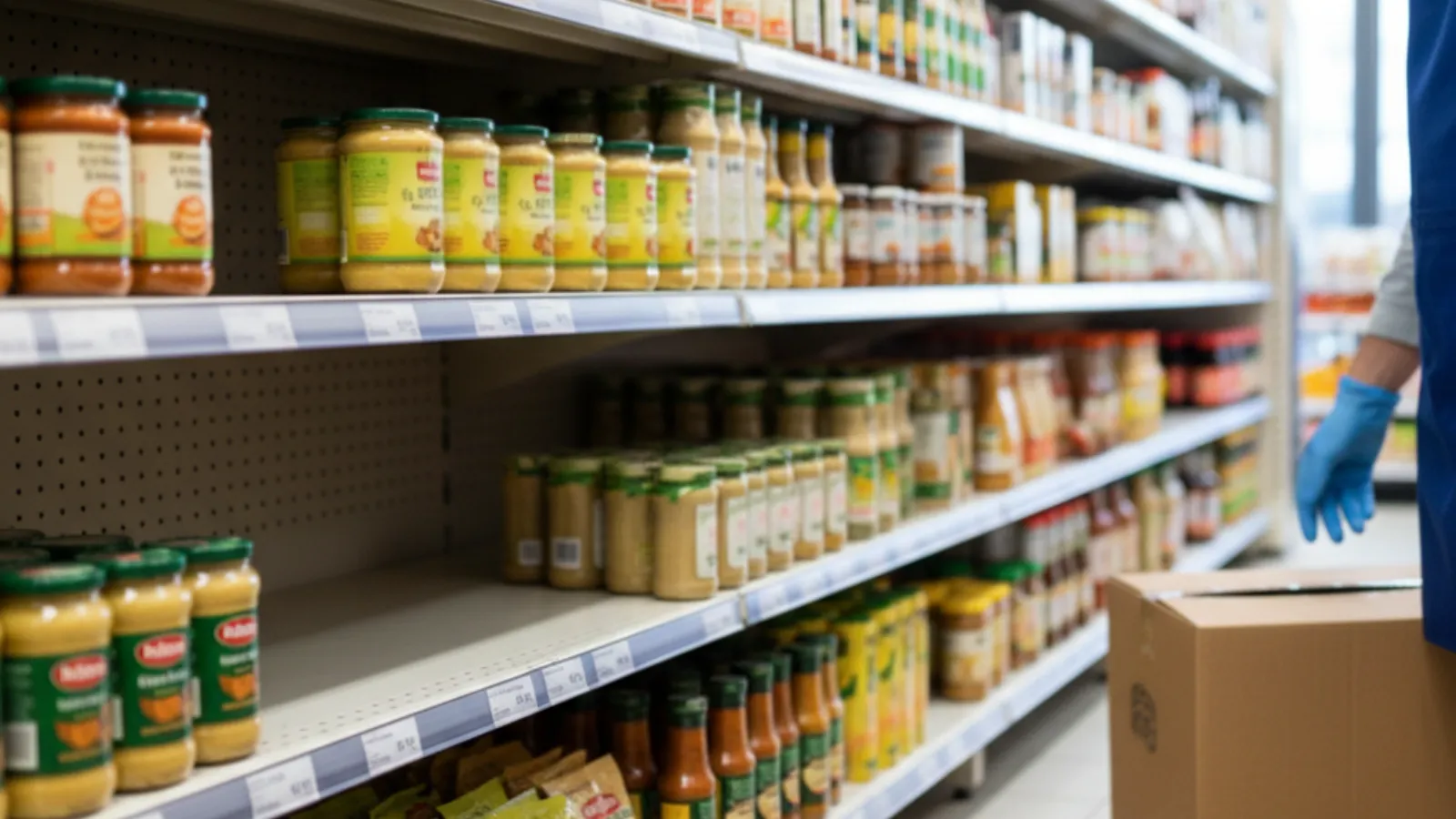
Most reports read this as a small British brand losing its place. I read it as a deal design story. Colman's is on sale because it is too strong. One shelf in one country is now shaping a $42.7bn deal.
Unilever said this week that it has put the Colman's brand and assets on the market. The reason is plain. McCormick already owns French's. Put the two together and the new firm would hold too much of the mustard shelf in Britain.
What is on the block
Colman's was founded in Norwich in 1814. It leads the British mustard shelf with more than half of it. That share is the whole problem. A brand this strong is what a watchdog looks at first.
The wider deal was agreed in March. The plan puts Unilever Foods together with McCormick to build a flavour group with about $20bn of sales. Unilever owners keep 65% of the new firm. McCormick holds 35%. Marmite, Knorr, Hellmann's, Frank's RedHot and Pot Noodle all move across.
Selling before being asked
The CMA has not started a phase one probe yet. It opened a first call for comment on 21 July and took views until 5 August. Unilever is not waiting. It has hired Rothschild to find a buyer. No price has been put on the brand yet.
That is a choice worth reading closely. Offering a fix early buys speed. It also tells every buyer that the seller has a deadline. The deal is due to close in mid 2027. The Colman's sale has to land well before that.
Why a forced sale sells badly
Buyers price a clock. When they know the seller must be done by a fixed date, they bid lower. Bankers can hide a lot, but they cannot hide a public close date. Premier Foods and Associated British Foods have both been named as likely buyers by AJ Bell.
There is a second cost, and most people miss it. Colman's does not have its own plant any more. Making stopped in Norwich in 2019 after 160 years. Milling stayed nearby in Norfolk. The rest of the work went to Burton upon Trent and to a plant in Germany.
A buyer here does not get a clean asset. It gets a name, a mustard mix and a set of supply deals with the seller. Those deals set the cost base for years. The seller writes them.
The small market sets the terms
This is the part boards keep getting wrong. Size does not decide a merger case. A watchdog judges it shelf by shelf, country by country, on the tightest view it can take.
Mustard in Britain is a rounding error inside a $20bn flavour group. It is still the line that sets the terms. A tiny overlap can cost you a brand with more than half its shelf.
A pattern across big food
Big food deals are getting harder to clear. The Ingredion bid for Tate and Lyle drew a long look this year. So did the Arla merger with DMK, which the EU cleared in the end with no fix at all. Sellers have taken one lesson from that run. Offering a fix early is cheaper than fighting one late.
Who would want it
Colman's is a strong asset in a small pond. It has more than half the British mustard shelf. It has a name most shoppers can picture. It also has almost nowhere left to grow at home.
That mix suits two kinds of buyer. A British food group can bolt it onto an existing sales force and take the cost out fast. A fund can buy the cash flow and push it into other countries. It can then sell it on in five years. Premier Foods and Associated British Foods sit in the first camp.
The wider Unilever plan
Fernando Fernandez wants Unilever built around beauty and care brands. Food pays for that shift. The group has said Lipton Ice Tea stays in its joint venture with PepsiCo. It is keeping the drinks it likes and selling the rest.
What to watch next
Watch three things. The first is whether the CMA opens a phase one probe and names other clashes. Mayonnaise, stock cubes and hot sauce all sit in the same basket. The second is the price Colman's fetches. It will set the mark for every other fix in this deal.
The third is who buys. A trade buyer will want the plants and the routes to shops. A fund will want the brand and a cheap supply deal. Those two bids look very different, and so does what happens to Colman's after.
For anyone running a deal this year, the lesson is short. Map your smallest shared market first. That is where your fix will come from. It is also the brand you will be asked to give up.
Global Aseptic Packaging Market Report 2026
148.4bn litres and 344bn packs in 2025. Aseptic volumes across dairy, dairy alternatives, beverages and food in 39 markets — 2025 actuals and forecasts to 2030. Buy online and receive it within 24 hours.
More information
Global Cheese Database 2026
Production, imports, exports and consumption for 39 cheese types across 48 countries, with actuals through 2025 and forecasts to 2030. Join the waitlist for early access, pre-launch pricing and a free sample country chapter.
Get early accessStrategic Insights
📊 Analytics & Strategic Insight
The fix sets the price of the whole deal
The decision most in this industry are avoiding:
👉 Deal teams map the big markets and skip the small ones. The fix nearly always comes from a small one. Colman's is the proof.
👉 Inside a merger, a strong brand is a risk. Weak brands clear with no fuss. Leaders get put on the block.
👉 Almost nobody prices the supply deal. A brand carved out of the seller's plant carries the seller's terms for years. That cost lands after the sale closes.
Here's the full context:
→ 1814: Colman's is founded in Norwich. It grows into the leading British mustard brand.
→ 2019: Unilever stops making at Norwich after 160 years. Milling stays in Norfolk. The rest moves to Burton upon Trent and Germany.
→ March 2026: Unilever agrees to join Unilever Foods with McCormick. The deal is worth $42.7bn. The new group would have about $20bn of sales.
→ 21 July 2026: The CMA opens a first call for comment. Views were taken until 5 August. A phase one probe has not started.
→ Most recent: Unilever says it is marketing the Colman's brand and assets. Rothschild has been hired to find a buyer.
What this means for food and beverage operators and investors:
✅ Map the small shelves before you sign. The tightest view of the market sets your fix. Put that cost into the price you offer.
✅ A public close date is a discount. Any asset you must sell before a fixed day will fetch less. Start earlier than you think you need to.
✅ Read the supply deal before the brand deal. If the plant stays with the seller, the terms of that deal decide your returns.
3 moves you can make this week:
1️⃣ List your top five shared shelves. Take any deal you are working on. Write down the smallest market where you and the target both sell.
2️⃣ Price a forced sale. Take your best brand and work out what it fetches with a nine month clock on it. That gap is your real deal cost.
3️⃣ Pull your carve-out supply terms. Check who sets the price, who owns the mix and how long the deal runs. Fix the weak ones now.
Take the Next Step
🧭 Facing a decision like this in your own category?
Describe it in a few lines. Selected enquiries receive an initial strategic assessment: direction, likely scope and indicative investment range.
→ Start a project enquiry
Zenith Consulting
Submit your food & beverage project enquiry.
Share your requirements. If there is a strong fit, we’ll come back with an indicative investment range, project timeline and recommended strategic approach.
Reviewed by Zenith Consulting’s senior food & beverage strategy team.
Related analyses
- M&A, Investment & Valuation
Parmigiano Reggiano Takes On Australian Parmesan: The EU Trade Deal Protected 53 Cheese Names And Left Parmesan Out
The Parmigiano Reggiano Consortium has opened a three-year campaign in Australia, where cheese output runs at 455,000 tonnes a year. Australia agreed to protect 53 EU cheese names, and parmesan is not one of them.
Read analysis → - M&A, Investment & Valuation
Parmigiano Reggiano Takes On Australian Parmesan: The EU Trade Deal Protected 53 Cheese Names And Left Parmesan Out
The Parmigiano Reggiano Consortium has opened a three-year campaign in Australia, where cheese output runs at 455,000 tonnes a year. Australia agreed to protect 53 EU cheese names, and parmesan is not one of them.
Read analysis → - M&A, Investment & Valuation
Müller Closes Sachsenmilch Semi-Hard Cheese Dairy At Leppersdorf: Mozzarella And Acid Curd Lines Stay
Müller will close the semi-hard cheese dairy at Sachsenmilch Leppersdorf on 31 December 2026, with about 160 staff affected. Mozzarella and acid curd cheese carry on at a site that takes 1.7 billion kg of milk a year.
Read analysis →
Share it with your peers
Pass this analysis to colleagues who track the food and beverage market.
Zenith Market Intel
Need a specific food or beverage market report?
Tell us which category, region or question would be useful for your team.
Sister Publication
Also follow our Water Dispense Market Intelligence
Category analyses, operator briefings, and investor signals across the global water dispense market.