USDA's Ranchers First Puts 20% Of US Beef Processing In Play: The Purchase Order Matters More Than The Loan
USDA says nearly 20% of US beef processing will come free as the herd grows, and it is offering backed loans to fill it. The cheaper win sits in the buying line, because a purchase order fills a plant and a loan only builds one.
One number in this package changed how I read it. USDA says nearly 20% of US beef processing will come free as the herd grows. It calls that a chance. I read it as a warning.
That space did not close because owners lost heart. It closed because there were not enough cattle to run it. The US herd sits at a 75-year low. Washington now wants to help new owners walk into it.
What USDA put on the table
Agriculture Secretary Brooke Rollins launched the Ranchers First package on Monday 31 August. She chose the Nebraska State Fair to do it. She called it "a new day at USDA and a new day for our ranchers".
The package has five parts. A new heifer cover called BRAND, which sits under Livestock Risk Protection. Room to use disaster aid on Grassland Conservation Reserve Program acres. A SPUR Guaranteed Loan Program for smaller plants. A Regional Processor Continuity Effort. And a push to buy American beef for prisons, army bases and public wards.
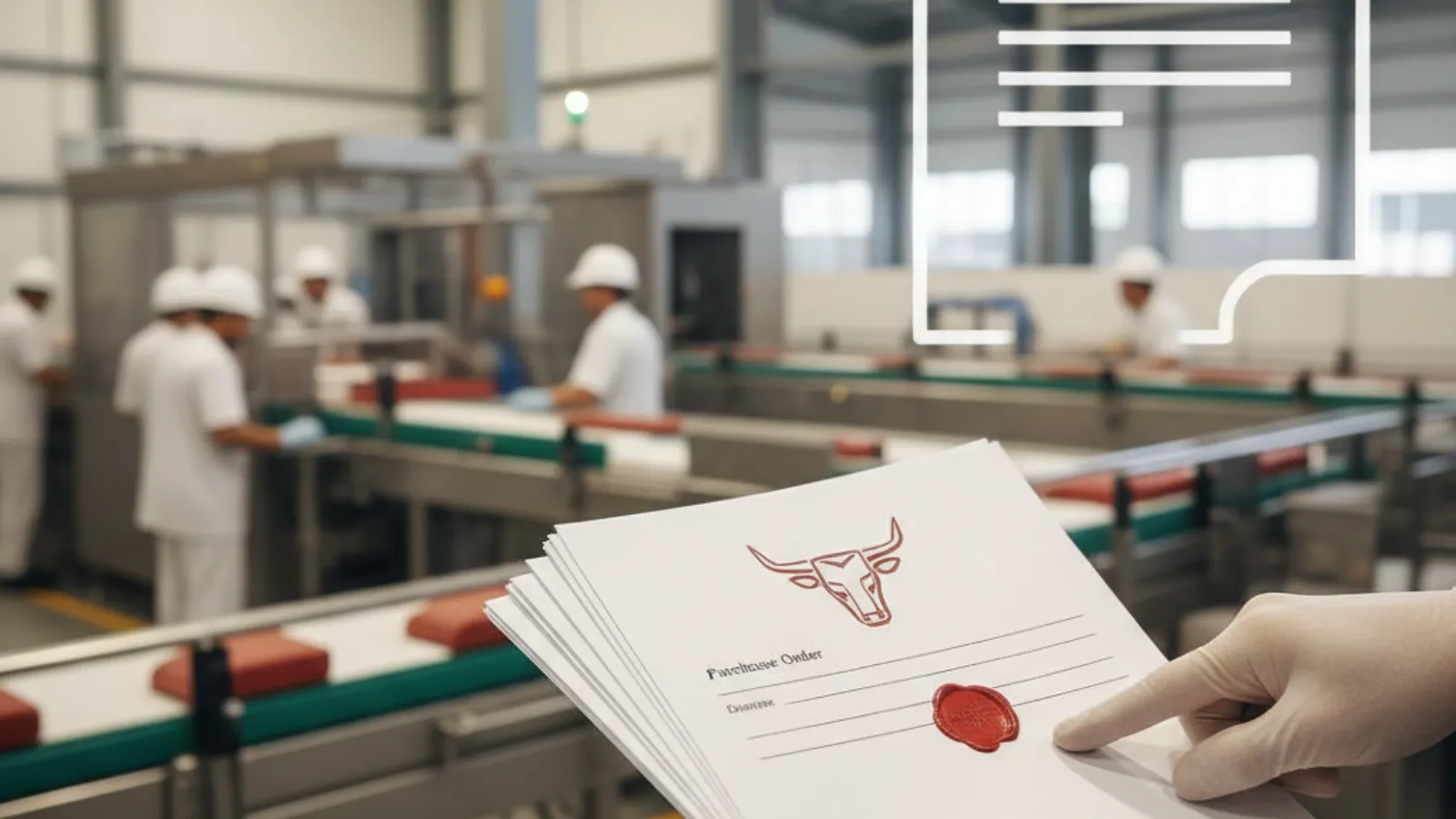
The loan builds the shed. The order fills it.
SPUR itself is not new. USDA opened it on 30 June with up to $500m in payments. The money goes to small and mid-size plants. The four largest beef firms cannot claim any of it.
The new part is a backed loan, and a loan is the wrong tool for this problem. A loan pays for a building. It does not pay for cattle, and cattle are what is short. A beef plant earns on throughput. A half-full plant loses money whoever owns it.
Look at the buying line instead. USDA says it will push prisons, army bases and public wards toward locally processed American beef. It named the Departments of Health and Human Services, Justice, Veterans Affairs and War as partners. That is the only part of the package that fills a plant rather than building one.
The 20% is a cost trap
Don Close is a senior meat analyst at Terrain. He put the problem plainly on AgriTalk this week. He warned that Washington cannot rush the animal. A heifer takes about two years to come into the herd, and no rule shortens that.
Derrell Peel of Oklahoma State University made the same point. He said there is so little detail that the plan raises more questions than it answers. He doubts the new cover would change how many heifers get held back.
Rollins says heifer holding is already up 3%, the first rise in ten years. That is real progress. It is also the slowest lever in the whole chain.
The import window is already open
The second number matters more this quarter. Trump signed the beef import proclamation on 26 August, and the window opened on 1 September. It runs for 90 days at 100,000 tons a month.
Read the limits, because they are tight. It covers lean beef trimmings only. Those trimmings must be blended with US beef to make ground beef. It leaves out countries with a free trade deal. It also skips countries that hold their own beef quota.
USDA expects US beef output above 11 million tons in 2026. That makes the window worth about 2.7% of a single year. USDA also expects output to fall about 4% against 2025. The imports do not fill that hole, and they run out in December.
What this costs a food business
Close made one more point that buyers should hear. Most of the imported trim will go to fast food chains. Patty makers, packers and shops each take a cut before the shelf. A shopper will feel very little of the 25% discount the White House talked about.
So the trap is simple. Price an autumn deal off cheap trim and you lose your floor in December. The window shuts, the herd is still small, and the shelf price stays where the cattle put it.
What buyers and owners should take from it
Treat that 20% as space that needs cattle rather than as a bargain. Anyone weighing a plant now should ask one thing first. Where does the throughput come from in 2027 and 2028?
The buying line is the part worth chasing. A public contract is slow and dull. It also fills a shift, and a filled shift is what pays for a shed. The winners here will be the firms that land the order before they take the loan.

Global Aseptic Packaging Market Report 2026
148.4bn litres and 344bn packs in 2025. Aseptic volumes across dairy, dairy alternatives, beverages and food in 39 markets — 2025 actuals and forecasts to 2030. Buy online and receive it within 24 hours.
More information
Global Cheese Database 2026
Production, imports, exports and consumption for 39 cheese types across 48 countries, with actuals through 2025 and forecasts to 2030. Join the waitlist for early access, pre-launch pricing and a free sample country chapter.
Get early accessStrategic Insights
📊 Analytics & Strategic Insight
Washington is paying for sheds while the shortage sits in the herd
The decision most in this industry are avoiding:
👉 A backed loan is not the same thing as a market. State money makes it cheap to build. State money does nothing about whether cattle turn up at the gate.
👉 The 20% figure is a closure list read backwards. Those plants shut because they could not fill a shift. That maths does not change for a smaller owner.
👉 Public buying is the quiet win in this package. It is slow and the margin is thin. It is also the only line that promises a shift will be filled.
Here's the full context:
→ October 2025: USDA set out its plan to fortify the American beef industry. The herd was already falling fast.
→ 30 January 2026: The USDA Cattle Inventory report put the US herd at a 75-year low. That is the smallest count since 1951.
→ 30 June 2026: USDA opened SPUR with up to $500m for small and mid-size beef plants. The four largest firms were shut out.
→ 26 August 2026: Trump signed the beef import proclamation. The 90-day window opened on 1 September at 100,000 tons a month.
→ Most recent: On 31 August Rollins launched Ranchers First. USDA called the coming 20% of free processing a chance.
What this means for food and beverage operators and investors:
✅ Beef cost stays high well into 2027. The herd rebuild runs on a two-year clock. Nothing in this package moves that clock.
✅ Rule risk now sits beside price risk. Three big moves landed in six weeks. A buyer can hedge a price and cannot hedge a rule.
✅ Smaller plants are about to look cheap for a reason. Check the cattle draw within a day's haul before you look at the asking price.
3 moves you can make this week:
1️⃣ Ask your beef supplier where their trim comes from. Find out how much of it rests on the 90-day window.
2️⃣ Re-price any deal that runs past November. Assume the cheap import floor is gone by December.
3️⃣ Check whether public buying is open to you. Prisons, army bases and public wards are being pushed toward locally processed beef.
Take the Next Step
🧭 Facing a decision like this in your own category?
Describe it in a few lines. Selected enquiries receive an initial strategic assessment: direction, likely scope and indicative investment range.
→ Start a project enquiry
Zenith Consulting
Submit your food & beverage project enquiry.
Share your requirements. If there is a strong fit, we’ll come back with an indicative investment range, project timeline and recommended strategic approach.
Reviewed by Zenith Consulting’s senior food & beverage strategy team.
Related analyses
- M&A, Investment & Valuation
Parmigiano Reggiano Takes On Australian Parmesan: The EU Trade Deal Protected 53 Cheese Names And Left Parmesan Out
The Parmigiano Reggiano Consortium has opened a three-year campaign in Australia, where cheese output runs at 455,000 tonnes a year. Australia agreed to protect 53 EU cheese names, and parmesan is not one of them.
Read analysis → - M&A, Investment & Valuation
Parmigiano Reggiano Takes On Australian Parmesan: The EU Trade Deal Protected 53 Cheese Names And Left Parmesan Out
The Parmigiano Reggiano Consortium has opened a three-year campaign in Australia, where cheese output runs at 455,000 tonnes a year. Australia agreed to protect 53 EU cheese names, and parmesan is not one of them.
Read analysis → - M&A, Investment & Valuation
Müller Closes Sachsenmilch Semi-Hard Cheese Dairy At Leppersdorf: Mozzarella And Acid Curd Lines Stay
Müller will close the semi-hard cheese dairy at Sachsenmilch Leppersdorf on 31 December 2026, with about 160 staff affected. Mozzarella and acid curd cheese carry on at a site that takes 1.7 billion kg of milk a year.
Read analysis →
Share it with your peers
Pass this analysis to colleagues who track the food and beverage market.
Zenith Market Intel
Need a specific food or beverage market report?
Tell us which category, region or question would be useful for your team.
Sister Publication
Also follow our Water Dispense Market Intelligence
Category analyses, operator briefings, and investor signals across the global water dispense market.