Elopak Says Aseptic Carton Board Supply Stays Tight Into 2027 After The Longview Mill Shutdown
Elopak told the market its board supply stays tight into 2027 after the Longview mill stopped. Cartons carry 66.5% of world aseptic volume, so one paper mill can set the ceiling for a whole trade.
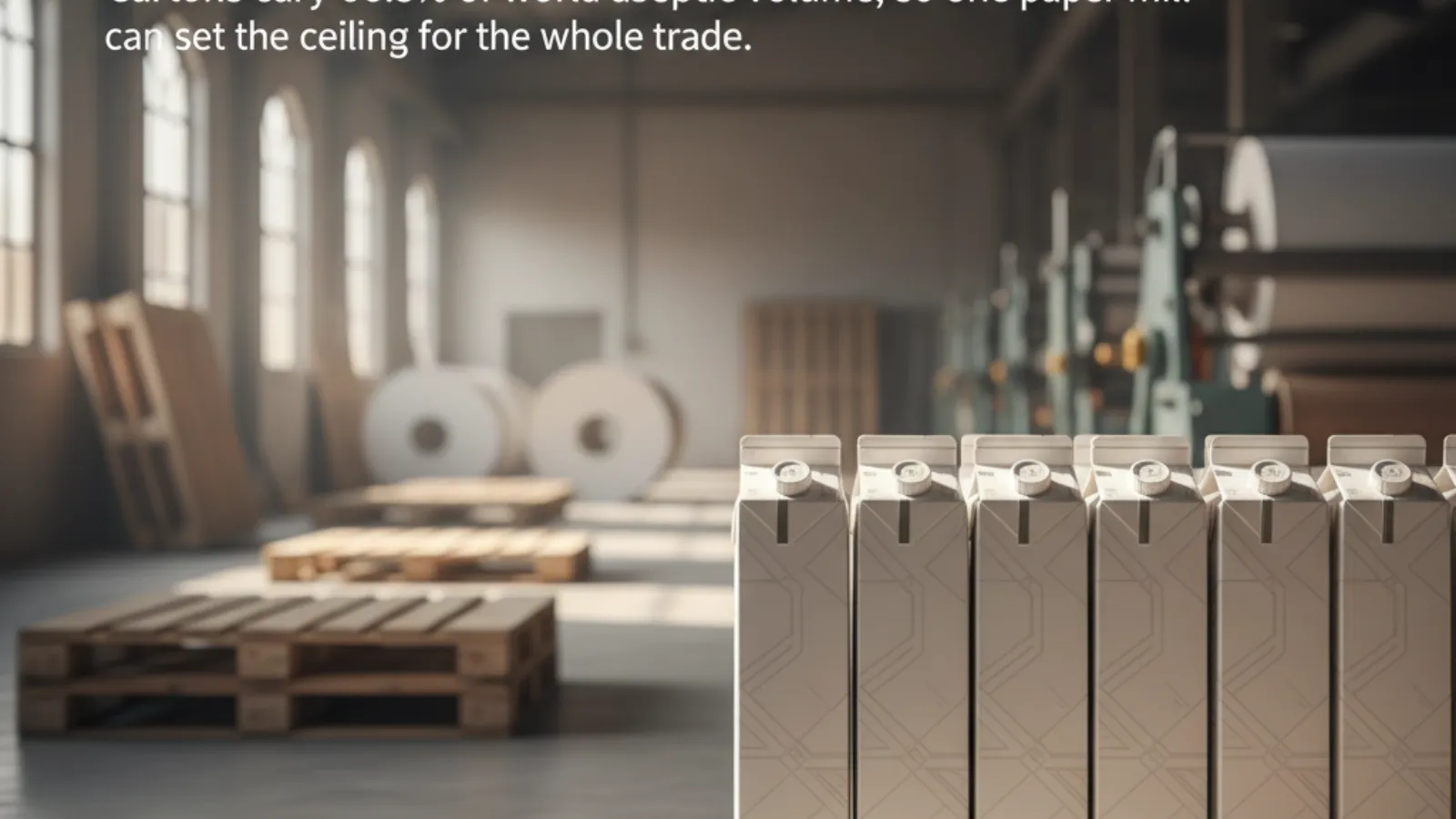
The one question I keep putting to packaging buyers is this. Who makes your board? Very few can answer it, and in 2026 that gap has a price.
One mill in Longview, Washington makes about 300,000 tonnes of board for cartons and cups a year. It has been shut since 26 May. Elopak has now told the market its board supply stays tight through the rest of 2026. It may stay tight into 2027.
One site, a whole year of tight supply
Nippon Dynawave Packaging runs the Longview mill. A tank holding 900,000 gallons of white liquor imploded there on 26 May. Eleven workers were killed and eight were hurt. The mill has been idle ever since.
Nippon Paper bought the site from Weyerhaeuser in 2016 for $285 million. It sells board under the Structure-Pak and Structure-Serv names. Crews began removing the failed tank and two others on 17 August. No restart date has been given.
What Elopak told the market
Elopak set out its second quarter on 18 August. Sales rose 4.9% to 303.9 million euros, and carton and closure sales rose 8.4%. Trading profit was 45.0 million euros, on a margin of 14.8%. A year earlier that margin was 15.3%.
The group said board supply would stay tight through the rest of 2026, and maybe into 2027. It named the Longview event as the cause. Input costs took 4.3 million euros off the quarter. Elopak has added surcharges to claw some of that back.
Demand kept climbing while supply froze
The order side did not pause. Roll Fed sales across Europe, the Middle East and Africa rose 16.4%, on new wins in Poland and Ukraine. Pure-Pak grew in UHT milk, mainly in Germany. In the Americas, carton and closure sales rose 11.9% and the margin moved up to 22.9%.
So the demand is there. The paper behind it is the pinch point. Elopak has put $109 million into its new US plant so far, with $19 million left for three lines. Lines are far easier to add than mills.
Why board sets the ceiling
Most people in this trade count filling machines. Cartons carry 66.5% of world aseptic volume, so the board mill is the real gate. Zenith puts total aseptic volume at 148.4 billion litres in 2025, or 344 billion packs.
Liquid packaging board comes from a short list of mills. It needs a bleached kraft base, tight thickness control and food safety sign-off. A converter cannot drop in a normal carton grade instead. That is why one mill stopping moves a global chain.
The mix riding on that board keeps shifting. Zenith puts UHT white milk at 52.7 billion litres in 2025. Beverages reached 60.2 billion litres and passed milk during the review period. Large PET hit 25.9 billion litres and is now the biggest aseptic drinks format.
The state has now weighed in
Washington's Department of Ecology cited the site for 35 breaches on 26 August. Most relate to the white liquor that spread across the site and reached the Columbia River. The firm has 30 days to reply. The state has two years to act.
Other reviews run alongside it. The US Chemical Safety Board expects an update by the end of September. The state labour agency must report by 22 November. Each of those dates is a fresh chance of a longer stoppage.
What buyers should do now
Ask your carton maker which mill makes your grade. Ask what the second source is. Ask how long a switch takes, and who pays for the trial runs. Most buyers find they have one mill and no plan.
Price your risk in litres. Model a 20% cut in board for one quarter. See which brands you would drop first. Talk to your filler about a second pack shape. Book board earlier than you think you need to. Put a break clause in the surcharge terms.
The shutdown is one event. What matters more is how much board sits behind every litre packed aseptically, and where that board is made. Cartons still carry two thirds of world aseptic volume, so that answer decides who can grow. Zenith's Global Aseptic Packaging Market Report 2026 maps 39 markets by category, pack type and pack size. A free sample is on the page.
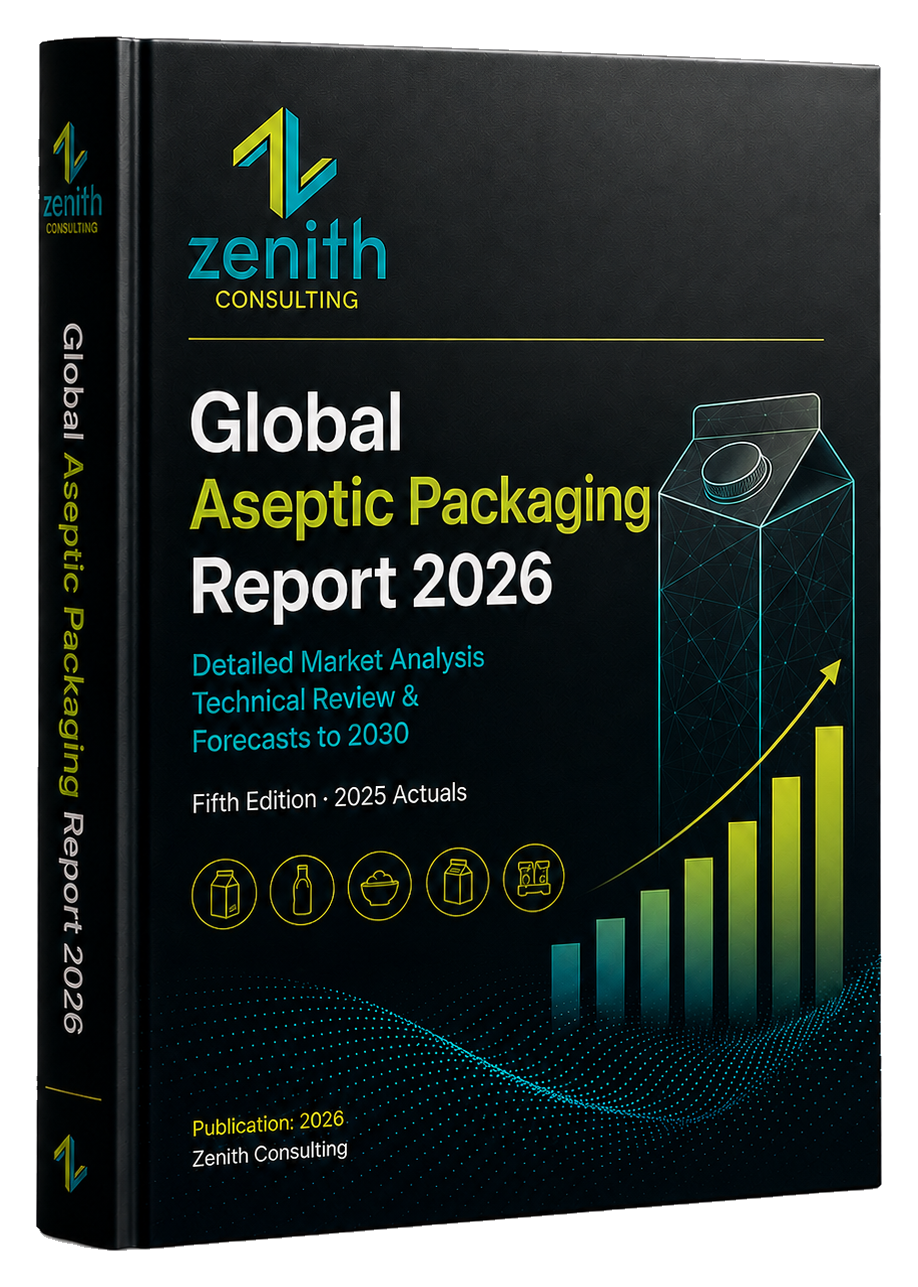
Global Aseptic Packaging Market Report 2026
148.4bn litres and 344bn packs in 2025. Aseptic volumes across dairy, dairy alternatives, beverages and food in 39 markets — 2025 actuals and forecasts to 2030. Buy online and receive it within 24 hours.
More information
Global Cheese Database 2026
Production, imports, exports and consumption for 39 cheese types across 48 countries, with actuals through 2025 and forecasts to 2030. Join the waitlist for early access, pre-launch pricing and a free sample country chapter.
Get early accessStrategic Insights
📊 Analytics & Strategic Insight
The carton trade has been counting machines while the paper ran out
The decision most in this industry are avoiding:
👉 Board is a bigger risk than filling lines. A new line takes 12 to 18 months. A new board mill takes years and a lot more money.
👉 Surcharges are a signal rather than a fix. They tell you the maker has no spare board. Once buyers accept them, the pain is shared and the shortage stays.
👉 Aluminium-free board makes the pinch worse before it helps. Paper-heavy structures need more of the same scarce fibre. That is a supply choice as much as a green one.
Here's the full context:
→ 2016: Nippon Paper buys the Longview liquid packaging board site from Weyerhaeuser for $285 million.
→ 2025: Cartons carry 66.5% of the 148.4 billion litres packed aseptically worldwide, Zenith reports.
→ May 2026: A white liquor tank implodes at Longview. Eleven workers die and the mill stops.
→ August 2026: Elopak reports board tight into 2027. Input costs take 4.3 million euros off the quarter.
→ Most recent: Washington cited the site for 35 breaches. Crews are pulling out the failed tanks.
What this means for aseptic fillers, converters and equipment suppliers:
✅ Growth is now rationed by paper. Roll Fed rose 16.4% in Europe while board stayed short. Orders you cannot serve go to a rival.
✅ Pack shape is a hedge. Groups that can fill both carton and PET have somewhere to move litres. Single-format fillers do not.
✅ New country wins carry more risk. Poland and Ukraine gains need board on the water. A tight mill base makes launch dates slip.
3 moves you can make this week:
1️⃣ Map your board back to the mill. Name the site, the grade and the lead time. Do it for your top five lines.
2️⃣ Qualify a second grade now. Trials take months. Start them while you still have stock rather than during the next stoppage.
3️⃣ Re-read your surcharge clause. Check how it unwinds when input costs fall. Many have no way back down.
The data behind this story
📦 Global Aseptic Packaging Market Report 2026
148.4 billion litres and 344 billion packs across 39 markets, split by category, pack type and pack size, with 2025 actuals and forecasts to 2030. A free 17-page sample is on the page.
→ Read the free sample
Zenith Consulting
Submit your food & beverage project enquiry.
Share your requirements. If there is a strong fit, we’ll come back with an indicative investment range, project timeline and recommended strategic approach.
Reviewed by Zenith Consulting’s senior food & beverage strategy team.
Related analyses
- Corporate Strategy & Portfolio
FDA Clears Salt Substitutes In 41 Cheese Standards, And The Last Sodium Push Moved The Median Just 3%
The FDA has opened 41 cheese standards to salt substitutes, with the rule effective 14 December 2026. The cheese part can still be objected to until 12 November, and the last US sodium push moved the median by 3%.
Read analysis → - Corporate Strategy & Portfolio
Large PET Fills 25,940 Million Litres Of Aseptic Drinks Against 14,500 Million In Family Cartons
Zenith's Global Aseptic Packaging Market Report 2026 puts large PET at 25,940 million litres of aseptic drinks in 2025, against 14,500 million litres in family cartons. Cartons still lead on pack count, which turns the format split into a pack size split.
Read analysis → - Corporate Strategy & Portfolio
Cheese Kingdom Shuts 84 Ukrainian Shops As Cheese Imports Hit 28,300 Tonnes, More Than Three Times Exports
Ukraine's largest specialist cheese chain has stopped trading at all 84 of its shops after 13 years. Cheese imports reached 28,300 tonnes in the seven months to July, more than three times exports, and European cheese now sits in ordinary supermarkets.
Read analysis →
Share it with your peers
Pass this analysis to colleagues who track the food and beverage market.
Zenith Market Intel
Need a specific food or beverage market report?
Tell us which category, region or question would be useful for your team.
Sister Publication
Also follow our Water Dispense Market Intelligence
Category analyses, operator briefings, and investor signals across the global water dispense market.