SIG Backs India's Regional Drinks: Aseptic Filling Has Fallen To 40.3% Of Indian Ambient Beverage Volume
SIG argues that aseptic cartons can take India's regional drinks national. Zenith's India data shows aseptic filling losing 17 points of ambient beverage share since 2020, while UHT milk grows at 12.3% a year.
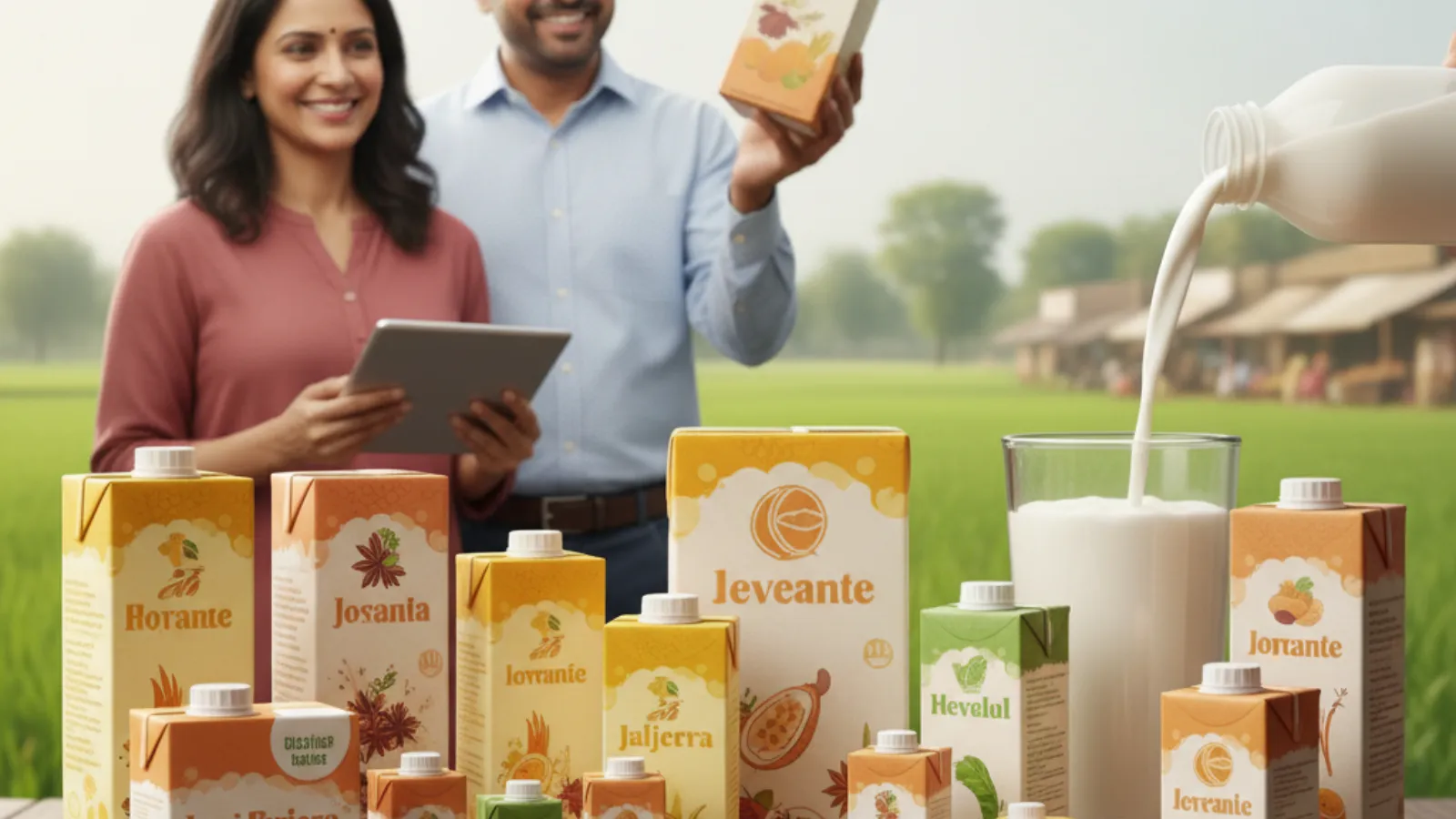
I keep seeing the same pattern in fast growing drinks markets. The new category gets the pitch. The litres turn up somewhere else. SIG made the case on 15 September that India's regional drinks can now go national in aseptic cartons. Zenith's India data points the other way. Aseptic filling took 57.7% of Indian ambient beverage volume in 2020. By 2025 it was 40.3%.
What SIG argued
The piece was written by Vandana Tandan, who heads SIG's market in India and Bangladesh. Her case is clean. Drinks such as sol kadhi, chaas, nimbu paani and Irani chai stay local because they spoil. Aseptic filling keeps them for months with no fridge and no preservative. So a drink sold in one state can sit on a shelf in Delhi.
The logic holds and the demand is real. But have India's new aseptic litres come from drinks like these? They have not.
India fills 5,074 million litres a year
Zenith's Global Aseptic Packaging Market Report 2026 puts India at 5,074 million litres of aseptically filled product in 2025. That arrived in 16,111 million packs. The blended pack is 315 ml.
India is a very large market at a very low rate of aseptic use. It runs at 3.50 litres a head a year. That is the lowest of the 39 markets in the report. Turkiye runs at 28.3 litres. The room is there. What matters is which block fills it.
Drinks are the slow block
Beverages are still the biggest use at 2,710 million litres, or 53.4% of Indian aseptic litres. They are also the slowest, up 4.0% a year since 2020. Zenith has them down to 47.5% of the national total by 2030.
Indian ambient drinks grew fast and mostly skipped aseptic filling. Ambient drink output went from 3,858 to 6,718 million litres between 2020 and 2025. Hot filling took most of that gain. It rose from 41.5% of the ambient total to 56.4%. Sports and energy drinks grew 36.0% a year. None of that volume is aseptic.
The growth is in milk
UHT white milk is the fastest block in the Indian model. It reached 1,250 million litres in 2025. That is up 12.3% a year since 2020. Zenith has it at 1,799 million litres by 2030. Other dairy drinks such as lassi and flavoured milk reached 1,113 million litres, up 9.5% a year.
Both dairy blocks are growing at more than twice the drinks rate. Tax helped. The GST Council cut UHT milk from 5% to nil with effect from 22 September 2025. Zenith has white milk rising from 19.3% of Indian aseptic litres in 2020 to 28.0% by 2030.
The pack is the gate
Portion cartons carry 77.2% of every aseptic pack filled in India, at an average of 191 ml. Family cartons take 14.0%. Aseptic PET is the fastest format at 23.3% a year, but it is only 142 million litres.
A new Indian drink has to hit a price point before it can hit a shelf. The report notes the same 10 rupee pack again and again. It shows up on the mango brick, the 200 ml lassi carton and the school flavoured milk. When input costs rise, Indian fill volumes fall before prices move.
Board and machines come from abroad
No Indian mill makes aseptic grade liquid packaging board. Zenith puts Indian board imports at 185 million dollars in 2023, sourced 34% from China and 13% from South Korea. Filling machine imports ran at 799 million dollars in 2023, up 42%.
That is the real cost of a new format in India. The sleeve travels before the drink does. Tetra Pak, Uflex and SIG have all built or expanded local carton supply to shorten that line.
Size the dairy block first if you sell fillers into India. Price the 191 ml carton before you design the recipe. Check whether your Indian customer can hot fill the same drink for less. Watch the GST change feed through white milk volumes into 2027. Treat a national launch as a pack cost question and not a taste question.
There is a wider point here about where aseptic growth actually lands. A market can grow at 6.9% a year and still move aseptic share away from the category everyone is pitching. We track that split by block, by format and by filling method. It sits inside Zenith's Global Aseptic Packaging Market Report 2026, which models India and 38 other markets.
Global Aseptic Packaging Market Report 2026
148.4bn litres and 344bn packs in 2025. Aseptic volumes across dairy, dairy alternatives, beverages and food in 39 markets — 2025 actuals and forecasts to 2030. Buy online and receive it within 24 hours.
More information
Global Cheese Database 2026
Production, imports, exports and consumption for 39 cheese types across 48 countries, with actuals through 2025 and forecasts to 2030. Join the waitlist for early access, pre-launch pricing and a free sample country chapter.
Get early accessStrategic Insights
📊 Analytics & Strategic Insight
India is an aseptic dairy market wearing a drinks market's clothes
The decision most in this industry are avoiding:
👉 The Indian drinks boom was a hot fill boom. Ambient drink output nearly doubled in five years. Aseptic filling lost 17 points of share while it happened.
👉 Novel formats do not create pack demand in a 10 rupee market. The price point picks the pack. The pack then picks the filling technology.
👉 The tax cut may matter more than any product launch. Zero rated UHT milk moves a block that is already growing at 12.3% a year.
Here's the full context:
→ 2020: India fills 3,630 million litres of aseptic product. Aseptic takes 57.7% of ambient drinks.
→ 2022: Uflex takes its Asepto carton plant at Sanand to 7 billion packs a year.
→ 2024: SIG completes its first Indian sleeves plant, with first output in January 2025.
→ 2025: The GST Council cuts UHT milk to nil from 22 September. India fills 5,074 million litres in 16,111 million packs.
→ Most recent: SIG published a case for regional Indian drinks on 15 September. The numbers behind it sit in dairy.
What this means for aseptic fillers, converters and equipment suppliers:
✅ Sell into the dairy block rather than the novelty block. White milk and other dairy carry the Indian growth rate and the carton demand behind it.
✅ Portion lines win the pack count. India files 12,444 million portion cartons a year against 2,253 million family cartons.
✅ Local sleeve supply is now a price argument. Board still arrives by sea, so landed cost and lead time decide who fills what.
3 moves you can make this week:
1️⃣ Split your India pipeline by block. Count dairy litres and drink litres apart. Look at which one your last three wins came from.
2️⃣ Cost a 200 ml carton against a hot filled bottle. Use the landed board price rather than the list price.
3️⃣ Ask your Indian buyers what the GST cut did to their milk plan. The answer tells you where the 2027 lines go.
The data behind this story
📦 Global Aseptic Packaging Market Report 2026
148.4 billion litres and 344 billion packs across 39 markets, split by category, pack type and pack size, with 2025 actuals and forecasts to 2030. A free 17-page sample is on the page.
→ Read the free sample
Zenith Consulting
Submit your food & beverage project enquiry.
Share your requirements. If there is a strong fit, we’ll come back with an indicative investment range, project timeline and recommended strategic approach.
Reviewed by Zenith Consulting’s senior food & beverage strategy team.
Related analyses
- Corporate Strategy & Portfolio
Cheddar Jumps 16.5% While Mozzarella Falls 6%: The GDT Cheese Spread Swung $824 A Tonne In Two Weeks
Cheddar rose 16.5% and mozzarella fell 6.0% at the same Global Dairy Trade auction on 15 September. Two cheeses made from the same milk moved $824 a tonne apart in a fortnight, and the reason sits in the vats.
Read analysis → - Corporate Strategy & Portfolio
China Aseptic Packaging: Litres Keep Rising, Packs Have Stopped, And The Average Pack Is Now 343ml
China filled 37,391 million litres of aseptic product in 2025 and used no more packs than it did in 2020. Zenith's Global Aseptic Packaging Market Report 2026 shows why the litre line and the pack line have split.
Read analysis → - Corporate Strategy & Portfolio
Aseptic Filling Still Trails Hot Fill In 2030: Zenith Puts The Gap At 946 Million Litres
Zenith's Global Aseptic Packaging Market Report 2026 puts aseptic filling at 38.9% of the world's ambient long-life drinks against 42.6% for hot filling. By 2030 the gap narrows to 946 million litres, and the fastest-growing route of all is the cheapest one.
Read analysis →
Share it with your peers
Pass this analysis to colleagues who track the food and beverage market.
Zenith Market Intel
Need a specific food or beverage market report?
Tell us which category, region or question would be useful for your team.
Sister Publication
Also follow our Water Dispense Market Intelligence
Category analyses, operator briefings, and investor signals across the global water dispense market.