Barilla Buys Goodles: How a Five-Year-Old Mac and Cheese Brand Took 7.8% of the US Shelf
Barilla has agreed to buy Goodles, the Santa Cruz brand that grew from 0.8% to 7.8% of US shelf-stable mac and cheese spending in three years. The buyer was the one group in the aisle with no share to defend.
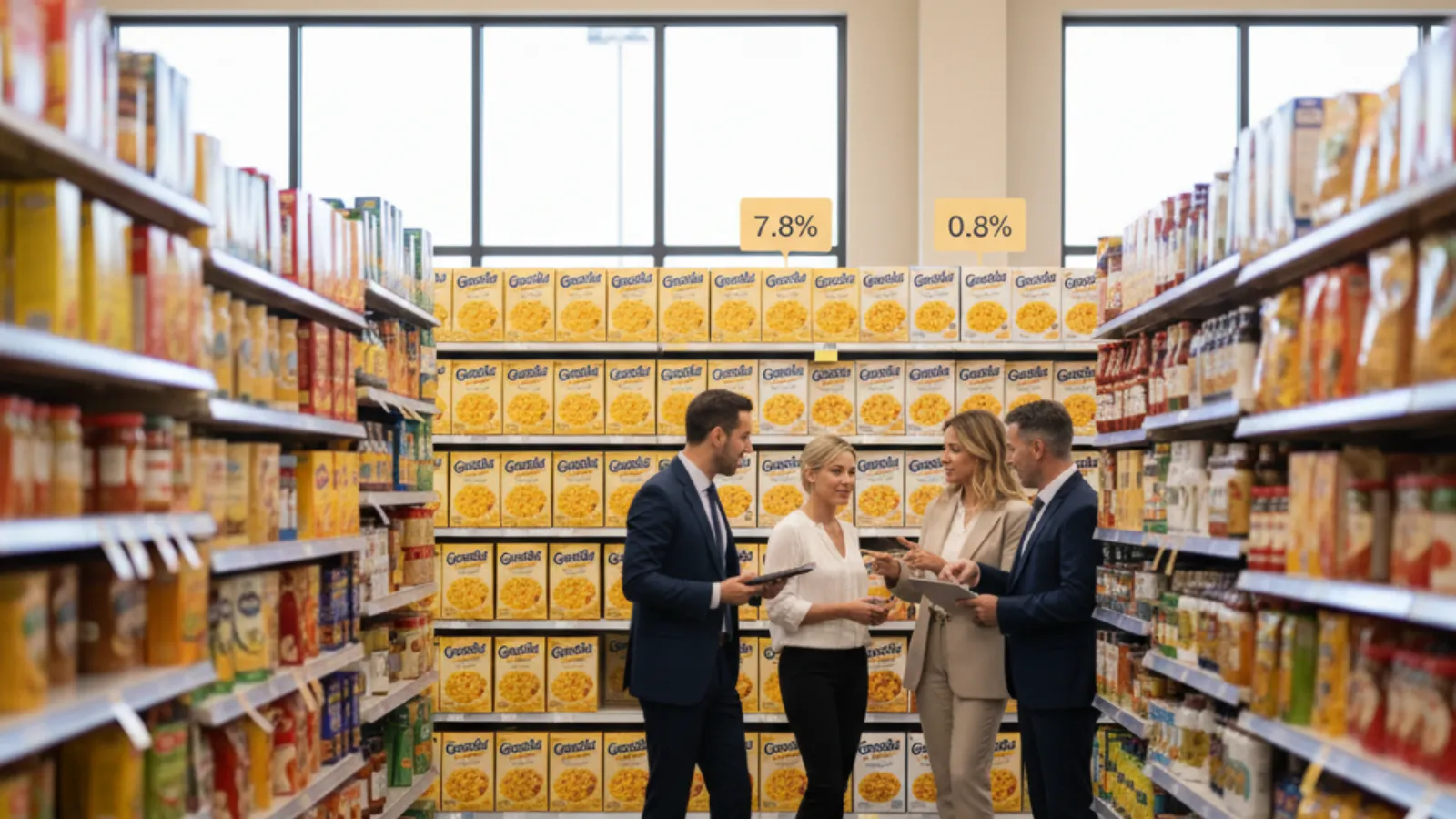
I keep seeing the same ending. A small brand takes shelf from the leaders for a few years, and then somebody buys it. Goodles went from 0.8% of US mac and cheese spending to 7.8% in three years. On 2 September Barilla agreed to buy it.
What Barilla bought
Barilla Group agreed to buy Goodles on 2 September. Neither side gave a price. Goodles will run as its own brand and keep its base in Santa Cruz, California. Jen Zeszut stays on as chief executive.
Goodles started in 2020. It sells boxed mac and cheese with 14 grams of protein and 6 to 7 grams of fibre a serving. Its best known trick is a pouch of wet cheese in place of the dry powder. Gal Gadot and Jaron Varsano were among the first backers.
The share move is the whole story
Numerator tracked US spending on shelf stable mac and cheese for the year to the end of June. Goodles took 7.8% of it, against 0.8% three years earlier. That is close to ten times the share in three years.
The brand was also selling faster per store than Kraft and Annie's within three years of launch. A five year old brand was beating the two names that have owned this shelf for decades.
Shelf stable mac and cheese is a cheap and crowded aisle. Own label sits next to Kraft in most shops. A newer brand charging more has to earn every facing it gets. Goodles did that on protein, on fibre and on the cheese pouch.
The buyer had nothing to defend
Here is the part worth sitting with. Kraft Mac and Cheese belongs to Kraft Heinz. Annie's belongs to General Mills. Both watched Goodles take their shelf. Neither of them bought it. The buyer was Barilla, which had no mac and cheese business in the US to protect.
That is the pattern. A leader with share to lose treats a small rival as a price problem and answers with deals. An outsider treats the same brand as a way in and answers with a cheque. Defending a shelf and buying a shelf are different jobs, and firms rarely do both well.
What Barilla brings
Barilla is the largest pasta maker in the world and is held by the Barilla family. Guido Barilla, the chairman, said the group had watched Goodles closely for some time.
The fit is plain. Goodles has the brand and the shoppers. Barilla has plants, buyers and shelf space outside the US. Goodles sells in one country today, and that is the whole growth case.
Barilla has also been adding US capacity. Earlier this year it put $170 million into its site in Livingston County, New York. That money went on making, packing lines and warehouse space.
The price nobody will confirm
Barilla is family held, so it does not have to tell anyone what it paid. Some reports have floated a range. None of it is confirmed, so treat it as noise.
What is confirmed is more useful. Barilla will name the $170 million it spent on a plant. It will not name what it spent on a brand. That tells you which number it treats as a secret.
What to watch next
Three things decide whether this works. First, whether Goodles keeps its own team and its own pace. Second, how fast Barilla puts the brand into Europe. Third, what Kraft Heinz and General Mills do now.
Demand for protein and fibre is still climbing. Circana found that close to half of US adults are trying to eat more protein. Every leader in packaged food now has a Goodles somewhere in its aisle, taking share quietly.
For buyers and holders the lesson is blunt. The best time to buy a fast riser is while it is small and cheap to fold in. By the time a rival holds a tenth of your shelf, you are buying back your own share.
Global Aseptic Packaging Market Report 2026
148.4bn litres and 344bn packs in 2025. Aseptic volumes across dairy, dairy alternatives, beverages and food in 39 markets — 2025 actuals and forecasts to 2030. Buy online and receive it within 24 hours.
More information
Global Cheese Database 2026
Production, imports, exports and consumption for 39 cheese types across 48 countries, with actuals through 2025 and forecasts to 2030. Join the waitlist for early access, pre-launch pricing and a free sample country chapter.
Get early accessStrategic Insights
📊 Analytics & Strategic Insight
The leaders lost the shelf, then they lost the deal
The decision most in this industry are avoiding:
👉 The firm that should buy is rarely the firm that does. A leader defends with price cuts. An outsider buys the brand and the shoppers with it.
👉 Share is the cheapest early warning you own. A rival moving from under 1% to near 8% is in plain sight for two years before it hurts.
👉 Family owned buyers can pay without telling you. When the buyer has no shares listed, the price stays hidden and your board loses its yardstick.
Here's the full context:
→ 2020: Goodles starts up in Santa Cruz, California. It puts protein and fibre into boxed mac and cheese.
→ 2023: Within three years of launch it is selling faster per store than Kraft and Annie's.
→ Early 2026: Barilla puts $170 million into its plant in Livingston County, New York.
→ June 2026: Numerator has Goodles at 7.8% of US shelf stable mac and cheese spending. Three years before it was 0.8%.
→ Most recent: On 2 September Barilla agreed to buy Goodles. The price was not given.
What this means for food and beverage operators and investors:
✅ Track how fast a rival sells per store. Share tells you where a rival has been. Sales per store tell you where it is going.
✅ Outsiders are your real buyers. If a fast riser sits in your aisle, look next door. The buyer may be a firm with no share to defend.
✅ A quiet price is a signal. Family groups do not have to publish what they pay, so your read on brand prices gets weaker every year.
3 moves you can make this week:
1️⃣ List the brands under 2% share in your top aisle. Sort that list by growth. Size can wait.
2️⃣ Pull sales per store for your top three rivals. If a small brand beats you there, it will beat you on share within two years.
3️⃣ Name the outside buyer for each one. Ask who would want your aisle without owning any of it today.
Take the Next Step
💬 You don't need a written brief.
Tell us what you are weighing up, and we will come back with the likely project scope, recommended direction and cost range.
→ Tell us what you're planning
Zenith Consulting
Submit your food & beverage project enquiry.
Share your requirements. If there is a strong fit, we’ll come back with an indicative investment range, project timeline and recommended strategic approach.
Reviewed by Zenith Consulting’s senior food & beverage strategy team.
Related analyses
- Health, Nutrition & Functional
Dreher Adds A 12,000 Carton An Hour Elopak Aseptic Line Into A German Juice Market Down To 1,915 Million Litres
Dreher Group has started filling its own aseptic cartons at Stockach on an Elopak E-PS120AH running up to 12,000 cartons an hour. It joins a German market where Zenith's own data shows aseptic volume falling 2.6% a year and juices and nectars down to 1,915 million litres.
Read analysis → - Corporate Strategy & Portfolio
FDA Clears Salt Substitutes In 41 Cheese Standards, And The Last Sodium Push Moved The Median Just 3%
The FDA has opened 41 cheese standards to salt substitutes, with the rule effective 14 December 2026. The cheese part can still be objected to until 12 November, and the last US sodium push moved the median by 3%.
Read analysis → - Corporate Strategy & Portfolio
Large PET Fills 25,940 Million Litres Of Aseptic Drinks Against 14,500 Million In Family Cartons
Zenith's Global Aseptic Packaging Market Report 2026 puts large PET at 25,940 million litres of aseptic drinks in 2025, against 14,500 million litres in family cartons. Cartons still lead on pack count, which turns the format split into a pack size split.
Read analysis →
Share it with your peers
Pass this analysis to colleagues who track the food and beverage market.
Zenith Market Intel
Need a specific food or beverage market report?
Tell us which category, region or question would be useful for your team.
Sister Publication
Also follow our Water Dispense Market Intelligence
Category analyses, operator briefings, and investor signals across the global water dispense market.