Q4 Whey Isolate Contracts Are Near $14.50 A Pound. Danone's Silk Soy Line Never Joins That Queue
USDA put fourth quarter whey isolate contracts near $14.50 a pound in the week to 28 August, with WPC 34% stocks called exceptionally thin. Danone's new Silk soy protein range buys none of it, and that is the commercial point.
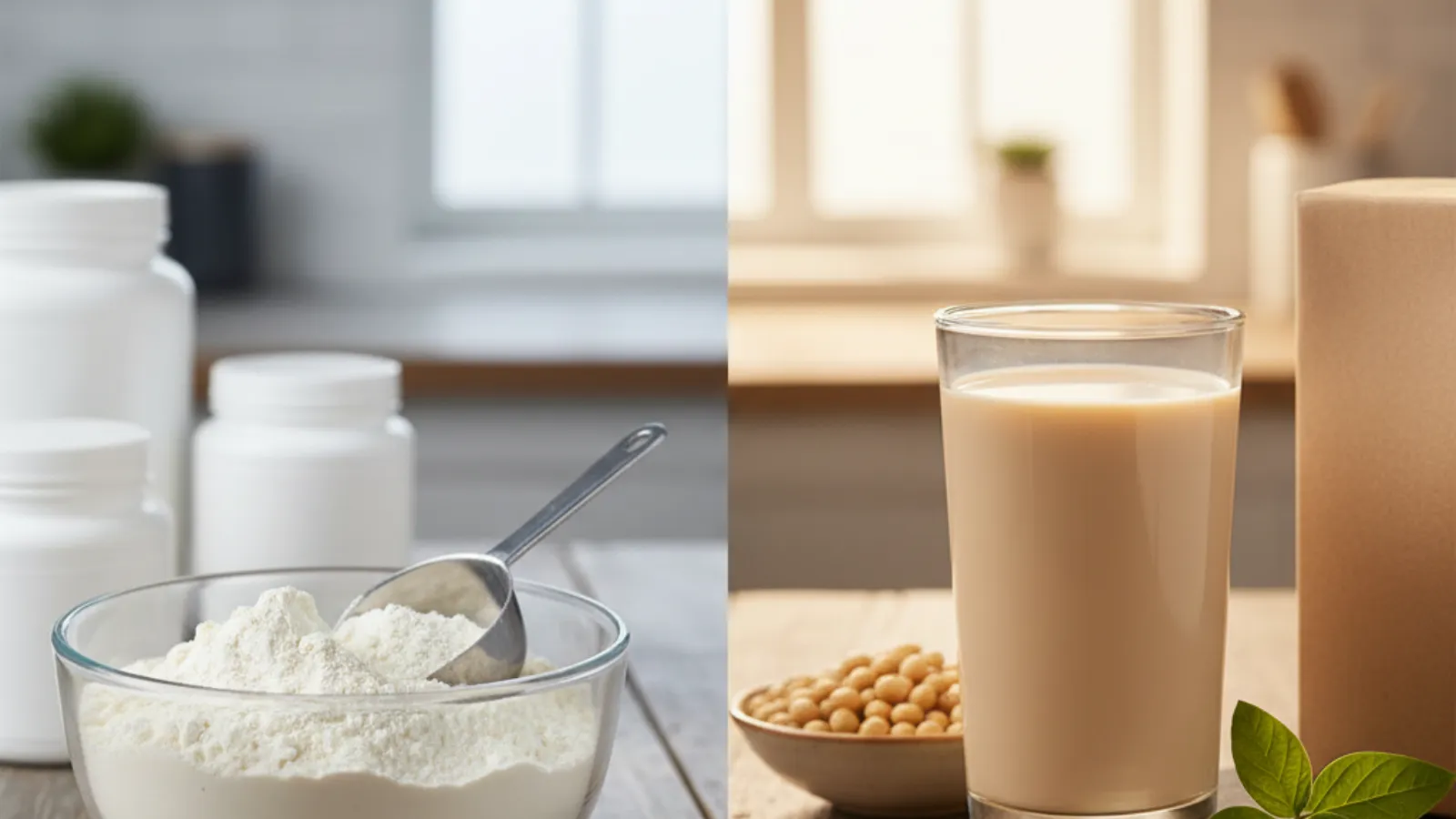
If this were my business, I would price my rival's protein before my own. That check gets skipped almost every time. Last week the USDA put fourth quarter whey isolate contracts at around $14.50 a pound.
Soy protein does not sit in that queue. That is the whole case for what Danone has just put on US shelves.
What the whey market looked like last week
USDA Dairy Market News covers the week of 24 to 28 August. It reports whey isolate trading mostly in the $14s a pound. Some fourth quarter contracts are near $14.50.
Regular WPC 80% ran from $11.50 to $12.85. The instant grade ran from $11.75 to $13.00. WPC 34%, the cheap workhorse grade, sat between $1.95 and $2.50.
The words matter more than the prices. USDA calls the WPC 34% market extremely tight. Product is harder to source. Stocks are described as exceptionally thin. Food, infant formula and feed buyers are all pulling at once.
Lactose reads the same way. USDA says spot loads are hard to find. Some makers have almost nothing left to sell. Dry whey closed at 73.75 cents a pound on 28 August.
The shortage sits in plant kit rather than in milk. USDA notes that some whey makers are rebuilding dryers to turn out the richer grades, which pay better. Sweet whey output is out of step with buyer interest. There are more buyers than sellers.
Danone built a line that skips the queue
Silk Protein Yogurt reached US shops in late June. The 24oz tub carries 13g of plant protein per 6oz serving and sells at $6.79. Single 5.3oz cups carry 12g and sell at $1.99.
FoodBev reports the yogurt holds twice the protein of the average US plant based yogurt. It also carries 4g of fibre a serving.
Silk Protein Shakes followed in July. Each 11.15 fl oz bottle holds 30g of soy protein, 2g of sugar and 180 calories. Four bottles sell at $11.99. This is the first shelf stable shake Silk has made.
Both lines buy soy, so neither one competes for a whey dryer. They follow Silk Protein milk, which launched earlier this year.
The cheapest gram sits on a warm shelf
Work the shelf prices back to a price per gram of protein. The shake lands near 10 cents a gram. The tub lands near 13 cents. The single cup lands near 17 cents.
Those are shop prices, so they carry packing, freight and retail margin. They still show how the range prices its own grams.
The shelf stable shake is the cheapest gram in the whole range. It is also the cheapest to move. No fridge on the truck, no fridge in the shop, and a longer life once it lands.
That combination opens doors a chilled cup cannot reach. Fuel stops, gyms, vending and online all take a warm pack.
A supply play wearing a health label
The old plant based pitch was sold on ethics and on the planet. Shoppers stopped paying extra for it. Beyond Meat has spent three years proving that.
Silk sells grams, sugar and price instead. FoodBev notes the 30g shake matches many dairy shakes on the label.
A soy line lets a dairy firm grow protein sales without growing its whey bill. That is a hedge, and few people read it that way.
Danone already told investors what the queue costs
Danone held its half year results call on 29 July. Chief executive Antoine de Saint-Affrique said the rest of the North American range ran "under quota". High protein yogurt took the factory time instead.
A production line was setting the shape of the range. Every gram of dairy protein Danone sells has to clear that same line. Soy grams clear a different one.
Rivals face the same sums. Any brand with a protein claim on pack is buying into one narrow supply. A second protein source is now a trading safeguard.
What to watch next
Three things decide whether this works. First, whether Danone breaks out Silk Protein sales so buyers can size it. Second, whether rivals copy the warm shake format within a year.
Third, and biggest, whether whey eases in 2027 as new plants open. If it does, soy has to hold its shelf on merit.
Every protein claim on a pack is a standing order for a powder. Ask how much of your claim rests on one queue. Then price the answer.
Global Aseptic Packaging Market Report 2026
148.4bn litres and 344bn packs in 2025. Aseptic volumes across dairy, dairy alternatives, beverages and food in 39 markets — 2025 actuals and forecasts to 2030. Buy online and receive it within 24 hours.
More information
Global Cheese Database 2026
Production, imports, exports and consumption for 39 cheese types across 48 countries, with actuals through 2025 and forecasts to 2030. Join the waitlist for early access, pre-launch pricing and a free sample country chapter.
Get early accessStrategic Insights
📊 Analytics & Strategic Insight
Your protein claim is a purchase order, and it is written on one supply
The decision most in this industry are avoiding:
👉 Grams on a pack are a standing order. Most teams treat a protein claim as a marketing call. It commits the plant to one scarce powder for the life of the pack.
👉 Soy is cheap because nobody fought over it. Whey rose because every brand chased the same dryers. Soy kept its own crops, its own plants and its own queue.
👉 A warm shelf beats a cold one on cost long before it beats it on taste. Losing the fridge cuts freight, shrink and store fees. That gap widens when chilled space is full.
Here's the full context:
→ January 2026: Danone launches Silk Protein milk in the US. It carries 13g of plant protein a serving.
→ 13 January 2026: Danone commits $4m to widen its Fort Worth plant. It says it cannot keep up with demand for high protein dairy.
→ 16 June 2026: Silk adds a protein yogurt and a shelf stable protein shake. Both are built on soy.
→ 29 July 2026: Danone tells analysts the rest of its North American range ran under quota. Protein yogurt had taken the factory time.
→ Most recent: USDA reports fourth quarter whey isolate contracts near $14.50 a pound. It calls WPC 34% stocks exceptionally thin, in the week to 28 August 2026.
What this means for food and beverage operators and investors:
✅ Price the input your rival depends on. If their protein is rationed, a gap on their shelf is a supply gap. That is your window, and it has a clock on it.
✅ Two protein sources beat one better price. A single source puts the claim on the pack at risk. A blend protects the label when one powder tightens.
✅ Warm formats buy room in a full fridge. Shelf stable lines skip the cold chain bill. They also reach shops a chilled cup never sees.
3 moves you can make this week:
1️⃣ Count your whey exposure. List every product carrying a protein claim. Mark which ones need whey and what share of sales they carry.
2️⃣ Get a soy or blend sample into the lab. Ask your supplier to match the gram count on your pack. Test taste and texture before you need to.
3️⃣ Price a shelf stable version of your best seller. Strip out the cold chain cost. See what that frees for the shelf price.
Take the Next Step
🎯 This is the thinking we bring to client projects.
If today's topic touches a decision on your desk this quarter, start the conversation before the window closes.
→ Start the conversation
Zenith Consulting
Submit your food & beverage project enquiry.
Share your requirements. If there is a strong fit, we’ll come back with an indicative investment range, project timeline and recommended strategic approach.
Reviewed by Zenith Consulting’s senior food & beverage strategy team.
Related analyses
- Health, Nutrition & Functional
Dreher Adds A 12,000 Carton An Hour Elopak Aseptic Line Into A German Juice Market Down To 1,915 Million Litres
Dreher Group has started filling its own aseptic cartons at Stockach on an Elopak E-PS120AH running up to 12,000 cartons an hour. It joins a German market where Zenith's own data shows aseptic volume falling 2.6% a year and juices and nectars down to 1,915 million litres.
Read analysis → - Health, Nutrition & Functional
SIG Targets 85% Paper In Aseptic Cartons: Aluminium-Free Still Has Enormous Room To Scale
SIG says it is working towards 85% paper content in its aseptic cartons, with polymer and fibre barriers doing the work aluminium used to do. Set against the 344 billion aseptic packs filled worldwide in 2025, the aluminium-free carton is still a rounding error.
Read analysis → - Health, Nutrition & Functional
Saputo Creates A Dairy Ingredients Division: Cheese Plants Are Now Judged On Their Whey
Saputo has split dairy ingredients into its own division under Steve Douglas. US cheese output rose 2.1% in July while whey protein concentrate output fell 2.3%.
Read analysis →
Share it with your peers
Pass this analysis to colleagues who track the food and beverage market.
Zenith Market Intel
Need a specific food or beverage market report?
Tell us which category, region or question would be useful for your team.
Sister Publication
Also follow our Water Dispense Market Intelligence
Category analyses, operator briefings, and investor signals across the global water dispense market.