Danone Grew 4.5% Last Year. North America Barely Managed 1.5%. Protein Is the Fix
Danone lifted group sales 4.5% in 2025, yet its North American business grew barely 1.5% in a recent quarter, its weakest since 2019. As Danone prepares to report first-half results on 29 July, protein and functional nutrition are the bet meant to fix its most stubborn market.
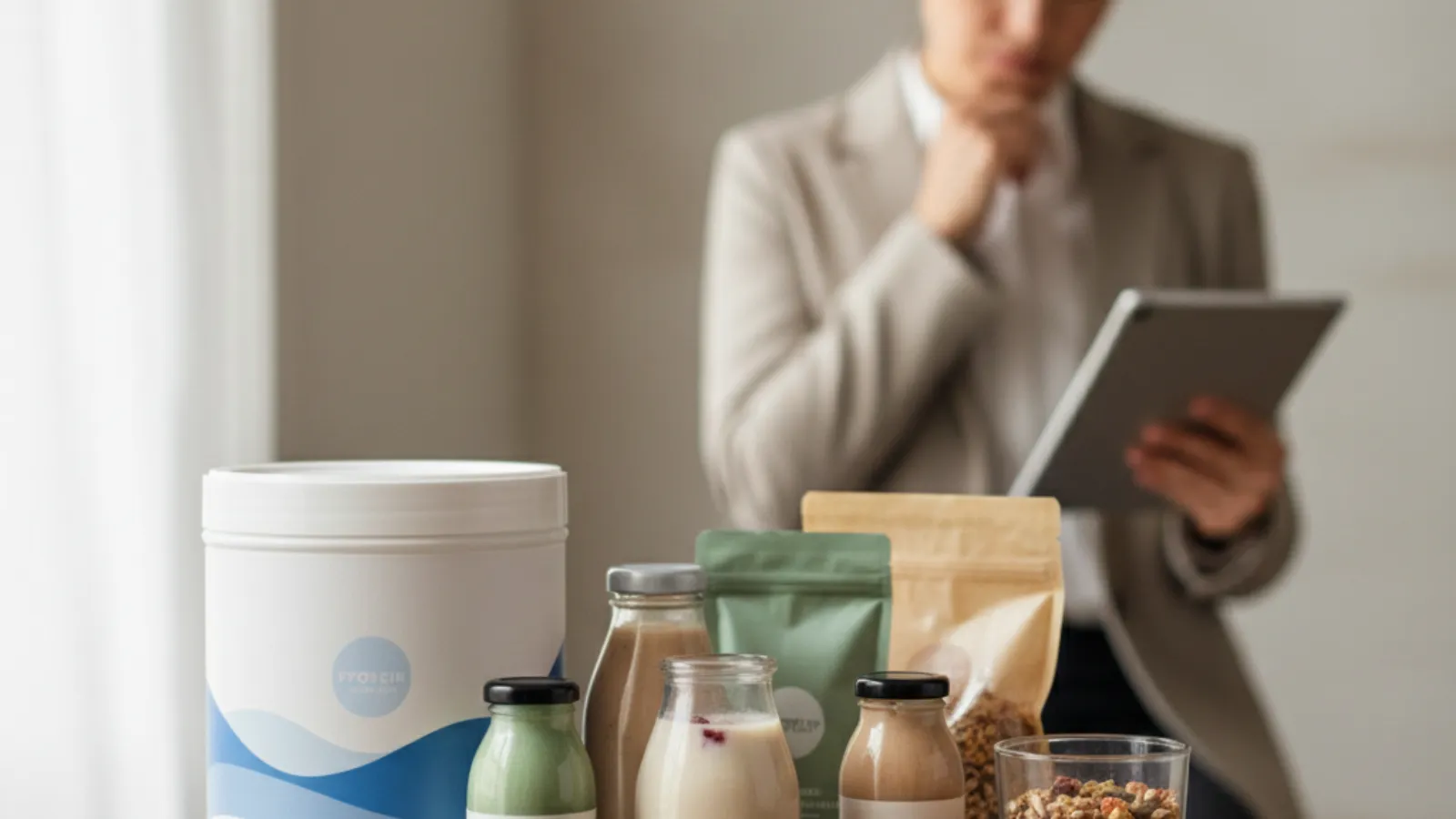
Danone grew 4.5% last year. In North America, one of its two biggest markets, sales barely moved. That gap is the story to watch when the French food giant reports first-half results this Wednesday.
The problem region
North America is the weak spot in an otherwise strong Danone. The group lifted like-for-like sales 4.5% in 2025 and pushed its recurring operating margin to 13.4%. Free cash flow jumped a third to €2.8 billion. Then you reach the United States. In the third quarter of 2025, North American sales rose just 1.5%, the slowest quarter since the end of 2019. The fourth quarter came in at 0.7%. Danone pointed to weak coffee creamers and factories that could not make enough yogurt to meet demand.
So the company behind Oikos, Silk, Horizon, Activia and International Delight has a growth problem in the one market where the health boom should help it most. Wednesday's results are the first clean read on whether the fix is working.
The fix is protein
Danone's answer is to pour money into protein and functional nutrition. Oikos is already the number one high-protein yogurt brand in the US. Over the past year Danone pushed it well beyond the dairy aisle. Oikos now sells shelf-stable protein shakes in a market worth more than $7 billion that is growing almost 16% a year. Silk Protein claims the highest protein of any chilled plant milk on US shelves. There is even an Oikos drink built for people losing weight on GLP-1 medicines.
The buying has been just as aggressive. Danone took control of Kate Farms, the top doctor-recommended plant-based nutrition brand in the US, to grow its medical nutrition arm. It agreed to pay about €1 billion for the British meal-replacement brand Huel. It is buying Australia's MADE Group and the rest of its Saputo dairy venture to add more protein and gut-health drinks. Each deal points the same way: sell more high-protein nutrition to shoppers who now put health first.
Where the protein bet could break
Here is the catch. Everyone is chasing the same shopper. General Mills, PepsiCo, Nestlé and a wall of private-label brands are all loading protein onto shelves. When every label shouts 30 grams of protein, the word stops selling the product and price takes over. Danone is spending to plant its flags early. It even became the first official yogurt and plant-based drinks partner of the Big Ten college sports conference, a deal that reaches 580,000 students and 14,000 athletes.
The bigger risk sits closer to home. Danone said its US weakness came partly from plants that could not keep up with orders. New brands and sponsorships do not fix a factory that has run out of capacity. That takes money, time and patient management. It is the least glamorous part of the plan and probably the one that matters most.
What This Means for Operators and Investors
On Wednesday, look past the group headline to North American like-for-like growth. If it climbs back above 3%, the protein bet is starting to pay. If it sits near 1%, Danone is buying growth faster than it is building it, and investors will start asking what all the deals are really worth. Watch whether protein is adding sales or just shifting them from plain yogurt to premium yogurt. Watch the margin too, because Huel was expensive and its integration costs land this year. For everyone else in food, Danone is a live test of a bet the whole industry is making: that protein is a lasting growth engine rather than a crowded fad. The company that fixes its supply and holds its price will win this category. The one that only launches products will hand its margin to the retailer.

Global Aseptic Packaging Market Report 2026
148.4bn litres and 344bn packs in 2025. Aseptic volumes across dairy, dairy alternatives, beverages and food in 39 markets — 2025 actuals and forecasts to 2030. Buy online and receive it within 24 hours.
More information
Global Cheese Database 2026
Production, imports, exports and consumption for 39 cheese types across 48 countries, with actuals through 2025 and forecasts to 2030. Join the waitlist for early access, pre-launch pricing and a free sample country chapter.
Get early accessStrategic Insights
📊 Analytics & Strategic Insight
In protein, the winner fixes supply and holds price while everyone else just launches
The decision most in this industry are avoiding:
👉 The protein boom hides a supply story. Most food firms are treating protein as a marketing job, when the real limit is whether their plants can make the volume the shelf now wants. The brand that can actually supply the demand takes the share.
👉 M&A can mask a flat core. A run of deals lifts the group line and buys time, and it can also hide that the base business stopped growing. Read organic growth by region before you cheer the headline.
👉 A sponsorship buys reach today and hopes for loyalty later. Owning a college league puts product in young hands early, yet the payback runs for years and rarely shows up in the next set of results.
Here's the full context:
→ 2022: Danone launches its Renew plan to refocus the company on health-driven nutrition after years of drift.
→ 2025 (full year): Group like-for-like sales grow 4.5%, recurring margin reaches 13.4%, and high-protein plus medical nutrition each pass €1 billion in sales.
→ 2025 (third quarter): North America grows just 1.5%, its weakest quarter since 2019, held back by coffee creamers and yogurt capacity.
→ 2026 (first half): Danone agrees to buy Huel for about €1 billion, completes Kate Farms, and moves on Australia's MADE Group to widen its protein and functional-nutrition range.
→ Most recent: Danone reports first-half 2026 results on 29 July, the first clean read on whether the North America protein bet is lifting its weakest region.
What this means for food and beverage operators and investors:
✅ Separate the growth you buy from the growth you build. Track organic sales by region so acquisitions do not flatter a soft core, and price the business on what it can grow on its own.
✅ Treat capacity as strategy. In a category running hot, the firm that can supply the demand takes the share, so spending on plants can matter more than the next launch.
✅ Defend price early. Protein claims are drifting toward parity, so build a reason to charge more through format, brand or an added benefit before the number alone stops working.
3 moves you can make this week:
1️⃣ Map your protein shelf. List every product you and your rivals sell on a protein claim, then find the gap nobody owns yet in format, occasion or health benefit.
2️⃣ Pressure-test your supply. Ask which of your growth lines would stall if demand jumped 30% next quarter, and cost the fix now rather than in the middle of a stockout.
3️⃣ Read the regional splits. When a big competitor reports, skip the headline and check where growth actually came from; that shows you where they are strong and where they are exposed.
Take the Next Step
🧭 Facing a decision like this in your own category?
Describe it in a few lines. Selected enquiries receive an initial strategic assessment: direction, likely scope and indicative investment range.
→ Start a project enquiry
Zenith Consulting
Submit your food & beverage project enquiry.
Share your requirements. If there is a strong fit, we’ll come back with an indicative investment range, project timeline and recommended strategic approach.
Reviewed by Zenith Consulting’s senior food & beverage strategy team.
Related analyses
- Health, Nutrition & Functional
Sports And Energy Drinks Reach 39,180 Million Litres, And Aseptic Filling Has Almost None Of It
Sports and energy drinks are the fastest growing group on the world drinks shelf at 39,180 million litres in 2025, up 7.2% a year since 2020. Zenith's Global Aseptic Packaging Market Report 2026 books just 100 million litres of the United States total as aseptic.
Read analysis → - Health, Nutrition & Functional
Dreher Adds A 12,000 Carton An Hour Elopak Aseptic Line Into A German Juice Market Down To 1,915 Million Litres
Dreher Group has started filling its own aseptic cartons at Stockach on an Elopak E-PS120AH running up to 12,000 cartons an hour. It joins a German market where Zenith's own data shows aseptic volume falling 2.6% a year and juices and nectars down to 1,915 million litres.
Read analysis → - Corporate Strategy & Portfolio
FDA Clears Salt Substitutes In 41 Cheese Standards, And The Last Sodium Push Moved The Median Just 3%
The FDA has opened 41 cheese standards to salt substitutes, with the rule effective 14 December 2026. The cheese part can still be objected to until 12 November, and the last US sodium push moved the median by 3%.
Read analysis →
Share it with your peers
Pass this analysis to colleagues who track the food and beverage market.
Zenith Market Intel
Need a specific food or beverage market report?
Tell us which category, region or question would be useful for your team.
Sister Publication
Also follow our Water Dispense Market Intelligence
Category analyses, operator briefings, and investor signals across the global water dispense market.