The $100 Billion Infant Formula Reset: Twin Toxins, a Single Chinese Supplier, and the Repricing of Nestlé, Danone, Reckitt and a2 Milk
The world's $100 billion infant formula category has been quietly rewriting its safety architecture since November 2025. Two toxins, one Chinese supplier and four major brands later, the asset-valuation rules have already shifted.
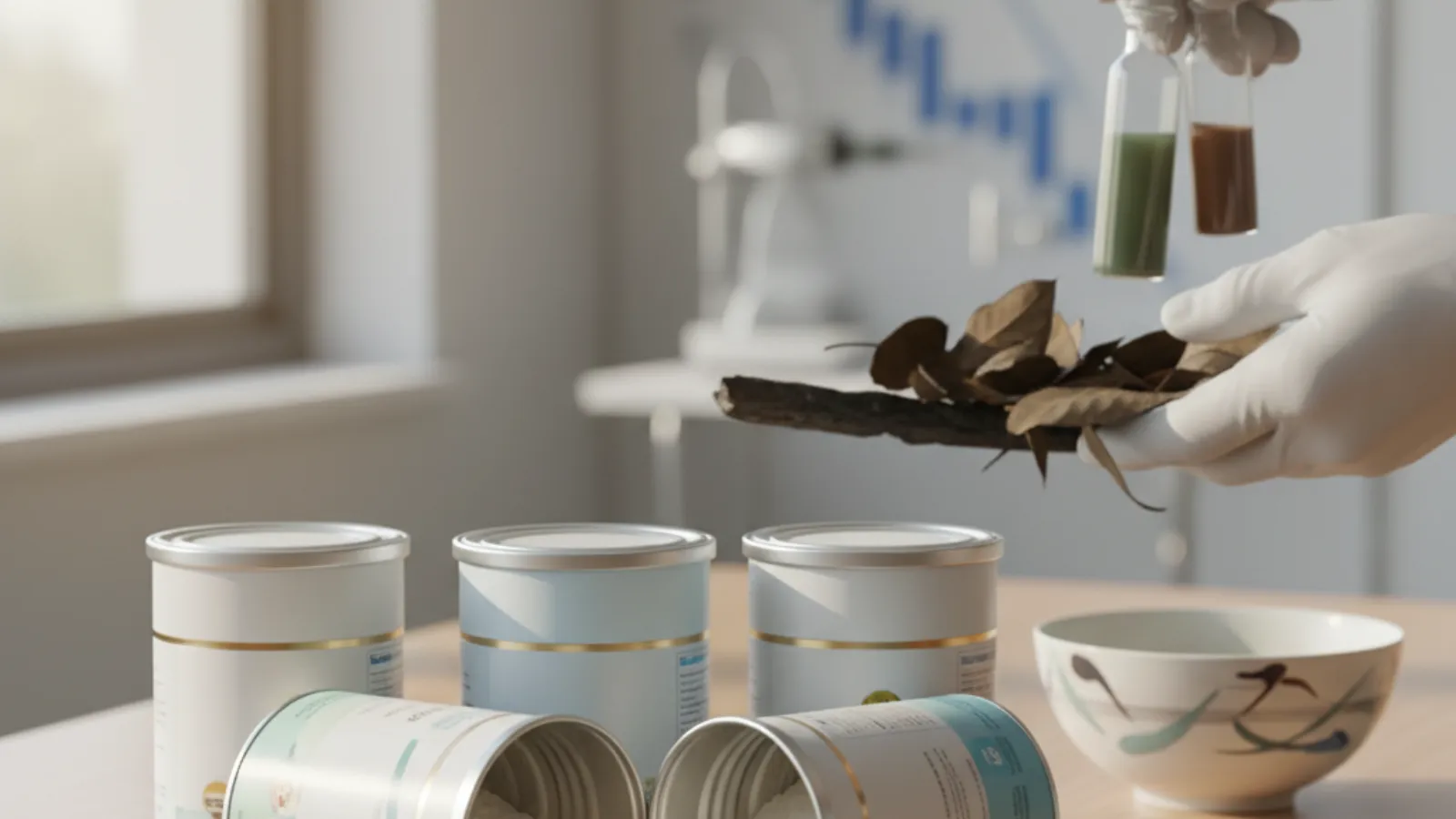
For 18 months, Cabio Biotech — a Chinese producer of arachidonic acid (ARA) oil based outside the daily attention of any global rating agency — was shipping batches of a single trace nutrient to nearly every premium infant formula brand on earth. Between October 2024 and October 2025, those batches carried cereulide: a heat-stable toxin that survives pasteurization, sterilization and most industrial processes. By the time the contamination surfaced inside Nestlé's Nunspeet plant in the Netherlands in late November 2025, the toxic supply had already moved through 65 ARA oil batches and into formula sold in over 100 countries. The $100 billion infant nutrition category is now five months into the most expensive trust reset in its history — and the May 2, 2026 recall of 63,078 units of a2 Platinum in the United States shows the crisis is still expanding, not contracting.
A single supplier became a single point of failure
Cabio Biotech, identified publicly by France's agriculture ministry in February 2026, supplied ARA oil through a Dutch intermediary into Nestlé, Danone (Aptamil, Cow & Gate, SMA), Lactalis (Picot), and at least two smaller European brands — Babybio and La Marque en Moins. ARA, a polyunsaturated fatty acid added to formula to support brain and eye development, represents a fractional ingredient cost. What the category had not done was price the concentration risk of that fraction. The Nestlé-led recall has now extended to more than 800 products across 10-plus factories. Austria's health ministry called it the company's largest recall campaign in history.
Two toxins, two regulators, one structural lesson
The May 12, 2026 analytical reviews across foodnavigator, nutraingredients and dairyreporter pulled a sharper frame into view: cereulide is not the only first-in-history toxin event the category has absorbed in the past six months. In the same November-December 2025 window, the United States recorded its first epidemiological link between Clostridium botulinum and powdered infant formula — through ByHeart, a US challenger brand that voluntarily recalled all production on November 8 and expanded the recall November 11, 2025. By late February 2026 the FDA had confirmed 28 cases of infant botulism plus 20 probable cases tied to ByHeart formula and 48 hospitalizations. Two toxins, two regulators, one structural lesson: the category's existing safety architecture was built for nutrient compliance, not microbial-supplier diligence.
The 13-day gap that became a criminal probe
The reputational damage to the largest brand is concentrated, specific, and now being litigated. Nestlé's lab tests detected Bacillus cereus on November 26, 2025; the company notified Dutch food authorities on December 9 — a 13-day delay. Public recalls did not begin until early January 2026. Paris' public prosecutor opened a criminal investigation in February 2026 covering Nestlé, Danone, Lactalis, Babybio and La Marque en Moins, after consumer watchdog Foodwatch filed a complaint on behalf of eight families whose infants reportedly fell ill. Until November 2025, no global regulator had set a binding action limit for cereulide in infant formula. EFSA introduced an acute reference dose on February 2, 2026 corresponding to a product level of 0.43 nanograms per gram. Nestlé operates internally at 0.2 ng/g — more than twice as strict.
The asset-valuation consequences are already arriving
Reckitt is mid-strategic-review of Mead Johnson, the Enfamil-led infant formula business it bought for $17.9 billion in 2017. Its share price hit a nine-month low on April 10, 2026 at around 5,160 pence, as Danone deal speculation collided with category-wide trust erosion. Danone, conspicuously, is itself a defendant in the French criminal probe — making any Mead Johnson acquisition timing-questionable for a board approving it this summer. Asia-Pacific represents 68.94% of the global infant formula market and is led by China, where regulatory tolerance for European-supply-chain failure runs structurally low. The premium "European nutrition" pricing premium that supported 10-25% segment margins for two decades now carries a recall asterisk. PE bidders circling Nestlé Waters — the parallel divestment — are explicitly using the formula crisis as a contagion-discount lever inside risk-return models.
What this means for the next 90 days
Three asset-pricing events are likely to land before the European summer break. The first is a Cabio Biotech ingredient-supplier liability ruling — quietly being negotiated across at least three jurisdictions and likely to set the first formal precedent on upstream-supplier exposure in nutritional categories. The second is the Reckitt-Mead Johnson decision, which is now effectively a forced-timing transaction: holding through Q3 means absorbing every cereulide headline through the summer reporting cycle. The third is China's National Health Commission response. Beijing already controls market access for foreign infant formula through GB 10765/10766 standards; a tightening cycle aimed at "trace-ingredient supplier auditability" would re-route an estimated $20 billion-plus of European exports. For executives sitting in adjacent categories — premium dairy, functional beverages, medical nutrition — the lesson is the same one PE bidders are already pricing in: single-supplier dependency on a non-public Asian intermediate-ingredient producer is now a board-level risk, not a procurement footnote.
Global Aseptic Packaging Market Report 2026
148.4bn litres and 344bn packs in 2025. Aseptic volumes across dairy, dairy alternatives, beverages and food in 39 markets — 2025 actuals and forecasts to 2030. Buy online and receive it within 24 hours.
More information
Global Cheese Database 2026
Production, imports, exports and consumption for 39 cheese types across 48 countries, with actuals through 2025 and forecasts to 2030. Join the waitlist for early access, pre-launch pricing and a free sample country chapter.
Get early accessStrategic Insights
📊 Analytics & Strategic Insight
Why ingredient-supplier concentration is now an asset-pricing factor, not a procurement footnote
The decision most in this industry are avoiding:
👉 Treating trace-ingredient suppliers as procurement, not as governance. Cabio Biotech sat behind half the world's premium infant formula brands. No board paper named it.
👉 Pricing recalls as P&L, not as franchise. The Nestlé Nunspeet recall costs less than the medium-term valuation discount the category is now absorbing across Europe and the United States.
👉 Assuming new safety thresholds are downside-only. EFSA's 0.43 ng/g cereulide action limit is more friend than burden — it creates a regulated floor that competitors who under-invest in lab testing now have to clear.
Here's the full context:
→ October 2024: Cereulide-contaminated ARA oil batches start shipping out of Cabio Biotech in China, according to French agriculture ministry analysis.
→ November 8, 2025: ByHeart voluntarily recalls infant formula tied to the first epidemiologically linked Clostridium botulinum outbreak in powdered formula; expanded November 11.
→ December 9, 2025: Nestlé notifies Dutch authorities 13 days after Bacillus cereus is detected at the Nunspeet plant in the Netherlands.
→ February 2, 2026: EFSA sets a 0.43 ng/g cereulide action limit; the Paris prosecutor opens a criminal probe of Nestlé, Danone, Lactalis, Babybio and La Marque en Moins.
→ Most recent: May 12, 2026 — analytical reviews across foodnavigator, nutraingredients and dairyreporter formalise the "twin-toxin" framing, days after a2 Milk's 63,078-unit US recall.
What this means for food and beverage operators and investors:
✅ Ingredient-supplier audit is a board-level governance line. Trace-ingredient concentration on a single non-public Asian producer now carries the same scrutiny as raw material price hedging.
✅ Premium positioning needs a recall-adjusted discount factor. Asset valuations on Mead Johnson, a2 Milk, Reckitt Nutrition and even Nestlé Waters now embed category trust haircuts that were absent six months ago.
✅ China will set the next compliance floor. An NHC tightening cycle on trace-ingredient supplier auditability is the single regulatory move most likely to re-route $20 billion-plus of European exports.
3 moves you can make this week:
1️⃣ Map your trace-ingredient supplier tree to a single page. If any ingredient under 1% of bill of materials has only one or two qualified producers globally, escalate to the audit committee, not procurement.
2️⃣ Build a recall-adjusted EV model for any premium nutrition asset on your radar. The Reckitt-Mead Johnson process is the live test case. Discount free cash flow by trust-rebuilding spend, not by recall direct cost.
3️⃣ Stress-test your December-January PR readiness. The Nestlé 13-day gap will be the template criminal prosecutors and consumer watchdogs apply to every future European food safety lapse. Treat any internal lab result like a market-moving disclosure event.
Take the Next Step
♻️ Looking for a high-growth investment in sustainable beverage technology?
An iF Design Award-winning, IoT-enabled product line solving the single-use plastic crisis from the inside — designed for the home and B2B market. Strong structural tailwinds as plastic regulations tighten across Europe.
→ Request the investor deck: info@zenithglobalcommercial.com
Zenith Consulting
Submit your food & beverage project enquiry.
Share your requirements. If there is a strong fit, we’ll come back with an indicative investment range, project timeline and recommended strategic approach.
Reviewed by Zenith Consulting’s senior food & beverage strategy team.
Related analyses
- Sustainability, Regulation & Risk
Raw Milk Cheese Warning Label Petition: Parmigiano Reggiano And Roquefort Cannot Be Pasteurised
A draft FDA petition would put a warning label on every raw milk cheese sold in America, imported cheese included. The US took in 251.3 million pounds of cheese in seven months, and the biggest Italian and French names cannot be pasteurised at all.
Read analysis → - Sustainability, Regulation & Risk
Aseptic Bags Face The EU Recycling Test: ABMA Starts A Three-Year Programme Ahead Of PPWR Requirements
Europe's industrial aseptic bag makers have started a three-year project to make the pack recyclable before the PPWR deadline on 1 January 2030. Zenith puts 4,670 million litres of the world's aseptic food in bag-in-box, and 810 million litres of West European aseptic volume rides in the same format.
Read analysis → - M&A, Investment & Valuation
Parmigiano Reggiano Takes On Australian Parmesan: The EU Trade Deal Protected 53 Cheese Names And Left Parmesan Out
The Parmigiano Reggiano Consortium has opened a three-year campaign in Australia, where cheese output runs at 455,000 tonnes a year. Australia agreed to protect 53 EU cheese names, and parmesan is not one of them.
Read analysis →
Share it with your peers
Pass this analysis to colleagues who track the food and beverage market.
Zenith Market Intel
Need a specific food or beverage market report?
Tell us which category, region or question would be useful for your team.
Sister Publication
Also follow our Water Dispense Market Intelligence
Category analyses, operator briefings, and investor signals across the global water dispense market.