JBS Is Closing Its Biggest East Coast Beef Plant: The Cattle Crunch Forcing the World's Largest Meatpacker to Shrink US Beef
JBS is shutting one of the largest beef plants on the US East Coast, cutting nearly 2,000 jobs. The reason is not weak demand. It is a cattle herd at a 75-year low, and it is reshaping how the biggest protein company on earth is built.
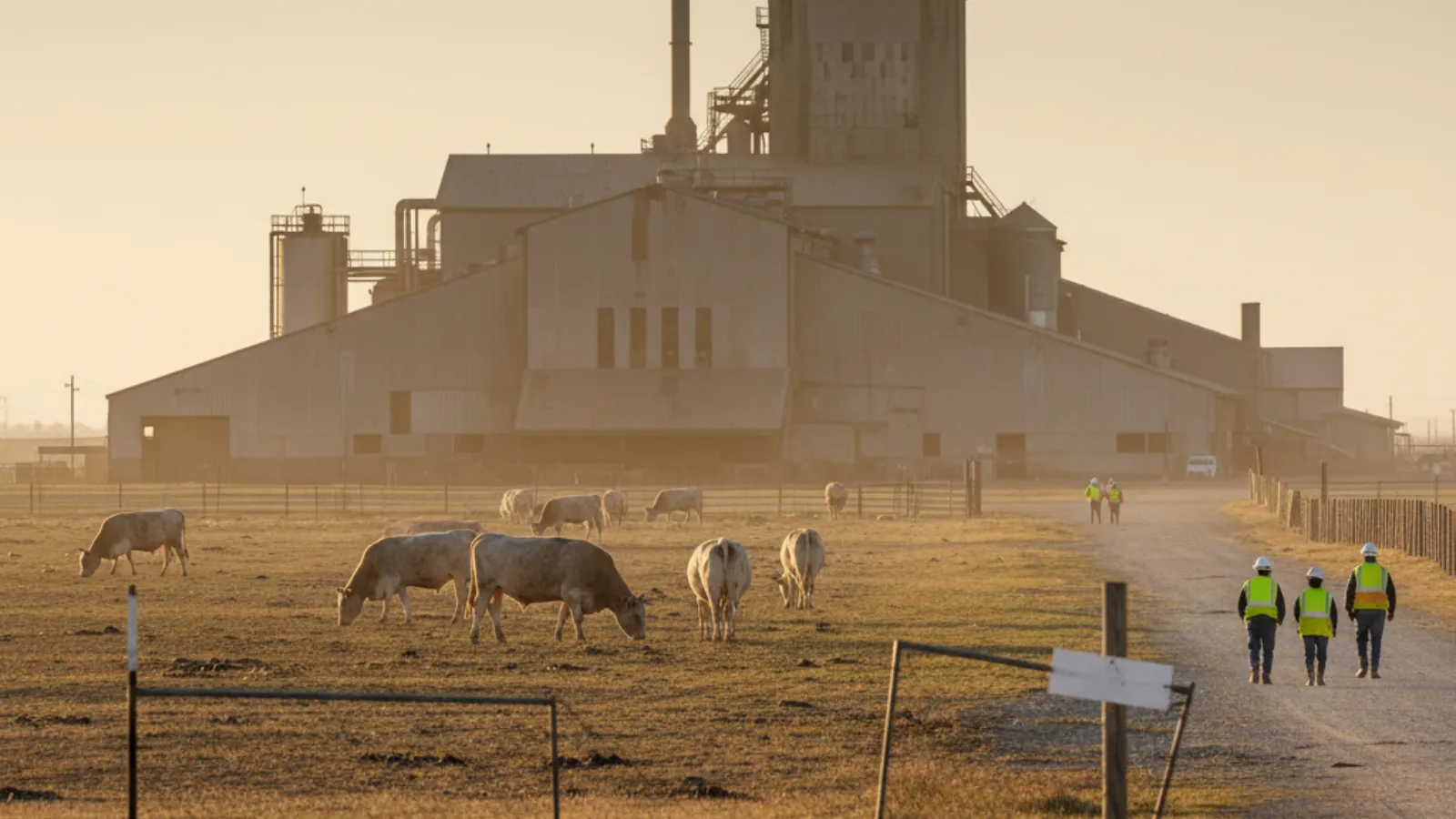
The world's largest meat company just decided it no longer needs one of its biggest beef plants. The reason is simple. There are not enough cattle to fill it.
A plant closure that signals a bigger problem
On 12 June 2026, JBS said it will close its beef plant in Souderton, Pennsylvania, by 14 August. The plant employs about 1,700 people and can process around 2,000 cattle a day. It is one of the largest beef plants on the US East Coast. JBS will also shut a value-added facility in Memphis, Tennessee, with about 200 staff. Nearly 2,000 jobs go in total.
JBS is not closing these plants because demand for beef fell. It is closing them because it cannot get enough cattle to run them. The company said production will move to other plants in its network. That is the polite way of saying it has more slaughter capacity than the country has animals to fill.
There are not enough cattle
The US cattle herd is the smallest it has been in 75 years. On 1 January 2026, there were 86.2 million head of cattle on US farms, the lowest count since 1951. The number of beef cows, the animals that produce calves, fell to 27.6 million, a level not seen since 1961.
Years of drought, high feed costs and thin margins pushed ranchers to sell animals instead of breeding them. Fewer cows now means fewer cattle for years, because it takes about two to three years to raise a new animal to slaughter weight. So the squeeze will not ease quickly. Even if every rancher started rebuilding today, the extra cattle would not reach plants until the late 2020s.
The beef business is bleeding cash
You can see the damage in the numbers. In the first quarter of 2026, JBS earned net revenue of $21.6bn, up 11% from a year earlier. But net income fell 56% to $221m. The US beef unit was the problem. It brought in $7.2bn of revenue and still lost money, posting EBITDA of minus $230m and a margin of minus 3.2%.
JBS is now paying more for each animal than it can recover when it sells the meat. Rivals feel the same pain. Tyson Foods and Cargill have also cut beef capacity to match the smaller herd. When the biggest players all pull back at once, that is a sign the problem is the supply of cattle, not any single company.
Chicken and Brazil are doing the heavy lifting
Here is what keeps JBS standing. The company is far more than a beef business. Its chicken arm, Pilgrim's Pride, made a 9.9% profit margin in the same quarter on $4.5bn of revenue. Its Brazil operations and the Seara brand stayed strong on healthy global demand.
The parts of JBS that have nothing to do with American cattle are carrying the parts that do. That spread is the whole point of how JBS is built. In 2025 the company listed its shares on the New York Stock Exchange, partly to sell investors on exactly this story: a global protein company that can lean on chicken, pork and Brazil when US beef turns sour. The Souderton closure is that strategy in action.
Why this matters beyond JBS
This is not a one-quarter dip. The cattle shortage is a multi-year problem, and the biggest player in the industry is now shrinking its physical footprint to deal with it. Closing a plant is a hard, lasting decision. A company does not spend the money to reopen a slaughterhouse the next year.
For operators, the lesson is that beef supply will stay tight and expensive into the late 2020s, so menus, pricing and contracts need to plan for it now. For investors, the read is clearer still. The protein companies that win the next few years will be the ones with the most balance across chicken, pork, beef and regions. Beef alone is now the riskiest place to stand. JBS is betting its chicken and its Brazilian base can outrun the empty pastures at home, and the closed gates in Souderton show how serious that bet has become.

Global Aseptic Packaging Market Report 2026
148.4bn litres and 344bn packs in 2025. Aseptic volumes across dairy, dairy alternatives, beverages and food in 39 markets — 2025 actuals and forecasts to 2030. Buy online and receive it within 24 hours.
More information
Global Cheese Database 2026
Production, imports, exports and consumption for 39 cheese types across 48 countries, with actuals through 2025 and forecasts to 2030. Join the waitlist for early access, pre-launch pricing and a free sample country chapter.
Get early accessStrategic Insights
📊 Analytics & Strategic Insight
When the cattle run out, the biggest player shrinks first
The decision most in this industry are avoiding:
👉 Treating the beef loss as a normal cycle to wait out. The herd cannot rebuild for years, so this is a structural capacity problem, not a quarter to ride through. JBS chose to cut steel, not just trim shifts.
👉 Staying concentrated in one protein. Beef-heavy processors carry the most risk right now. The hedge JBS is using is real balance across chicken, pork and Brazil, and it is the only thing keeping the group profitable.
👉 Defending a plant for size and pride instead of right-sizing it. Running a half-fed slaughterhouse burns cash on every shift. JBS closed one of its biggest East Coast plants rather than keep feeding the loss.
Here's the full context:
→ 2020-2024: Drought and high feed costs push US ranchers to cull herds instead of breeding them.
→ 2025: JBS lists on the New York Stock Exchange, selling investors a diversified global-protein story built on chicken, pork, beef and Brazil.
→ January 2026: The USDA reports the US herd at 86.2 million head, the lowest since 1951, with beef cows at a level not seen since 1961.
→ May 2026: JBS Q1 net income falls 56% to $221m as the US beef unit posts EBITDA of minus $230m on a minus 3.2% margin.
→ Most recent: On 12 June 2026, JBS announces the closure of its Souderton, Pennsylvania beef plant and a Memphis, Tennessee facility, cutting nearly 2,000 jobs.
What this means for food and beverage operators and investors:
✅ Plan for tight, expensive beef into the late 2020s. The herd cannot recover fast, so lock supply and reprice menus and contracts before availability tightens further.
✅ Value protein companies on their mix, not their size. Balance across chicken, pork, beef and geography decides who absorbs the shock and who gets crushed by it.
✅ Read permanent capacity cuts as a signal, not a headline. When the largest player closes plants instead of pausing them, the supply problem is structural, not seasonal.
3 moves you can make this week:
1️⃣ Audit your beef exposure. Map how much of your cost base or revenue depends on US beef, then model it at materially higher prices.
2️⃣ Build a protein-switching plan. Find where chicken or pork can stand in for beef on menus or in products without losing your customers.
3️⃣ Lock supply early. Open talks with suppliers about longer contracts now, before the herd trough tightens availability even more.
Take the Next Step
💧 Also covering the water dispense market?
Water dispense is one of the fastest-growing segments in food and beverage. Operator data, revenue benchmarks, and market intelligence across 32 countries.
→ Explore water dispense insights
Zenith Consulting
Submit your food & beverage project enquiry.
Share your requirements. If there is a strong fit, we’ll come back with an indicative investment range, project timeline and recommended strategic approach.
Reviewed by Zenith Consulting’s senior food & beverage strategy team.
Related analyses
- Corporate Strategy & Portfolio
Cheddar Jumps 16.5% While Mozzarella Falls 6%: The GDT Cheese Spread Swung $824 A Tonne In Two Weeks
Cheddar rose 16.5% and mozzarella fell 6.0% at the same Global Dairy Trade auction on 15 September. Two cheeses made from the same milk moved $824 a tonne apart in a fortnight, and the reason sits in the vats.
Read analysis → - Corporate Strategy & Portfolio
SIG Backs India's Regional Drinks: Aseptic Filling Has Fallen To 40.3% Of Indian Ambient Beverage Volume
SIG argues that aseptic cartons can take India's regional drinks national. Zenith's India data shows aseptic filling losing 17 points of ambient beverage share since 2020, while UHT milk grows at 12.3% a year.
Read analysis → - Corporate Strategy & Portfolio
China Aseptic Packaging: Litres Keep Rising, Packs Have Stopped, And The Average Pack Is Now 343ml
China filled 37,391 million litres of aseptic product in 2025 and used no more packs than it did in 2020. Zenith's Global Aseptic Packaging Market Report 2026 shows why the litre line and the pack line have split.
Read analysis →
Share it with your peers
Pass this analysis to colleagues who track the food and beverage market.
Zenith Market Intel
Need a specific food or beverage market report?
Tell us which category, region or question would be useful for your team.
Sister Publication
Also follow our Water Dispense Market Intelligence
Category analyses, operator briefings, and investor signals across the global water dispense market.