Nestlé Taps Lab-Made Breast Milk Protein: How Precision Fermentation Is Rewriting the Infant Formula Moat
Nestlé has partnered with biotech startup Helaina to put precision-fermented human lactoferrin into infant formula, brewing a once-scarce breast milk protein in tanks instead of pulling it from cow's milk. The deal shows how fermentation could loosen Big Dairy's grip on the high-margin proteins behind premium baby formula.
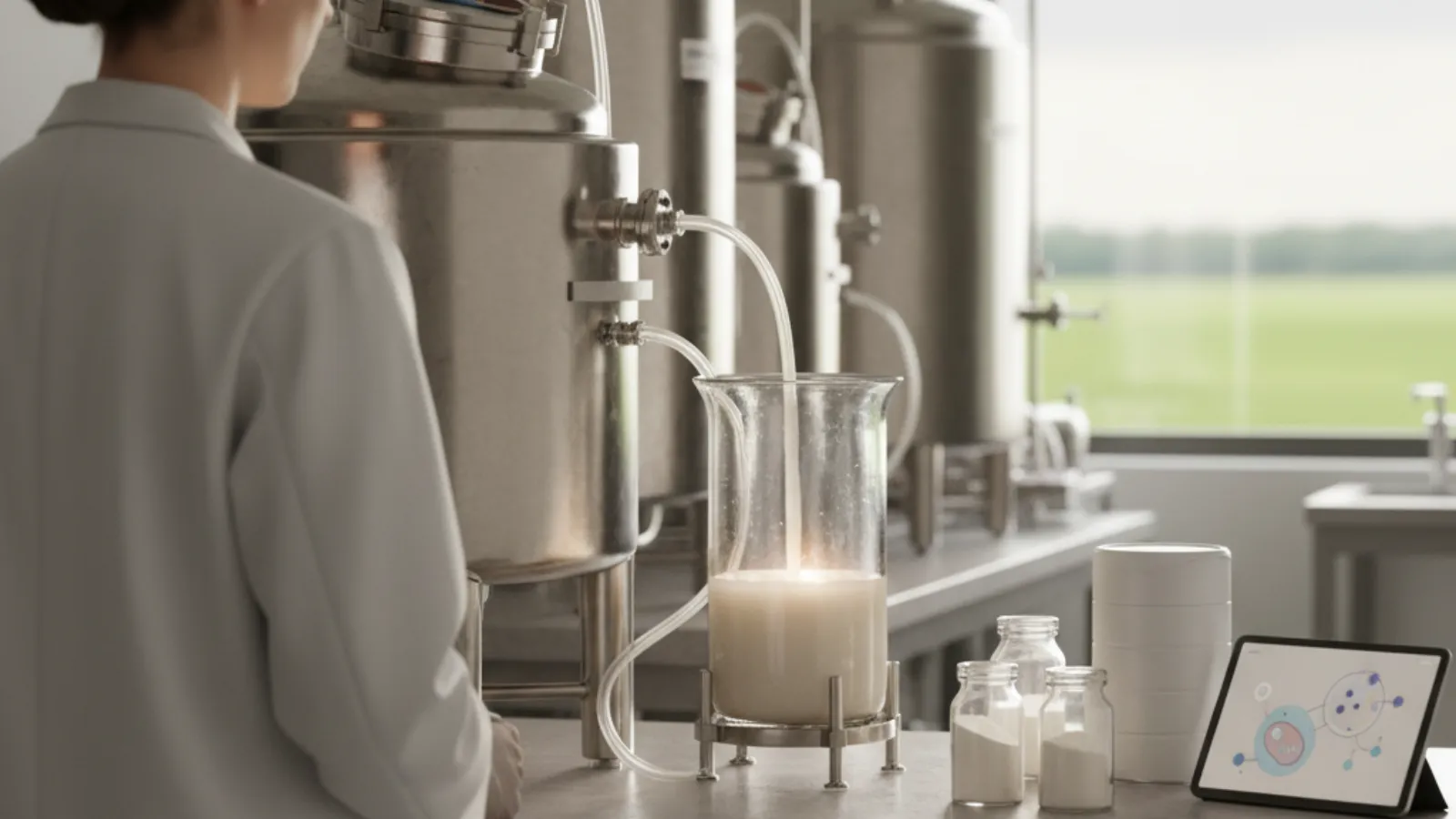
The protein that makes premium baby formula worth its price tag does not come from a lab or a clever machine. It is pulled, drop by drop, from cow's milk, and there is barely any of it in there.
On 3 June 2026, Nestlé announced a multi-year partnership with Helaina, a New York biotech. Helaina brews a human version of that protein in steel tanks. Nestlé is the world's largest food company and the leader in infant nutrition. The deal is a quiet bet that the next moat in baby formula gets built in a bioreactor rather than a dairy.
What Nestlé and Helaina agreed
The two companies will work together to study new bioactive proteins for early-life nutrition, starting with effera, Helaina's human-identical lactoferrin. Lactoferrin is one of the most valued proteins in breast milk. It helps a baby's immune system, balances iron, and supports the gut. For years, formula makers have added a cow-derived version to their priciest tubs to close the gap with breastfeeding.
Helaina makes its lactoferrin a different way. It inserts the human gene into a yeast strain and ferments it, much like brewing beer. Helaina brews a protein that copies the human version almost exactly. The cow version manages only about 70% of the same structure. The startup has raised $45 million in a Series B round, taking total funding to roughly $83 million. It says it can now make the ingredient by the metric ton.
Why lactoferrin is the prize
Here is the problem Nestlé is trying to solve. Cow's milk holds only about 0.1 milligram of lactoferrin per millilitre, so making a usable amount takes a huge volume of milk. That scarcity has turned bovine lactoferrin into one of the most expensive ingredients in the formula aisle. Prices have swung from a few hundred dollars a kilo to nearly two thousand during past shortages. When supply tightens, the whole premium tier feels it.
There is a quality gap on top of the supply gap. The cow protein's 70% structural match changes how well a baby absorbs and uses it. A protein you can brew on demand removes both the supply ceiling and the species gap at once. In a category where parents pay up for anything that sounds closer to breast milk, that is a powerful card to hold.
The threat to Big Dairy's grip
This is where the deal gets bigger than one ingredient. Premium infant formula has long rested on dairy's control of rare milk proteins. Precision fermentation hands that control to whoever owns the yeast strain and the tanks. Nestlé is not the only one paying attention. FrieslandCampina is one of the largest dairy ingredient suppliers. It has deepened its own fermentation partnership with biotech firm Triplebar to make the same protein without cows.
For dairy giants like Arla, Lactalis, and FrieslandCampina, that is a warning shot. Their edge in high-value milk proteins is real today. It is no longer guaranteed for the next decade. The companies that lock in fermentation capacity and ingredient rights early will set the terms for everyone who waits.
What it means next
For Nestlé, the move fits a wider reset. The company is under pressure to defend its best margins and clean up a sprawling portfolio. Infant nutrition is one of its richest, most defensive businesses. Birth rates are falling in its biggest markets, so winning a smaller pool of premium buyers matters more every year. Owning a better, steadier supply of the proteins parents care about is how Nestlé protects that prize.
For investors and operators across food and beverage, the read goes well past babies. Lactoferrin is already moving into adult wellness, women's health, and sports nutrition, where the same fermentation playbook applies. The lesson lands today. When a scarce natural ingredient defines your premium, your biggest threat may be a biotech with a tank rather than a rival with a bigger herd.
Global Aseptic Packaging Market Report 2026
148.4bn litres and 344bn packs in 2025. Aseptic volumes across dairy, dairy alternatives, beverages and food in 39 markets — 2025 actuals and forecasts to 2030. Buy online and receive it within 24 hours.
More information
Global Cheese Database 2026
Production, imports, exports and consumption for 39 cheese types across 48 countries, with actuals through 2025 and forecasts to 2030. Join the waitlist for early access, pre-launch pricing and a free sample country chapter.
Get early accessStrategic Insights
📊 Analytics & Strategic Insight
Precision fermentation is coming for Big Dairy's most profitable proteins
The decision most in this industry are avoiding:
👉 Treating fermentation as a startup sideshow. The biggest formula and dairy players are already signing with biotechs. The real question is who controls supply, not whether the science is new.
👉 Assuming dairy will always own the premium proteins. Scarcity is the moat today. A brewed substitute removes the scarcity, and the moat goes with it.
👉 Reading this as an infant-formula story. The same human proteins are heading into adult wellness, women's health, and sports nutrition, where the margins are just as rich.
Here's the full context:
→ 2015 to 2018: Bovine lactoferrin prices jump from a few hundred dollars a kilo toward two thousand as premium-formula demand outruns the milk supply that yields it.
→ 2024: Helaina raises a $45 million Series B, pushing total funding near $83 million, and prepares to launch effera, its precision-fermented human lactoferrin.
→ 2025: Helaina scales production to the metric-ton level and self-affirms the ingredient as safe (GRAS) for US use.
→ Early 2026: FrieslandCampina deepens a fermentation partnership with biotech Triplebar to make the same scarce proteins without cows.
→ Most recent: On 3 June 2026, Nestlé partners with Helaina to study bioactive proteins for infant nutrition, starting with human lactoferrin.
What this means for food and beverage operators and investors:
✅ Map your ingredient scarcity. List the rare, costly inputs that justify your premium, then ask which ones a biotech could brew within five years.
✅ Buy or partner before the capacity fills. Fermentation tanks and ingredient rights are limited. Early movers lock in supply and price while latecomers pay up.
✅ Watch the regulatory path, not just the science. GRAS status and infant-formula approval decide how fast a brewed protein reaches shelves, so track the filings as closely as the funding.
3 moves you can make this week:
1️⃣ Audit your premium ingredients. Pick your top three margin-driving inputs and flag any that depend on a scarce animal or plant source.
2️⃣ Scan the fermentation field. Build a short list of biotech firms making your key proteins or fats, and note who has already signed with a big rival.
3️⃣ Pressure-test one supply contract. Take your most exposed ingredient and model what a 30% price swing or a brewed substitute does to that product's margin.
Take the Next Step
💧 Also covering the water dispense market?
Water dispense is one of the fastest-growing segments in food and beverage. Operator data, revenue benchmarks, and market intelligence across 32 countries.
→ Explore water dispense insights
Zenith Consulting
Submit your food & beverage project enquiry.
Share your requirements. If there is a strong fit, we’ll come back with an indicative investment range, project timeline and recommended strategic approach.
Reviewed by Zenith Consulting’s senior food & beverage strategy team.
Related analyses
- Health, Nutrition & Functional
US Bans Canadian Whey From 29 September: The Cheese Vat Now Sets The Protein Price
Washington shuts eight lines of Canadian whey out of the country from 29 September 2026. The ban lands on a protein market with nothing spare, and every extra pound of whey protein has to come off a cheese vat.
Read analysis → - Health, Nutrition & Functional
Canada Puts 25% On All US Cheese: Cheddar And Mozzarella Now Pay Duty Inside The USMCA Quota
Canada's 25% surtax on US cheese took effect on 8 September 2026. It lands inside the duty free quota, where American cheddar and mozzarella have paid nothing since USMCA began.
Read analysis → - Health, Nutrition & Functional
Allulose Lawsuits Hit Liquid Death, WK Kellogg And KIND: The FDA Green Light That Was Never A Defence
Five food and drinks brands were sued in one week over zero sugar claims on packs sweetened with allulose. The FDA said it would not act on the back panel, and it never changed the rule on the front.
Read analysis →
Share it with your peers
Pass this analysis to colleagues who track the food and beverage market.
Zenith Market Intel
Need a specific food or beverage market report?
Tell us which category, region or question would be useful for your team.
Sister Publication
Also follow our Water Dispense Market Intelligence
Category analyses, operator briefings, and investor signals across the global water dispense market.