100+ Food and Beverage CEOs Are Trying to Reopen Europe's Packaging Law
On April 29, more than 100 food and beverage CEOs signed a leaked letter asking the EU to delay its August 12 packaging law and reopen four of its most consequential provisions. With 89 days until PPWR enforcement, the signatory list itself is the disclosure — and it is now a tradeable thesis for operators, suppliers, and investors.

On April 29, more than one hundred chief executives — including the heads of Coca-Cola, McDonald's, Heineken, Kraft Heinz, Mondelez, McCormick, Molson Coors and Ball Corporation — quietly signed a letter to the European Commission asking it to delay parts of the EU Packaging and Packaging Waste Regulation and reopen four of its most consequential provisions. The letter leaked on May 13. The August 12 enforcement date is now 89 days away.
This is a structural moment for European food and beverage. The same companies that spent the last two years publishing voluntary plastic-reduction pledges are, behind closed doors, telling Brussels they cannot hit the binding regulation they helped negotiate.
What the letter actually asks for
The letter targets four pillars of the PPWR: the August 12, 2026 application date; the PFAS ban on food-contact materials (capped at 25 parts per billion per substance, 250 parts per billion total PFAS, and 50 parts per million total fluorine); the 2030 phase-out of single-use plastic formats including HORECA condiment sachets, hotel toiletry bottles, and single-serving food-service items; and the reuse and refill targets that survived the final 2024 compromise text.
The signatories argue three things. First, no harmonised EU testing method yet exists for PFAS compliance, leaving operators unable to certify packaging to a moving standard. Second, scalable food-contact alternatives are not commercially available across the supply base. Third, the Commission has signalled it will not finalise Annex V technical detail until February 12, 2027 — leaving only eighteen months of investment runway before the bulk of the regulation bites in earnest.
Why this is a strategic signal, not a procedural one
What looks like a routine lobbying letter is in fact a confession. The largest packaged-food and beverage operators in the world are telling the market that their PPWR compliance CapEx is materially higher — and their timelines materially tighter — than current consensus models reflect.
The signatory list is the giveaway. Coca-Cola HBC has already committed publicly to fibre-based secondary packaging with DS Smith and Krones; Tetra Pak has put more than €40 million annually into EU recycling infrastructure since 2023 and is expanding polyAl capacity by over 40,000 tonnes a year. The companies that have invested early are not on the letter. The companies that are on the letter are the ones with the most exposed packaging architecture. That divergence is now a tradeable thesis.
The compliance arithmetic
The numbers Brussels published are not soft. PFAS limits for food-contact packaging — 25 parts per billion for individual substances, 250 parts per billion for the sum, 50 parts per million for total fluorine — effectively force a reformulation of grease-resistant fast-food wrappers, microwave popcorn bags, and a substantial share of QSR-supplied takeaway packaging. Coca-Cola HBC's Austrian pilot of mono-material cardboard secondary packaging eliminates roughly 200 tonnes of plastic per year — for one bottler, in one country. Scaled across the bloc, the supply chain transformation is real, expensive, and irreversible once started.
Why the timing is awkward for Big Food
The PPWR revolt lands inside a twelve-month window in which Big Food has already had to absorb a Reverse Morris Trust megamerger (Unilever-McCormick, $42.7B), a $36B snacks deal (Mars-Kellanova), a $100B infant formula trust reset (Nestlé, Danone, Reckitt, a2 Milk), and a Nestlé Waters private equity auction now in its final round with binding bids due in June. Layering forced packaging CapEx on top of all of that is the wrong sequencing for a sector that has spent 2026 trying to convince capital markets it can compound earnings through portfolio focus.
The Commission has, so far, refused to budge. The 17 industry associations that lobbied for a January 2027 delay in 2025 were turned away. The 100-CEO letter is the next escalation.
What happens if Brussels holds firm
If the Commission keeps the August 12 date intact, three things move at once. First, packaging suppliers with PPWR-ready capacity become takeover targets — Tetra Pak's recycling infrastructure becomes a moat, not a sunk cost. Second, the food and beverage operators who failed to start their packaging transition in 2024 will face accelerated depreciation on plastic-heavy formats, transferring shareholder value to the small set of brands that did. Third, the lobbying paper trail itself becomes a litigation and ESG-screening risk: 160+ environmental and health groups have already filed a counter-letter, and major institutional investors are reading the leak as a credibility test of voluntary sustainability commitments.
The PPWR letter is not really about August 12. It is about who pays for the European packaging transition and over what time frame. Buyers, operators and investors looking at food and beverage over the next 24 months should be reading the signatory list as a strategic disclosure. The companies that signed are the ones with the most repricing to do.
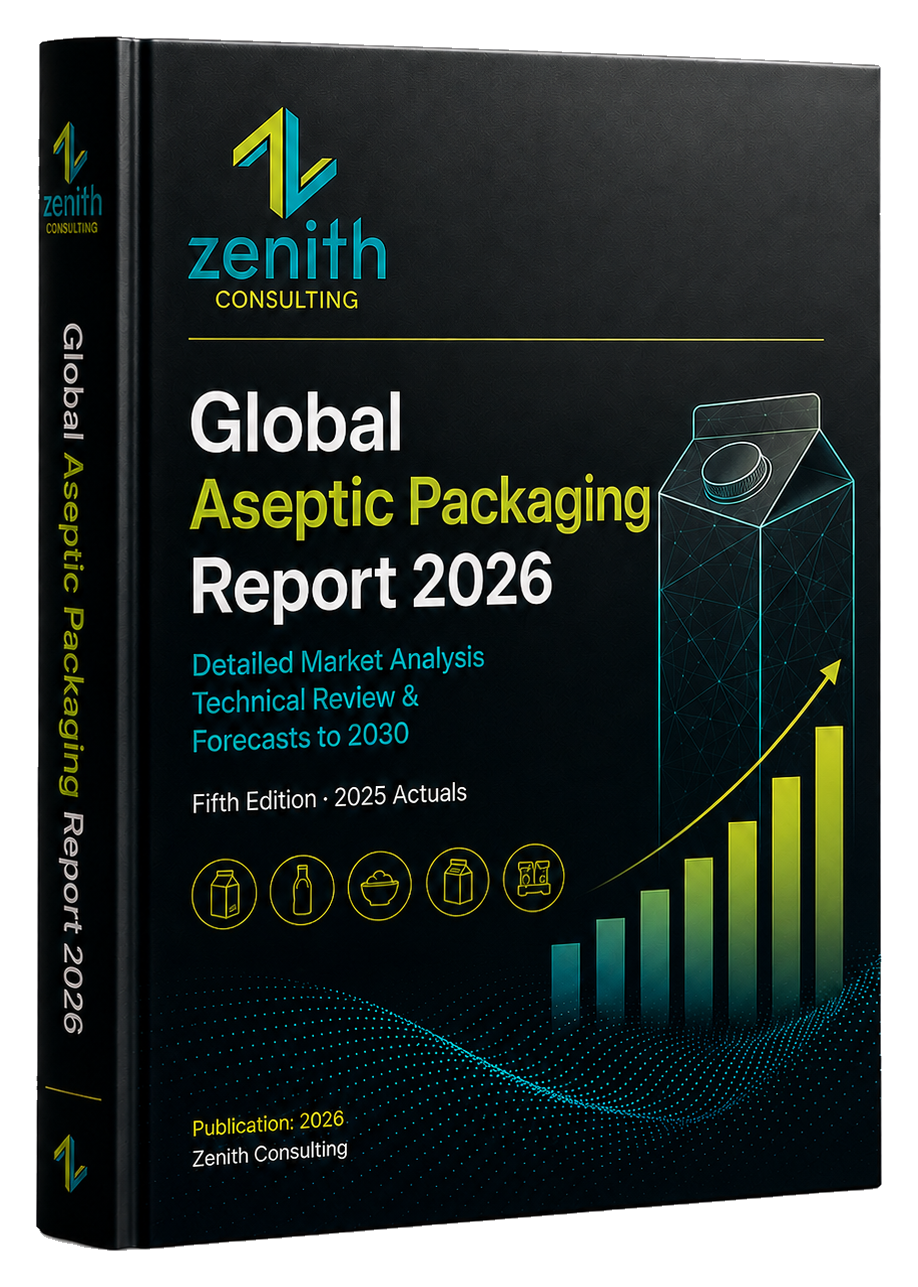
Global Aseptic Packaging Market Report 2026
148.4bn litres and 344bn packs in 2025. Aseptic volumes across dairy, dairy alternatives, beverages and food in 39 markets — 2025 actuals and forecasts to 2030. Buy online and receive it within 24 hours.
More information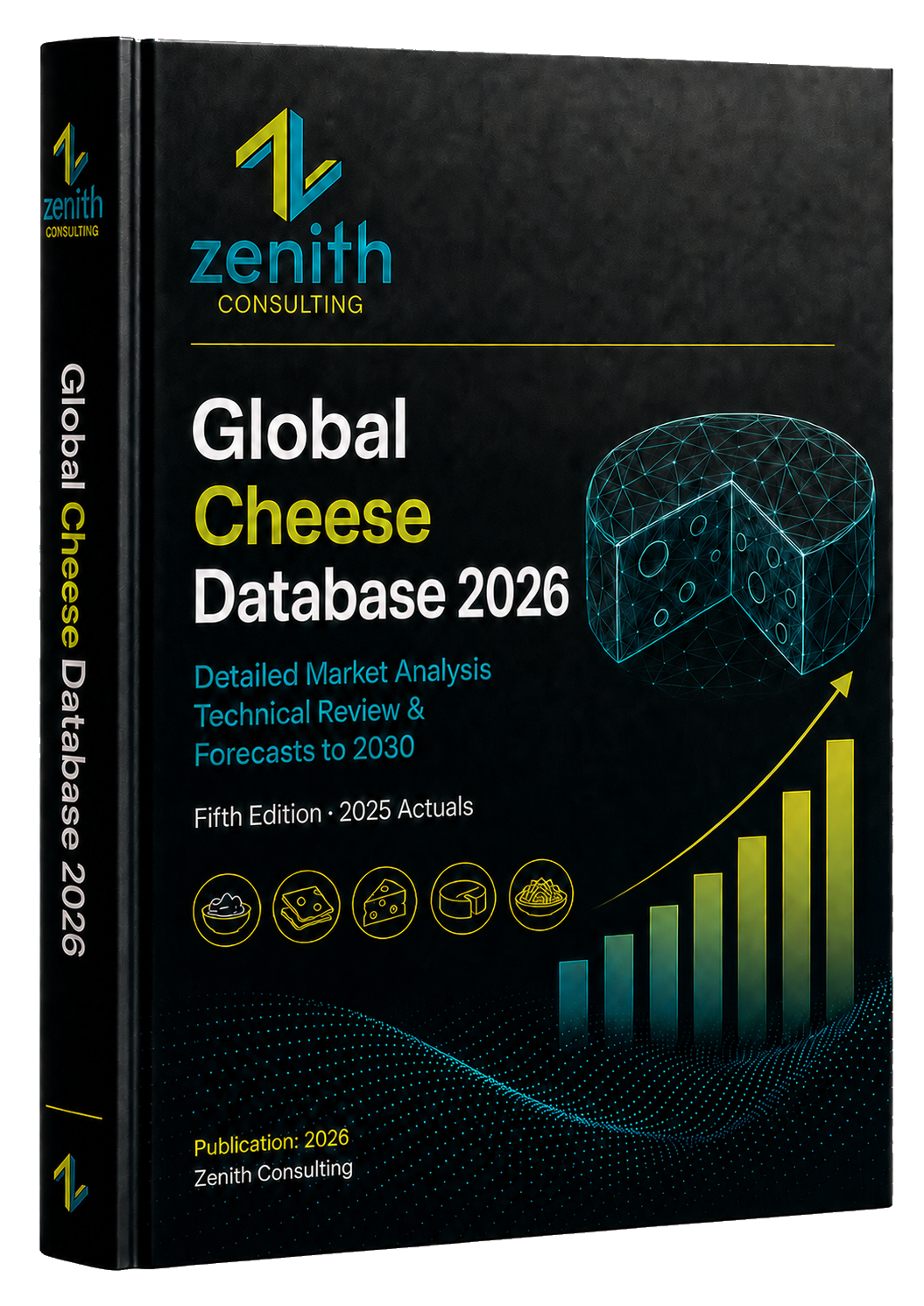
Global Cheese Database 2026
Production, imports, exports and consumption for 39 cheese types across 48 countries, with actuals through 2025 and forecasts to 2030. Join the waitlist for early access, pre-launch pricing and a free sample country chapter.
Get early accessStrategic Insights
📊 Analytics & Strategic Insight
The Signatory List Is the Disclosure: Which Big Food Names Just Marked Themselves as PPWR-Exposed
The decision most in this industry are avoiding:
👉 Treating the PPWR letter as a lobbying story instead of a balance-sheet story. The signatories have admitted, in writing, that their packaging transition is behind schedule. Markets have not yet repriced that.
👉 Assuming the Commission will fold. Brussels turned away the 17-association ask in 2025 and has reiterated the August 12 timeline three times since the leak. Base case is enforcement on time, not delay.
👉 Buying packaging-exposed equities on a regulatory-delay thesis. Optionality is asymmetric in the wrong direction — even a partial delay still leaves the PFAS ban and recyclability standards intact.
Here's the full context:
→ 2024: PPWR final compromise text agreed between Parliament, Council and Commission, dropping the most ambitious reuse targets in exchange for binding PFAS limits and recyclability standards.
→ February 2025: PPWR enters into force; application date set for August 12, 2026; Annex V technical detail deadline set for February 12, 2027.
→ 2025: Seventeen industry associations request a January 2027 delay; Commission refuses.
→ April 28, 2026: Coca-Cola HBC confirms scaled rollout of fibre-based secondary packaging with DS Smith and Krones — a public PPWR alignment signal.
→ Most recent: April 29 letter from 100+ CEOs (Coca-Cola, McDonald's, Heineken, Kraft Heinz, Mondelez, McCormick, Molson Coors, Ball Corp) leaks on May 13; 160+ environmental and health groups respond with counter-letter.
What this means for food and beverage operators and investors:
✅ The signatory list is now a public proxy for packaging-transition risk. Underwriters, ESG screeners and M&A diligence teams should map exposure accordingly across their watchlists.
✅ PPWR-ready suppliers become strategic acquisition targets. Tetra Pak, DS Smith, Krones, and fibre/mono-material specialists move from cost-line to optionality if enforcement holds.
✅ The packaging-CapEx wedge widens earnings divergence inside Big Food. Operators that began transitioning in 2023–2024 protect FY27 margin; late movers absorb accelerated depreciation and reformulation cost.
3 moves you can make this week:
1️⃣ Build a signatory-versus-non-signatory matrix for your top 25 F&B holdings. The split is the cleanest near-term ESG and operational disclosure currently available on packaging readiness.
2️⃣ Run a Q3 2026 CapEx sensitivity on any portfolio company with greater than 40% plastic-heavy SKU exposure in the EU. Stress-test the model for no delay and February 2027 Annex V certainty.
3️⃣ Audit your supplier base for PPWR-ready certifications. Vendors that already pass the August 12 standard will have repricing power in Q4 2026 procurement cycles — lock in framework agreements before they do.
Take the Next Step
🌊 Interested in owning a stake in one of Earth's largest secured natural spring sources?
A rare asset-backed investment opportunity: 50+ year water and land rights, carbon-neutral infrastructure, B2B and white-label focus, and a 33% projected IRR. USD 28M raise, USD 80M post-money valuation.
→ View the investment opportunity
Zenith Consulting
Submit your food & beverage project enquiry.
Share your requirements. If there is a strong fit, we’ll come back with an indicative investment range, project timeline and recommended strategic approach.
Reviewed by Zenith Consulting’s senior food & beverage strategy team.
Related analyses
- Sustainability, Regulation & Risk
Raw Milk Cheese Warning Label Petition: Parmigiano Reggiano And Roquefort Cannot Be Pasteurised
A draft FDA petition would put a warning label on every raw milk cheese sold in America, imported cheese included. The US took in 251.3 million pounds of cheese in seven months, and the biggest Italian and French names cannot be pasteurised at all.
Read analysis → - Sustainability, Regulation & Risk
Aseptic Bags Face The EU Recycling Test: ABMA Starts A Three-Year Programme Ahead Of PPWR Requirements
Europe's industrial aseptic bag makers have started a three-year project to make the pack recyclable before the PPWR deadline on 1 January 2030. Zenith puts 4,670 million litres of the world's aseptic food in bag-in-box, and 810 million litres of West European aseptic volume rides in the same format.
Read analysis → - M&A, Investment & Valuation
Parmigiano Reggiano Takes On Australian Parmesan: The EU Trade Deal Protected 53 Cheese Names And Left Parmesan Out
The Parmigiano Reggiano Consortium has opened a three-year campaign in Australia, where cheese output runs at 455,000 tonnes a year. Australia agreed to protect 53 EU cheese names, and parmesan is not one of them.
Read analysis →
Share it with your peers
Pass this analysis to colleagues who track the food and beverage market.
Zenith Market Intel
Need a specific food or beverage market report?
Tell us which category, region or question would be useful for your team.
Sister Publication
Also follow our Water Dispense Market Intelligence
Category analyses, operator briefings, and investor signals across the global water dispense market.