Kamson Beverage Picks A Sidel Aseptic PET Line: Why China's Low-Acid Tea, Coffee And Protein Drinks Are Leaving Hot Fill
Jiangsu Kamson Beverage has installed a Sidel Aseptic Combi Predis PET line for juice, tea, coffee and protein drinks. Zenith's data shows why low-acid recipes are pulling China's mid-sized bottlers out of hot fill and into aseptic bottles.
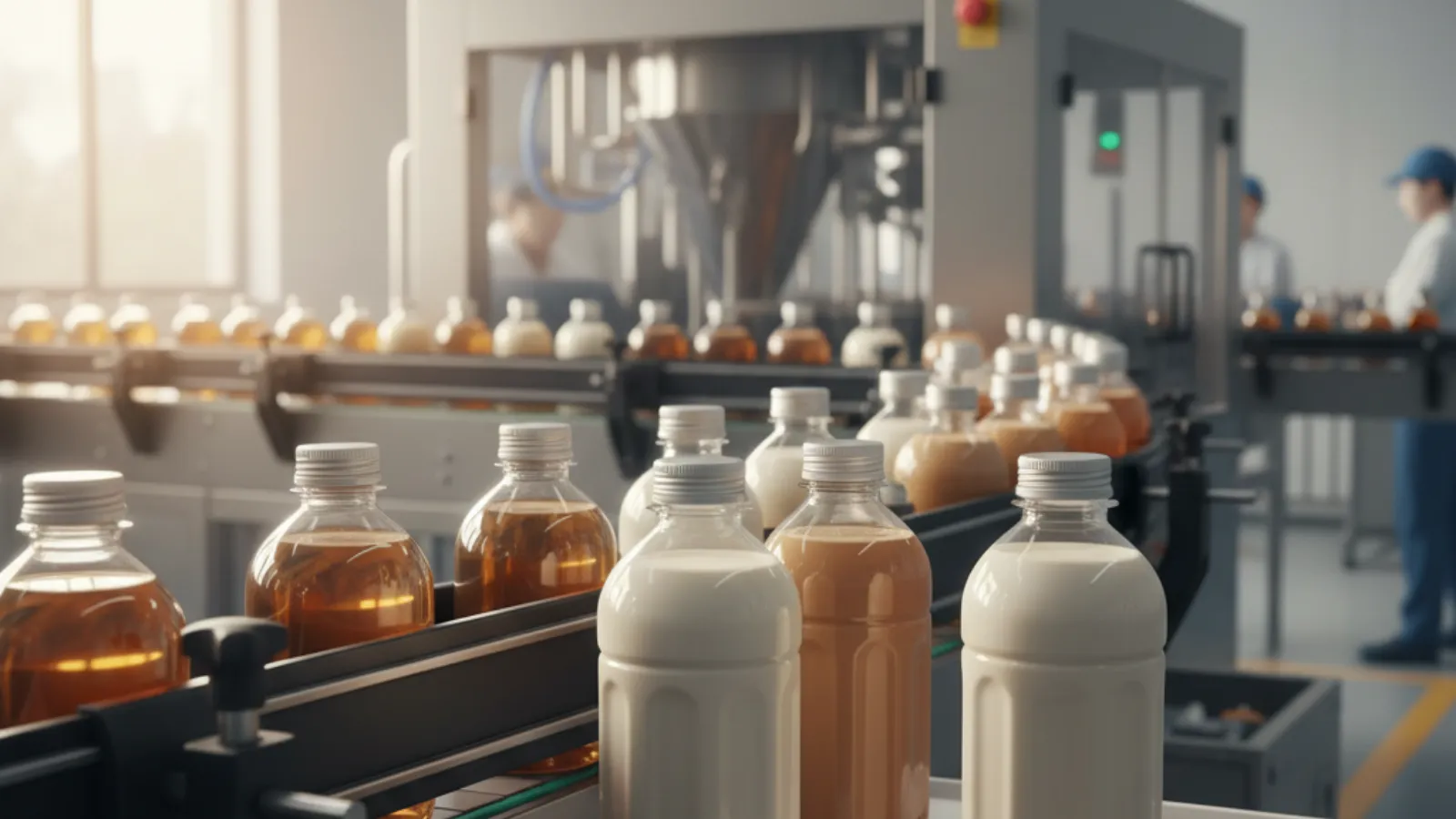
Most of the coverage reads this deal as a story about a flexible line. I read it as a story about acid. Jiangsu Kamson Beverage has installed a Sidel aseptic PET line for juice, tea, coffee and protein drinks. Most of those drinks are low in acid, and that choice decides the filler. A low-acid drink is either filled cold into a sterile pack or sealed in a can and cooked. China's bottlers are picking the first route, one recipe at a time.
What Kamson bought from Sidel
Sidel announced the deal on 17 November. Kamson is a Jiangsu bottler and part of the Mulanka Group. It builds drink brands for younger shoppers. The line is an Aseptic Combi Predis. It cleans the plastic preform, blows it into a bottle, fills it and caps it in one closed run. Bottles range from 200 ml to 1.5 litres. Here is why the preform step matters. Predis sprays a fine hydrogen peroxide mist into each preform before the oven. The oven heat then activates it. So the bottle is sterile from the moment it is blown. The blower needs no separate cleaning, which saves water and changeover time. Sidel built and tested the line at its Beijing site, which has made this system locally since 2019. Sidel says the line passed its sterility checks at the first attempt. Neither firm gave a speed or a price.
Why low acid decides the filler
Hot fill is the older and simpler route. The drink goes into a heat-set bottle at more than 90 degrees. The heat kills what is in the bottle, and the acid keeps it safe on the shelf. That happens because most spoilage bugs cannot grow in an acid drink. Juice and sweet iced tea are acid enough for that. Tea with no sugar, milk coffee and protein drinks are not. They need a full sterilising step. That leaves a bottler two choices. It can fill cold into a sterile pack, or seal the drink in a can and cook the can. Kamson's line can also switch between acid and low-acid recipes on the same day. A hot-fill line cannot fill the low-acid half of that list at all. So the product plan chose the filler long before the price talks began.
What China already fills aseptically
Zenith's Global Aseptic Packaging Market Report 2026 puts China's aseptic drinks at 17,950 million litres in 2025. That volume has grown 8.5% a year since 2020. PET bottles of half a litre and above carry 10,881 million litres of it. Cartons have held their litres roughly flat while the bottles took the growth. The reason is simple. Tea makers wanted bigger packs, and big low-acid packs need aseptic PET. The average bottle of unsweetened tea grew from 550 ml to 620 ml in two years. A carton maker has no answer at that size for a chilled-shelf look. Each step up in tea bottle size moved more litres into aseptic PET lines.
Tea led, and protein drinks come next
Ready-to-drink tea and coffee is China's biggest drinks category, at 18,900 million litres. Aseptic filling took 9,800 million litres of its long-life volume in 2025. About 8,650 million litres are still hot filled. Most of that is sweet iced tea from Tingyi and Uni-President. That tea is acidic, so it has no technical reason to move. Plant-protein drinks are the next pool. Our report puts that category at 3,545 million litres. Half of it is filled in metal cans and cooked after sealing. That matters because the cans belong to the older brands. Walnut and almond drinks in cans have been shrinking for years. Zuming, a fresh soy firm, put in an aseptic PET line. Its plant drink volume then grew by about a third. New protein drink volume in China is going into aseptic bottles rather than cans.
Why the second tier is buying now
The big names moved first. Nongfu Spring built its first cold aseptic PET line in 2011 for its unsweetened tea. It had fourteen such lines by 2021. CR Beverage took three Sidel Predis lines in January 2025, rated at up to 54,000 bottles an hour. Kamson is a smaller firm making many short runs across five drink types. For a bottler like that, fast changeover counts for more than top speed. The mechanism is cost as well as safety. An aseptic 500 ml bottle can weigh under 18 grams. A heat-set bottle for hot fill weighs 28 to 32 grams. That is about 40% less plastic on the biggest variable cost in the drink. Local line builders have also cut the wait for a new line. So a mid-sized bottler can now buy the same route the giants took.
The Zenith read: the low-acid switch is reaching mid-sized bottlers
We expect more second-tier Chinese bottlers to order aseptic PET lines over the next two years. Our forecast takes China's aseptic drinks to 23,292 million litres by 2030. That is growth of 5.3% a year. By then about half of China's long-life drink litres will be filled aseptically. That happens because recipes are changing faster than thirst. Tea is moving from sweet acid blends to unsweetened low-acid ones. Protein and plant drinks are moving out of cans. Sidel will face local rivals on every one of these deals. The figure that would change our call is the PET resin price. A long fall in resin shrinks the bottle weight saving. Hot fill would then stay cheaper for longer on acid drinks, and the switch would slow.
We will be watching whether China's protein and plant drinks follow tea into aseptic PET. That shift sits in the China chapter of our Global Aseptic Packaging Market Report 2026. It splits every market by category, pack type and pack size.
Going deeper on this market? See the Global Aseptic Packaging Market Report 2026.
Global Water Database 2026
Packaged, bulk, flavoured and premium water in 86 markets, to 2030.
More information
Global Cheese Database 2026
Production, imports, exports and consumption for 39 cheese types across 48 countries, with actuals through 2025 and forecasts to 2030. Buy one market or any five with a single-user, departmental or corporate licence, or get your free database and report sample first.
Get your free database & report sampleStrategic Insights
📊 Analytics & Strategic Insight
China's aseptic boom is a recipe change, and the second tier has started to buy
The decision most in this industry are avoiding:
👉 The carton is losing share in Chinese drinks while its litres hold. Portion cartons filled 2,805 million litres of aseptic drinks in 2025, slightly more than five years earlier.
👉 Changeover time is the race that matters for mid-sized bottlers. The giants can give one drink a whole line. Genki Forest runs nine aseptic lines at Tianjin alone.
👉 Sports drinks are the next low-acid wave. Our report has aseptic sports and energy drinks in China growing 12.7% a year to 2030.
Here's the full context:
→ 2011: Nongfu Spring builds its first cold aseptic PET line for unsweetened tea.
→ 2019: Sidel starts making its dry preform aseptic system in Beijing.
→ 2025: CR Beverage takes three Sidel Predis lines into Yixing and Chengdu.
→ 2025: China fills 17,950 million litres of aseptic drinks, by Zenith's count.
→ Most recent: Sidel announces a Predis line for Jiangsu Kamson Beverage. It names no speed and no price.
What this means for aseptic fillers, converters and equipment suppliers:
✅ The bottler's finance team should cost the bottle weight before the filler. Resin is the line in the plan that pays the machine back.
✅ The preform supplier should plan for lighter preforms in more sizes. Every bottler that leaves hot fill needs a new preform design.
✅ The carton sales team should defend the small pack. Portion drinks for children and schools are where cartons still hold their ground.
What this means for market decisions:
1️⃣ China's aseptic drink market grows on recipe change more than on thirst. Juice drinks fell from 12,600 million litres in 2020 to 10,500 million in 2025.
2️⃣ Local line builders are the main threat to Sidel's China share. Our study has the domestic equipment trade growing above 12% a year.
3️⃣ An entrant should size the low-acid pool before it picks a pack. Our report puts the average Chinese aseptic drink pack at 485 ml.
The Zenith view:
This proves a mid-sized Chinese bottler now sees aseptic PET as worth buying for short runs. It does not prove the line will run full, since no speed or volume was given. The figure that settles it is next year's count of new aseptic PET lines outside the big tea groups. If that count rises, the low-acid switch has reached the second tier and our forecast looks cautious.
The data behind this story
📦 Global Aseptic Packaging Market Report 2026
148.4 billion litres and 344 billion packs across 39 markets, split by category, pack type and pack size, with 2025 actuals and forecasts to 2030. A free 40-page sample is on the page.
→ Read the free sample
Weighing an aseptic drinks or PET line move in China? Zenith helps food and beverage companies assess market size, growth, competitors, pricing and route to market before they invest.
→ Discuss your market
Zenith Consulting
Submit your food & beverage project enquiry.
Share your requirements. If there is a strong fit, we’ll come back with an indicative investment range, project timeline and recommended strategic approach.
Reviewed by Zenith Consulting’s senior food & beverage strategy team.
Our market reports
All reports and databases Available now
Global Aseptic Packaging Market Report 2026
39 markets, 2025 actuals and forecasts to 2030 by category, region and pack type.
View report Available now
Global Cheese Database 2026
48 markets and 39 cheese types: production, trade and consumption to 2030.
View report Available now
UK Water Drinks Reports 2026
Plain, flavoured and functional water in the UK: companies, brands, own label and forecasts to 2030.
View report- Available now
Global Water Database 2026
Packaged, bulk, flavoured and premium water in 86 markets, to 2030.
View report  Available now
Global Premium Bottled Water Report 2026
Premium water volume, value and brands, with six country deep dives.
View report Available now
Global Water Dispense Market Reports 2026
Coolers, dispensers and operators across 35+ markets, with forecasts to 2030.
View report- Free tool
Cheese Market Sizer
Size any of 48 cheese markets: 2025 consumption, kg per person, your market share and headroom.
Open free tool
Related analyses
- Market & Category Growth
Celsius Paid About $341M to Leave Its Old Distributors. The PepsiCo Switch Shows What Changing Route to Market Really Costs
Celsius Holdings shipped 11.7% less of its namesake brand in Q2 2026 while the same brand sold only 2% less in shops, and the stock fell more than 18%. The gap is the price of moving three brands into PepsiCo's delivery system, and most food and beverage deal models never carry that line.
Read analysis → - Corporate Strategy & Portfolio
Sugar Just Broke Ranks: A 7.5% One-Month Spike Is the Margin Threat Coca-Cola, Mondelez and Hershey Didn't Plan For
World sugar prices jumped 7.5% in May 2026, the sharpest move in the global food basket, while everything else stayed flat. Here is why the cheap-sugar tailwind that padded margins at Coca-Cola, Mondelez and Hershey is starting to turn.
Read analysis → - Market & Category Growth
PepsiCo's Snack Recovery Is Real — But Its Beverage Problem Is Deepening
PepsiCo beat Q1 2026 analyst estimates with $19.4 billion in revenue and a 27% jump in EPS — but the headline conceals a structural split. The North American food business just returned to volume growth for the first time in over two years. The beverage business contracted again. And the company's $3.15 billion acquisition spree is buying competitors to its own core portfolio.
Read analysis →
Share it with your peers
Pass this analysis to colleagues who track the food and beverage market.
Zenith Market Intel
Need a specific food or beverage market report?
Tell us which category, region or question would be useful for your team.
Sister Publication
Also follow our Water Dispense Market Intelligence
Category analyses, operator briefings, and investor signals across the global water dispense market.