Krones Opens Its Largest Plant Outside Germany In China: An Aseptic Laboratory Lands As Local Line Builders Take The Orders
Krones has opened a second plant at Taicang, giving it 74,000 square metres of buildings and its largest site outside Germany. It arrives in a market where Zenith puts aseptic drinks at 17,950 million litres and local line builders hold more than 30 aseptic lines on order.
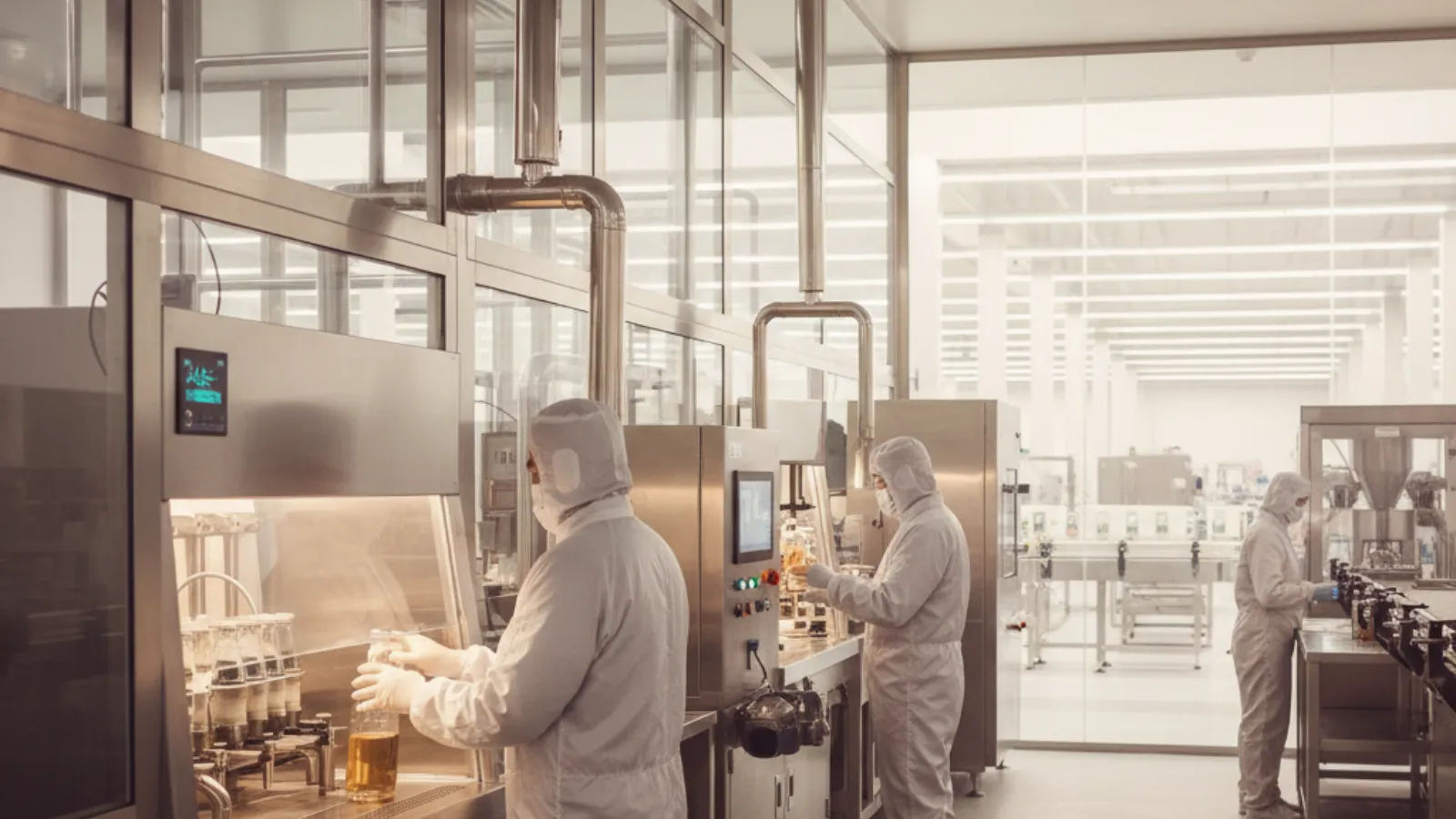
I keep seeing the same move in China. A European line builder spends on a bigger plant there, just as the local builders get good. Krones has opened its largest site outside Germany at Taicang. Zenith puts Chinese aseptic drinks at 17,950 million litres in 2025.
What Krones opened at Taicang
Krones published the opening on 13 October. The second Taicang plant adds about 59,000 square metres of floor space. The whole site covers about 120,000 square metres. Buildings account for about 74,000 square metres of that. The two Taicang plants are now the group's largest production site outside Germany.
The work there is module assembly, whole machine assembly and machine testing. The site also holds an automated high-bay store from System Logistics, a Krones company. Krones has built machines at Taicang since 2004. It sells through hubs in Beijing, Shanghai, Chengdu and Shenzhen. Ralf Goldbrunner of the Krones board called it a long-term investment in China. No cost was given.
The aseptic laboratory is the real news
The plant holds an aseptic laboratory. It can check how packaging materials are sterilised. It can also run chemical and hygiene tests. That moves the slowest step in an aseptic sale from Europe to China.
A dry aseptic line is bought on its test file. The maker has to show that the bottle, the cap and the drink stay safe at full speed. Doing that work near the buyer saves weeks on every project. Krones named no customer and no line order with the opening.
China is the market the plant points at
Our Global Aseptic Packaging Market Report 2026 puts China at 37,391 million litres in 2025. That volume went into 109,036 million packs. The market grew 1.2% on 2024. Aseptic drinks are the part that moves, at 17,950 million litres last year. That line grew 8.5% a year from 2020. We forecast 23,292 million litres by 2030.
The litres have to come from somewhere. Hot filling held 20,025 million litres in 2025 and falls 1.0% a year. Drinks kept with preservatives held 3,795 million litres. China is swapping one filling method for another.
The pack mix is moving to PET
The ambient drinks block shows the switch by pack. Large PET carried 25,028 million litres in 2025, up 5.2% a year since 2020. Small PET carried 7,818 million litres. Family cartons in that block fell to 1,548 million litres, down 4.9% a year. Portion cartons fell to 3,000 million litres.
Juice is a large part of the reason. Huiyuan held 53.4% of Chinese juice in 2016 and 11.0% by January 2022. Its one-litre juice carton was the anchor of the format. The brand went into restructuring in 2022 and cut its range from 385 lines to 78.
The local builders already hold the order book
Zhongya carries more than 30 aseptic lines in its order book. The named buyers are Mengniu, Yili, Bright, Jinmailang and Genki Forest. Tech-Long made RMB 122 million of net profit in 2025, up 74.4%. Newamstar builds the blow, fill and cap steps as one block. Chinese aseptic lines are no longer rationed by European waiting times.
European suppliers still win large jobs. CR Beverage took three Sidel aseptic lines into Yixing and Chengdu in January 2025. They run 54,000 bottles an hour on 450 ml. Genki Forest has spent RMB 7.25 billion on six plants. Those plants run 6.5 billion bottles a year. One of them is at Taicang, in the same city as the new Krones site.
What this means for the market
China is the biggest aseptic market in the world and it is still growing. The growth comes from switching filling methods rather than from more drinking. Nongfu Spring, Genki Forest and Eastroc built the demand that pulls it. The pack that gains is PET, and the pack that loses is the carton.
Two tests follow for suppliers. The first is whether local testing wins projects or merely shortens them. The second is whether a European builder can match local waiting times on price. An entrant should price the switch out of hot fill rather than the headline growth rate.
Localising a plant also raises a wider question about where the next aseptic litre is filled. That is one of the areas we track across world aseptic packaging in our 2026 research. It covers 39 markets by category, pack type and pack size. Actuals run to 2025 and forecasts reach 2030. The report page carries a free 40-page sample.
Global Aseptic Packaging Market Report 2026
148.4bn litres and 344bn packs in 2025. Aseptic volumes across dairy, dairy alternatives, beverages and food in 39 markets — 2025 actuals and forecasts to 2030. Buy online and receive it within 24 hours.
More information
Global Cheese Database 2026
Production, imports, exports and consumption for 39 cheese types across 48 countries, with actuals through 2025 and forecasts to 2030. Join the waitlist for early access, pre-launch pricing and a free sample country chapter.
Get early accessStrategic Insights
📊 Analytics & Strategic Insight
A bigger Chinese plant is the easy part. Holding share against builders with shorter waiting times is the hard part.
The decision most in this industry are avoiding:
👉 Square metres are the least useful figure in the release. Assembly space is cheap to announce. The aseptic laboratory is the asset that shortens a sale.
👉 The Chinese market is growing without needing anyone to drink more. Aseptic gains litres that hot fill and cartons give up. A supplier plan built on drinks growth misses that.
👉 Local builders are no longer the cheap option alone. Zhongya has the brands and Tech-Long has the profit. Both arrive faster than a German order slot.
Here's the full context:
→ 2004: Krones started making machines at Taicang in China.
→ 2011: Nongfu Spring built its first cold aseptic PET line for Oriental Leaf, at a cost of RMB 200 million.
→ January 2025: CR Beverage took three Sidel aseptic lines into Yixing and Chengdu at 54,000 bottles an hour.
→ 2025: Chinese aseptic drinks reached 17,950 million litres. Hot filling fell to 20,025 million.
→ Most recent: Krones opened its second Taicang plant on 13 October. It holds an aseptic laboratory.
What this means for aseptic fillers, converters and equipment suppliers:
✅ Validation is becoming a local service rather than a trip to Europe. Buyers will expect test work near the plant. Suppliers without it will lose weeks on every bid.
✅ Carton converters are losing the Chinese drinks block. Family cartons there are down to 1,548 million litres and falling 4.9% a year. PET took the growth.
✅ Lead time is now a price. A line that arrives a year earlier earns a year of sales. That is the number a Chinese buyer compares.
What this means for market decisions:
1️⃣ China is attractive on litres and crowded on supply. Aseptic drinks grew 8.5% a year to 2025 and are forecast at 23,292 million litres by 2030. The machines to fill them are already being built locally.
2️⃣ Nongfu Spring, Genki Forest and Eastroc decide who wins. A handful of drinks groups carry most new aseptic volume. Their supplier choice sets the format for the decade.
3️⃣ An entrant should test the hot fill base rather than the growth rate. Those 20,025 million litres are the pool that aseptic is drawing from. The speed of that switch is the real forecast.
The Zenith view:
A new plant proves commitment and nothing more. It does not prove that Krones can hold share in China. The market is growing by swapping filling methods, and the buyers are few and large. One test decides the investment case. Local testing and local assembly have to beat a shorter waiting time on price.
The data behind this story
📦 Global Aseptic Packaging Market Report 2026
148.4 billion litres and 344 billion packs across 39 markets, split by category, pack type and pack size, with 2025 actuals and forecasts to 2030. A free 40-page sample is on the page.
→ Read the free sample
Evaluating aseptic filling capacity in China or Asia? Zenith helps food and beverage companies assess market size, growth, competitors, pricing and route to market before they invest.
→ Discuss your market
Zenith Consulting
Submit your food & beverage project enquiry.
Share your requirements. If there is a strong fit, we’ll come back with an indicative investment range, project timeline and recommended strategic approach.
Reviewed by Zenith Consulting’s senior food & beverage strategy team.
Related analyses
- Corporate Strategy & Portfolio
US Cheese Exports Rise 9% To 59,007 Tonnes: Mexico And The Americas Supplied All Of August's Growth
US cheese exports reached 59,007 tonnes in August, up 9% on a year earlier. Mexico, South America and Central America added more than the whole net gain while South Korea fell 12%.
Read analysis → - Corporate Strategy & Portfolio
Greatview Faces Hong Kong Delisting: The Aseptic Carton Maker Sold 11.7 Billion Packs Against 30 To 34 Billion Of Chinese Capacity
Greatview Aseptic Packaging has asked for a review of the Hong Kong exchange decision to cancel its listing. The carton maker sold 11.7 billion packs in 2025 against Chinese plants Zenith rates at roughly 30 to 34 billion.
Read analysis → - Corporate Strategy & Portfolio
Oji Liquid Pak's USD 110 Million Vietnam Aseptic Carton Plant Adds 8 Billion Packs To A Region Already At 62 Billion
Oji Liquid Pak broke ground on a USD 110 million aseptic carton material plant in Dong Nai, rated at up to 8 billion packs a year from 2028. Zenith puts Vietnam at 10,358.7 million aseptic packs in 2025, and South East Asia already holds about 62 billion packs of documented converting capacity.
Read analysis →
Share it with your peers
Pass this analysis to colleagues who track the food and beverage market.
Zenith Market Intel
Need a specific food or beverage market report?
Tell us which category, region or question would be useful for your team.
Sister Publication
Also follow our Water Dispense Market Intelligence
Category analyses, operator briefings, and investor signals across the global water dispense market.