Seoul Dairy Sells 3 Million SIG DomeMini Packs In 80 Days: South Korea Fills The World's Smallest Aseptic Pack
Seoul Dairy sold more than 3 million packs of its first nutrition drink in 80 days, filled in SIG's DomeMini carton bottle. Zenith puts South Korea at 1,063 million litres of aseptic packaging in 3,650 million packs, the smallest average pack of any market in the study.
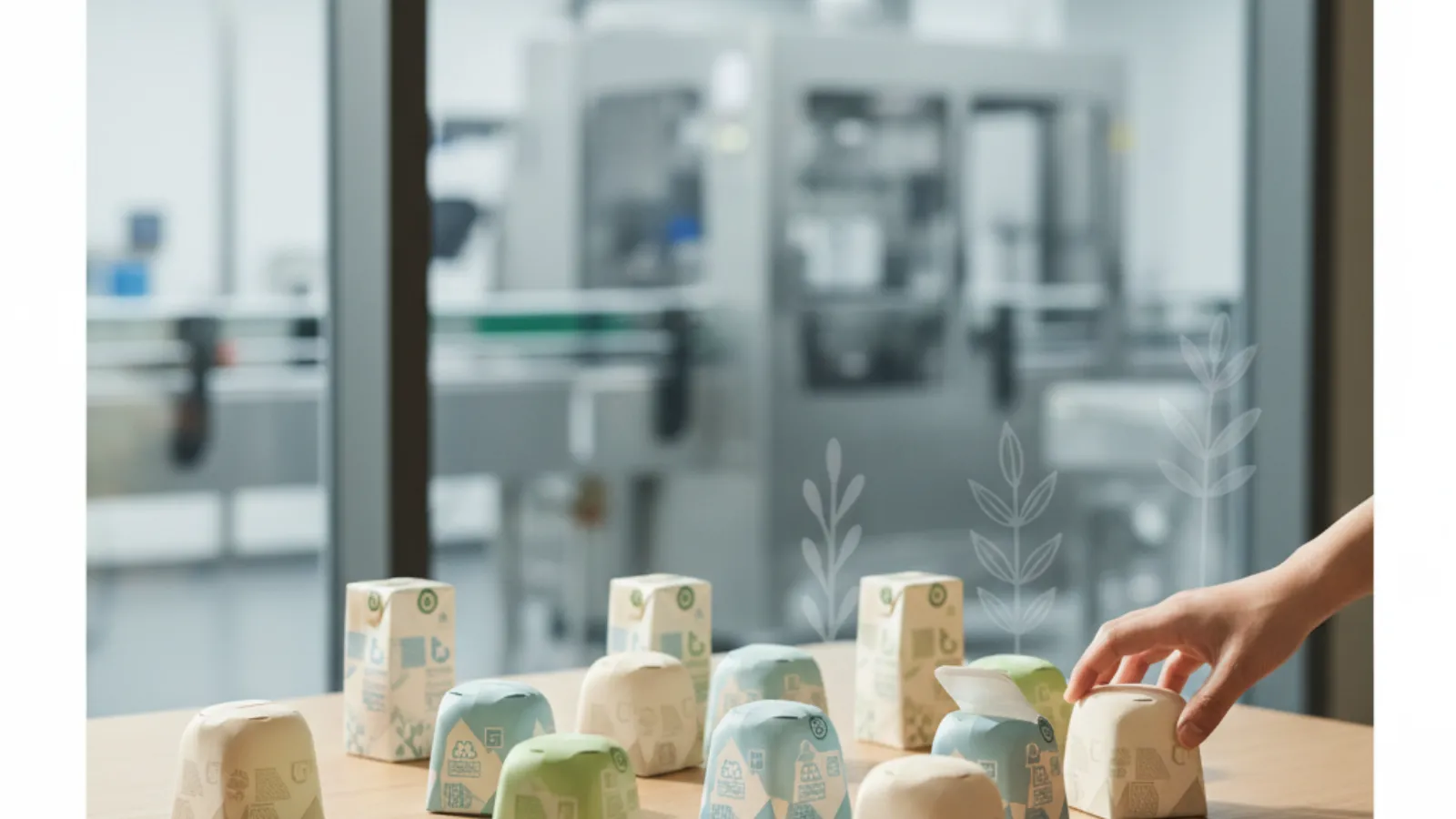
I keep seeing the same move in ageing dairy markets. White milk falls away, and the answer is a smaller pack with more in it. Seoul Dairy has now put a number on that move. Its first nutrition drink sold more than 3 million packs in 80 days. SIG published the figure on 22 September.
What Seoul Dairy launched
The drink is a first for the co-op. One Meal Daily Care is its first product in the nutrition drink category. It is filled into SIG DomeMini, a bottle shaped carton. Seoul Dairy sold more than 3 million packs in the first 80 days. President Moon Jin-Seop said the early demand shows buyers want easy daily nutrition. Hans Cho, who runs SIG's South Korean market, said the format pairs a bottle shape with aseptic packing.
The pack behind the drink
DomeMini is a portion carton. It is made mostly from FSC certified board. SIG put Europe's first DomeMini 12 line into SalzburgMilch in July. That line runs at 12,000 packs an hour. It covers seven sizes from 180ml to 350ml. SIG says the format uses 80% less plastic than the PET bottle it replaced. The Korean launch is the same pack doing a different job.
Korea fills the smallest pack
Zenith has the country measured. Zenith's Global Aseptic Packaging Market Report 2026 puts South Korea at 1,063 million litres of aseptic packaging in 2025. Those litres went into 3,650 million packs. That is an average pack of 291ml, the smallest of the 39 markets in the study. Other dairy takes 46.2% of national aseptic litres. Beverages take 44.5%. White milk takes 9.3% and is shrinking at 2.9% a year.
The market splits in two. Soy and plant drink in 190ml to 200ml cartons is the largest single line, at 445 million litres. Contract filled aseptic PET for tea, coffee and sports drinks now takes 40% of national aseptic litres. Dairy is the smaller half here, which is unusual.
Why the milk went away
The buyer changed. Korean fresh milk use per head fell to 22.9kg in 2025, down 9.5% in a year. The Korea Times called that the lowest level since the late 1980s. The peak was near 31kg in the early 2000s. Imported sterilised milk reached 51,000 tonnes in 2025, from 10,000 tonnes in 2019. Polish long life litres sell at about 1,900 won against 3,000 won for domestic fresh. School milk take-up fell from 51.1% in 2015 to 29.1% in 2022.
Where the litres go next
Two pack types are pulling apart. Zenith has portion cartons at 497 million litres in 2025, or 46.7% of the market. That block falls to 472 million litres by 2030. Aseptic PET goes the other way, from 423 million litres in 2025 to 502 million by 2030. National growth slows from 2.1% a year to 0.7%. Korea's birth rate of 0.72 is taking out the school age buyer faster than new formats replace it.
What this means for the market
Korea is a small pack market that is close to full. Volume growth to 2030 runs at 0.7% a year, so share has to come from someone else. A brand arriving here is buying the shelf that school milk left behind. Competitive position matters more than market size. Two pack systems already hold the ground: the portion carton and contract filled aseptic PET. An entrant should first check which pack its target buyer already picks up. Then it should test whether older buyers come back at a higher price per litre.
We will be watching whether Korea's portion carton holds its share as buyers get older. The pack stays the same size. The reason to pick it up changes. Zenith's Global Aseptic Packaging Market Report 2026 tracks that split by pack type and size across 39 markets. A free sample sits on the page.
Global Aseptic Packaging Market Report 2026
148.4bn litres and 344bn packs in 2025. Aseptic volumes across dairy, dairy alternatives, beverages and food in 39 markets — 2025 actuals and forecasts to 2030. Buy online and receive it within 24 hours.
More information
Global Cheese Database 2026
Production, imports, exports and consumption for 39 cheese types across 48 countries, with actuals through 2025 and forecasts to 2030. Join the waitlist for early access, pre-launch pricing and a free sample country chapter.
Get early accessStrategic Insights
📊 Analytics & Strategic Insight
Korea built a portion pack market for children, and now needs an older buyer to hold it up
The decision most in this industry are avoiding:
👉 Three million packs in 80 days is a small number. At that rate it is about 13 million packs a year. Korea fills 3,650 million aseptic packs. The signal sits in who bought them rather than how many.
👉 Aseptic PET is growing while the portion carton shrinks. Zenith has Korean aseptic PET at 423 million litres in 2025 and 502 million by 2030. Cartons move the other way over the same five years.
👉 Cheap Polish milk is doing more damage this year than the birth rate. Imports reached 51,000 tonnes in 2025 at roughly two thirds of the domestic price. That lands on family size sterilised milk first.
Here's the full context:
→ 2015: School milk take-up in Korea stood at 51.1%.
→ 2019: Imported sterilised milk passed 10,000 tonnes for the first time.
→ 2022: School milk take-up had fallen to 29.1%.
→ 2025: Fresh milk use per head fell to 22.9kg, down 9.5%. Imports reached 51,000 tonnes.
→ Most recent: Seoul Dairy launched One Meal Daily Care in SIG DomeMini. SIG reported 3 million packs in 80 days.
What this means for aseptic fillers, converters and equipment suppliers:
✅ Korean portion carton demand is flat at best. Zenith has 497 million litres in 2025 falling to 472 million by 2030. New carton capacity here has to take share from someone.
✅ Contract filled aseptic PET is where the Korean growth sits. It already takes 40% of national aseptic litres. Dong-A Otsuka's Cheongju switch from hot fill to aseptic filling lands in 2028.
✅ Small packs lift the pack count per litre. Korea averages 291ml a pack. Board, sleeve and closure demand scales with packs rather than litres.
What this means for market decisions:
1️⃣ Korea grows 0.7% a year to 2030, so the litres are close to flat. Any plan built here is a share plan. Treat headline market size as a poor guide.
2️⃣ The winners are the ones who already hold the older buyer. Soy and plant drink in 190ml to 200ml cartons is still the largest single line at 445 million litres.
3️⃣ Test repeat buying before you commit capacity. A launch spike is cheap to buy. What decides the case is whether older buyers come back at a higher price per litre.
The Zenith view:
Seoul Dairy has shown that an older buyer will pick up a small ambient carton. It has not shown that this buyer replaces the school milk that left. What decides the investment case is repeat buying across a full year, at a price per litre above white milk.
The data behind this story
📦 Global Aseptic Packaging Market Report 2026
148.4 billion litres and 344 billion packs across 39 markets, split by category, pack type and pack size, with 2025 actuals and forecasts to 2030. A free 17-page sample is on the page.
→ Read the free sample
Evaluating the Korean ambient dairy market? Zenith helps food and beverage companies assess market size, growth, competitors, pricing and route to market before they invest.
→ Discuss your market
Zenith Consulting
Submit your food & beverage project enquiry.
Share your requirements. If there is a strong fit, we’ll come back with an indicative investment range, project timeline and recommended strategic approach.
Reviewed by Zenith Consulting’s senior food & beverage strategy team.
Related analyses
- Health, Nutrition & Functional
Goodman Fielder Opens A NZ$100m UHT Plant In Christchurch: New Zealand's Liquid Milk Exports Are Flat At 255,000 Tonnes
Goodman Fielder has opened a NZ$100 million high-value dairy centre in Christchurch, built around long-life milk for China and South East Asia. New Zealand's liquid milk exports have sat flat near 255,000 tonnes, so the plant sells more protein in the litre rather than more litres.
Read analysis → - Health, Nutrition & Functional
US Bans Canadian Whey From 29 September: The Cheese Vat Now Sets The Protein Price
Washington shuts eight lines of Canadian whey out of the country from 29 September 2026. The ban lands on a protein market with nothing spare, and every extra pound of whey protein has to come off a cheese vat.
Read analysis → - Health, Nutrition & Functional
Canada Puts 25% On All US Cheese: Cheddar And Mozzarella Now Pay Duty Inside The USMCA Quota
Canada's 25% surtax on US cheese took effect on 8 September 2026. It lands inside the duty free quota, where American cheddar and mozzarella have paid nothing since USMCA began.
Read analysis →
Share it with your peers
Pass this analysis to colleagues who track the food and beverage market.
Zenith Market Intel
Need a specific food or beverage market report?
Tell us which category, region or question would be useful for your team.
Sister Publication
Also follow our Water Dispense Market Intelligence
Category analyses, operator briefings, and investor signals across the global water dispense market.