SIG Neo XSlim 32 Aseptic Fills 32,000 Single-Serve Cartons An Hour: A Third More Output In The Same Floor Space
SIG has added two aseptic carton filling machines to its Neo range, one at 32,000 single-serve cartons an hour and one at 15,000 multi-serve. Both claim a third more output per square metre in the same footprint, which puts floor space ahead of demand as the limit on new carton capacity.
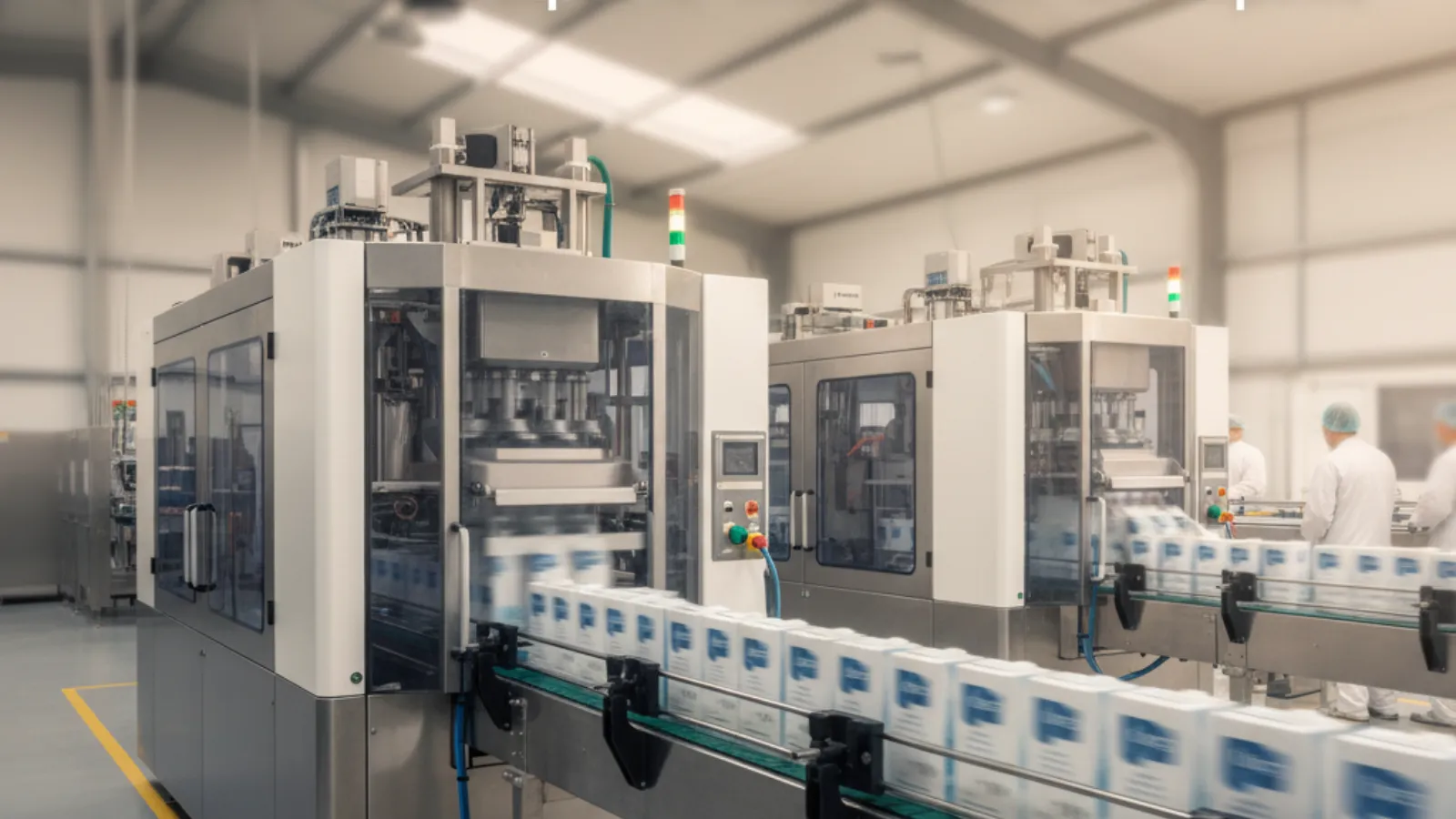
The one thing I keep asking milk and drinks firms is this. Where would a new line physically go? Most cannot answer it, and that is why I read SIG's launch this week as a floor-space story.
What SIG put on the market
SIG announced two new aseptic carton filling machines in Dubai on 1 October 2026. The SIG Neo XSlim 32 Aseptic fills 32,000 single-serve cartons an hour. It runs the SIG XSlimBloc shape in nine sizes. The SIG Neo Midi 15 Aseptic fills 15,000 multi-serve cartons an hour, in the MidiBloc and MidiFit shapes. Each of those two shapes comes in three sizes.
Where the extra third comes from
SIG puts total output and output per square metre a third higher than its standard machines. The footprint stays the same. Waste runs below 0.5%. A switch between pack sizes takes under 15 minutes with no parts to change.
A guard called SIG Neo Shield takes out up to 95% of airborne particles. It works during bottom sealing and pre-folding. SIG also claims lower total filling costs than its standard machines.
The limit is the building
Christoph Wegener, chief markets officer at SIG, was blunt about the reason. "Many food and beverage producers have reached the physical limits of their existing plants," he said. The machines, he added, "add capacity to our customer's factories and not buildings."
That is a different claim from a faster machine. It says the cheapest new litres come from inside walls that already exist. A new building needs land, permits and a longer wait.
What Zenith has on the single-serve carton
Zenith's Global Aseptic Packaging Market Report 2026 sizes the portion carton at 39,805m litres in 2025. Portion means every size up to 499ml. That pool has fallen 0.3% a year since 2020. The report has it growing 0.4% a year to 40,541m litres by 2030.
Family cartons of 0.5 litres and more sit at 58,787m litres. They grew 0.6% a year to 2025 and are forecast at 0.9% a year to 61,570m. So the machine with the top billing serves the one carton size that has not grown. Cartons carry 66.5% of world aseptic volume, and the growth inside that share sits in the bigger pack.
The small carton sits unevenly across the categories. Zenith has white milk portion cartons at 13,097m litres and drinks portion cartons at 10,694m. Other dairy carries the largest single-serve pool. Inside other dairy, family cartons still grow 6.0% a year.
Where 32,000 packs an hour pays
The money in single-serve is in packs rather than litres. A converter is paid per pack. A filling line is rated in packs per hour. So a flat litre pool can still be a growing market for both.
Zenith puts world aseptic volume at 148.4 billion litres in 344 billion packs in 2025. That averages 431ml a pack on my own sum. Asian single-serve dairy is where the small pack is thickest. Zenith has other dairy portion cartons at 14,977m litres, against 7,586m in family packs.
SIG has been down this road before. In November 2024 it launched the Neo Slimline 15 Aseptic at 15,000 packs an hour. SIG put that machine at up to 70 million packs a year, with output 25% above its standard line.
What this means for the market
A market worth entering on litres and one worth entering on packs are not the same market. The new machines cut the cost of adding packs inside a plant that is already built. That helps any filler whose growth sits in small sizes.
An entrant should test three things. Whether the local pool grows in litres or in packs. Whether its own site has the square metres. Whether a carton maker nearby can supply nine sizes.
We will be watching whether portion cartons grow again in litres. The other outcome is that the pack count carries the format on its own. Our Global Aseptic Packaging Market Report 2026 splits all 39 markets by pack type and pack size. That split is what answers it. The free sample on the page shows how the pack-size tables are built.
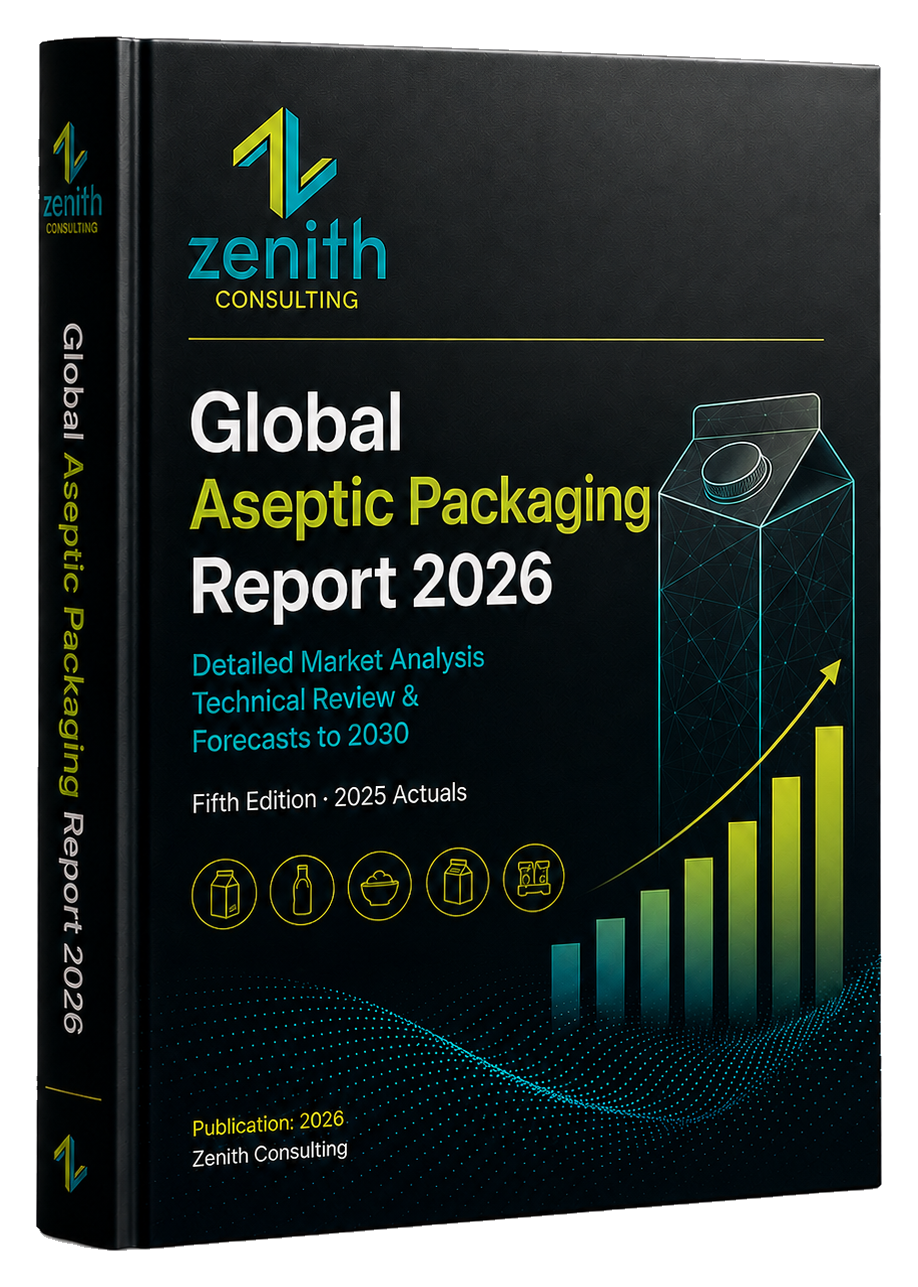
Global Aseptic Packaging Market Report 2026
148.4bn litres and 344bn packs in 2025. Aseptic volumes across dairy, dairy alternatives, beverages and food in 39 markets — 2025 actuals and forecasts to 2030. Buy online and receive it within 24 hours.
More information
Global Cheese Database 2026
Production, imports, exports and consumption for 39 cheese types across 48 countries, with actuals through 2025 and forecasts to 2030. Join the waitlist for early access, pre-launch pricing and a free sample country chapter.
Get early accessStrategic Insights
📊 Analytics & Strategic Insight
The limit on aseptic growth is square metres, and the pack that gained the speed is the flat one
The decision most in this industry are avoiding:
👉 Floor space is now the first filter on any new line. Most plans still start with demand and end with the building. SIG has turned that order around.
👉 The fast machine serves the slow pack. Portion cartons have been flat in litres since 2020. The speed gain lands where the litres are not.
👉 Nobody prices the wait for a new building. Land, permits and a build run to years. A machine swap runs to months.
Here's the full context:
→ 2024: SIG launched the Neo Slimline 15 Aseptic at 15,000 packs an hour. SIG put it at up to 70 million packs a year.
→ 2025: Zenith counts 148.4 billion litres of world aseptic volume in 344 billion packs.
→ 2025: Portion cartons hold 39,805m litres. Family cartons hold 58,787m.
→ 2030: Zenith forecasts 159.6 billion litres, with portion cartons at 40,541m.
→ Most recent: SIG launched two Neo machines in Dubai on 1 October. One fills 32,000 single-serve cartons an hour.
What this means for aseptic fillers, converters and equipment suppliers:
✅ A third more output per square metre changes the build-or-fill choice. A site that looked full may not be. Measure the floor before you cost a new plant.
✅ Carton makers should read nine sizes as nine order lines. A filler that can switch in 15 minutes will ask for more sizes. Sleeve supply has to keep up.
✅ Packs per hour and litres per year now tell different stories. Price the line on packs. Price the milk and the juice on litres.
What this means for market decisions:
1️⃣ Small-pack aseptic looks better on packs than on litres. The litre pool is flat and the pack pool is not. A market read in litres alone will look dull.
2️⃣ Fillers with tight sites gain the most from this launch. Crowded plants in Asia and the Gulf benefit first. Groups with spare land gain least.
3️⃣ Check the square metres before the business case. Ask what a site can hold and what a sleeve supplier can deliver. Both set the start date.
The Zenith view:
SIG has proved that output per square metre can rise by a third. It has not proved that the single-serve carton is growing. Zenith has that pack flat in litres since 2020. The test that decides the investment case is whether a market is buying more packs or more litres.
The data behind this story
📦 Global Aseptic Packaging Market Report 2026
148.4 billion litres and 344 billion packs across 39 markets, split by category, pack type and pack size, with 2025 actuals and forecasts to 2030. A free 40-page sample is on the page.
→ Read the free sample
Evaluating an aseptic filling or carton market?
Zenith helps food and beverage companies assess market size, growth, competitors, pricing and route to market before they invest.
→ Discuss your market
Zenith Consulting
Submit your food & beverage project enquiry.
Share your requirements. If there is a strong fit, we’ll come back with an indicative investment range, project timeline and recommended strategic approach.
Reviewed by Zenith Consulting’s senior food & beverage strategy team.
Related analyses
- Corporate Strategy & Portfolio
Oji Liquid Pak's USD 110 Million Vietnam Aseptic Carton Plant Adds 8 Billion Packs To A Region Already At 62 Billion
Oji Liquid Pak broke ground on a USD 110 million aseptic carton material plant in Dong Nai, rated at up to 8 billion packs a year from 2028. Zenith puts Vietnam at 10,358.7 million aseptic packs in 2025, and South East Asia already holds about 62 billion packs of documented converting capacity.
Read analysis → - Corporate Strategy & Portfolio
Spain Swaps HDPE Milk Bottles For Aseptic PET: 170 Million Litres Left And Only Three Aseptic PET Dairy Lines
Spanish UHT milk in large HDPE bottles fell from 307 million litres in 2020 to 170 million in 2025, and Zenith's model takes it to 88.5 million by 2030. Aseptic PET is taking the volume, and only three aseptic PET dairy lines have been documented in the country.
Read analysis → - Corporate Strategy & Portfolio
US Parmesan Output Jumps 25.9% While Cheddar Slips: Italian Cheese Takes Four In Five Pounds Of Growth
USDA figures published on 5 October show US Parmesan output up 25.9% in August while cheddar fell 0.9%. Italian types have supplied nearly four in every five pounds of US cheese growth so far in 2026.
Read analysis →
Share it with your peers
Pass this analysis to colleagues who track the food and beverage market.
Zenith Market Intel
Need a specific food or beverage market report?
Tell us which category, region or question would be useful for your team.
Sister Publication
Also follow our Water Dispense Market Intelligence
Category analyses, operator briefings, and investor signals across the global water dispense market.