Celsius, Rockstar and PepsiCo: The Founder Who Sold the Brand Now Wants to Run the Buyer
Rockstar Energy's founder has built a 4.7% stake in Celsius Holdings and says he should be its next CEO, a year after Celsius bought the Rockstar brand from PepsiCo. The bid shows how much control Celsius gave away when it paid for that brand in its own shares.
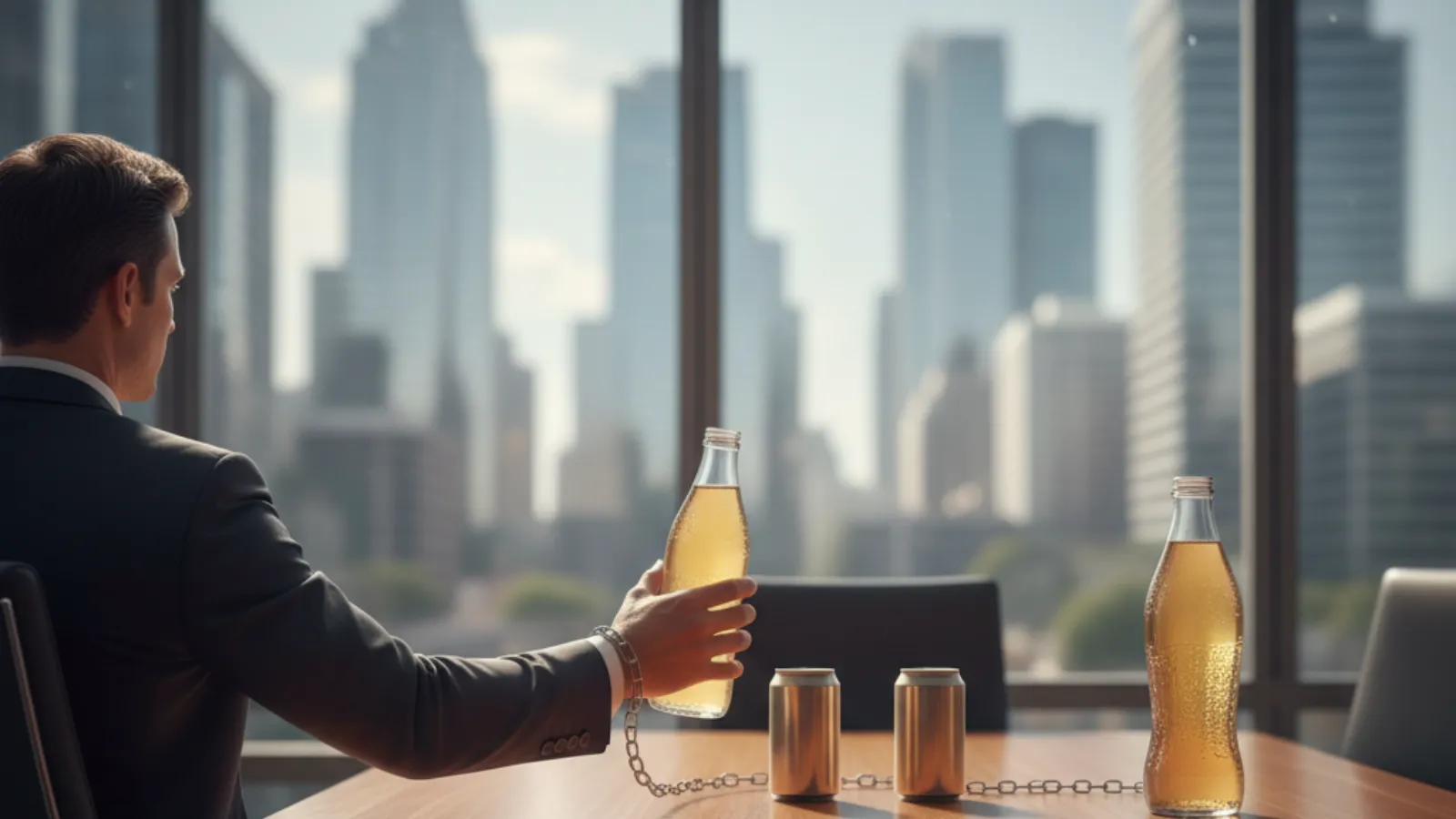
In 2020 one man sold Rockstar Energy to PepsiCo for $3.85 billion. In 2025 PepsiCo sold the US and Canadian rights to that brand on to Celsius Holdings. Last week the same man said he owns 4.7% of Celsius and wants to run it.
His name is Russ Savage. He was born Russell Weiner. He started Rockstar in 2001 and owned 85% of it when PepsiCo bought it. He told CNBC on 7 August that he now holds more than 12 million Celsius shares, worth about $300 million. He wants the chairman and CEO, John Fieldly, to leave. He wants three more senior people to leave with him. He has offered to take the top job himself.
Celsius said it welcomes ideas from owners that could add value. Board members and managers have met Savage several times over the years, it said. The firm said it stays focused on its energy drinks plan and on growth that lasts.
He picked his moment
Celsius reported second quarter results on 6 August. Sales came in at $817.9 million. The market had looked for $887.7 million. Earnings per share were 36 cents against a forecast of 42 cents. The shares fell more than 18% the next day.
Savage says he started buying in March, when the stock sat in the low $30s. So he is down on the trade. The shares rose about 12% to $26.60 when his plan broke, which helps, but he is still under water. That matters. An owner who is losing money has more reason to push and less reason to wait.
Celsius paid for Rockstar with its own shares
Here is the part few people have joined up. In August 2025 Celsius bought the Rockstar brand in the US and Canada from PepsiCo. It did not hand over cash. PepsiCo took $585 million of new Celsius stock that pays 5% a year and can turn into normal shares. That lifted PepsiCo to about 11% of Celsius.
So Celsius bought a brand by printing paper. Paper does not go away. It widens the group of people who own a vote in your firm. It also puts your own shares in the hands of a seller who knows the trade better than you do. A year later a man with $300 million of Celsius stock is asking the board to fire its leader.
PepsiCo sits on both sides
PepsiCo is the quiet party in this fight and the strongest one. It sold Rockstar to Celsius. It holds about 11% of Celsius. It ships Celsius, Alani Nu and Rockstar to shops across the US and Canada. In the second quarter Celsius booked $492.3 million of its $817.9 million of sales through PepsiCo. That is about three fifths of the firm.
So the largest owner is also the largest customer and the road to every shelf. No board fight at Celsius gets settled without PepsiCo taking a view. PepsiCo has said nothing in public. It does not need to.
A founder buying back in, one layer up
Founders who come back are rare in food and drink. Most people who sell a brand for billions buy a boat. Savage bought into the firm that now owns his old brand. His charge is plain. He says there are too many layers between the boss and the shelf, and too few people held to account.
That charge is easy to test. Celsius has bought two brands in two years. Alani Nu closed in April 2025. Rockstar closed in August 2025. Each came with staff, plans and its own way of doing things. Costs grow in that kind of year. So do meetings. Celsius also bought back $100.4 million of its own shares in the quarter. That is part of a $300 million plan for the year.
What decides this
Three things. First, whether Savage files a formal notice and starts calling other owners. Second, whether PepsiCo backs the board or stays silent. Third, the next set of results. If the shares keep sliding, that buy-back spend starts to look like poor use of cash. The board then loses one of its best defences.
For buyers and boards the lesson sits in the payment method. Celsius solved a brand problem with stock and took on an ownership problem it cannot undo. Paper is the cheapest money in a good year and the dearest in a bad one. Anyone weighing a share deal this year should price that risk before the ink dries. They should also ask a second question first. Who can buy this paper from the seller later, and what would they want with it?
Global Aseptic Packaging Market Report 2026
148.4bn litres and 344bn packs in 2025. Aseptic volumes across dairy, dairy alternatives, beverages and food in 39 markets — 2025 actuals and forecasts to 2030. Buy online and receive it within 24 hours.
More information
Global Cheese Database 2026
Production, imports, exports and consumption for 39 cheese types across 48 countries, with actuals through 2025 and forecasts to 2030. Join the waitlist for early access, pre-launch pricing and a free sample country chapter.
Get early accessStrategic Insights
📊 Analytics & Strategic Insight
Paper is the cheapest money you will ever regret
The decision most in this industry are avoiding:
👉 Stock is a currency with a memory. Pay for a brand in cash and the seller walks away. Pay in shares and the seller stays, votes, and can sell that stake on to someone who wants a fight.
👉 A buy and build run leaves you open to attack. Two brands in two years brings new staff, new plans and higher costs. Each of those lines is a slide in a critic's pitch deck.
👉 Your biggest customer can also be your biggest voter. When one partner ships your drinks and owns a tenth of you, a board row turns into a trade talk.
Here's the full context:
→ 2001: Russell Weiner starts Rockstar and builds the first 16oz energy drink.
→ 2020: PepsiCo buys Rockstar for $3.85 billion, plus about $0.7 billion of tax related payments over up to 15 years. Weiner owned 85%.
→ April 2025: Celsius closes its purchase of Alani Nu, its first big brand deal.
→ August 2025: Celsius buys Rockstar in the US and Canada. PepsiCo takes $585 million of new Celsius stock and moves to about 11%. PepsiCo ships all three brands.
→ Most recent: Second quarter sales of $817.9 million miss the $887.7 million forecast on 6 August 2026. The shares drop more than 18%. A day later the founder of Rockstar says he owns 4.7% and wants the top job.
What this means for food and beverage operators and investors:
✅ Read the payment method as well as the price. Cash buys a brand. Shares buy a brand and sell a piece of your board. Both sit in the same press release and only one gets read.
✅ Sales through one partner are a board risk as well as a trade risk. Three fifths of Celsius sales run through PepsiCo. That hands one party a say in who runs the firm.
✅ Founders make the loudest owners. They know the plants, the buyers and the ad spend. A board can brush off a fund. It has a harder time with the person who built the brand it just bought.
3 moves you can make this week:
1️⃣ List who owns your paper. Take every share deal you have signed in the last five years and write down who holds that stock today. If you cannot answer in an hour, that is the finding.
2️⃣ Put a number on your top partner. Work out what share of sales, cash and shelf space runs through one route. Then ask what changes if that partner takes a side in a board row.
3️⃣ Stress test the buy-back. Cash spent on your own shares in a falling market is the first thing an angry owner will point at. Have the case written down before someone asks for it.
Take the Next Step
💬 You don't need a written brief.
Tell us what you are weighing up, and we will come back with the likely project scope, recommended direction and cost range.
→ Tell us what you're planning
Zenith Consulting
Submit your food & beverage project enquiry.
Share your requirements. If there is a strong fit, we’ll come back with an indicative investment range, project timeline and recommended strategic approach.
Reviewed by Zenith Consulting’s senior food & beverage strategy team.
Related analyses
- Corporate Strategy & Portfolio
Oji Liquid Pak's USD 110 Million Vietnam Aseptic Carton Plant Adds 8 Billion Packs To A Region Already At 62 Billion
Oji Liquid Pak broke ground on a USD 110 million aseptic carton material plant in Dong Nai, rated at up to 8 billion packs a year from 2028. Zenith puts Vietnam at 10,358.7 million aseptic packs in 2025, and South East Asia already holds about 62 billion packs of documented converting capacity.
Read analysis → - Corporate Strategy & Portfolio
Spain Swaps HDPE Milk Bottles For Aseptic PET: 170 Million Litres Left And Only Three Aseptic PET Dairy Lines
Spanish UHT milk in large HDPE bottles fell from 307 million litres in 2020 to 170 million in 2025, and Zenith's model takes it to 88.5 million by 2030. Aseptic PET is taking the volume, and only three aseptic PET dairy lines have been documented in the country.
Read analysis → - Corporate Strategy & Portfolio
US Parmesan Output Jumps 25.9% While Cheddar Slips: Italian Cheese Takes Four In Five Pounds Of Growth
USDA figures published on 5 October show US Parmesan output up 25.9% in August while cheddar fell 0.9%. Italian types have supplied nearly four in every five pounds of US cheese growth so far in 2026.
Read analysis →
Share it with your peers
Pass this analysis to colleagues who track the food and beverage market.
Zenith Market Intel
Need a specific food or beverage market report?
Tell us which category, region or question would be useful for your team.
Sister Publication
Also follow our Water Dispense Market Intelligence
Category analyses, operator briefings, and investor signals across the global water dispense market.