Canada Puts 25% On All US Cheese: Cheddar And Mozzarella Now Pay Duty Inside The USMCA Quota
Canada's 25% surtax on US cheese took effect on 8 September 2026. It lands inside the duty free quota, where American cheddar and mozzarella have paid nothing since USMCA began.
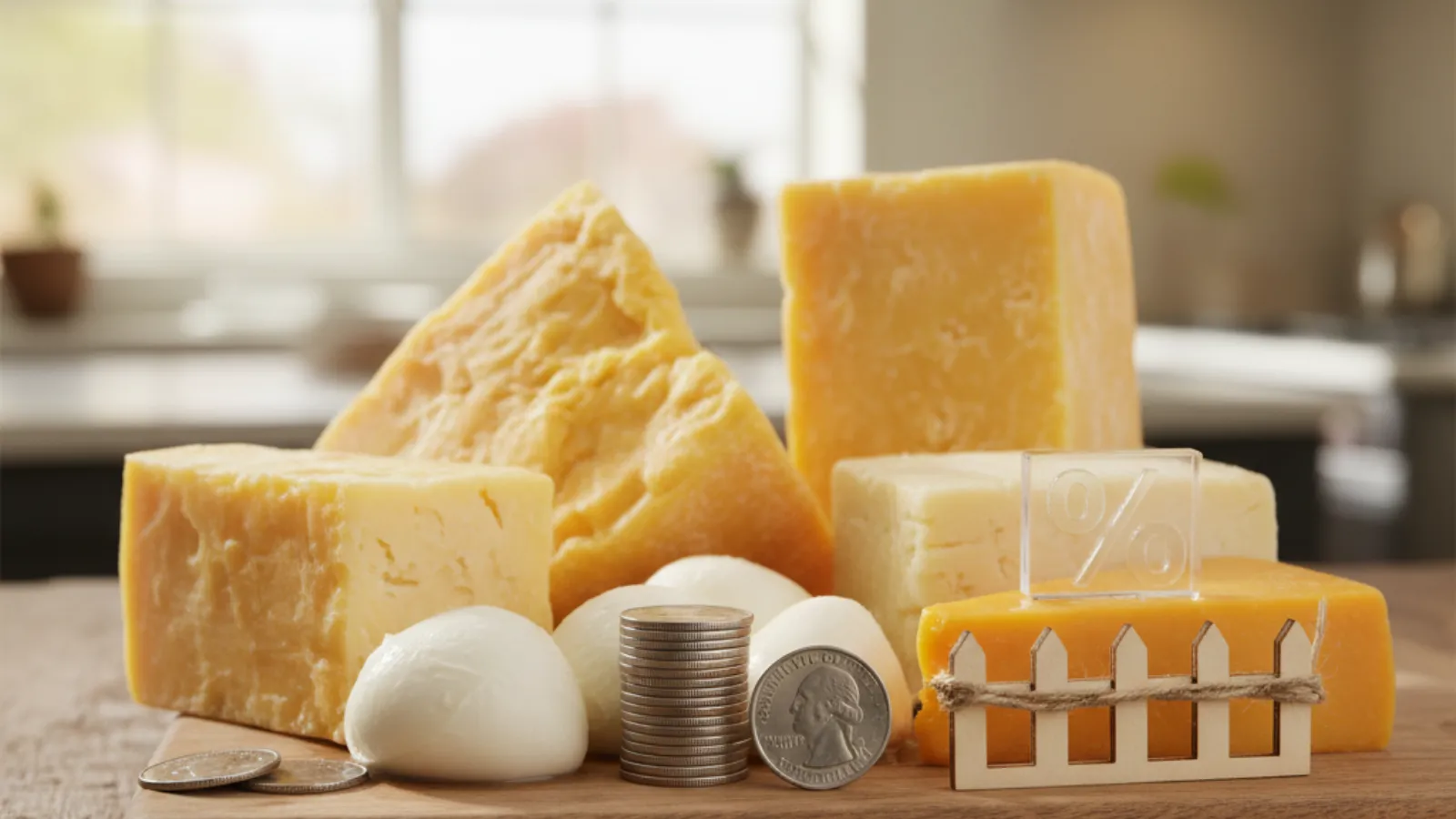
Most of the coverage reads this as a farm price story. I read it as a quota story. Canada put a 25% charge on all US cheese from 8 September. The charge lands inside the duty free quota, where US cheddar and mozzarella have paid nothing for six years.
What Canada did, and when
The Government of Canada issued the United States Surtax Order (2026) on 4 September. Canada Border Services Agency confirmed it in Customs Notice 26-23 on 7 September. The order took effect at 12:01 a.m. on 8 September. It covers about $27.6 billion of US goods at rates of 15%, 25% or 50%.
All US cheese pays 25%. Whey, casein, milk protein and milk powders pay 50%. Butter, fluid milk, cream, yogurt and ice cream pay nothing. Canada left those off the list on purpose.
The charge lands inside the quota
This is the part most reports skip. USMCA opened 14 dairy quotas. They give the US duty free access to about 3.5% of Canada's dairy market, phased in through the late 2030s. Cheese inside those quotas has entered Canada free of duty since the deal began.
The quota volume has not changed. The price of using it has. Canada's old over quota rates still sit at roughly 241% to 298%. Nobody pays those. They exist to stop trade above the quota. The new 25% is different. It sits on the trade that actually happens.
What actually crosses the border
US dairy sales to Canada were about $1.3 billion in 2025. That is 14% of all US dairy exports, second only to Mexico. Cheese was $134 million of it. Whey and milk protein were $82 million.
US cheese sales to Canada have grown fast. They went from 19.3 million pounds in 2019 to 51.4 million pounds in 2025. Butter is the biggest single line at $228 million. Neither side taxed butter, because Canada is short of butterfat.
How a 25% charge reaches a milk cheque
Cheese that cannot be sold in Canada has to go somewhere. Some finds a home in Mexico or South East Asia at a lower price. Some stays home and pushes US cheese prices down.
The Class III milk price is built from cheese and dry whey prices. Those are the two lines Canada taxed. A one cent fall in the cheese price cuts Class III by about ten cents. A one cent fall in dry whey cuts it by about six cents.
University of Wisconsin Extension puts the lasting effect at 20 to 35 cents per hundredweight of milk. For Wisconsin that is roughly $65 million to $113 million a year. That is $51 to $90 a cow. About 90% of the state's milk goes to cheese.
The US escalated on the same day
On 8 September the White House signed five more orders under Section 338. Three of them bar certain Canadian cars, dairy and drinks from entering the US at all. That starts on 29 September. Goods already imported before then still pay the 50% duty instead.
USMCA origin gives no shelter here. Two further orders widen the scope of the July duties from 15 September, adding more dairy lines. Section 338 comes from the Tariff Act of 1930. This is its first big outing in the current cycle.
Relief exists, but you have to claim it
Goods in transit on 8 September escape the charge. Importers need the paperwork to prove it. Cheese brought into Canada under an Import for Re-Export permit is also exempt, once every condition is met.
Duties Relief and Duty Drawback both cover the surtax. Neither one applies on its own. No agency reports how much trade uses them. So every exposure figure published this week sits before relief.
Check every Canadian order against the tariff item rather than the product name. Model the landed cost with the 25% on top. Ask your buyer who carries it. File for relief now if you ship for further processing. Watch the National Dairy Products Sales Report through October, because displaced cheese lands there first. Then watch the September export data, which lands in late October.
We will be watching where those 51 million pounds go next. Canada and the USA are both modelled separately in our Global Cheese Database 2026. Cheddar and mozzarella are tracked as their own types, in tonnes, from HS 0406 customs data. Waitlist members get a free sample country chapter.
Global Aseptic Packaging Market Report 2026
148.4bn litres and 344bn packs in 2025. Aseptic volumes across dairy, dairy alternatives, beverages and food in 39 markets — 2025 actuals and forecasts to 2030. Buy online and receive it within 24 hours.
More information
Global Cheese Database 2026
Production, imports, exports and consumption for 39 cheese types across 48 countries, with actuals through 2025 and forecasts to 2030. Join the waitlist for early access, pre-launch pricing and a free sample country chapter.
Get early accessStrategic Insights
📊 Analytics & Strategic Insight
A quota is worth what the duty free part of it is worth
The decision most in this industry are avoiding:
👉 Quota access is an asset with a price on it. Most export plans treat a quota as a volume. It is really a duty saving. Take the saving away and the volume may not be worth shipping.
👉 The 25% will be carried by whoever has the weaker contract. Canadian buyers will push it back up the chain. US sellers with no duty clause will eat some of it. Very few contracts written before July say who pays.
👉 Cheese was the grievance and is now the target. Washington built its case on how Canada hands out cheese quota. It then left Canadian cheese alone. Ottawa did the opposite and taxed US cheese first.
Here's the full context:
→ 2020: USMCA opens 14 dairy quotas to US exporters. Cheese enters Canada duty free inside them.
→ 2023: A USMCA panel reviews how Canada hands out that cheese quota. It sides with Canada.
→ 2025: US cheese sales to Canada reach 51.4 million pounds. That is nearly three times the 2019 level.
→ July 2026: Washington signs three orders under Section 338. A 50% duty on some Canadian dairy follows on 22 August.
→ Most recent: Canada answered on 8 September with 25% on all US cheese. Washington answered the same day with import bans from 29 September.
What this means for cheese producers, traders and buyers:
✅ Route the trade before you reprice it. Mexico and South East Asia can take mozzarella and cheddar. They will not pay Canadian money for it.
✅ Whey is hit harder than cheese. Whey and milk protein carry 50%, and they come out of the same vats. A cheese plant loses on both sides of the split.
✅ Canadian makers gain a home field edge. Saputo, Lactalis Canada and Agropur now face a costlier US rival on the shelf. Expect them to bid harder this autumn.
3 moves you can make this week:
1️⃣ Screen every Canadian line by tariff item. The order lists hundreds of items by Canadian tariff code. A product name will not tell you the rate.
2️⃣ File for relief on anything you ship for further processing. Duties Relief and Duty Drawback both cover the surtax. You have to ask for them.
3️⃣ Rewrite your duty clause before the next contract round. Say who pays a new charge, and at what rate. Do it before 29 September, when the US bans begin.
The data behind this story
🧀 Global Cheese Database 2026
Production, imports, exports and consumption for 39 cheese types across 48 countries, in tonnes, with actuals to 2025 and forecasts to 2030. The 2026 edition is being built market by market. Waitlist members get the pre-launch price and a free sample country chapter.
→ Join the waitlist
Zenith Consulting
Submit your food & beverage project enquiry.
Share your requirements. If there is a strong fit, we’ll come back with an indicative investment range, project timeline and recommended strategic approach.
Reviewed by Zenith Consulting’s senior food & beverage strategy team.
Related analyses
- Health, Nutrition & Functional
US Bans Canadian Whey From 29 September: The Cheese Vat Now Sets The Protein Price
Washington shuts eight lines of Canadian whey out of the country from 29 September 2026. The ban lands on a protein market with nothing spare, and every extra pound of whey protein has to come off a cheese vat.
Read analysis → - Health, Nutrition & Functional
Allulose Lawsuits Hit Liquid Death, WK Kellogg And KIND: The FDA Green Light That Was Never A Defence
Five food and drinks brands were sued in one week over zero sugar claims on packs sweetened with allulose. The FDA said it would not act on the back panel, and it never changed the rule on the front.
Read analysis → - Health, Nutrition & Functional
Barilla Buys Goodles: How a Five-Year-Old Mac and Cheese Brand Took 7.8% of the US Shelf
Barilla has agreed to buy Goodles, the Santa Cruz brand that grew from 0.8% to 7.8% of US shelf-stable mac and cheese spending in three years. The buyer was the one group in the aisle with no share to defend.
Read analysis →
Share it with your peers
Pass this analysis to colleagues who track the food and beverage market.
Zenith Market Intel
Need a specific food or beverage market report?
Tell us which category, region or question would be useful for your team.
Sister Publication
Also follow our Water Dispense Market Intelligence
Category analyses, operator briefings, and investor signals across the global water dispense market.