US Bans Canadian Whey From 29 September: The Cheese Vat Now Sets The Protein Price
Washington shuts eight lines of Canadian whey out of the country from 29 September 2026. The ban lands on a protein market with nothing spare, and every extra pound of whey protein has to come off a cheese vat.
If I ran a US cheese plant this month, I would stop watching the block price. I would go and price my whey stream instead. From 29 September, Washington shuts Canadian whey out of the country. The United States bought about 43 million pounds of Canadian whey protein concentrate last year.
What the order actually bans
President Trump signed it on 8 September. It takes eight whey lines off the US import list at 12:01 a.m. on 29 September. Annex I names whey protein concentrates, modified whey, fluid whey and dried whey. Molasses and non-alcoholic beer sit on the same page.
Cheese itself is not on the list. Washington never charged duty on Canadian cheese in this fight. It charged 50% on whey, milk protein, lactose, casein and powders from 22 August. Goods shipped but not yet cleared keep paying that 50%.
Why a whey ban is a cheese story
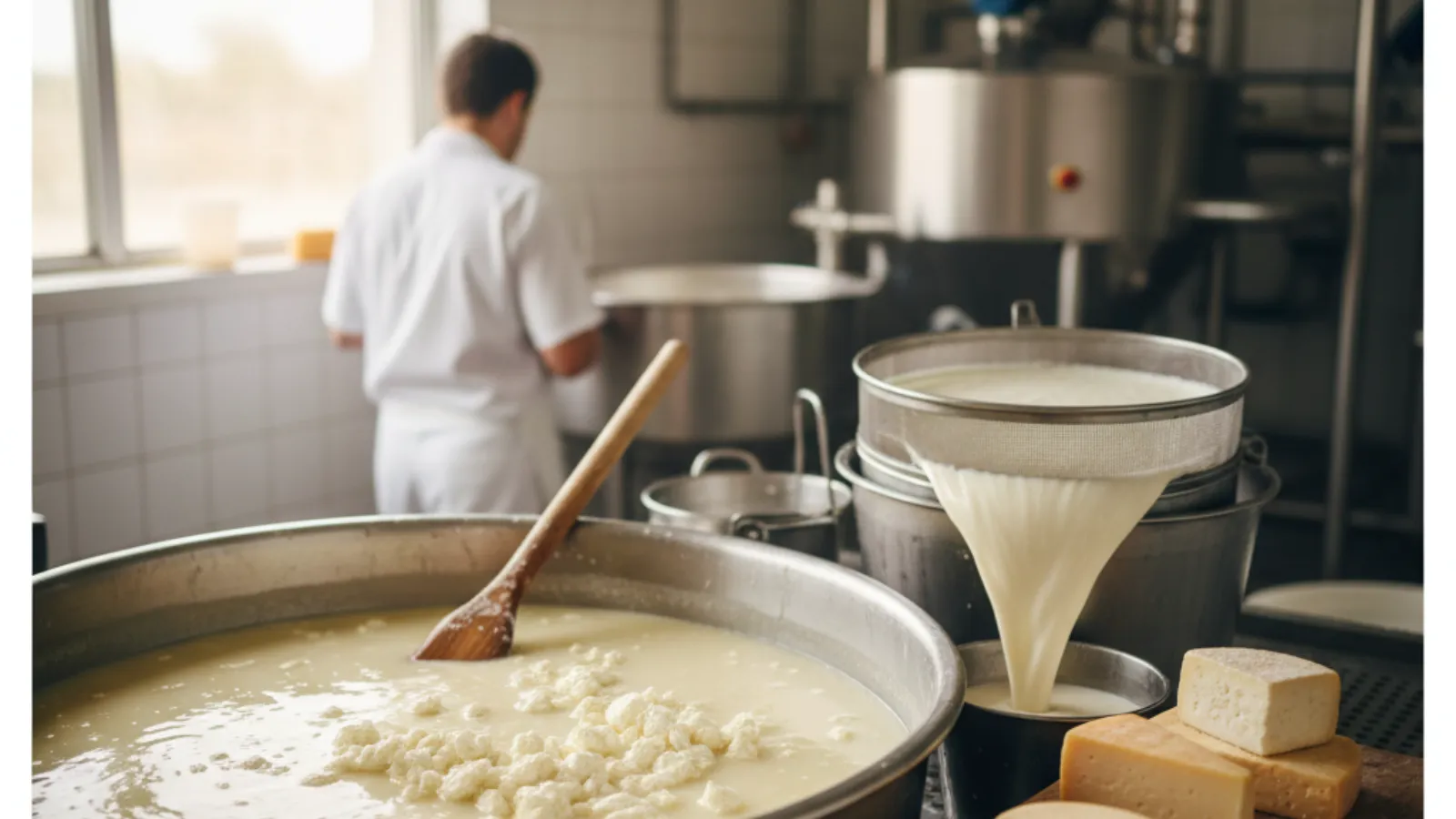
Whey is what drains off the curd when milk becomes cheese. About nine litres of it comes off every kilogram of cheese made. Nobody sets out to make whey. A cheese vat makes it whether the owner wants it or not.
So the whey trade and the cheese trade are one trade. Move the price of one and you move the margin on the other. That is the part of this fight the tariff coverage keeps missing.
A protein market with nothing spare
WPC80 rose 60% in 2025 and a further 76% by June 2026, on US Dairy Export Council figures. A tonne cost about $10,000 in January 2025. By June 2026 it cost close to $29,000. US sales of high protein whey abroad have fallen 21% so far this year. Buyers at home outbid everyone else.
Expana put the US instant grade at $12.25 a pound on 31 August. That is 134% above the same week in 2025. The EU grade closed the month at 25,995 euros a tonne, up 122% on the year.
The fluid whey line is the giveaway
One line in the annex matters more than the rest. The US took 21.2 million litres of Canadian fluid whey in 2025. It also took 3.5 million pounds of dried whey.
Fluid whey is mostly water and it does not travel well. A tanker of it crosses a border for one reason. The cheese plant on one side has no drier. The protein plant on the other side has spare hours. Close the line and a Canadian plant has a drainage problem rather than a trade problem.
Whey capacity is cheese capacity
American buyers will want that protein replaced at home. Here the arithmetic bites. Sandro Schulz of Expana made the point last week. Taking whey out of milk leaves curd behind, and curd is the raw material for cheese.
You cannot add whey protein without adding cheese. Every new drier needs vats in front of it. Every vat makes blocks or barrels that somebody has to sell. The protein boom is a cheese supply question wearing a sports nutrition label.
What Canada is left holding
Canada made 528,207 tonnes of cheese in 2024, on Statistics Canada figures. Cheddar was 161,317 tonnes and mozzarella 153,883 tonnes. That volume leaves a lot of whey to place.
Canadian cheese exports are tiny and almost all of them go south. Canada shipped 10,293 tonnes of cheese in 2024 and 84% went to the United States. The cheese still crosses. The whey stops.
Saputo has voted with its money. The Montreal group put more than CA$180 million into its Ripon plant in Wisconsin, aiming for about 35% more WPC80. That capacity sits on the American side of the border.
Price your whey stream before you price your cheese. Check whether your protein buyer sits across a border. Ask your drier what spare hours it has, then ask what more would cost. Watch the 29 September cut-off for anything still on the water. Watch Ottawa too, since Canada has answered every US move so far.
This also raises a wider question around how much cheese sits behind the world's appetite for protein. Whey volume follows cheese volume, country by country and type by type. That is one of the areas we are tracking across cheese markets in our 2026 research. Our Global Cheese Database 2026 models Canada and the United States on their own, in tonnes, by cheese type. Waitlist members get a free sample country chapter.
Global Aseptic Packaging Market Report 2026
148.4bn litres and 344bn packs in 2025. Aseptic volumes across dairy, dairy alternatives, beverages and food in 39 markets — 2025 actuals and forecasts to 2030. Buy online and receive it within 24 hours.
More information
Global Cheese Database 2026
Production, imports, exports and consumption for 39 cheese types across 48 countries, with actuals through 2025 and forecasts to 2030. Join the waitlist for early access, pre-launch pricing and a free sample country chapter.
Get early accessStrategic Insights
📊 Analytics & Strategic Insight
The protein boom has a cheese bill, and it is coming due
The decision most in this industry are avoiding:
👉 Whey is priced like an ingredient and planned like a waste stream. Most cheese plants still budget whey as a small credit against the vat. At $12 a pound for the top grade, whey is the vat.
👉 Nobody wants to say out loud that the protein boom needs more cheese. Every whey plant built in the last two years came with curd attached. Somebody has to sell that cheese into a flat market.
👉 Cross border tolling looked cheap until a border closed. Sending liquid whey to a drier in another country saves money on most days. It stops the vat on the wrong day.
Here's the full context:
→ 2020: USMCA opens Canada's dairy quotas and sets the terms both sides argue about today.
→ 2025: The US buys about 43 million pounds of Canadian whey protein concentrate and 21.2 million litres of fluid whey.
→ July 2026: Washington calls Canada's cheese quota rules unfair and sets 50% duties under Section 338 of the Tariff Act.
→ 22 August 2026: Those 50% duties hit Canadian whey, casein, lactose and milk powders. Cheese is left off the list.
→ Most recent: Trump signs a ban on eight Canadian whey lines. It starts on 29 September.
What this means for cheese producers, traders and buyers:
✅ US cheese margins get a lift from the whey side. Less imported protein means a firmer home whey price. That feeds straight into the value of every vat run.
✅ Canadian plants need a home for liquid whey by month end. Dry it, sell it locally or slow the vat. Two of those three cost real money.
✅ Buyers of WPC80 should plan for no quick relief. New drying lines take years to build. The curd that comes with them needs a market of its own.
3 moves you can make this week:
1️⃣ Map your whey stream by destination. List every tonne and litre, then mark the ones that cross a border. That is your exposure.
2️⃣ Re-run the vat margin with whey at today's price. Many plans still use a 2024 whey credit. The answer changes which cheeses you should be making.
3️⃣ Call your drier and your protein buyer this week. Ask for spare hours and for cover past 29 September. Price moves first against the plants that ask last.
The data behind this story
🧀 Global Cheese Database 2026
Production, imports, exports and consumption for 39 cheese types across 48 countries, in tonnes, with actuals to 2025 and forecasts to 2030. The 2026 edition is being built market by market. Waitlist members get the pre-launch price and a free sample country chapter.
→ Join the waitlist
Zenith Consulting
Submit your food & beverage project enquiry.
Share your requirements. If there is a strong fit, we’ll come back with an indicative investment range, project timeline and recommended strategic approach.
Reviewed by Zenith Consulting’s senior food & beverage strategy team.
Related analyses
- Health, Nutrition & Functional
Canada Puts 25% On All US Cheese: Cheddar And Mozzarella Now Pay Duty Inside The USMCA Quota
Canada's 25% surtax on US cheese took effect on 8 September 2026. It lands inside the duty free quota, where American cheddar and mozzarella have paid nothing since USMCA began.
Read analysis → - Health, Nutrition & Functional
Allulose Lawsuits Hit Liquid Death, WK Kellogg And KIND: The FDA Green Light That Was Never A Defence
Five food and drinks brands were sued in one week over zero sugar claims on packs sweetened with allulose. The FDA said it would not act on the back panel, and it never changed the rule on the front.
Read analysis → - Health, Nutrition & Functional
Barilla Buys Goodles: How a Five-Year-Old Mac and Cheese Brand Took 7.8% of the US Shelf
Barilla has agreed to buy Goodles, the Santa Cruz brand that grew from 0.8% to 7.8% of US shelf-stable mac and cheese spending in three years. The buyer was the one group in the aisle with no share to defend.
Read analysis →
Share it with your peers
Pass this analysis to colleagues who track the food and beverage market.
Zenith Market Intel
Need a specific food or beverage market report?
Tell us which category, region or question would be useful for your team.
Sister Publication
Also follow our Water Dispense Market Intelligence
Category analyses, operator briefings, and investor signals across the global water dispense market.