Foremost Farms Exits 40lb Block Cheese: $13 Billion Of New US Dairy Capacity Is Closing Old Cheddar Lines
Foremost Farms will close its Marshfield, Wisconsin cheese plant in December and stop making 40lb block cheddar, and it names new US cheese capacity as a reason. With $13 billion of dairy plants under way and blocks trading below barrels, the old bulk line is the first casualty.
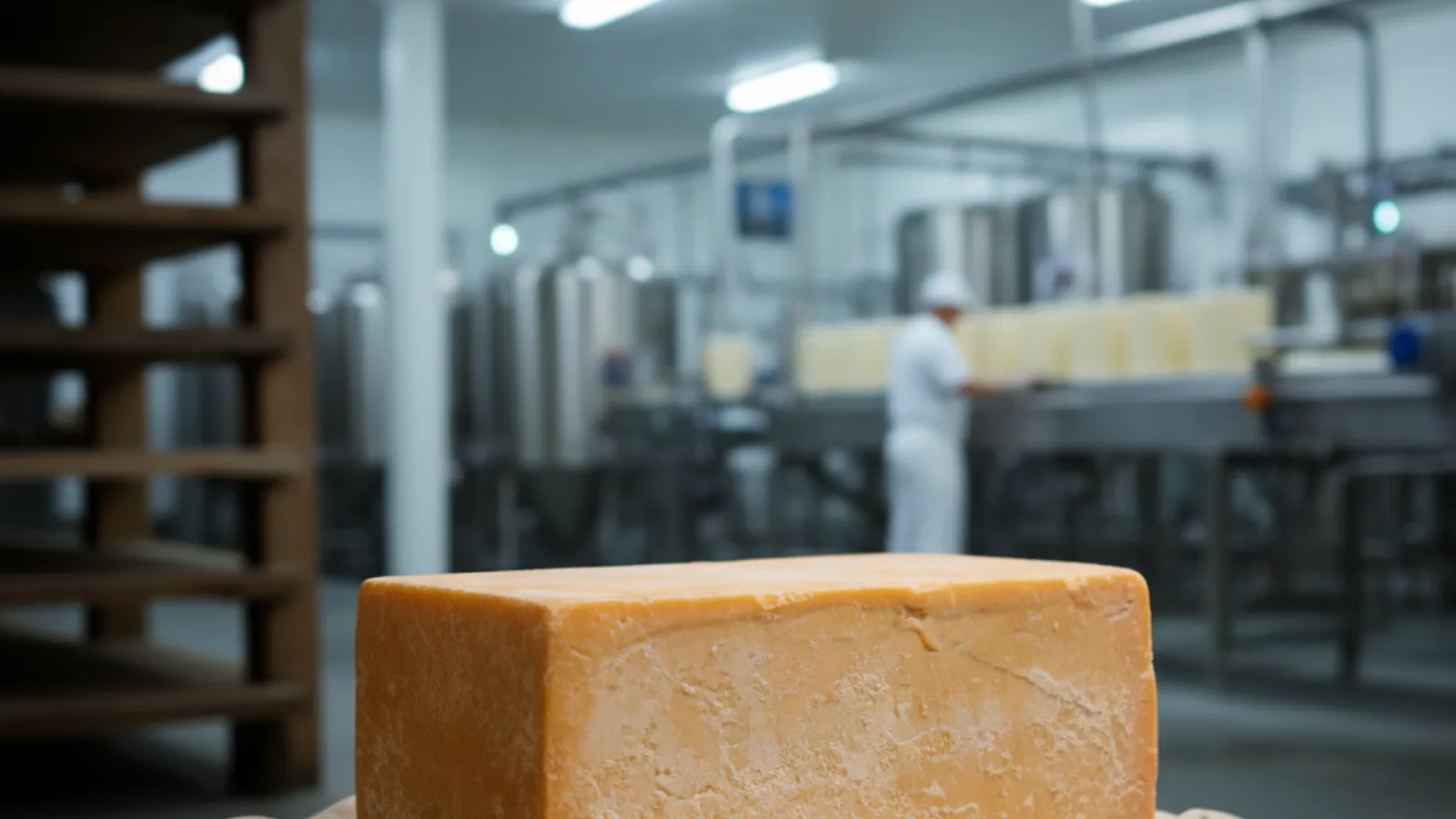
I had filed this as one small plant closing in Wisconsin. Then I saw the number behind it. US dairy makers are putting about $13 billion into new plants across 19 states. Foremost Farms says that new capacity is a reason its own plant has to go.
What Foremost Farms said
On 26 August the co-op said it will close its Marshfield, Wisconsin cheese plant in December. It will also stop making 40 lb block cheese for good. The plant dates from the 1950s and has 68 people. They were told on 24 August.
The reason given was plain. The co-op cited "increased US cheese production capacity and shifting consumer demand". A cheese maker has named the industry's building boom as a reason for a closure. That is rare, and it is worth reading twice.
The boom behind the closure
The $13 billion figure comes from the International Dairy Foods Association. It covers more than 50 projects due to open between 2025 and early 2028. Cheese takes the largest slice at $3.2 billion. New York leads with $2.8 billion, then Texas at $1.5 billion and Wisconsin at $1.1 billion.
The trade body expects the new plants to take 15 billion more pounds of milk a year by 2030. Wisconsin is both the third biggest builder and the state losing a cheese plant. New money and old closures sit in the same place.
Marshfield is the second co-op cheese closure of the summer. In June, Dairy Farmers of America said it would shut its St Albans plant in Vermont. About 80 jobs go there.
The price that makes the case
The cheese board tells the same story. On 2 September, 40 lb blocks closed at $1.475 a pound on the Chicago exchange. Barrels closed at $1.5325. Blocks usually sell above barrels, and right now they sell below them. The format Foremost is leaving is the one getting the worst price on the board.
Export prices point the same way. At the 1 September Global Dairy Trade auction, cheddar fell 6.6% to $3,503 a tonne. That is $1.59 a pound. The October contract dropped 12.4% to $3,185 a tonne, or about $1.44 a pound. Mozzarella held at $4,244 a tonne, up 0.3%.
So cheddar sold abroad for October now prices close to the Chicago block. The old plant sold into both markets. Neither is paying well.
Where the new cheese goes
The new plants were never built for the home block market. The US Dairy Export Council says more than 60% of new cheese made in the last two years went abroad. The boom is an export bet, and the export price of cheddar just fell 12% for October. Mozzarella, the pizza cheese, held its price. That is what the biggest new plants make.
Leprino's new complex in Lubbock, Texas makes mozzarella. Hilmar's plant in Dodge City, Kansas makes cheese and whey protein at scale. Bongards said in August it will spend $135 million to add 180 million pounds a year of process cheese. None of them is building a 40 lb cheddar block line.
Why co-ops close first
A co-op has to take its members' milk. It cannot cut supply the way a brand owner can. So when the board price falls, the weakest plant carries the loss. A 1950s plant with 68 people making a bulk block cannot stand next to a new export plant. Foremost has six other Wisconsin plants and one in Michigan. The milk will move to them.
What to read from it
Count the closures as well as the openings. The $13 billion is a gross figure. Nobody publishes the net. Watch the gap between blocks and barrels. When blocks stay below barrels, more block lines will close. Watch the October cheddar contract too. If it stays under $1.50 a pound, the export bet gets tested early.
One closure rarely moves a market on its own. What matters is whether the same pattern shows up in other states and in other cheese types. That is the level at which we build the Global Cheese Database 2026. It tracks production, imports, exports and demand for 39 cheese types in 48 countries, in tonnes. The 2026 edition is being built now, and the waitlist gives you a free sample country chapter.

Global Aseptic Packaging Market Report 2026
148.4bn litres and 344bn packs in 2025. Aseptic volumes across dairy, dairy alternatives, beverages and food in 39 markets — 2025 actuals and forecasts to 2030. Buy online and receive it within 24 hours.
More information
Global Cheese Database 2026
Production, imports, exports and consumption for 39 cheese types across 48 countries, with actuals through 2025 and forecasts to 2030. Join the waitlist for early access, pre-launch pricing and a free sample country chapter.
Get early accessStrategic Insights
📊 Analytics & Strategic Insight
Capacity announcements are counted. Closures are not.
The decision most in this industry are avoiding:
👉 Gross capacity is a press release. Net capacity is the market. Every new plant gets a headline. Closures get a short statement. The number that sets the price is the gap between them.
👉 The board price does the culling. Nobody decides which plant closes. Blocks under barrels decide it for them. The oldest bulk line goes first.
👉 Co-ops carry the milk, so co-ops carry the closures. A brand owner can buy less milk. A co-op cannot. Expect the next closures to come from co-ops too.
Here's the full context:
→ 2021: Hilmar announces its Dodge City, Kansas cheese plant. The plains building wave begins.
→ 2025: The International Dairy Foods Association counts more than $11 billion of dairy plant projects across 19 states.
→ June 2026: Dairy Farmers of America says it will close St Albans, Vermont. About 80 jobs go.
→ August 2026: The count rises to about $13 billion. Cheese is the largest slice at $3.2 billion.
→ Most recent: On 26 August Foremost Farms said Marshfield closes in December. It named new US cheese capacity as a reason.
What this means for cheese producers, traders and buyers:
✅ Price your plant against the newest one, never the oldest. The new export plants set the cost floor. Any line above it is living on borrowed time.
✅ Block cheddar is now the weak end of the board. Blocks below barrels is a signal. Move volume to mozzarella, process cheese or whey where you can.
✅ Exports carry the new capacity, so export prices set its return. A 12% fall in the October cheddar contract is a warning for every plant built to ship abroad.
3 moves you can make this week:
1️⃣ List every US block cheddar line you buy from or run. Rank them by age and by scale. The bottom of the list is where the next closure sits.
2️⃣ Track the block and barrel gap every week. Set a trigger. If blocks stay under barrels for a month, review your block contracts.
3️⃣ Map where the 15 billion extra pounds of milk will go. Do it by state and by cheese type. That map tells you who wins share by 2030.
The data behind this story
🧀 Global Cheese Database 2026
Production, imports, exports and consumption for 39 cheese types across 48 countries, in tonnes, with actuals to 2025 and forecasts to 2030. The 2026 edition is being built market by market. Waitlist members get the pre-launch price and a free sample country chapter.
→ Join the waitlist
Zenith Consulting
Submit your food & beverage project enquiry.
Share your requirements. If there is a strong fit, we’ll come back with an indicative investment range, project timeline and recommended strategic approach.
Reviewed by Zenith Consulting’s senior food & beverage strategy team.
Related analyses
- Market & Category Growth
UK Cheese Supplies Fall 6,900 Tonnes As Exports Hit A Q2 Record: Cheddar Milk Use Down 14 Million Litres
AHDB put UK available cheese supplies down 6,900 tonnes in the second quarter of 2026, while exports rose 8,000 tonnes to an all-time quarterly high. Defra figures show milk into Cheddar down 14.1 million litres in August alone.
Read analysis → - Health, Nutrition & Functional
Sports And Energy Drinks Reach 39,180 Million Litres, And Aseptic Filling Has Almost None Of It
Sports and energy drinks are the fastest growing group on the world drinks shelf at 39,180 million litres in 2025, up 7.2% a year since 2020. Zenith's Global Aseptic Packaging Market Report 2026 books just 100 million litres of the United States total as aseptic.
Read analysis → - Corporate Strategy & Portfolio
FDA Clears Salt Substitutes In 41 Cheese Standards, And The Last Sodium Push Moved The Median Just 3%
The FDA has opened 41 cheese standards to salt substitutes, with the rule effective 14 December 2026. The cheese part can still be objected to until 12 November, and the last US sodium push moved the median by 3%.
Read analysis →
Share it with your peers
Pass this analysis to colleagues who track the food and beverage market.
Zenith Market Intel
Need a specific food or beverage market report?
Tell us which category, region or question would be useful for your team.
Sister Publication
Also follow our Water Dispense Market Intelligence
Category analyses, operator briefings, and investor signals across the global water dispense market.