Novonesis Lifts West Allis Fermentation 66%: The Mozzarella Culture Behind America's Italian Cheese Growth
Novonesis has finished a three-phase build at West Allis that lifts fermentation capacity about 66%. The site makes Italian cheese cultures, and US Italian-type output is growing four times faster than cheddar.
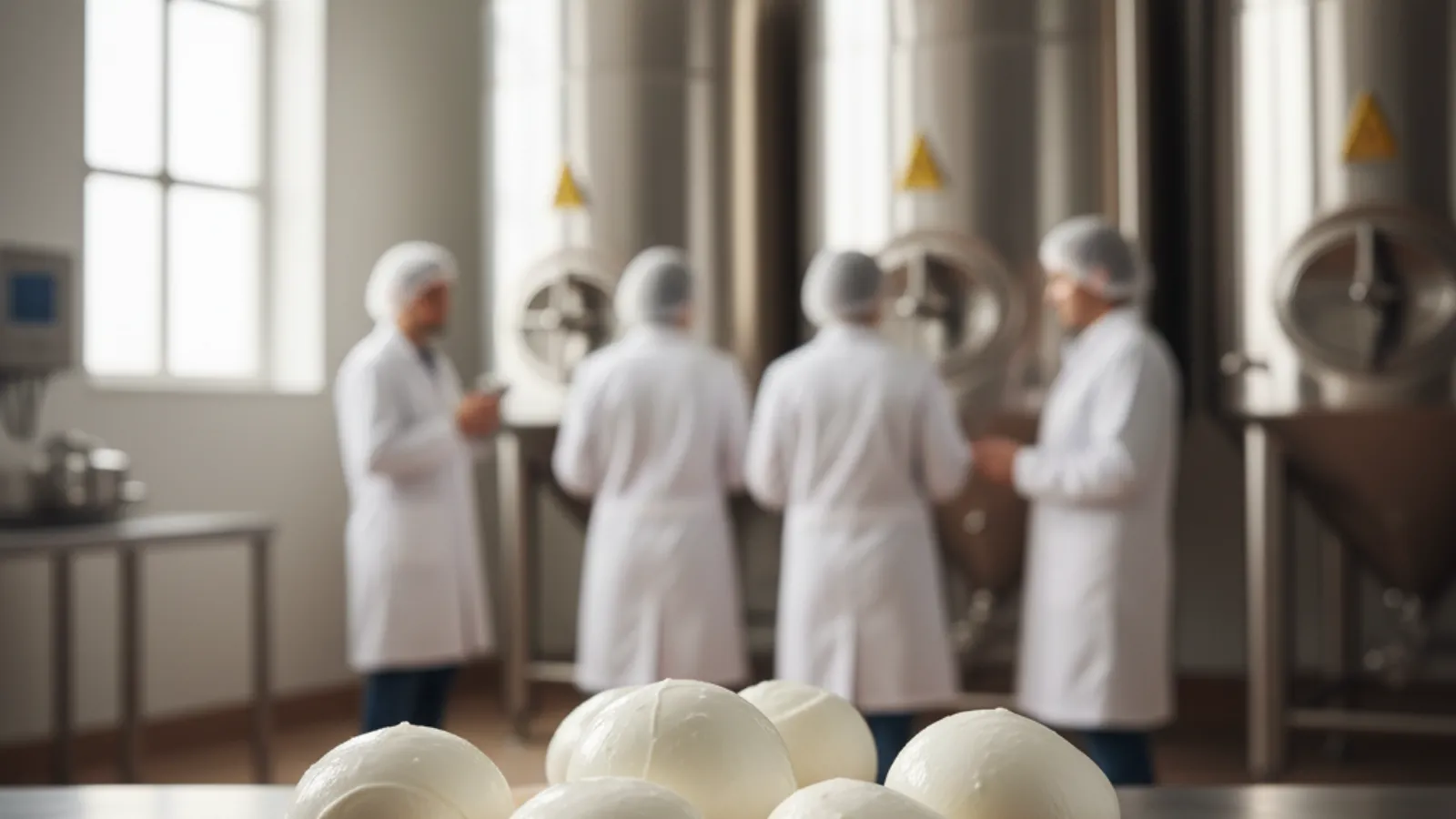
If this were my cheese plant, I would check one supply line before signing the build. It would be the culture, ahead of the milk. Novonesis has just finished a build in Wisconsin that lifts fermentation capacity by about 66%.
What Novonesis finished at West Allis
The company cut the ribbon on 25 September 2026 and confirmed the work on 28 September. Fermentation capacity at the site rises by about 66% and packaging capacity by 17%. Novonesis calls West Allis one of the largest lactobacillus production sites in the world. The plant employs 360 people. It opened in 1929.
A starter culture is the bacteria that turns milk into cheese. It sets the acid, the flavour and the texture. Get the strain wrong and the vat fails. Most plants run the same one for years.
Why the site matters to mozzarella
West Allis makes Italian cheese cultures, and mozzarella is its main job. One batch of culture pellets carries enough bacteria to make 10,000 pounds of cheese, on the plant's own account. Six fermentation tanks sit on the site. It can make more than 140 cultures and runs about 60 of them regularly.
Cheese makers buy these cultures as frozen pellets. They go straight into the vat. The site holds them at minus 67 degrees Fahrenheit before they ship. A 27,000 square foot freezer went in with the latest build.
The money behind the build
BizTimes put the spend at $165 million across three phases from 2021 to 2026. The first phase cost $25 million and the second cost $35 million. Novonesis has committed about $100 million more to the site by 2028 or early 2029. It also pledged another ten years of spending at West Allis.
Where the cheese growth actually is
USDA figures show the split clearly. Italian-type cheese output rose 4.1% in July 2026 to 551 million pounds. Cheddar fell 1.7% to 328.6 million pounds in the same month. Mozzarella alone reached 433.3 million pounds, up 2.9%. Across January to July, Italian-type output was up 4.2% while cheddar was down 0.1%.
The gap between the two blocks is wide. On those USDA totals, Italian-type output ran about 150 million pounds ahead of last year. Cheddar gave back a little ground. One block is pulling the whole US cheese number along.
Why culture supply is thin
Very few firms can make cheese cultures at this scale. Novonesis was formed in 2024 by joining Chr. Hansen and Novozymes, a deal worth $12.3 billion. It holds a library of more than 40,000 bacterial strains. A new culture takes one to two years to bring out. An enzyme can take ten.
Scale is the barrier here. Fermentation halls, strain libraries and cold rooms all take years and money. A new supplier cannot buy its way in quickly.
It takes close to ten kilos of milk to make one kilo of cheese. Novonesis also sells coagulants that lift the yield from that milk. A small gain there changes the milk bill on every vat a plant runs.
What this means for the market
Cheese plans model milk, vats and buyers. Few of them model whether the culture supply can follow the tonnage. An entrant should ask who supplies the strain, where it is fermented and how long a swap takes. Phage resistance ties a plant to one culture house for years. The harder a market leans on mozzarella, the tighter that tie becomes.
Sizing the mozzarella tonnage behind a build like this, market by market, is the harder job. Our Global Cheese Database 2026 counts 39 cheese types across 48 countries in tonnes, with forecasts to 2030. Mozzarella and cheddar sit apart, which is what shows where a culture plant should go.

Global Aseptic Packaging Market Report 2026
148.4bn litres and 344bn packs in 2025. Aseptic volumes across dairy, dairy alternatives, beverages and food in 39 markets — 2025 actuals and forecasts to 2030. Buy online and receive it within 24 hours.
More information
Global Cheese Database 2026
Production, imports, exports and consumption for 39 cheese types across 48 countries, with actuals through 2025 and forecasts to 2030. Join the waitlist for early access, pre-launch pricing and a free sample country chapter.
Get early accessStrategic Insights
📊 Analytics & Strategic Insight
The input that decides how fast a cheese market can grow
The decision most in this industry are avoiding:
👉 Culture is bought like a consumable and behaves like a constraint. A vat can be built in two years. A fermentation hall takes longer and costs more.
👉 Phage resistance is the real switching cost. A plant that changes culture house re-qualifies its whole make. Few teams price that before they sign.
👉 The growth is in Italian types, and so is the supply risk. The same cheeses that are growing fastest lean hardest on one Wisconsin site.
Here's the full context:
→ 1929: Chr. Hansen opened the West Allis site in Wisconsin.
→ 2021: A first phase added 20,000 square feet for $25 million.
→ 2023: A second phase added 81,000 square feet for $35 million.
→ 2024: Chr. Hansen and Novozymes joined to form Novonesis in a $12.3 billion deal.
→ Most recent: The third phase is finished. Fermentation capacity rises about 66%.
What this means for cheese producers, traders and buyers:
✅ Mozzarella makers get more headroom in North America. The culture behind the fastest growing cheese block now has 66% more fermentation behind it.
✅ Cheddar plants gain little from this build. US cheddar fell 1.7% in July. The money went where the volume is going.
✅ Buyers outside North America should ask where their pellets are made. A single large site shipping worldwide is a supply line worth mapping.
What this means for market decisions:
1️⃣ The US Italian cheese block is the one adding real tonnage. It grew 4.2% over seven months while cheddar stood still.
2️⃣ Novonesis is buying the growth ahead of its customers. Spending $165 million before the cheese arrives is a call on where the vats go next.
3️⃣ An entrant should test culture supply before milk supply. Milk can be sourced in most markets. A phage-stable strain for your make cannot.
The Zenith view:
This tells us that a culture maker believes North American Italian cheese keeps growing. It does not tell us the cheese tonnage will arrive on the same curve. What decides the case is how much mozzarella each market actually makes. It also matters how much of that a single supply line has to carry.
The data behind this story
🧀 Global Cheese Database 2026
Production, imports, exports and consumption for 39 cheese types across 48 countries, in tonnes, with actuals to 2025 and forecasts to 2030. The 2026 edition is being built market by market. Waitlist members get the pre-launch price and a free sample country chapter.
→ Join the waitlist
Evaluating a cheese market? Zenith helps food and beverage companies assess market size, growth, competitors, pricing and route to market before they invest.
→ Discuss your market
Zenith Consulting
Submit your food & beverage project enquiry.
Share your requirements. If there is a strong fit, we’ll come back with an indicative investment range, project timeline and recommended strategic approach.
Reviewed by Zenith Consulting’s senior food & beverage strategy team.
Related analyses
- Corporate Strategy & Portfolio
Oji Liquid Pak's USD 110 Million Vietnam Aseptic Carton Plant Adds 8 Billion Packs To A Region Already At 62 Billion
Oji Liquid Pak broke ground on a USD 110 million aseptic carton material plant in Dong Nai, rated at up to 8 billion packs a year from 2028. Zenith puts Vietnam at 10,358.7 million aseptic packs in 2025, and South East Asia already holds about 62 billion packs of documented converting capacity.
Read analysis → - Corporate Strategy & Portfolio
Spain Swaps HDPE Milk Bottles For Aseptic PET: 170 Million Litres Left And Only Three Aseptic PET Dairy Lines
Spanish UHT milk in large HDPE bottles fell from 307 million litres in 2020 to 170 million in 2025, and Zenith's model takes it to 88.5 million by 2030. Aseptic PET is taking the volume, and only three aseptic PET dairy lines have been documented in the country.
Read analysis → - Corporate Strategy & Portfolio
US Parmesan Output Jumps 25.9% While Cheddar Slips: Italian Cheese Takes Four In Five Pounds Of Growth
USDA figures published on 5 October show US Parmesan output up 25.9% in August while cheddar fell 0.9%. Italian types have supplied nearly four in every five pounds of US cheese growth so far in 2026.
Read analysis →
Share it with your peers
Pass this analysis to colleagues who track the food and beverage market.
Zenith Market Intel
Need a specific food or beverage market report?
Tell us which category, region or question would be useful for your team.
Sister Publication
Also follow our Water Dispense Market Intelligence
Category analyses, operator briefings, and investor signals across the global water dispense market.