Schreiber Foods Puts $267 Million Back Into Process Cheese: The American Cheese Pool It Draws On Is Flat
Schreiber Foods is building a $267 million process cheese plant in Carthage, Missouri, 17 months after shelving a $211 million project on the same site. American type cheese output fell 3% in 2024 and ran near flat in 2026, while Italian cheese grew 4.2%.
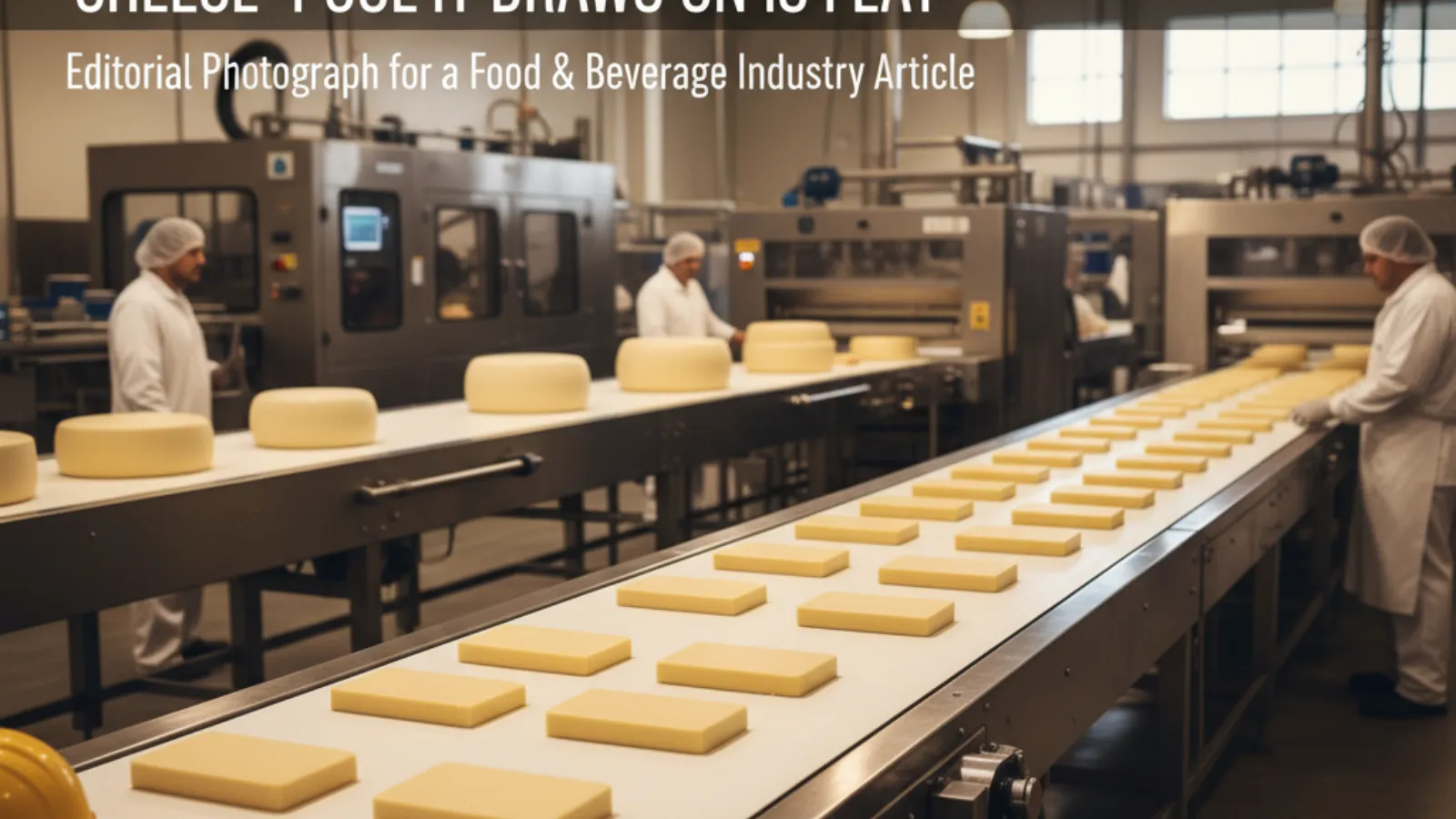
If this were my board paper, I would ask one thing before signing. Where does the cheese come from in 2028? Schreiber Foods has put $267 million into a new process cheese plant in Carthage, Missouri. The American cheese pool it draws on fell 3% in 2024 and is flat this year.
What Schreiber is building
The plant is new ground rather than a bolt-on. Schreiber announced it on 23 September. The $267 million site starts operations in 2028 and adds about 100 jobs. It goes up next to the firm's own distribution centre on Hazel Avenue. Schreiber has been in Carthage since 1950 and employs more than 1,300 people there. Jason Stephens, who runs the US business, said the firm still sees room in process cheese.
The project came back bigger
This site has a history. Schreiber announced a $211 million plant here in December 2024. That version carried 150 jobs and 168,000 square feet. The firm put the work on hold in April 2025. The plan is back 17 months later at $267 million, with a third fewer jobs. Carthage put the figure at $267.65 million when it approved the bonds.
That swap is the whole story in one line. Roughly $1.4 million of capital sat behind each new job in 2024. The 2026 plan carries about $2.7 million behind each one. Job counts are a poor guide to output, and the two designs may differ in scope. The firm told the city the new one carries more machines.
The pool it draws on
Process cheese starts as American type cheese. USDA had that pool at 5.58 billion pounds in 2024, down 3% on 2023. Total US cheese output rose that year, so the fall sits inside the American block alone. The 2026 prints say the same thing. American type ran at 3.4 billion pounds in the seven months to July, near flat.
The growth moved to another vat. Italian cheese output rose 4.2% in the seven months to July. Mozzarella alone reached 2.96 billion pounds, up 2.4%. Cheddar fell 0.1% over the period and dropped 1.7% in July. Total cheese grew 2.4% while the block used for slices went nowhere. Cream cheese, another Schreiber line, rose 9.5% in July.
Barrels above blocks again
The price signal points the same way. Barrel cheese is what slices and loaves are made from. Barrels closed at $1.4525 a pound in Chicago on 18 September. Blocks closed at $1.3500, so barrels held a 10 cent premium. Both grades gave up about five cents over that week. The tighter half of the US cheese market is the process cheese half.
Two plants land in 2028
Schreiber is not alone in this. Bongards' Creameries committed $135 million in August to its Minnesota process cheese plant. That project adds 180 million pounds a year from early 2028. Both plants arrive in the same year, into the one part of the cheese pool that has stopped growing. Bongards named four outlets for the volume: foodservice, retail, industrial ingredient and export.
What this means for the market
Market size is the wrong first question here. The US process cheese pool is flat, so new tonnes have to come off someone else's line. The likely donors are older plants and smaller slicers. Cost position decides that fight, and machines are how Schreiber has answered it. An entrant should check two things. First, whether the target buyer is retail or foodservice, because only retail carries label risk. Second, whether barrel supply near the site holds up once both plants run.
For anyone weighing process cheese capacity, the decision rests on whose tonnes the new lines take. The Global Cheese Database 2026 separates processed formats from natural cheese across 48 markets, in tonnes. It also splits ingredient use from what shoppers eat. A waitlist is open, with a free sample country chapter.

Global Aseptic Packaging Market Report 2026
148.4bn litres and 344bn packs in 2025. Aseptic volumes across dairy, dairy alternatives, beverages and food in 39 markets — 2025 actuals and forecasts to 2030. Buy online and receive it within 24 hours.
More information
Global Cheese Database 2026
Production, imports, exports and consumption for 39 cheese types across 48 countries, with actuals through 2025 and forecasts to 2030. Join the waitlist for early access, pre-launch pricing and a free sample country chapter.
Get early accessStrategic Insights
📊 Analytics & Strategic Insight
The money went back into the one part of the US cheese pool that stopped growing
The decision most in this industry are avoiding:
👉 The falling job count is the number to read. Capital rose 27% and the job count fell by a third. This plant is built to a cost rather than to a demand forecast.
👉 Process cheese capacity is arriving into a flat block. American type output fell 3% in 2024 and ran near flat in 2026. Italian cheese took the growth instead.
👉 Barrels are dearer than blocks right now. Barrels closed at $1.4525 a pound on 18 September against $1.3500 for blocks. The slice trade is bidding up its own raw material.
Here's the full context:
→ December 2024: Schreiber announced a $211 million process cheese plant in Carthage, with 150 jobs.
→ April 2025: The firm put that project on indefinite hold, blaming changed business conditions.
→ August 2026: Bongards' Creameries committed $135 million for 180 million more pounds of process cheese.
→ September 2026: Carthage approved bonds for a revised project worth $267.65 million.
→ Most recent: Schreiber confirmed the plant on 23 September. Operations begin in 2028 with about 100 jobs.
What this means for cheese producers, traders and buyers:
✅ The American block is where the squeeze lands. USDA had that pool at 5.58 billion pounds in 2024, down 3%. Two new process cheese plants draw on it from 2028.
✅ Slice demand and cheddar demand are pulling apart. Cheddar output fell 0.1% in the seven months to July. Italian cheese rose 4.2% over the same months.
✅ Machines are the cost answer on show here. Schreiber added $56 million of capital and dropped 50 planned jobs. Rivals running older lines will be measured against that.
What this means for market decisions:
1️⃣ A flat pool makes this a share plan rather than a growth plan. New tonnes have to come off someone else's line. Treat headline US cheese growth as a poor guide here.
2️⃣ The cost leaders in slices are being reset this cycle. Schreiber and Bongards both start up in 2028. Older process cheese lines will carry the adjustment.
3️⃣ An entrant should price barrel supply before capacity. Barrels already trade above blocks. Two new plants drawing on the same milk shed will test that.
The Zenith view:
Schreiber's return proves that process cheese still earns capital. It does not prove that the category is growing. What decides the investment case is whether the new tonnes find fresh buyers, or simply displace older American cheese lines.
The data behind this story
🧀 Global Cheese Database 2026
Production, imports, exports and consumption for 39 cheese types across 48 countries, in tonnes, with actuals to 2025 and forecasts to 2030. The 2026 edition is being built market by market. Waitlist members get the pre-launch price and a free sample country chapter.
→ Join the waitlist
Evaluating the US process cheese market? Zenith helps food and beverage companies assess market size, growth, competitors, pricing and route to market before they invest.
→ Discuss your market
Zenith Consulting
Submit your food & beverage project enquiry.
Share your requirements. If there is a strong fit, we’ll come back with an indicative investment range, project timeline and recommended strategic approach.
Reviewed by Zenith Consulting’s senior food & beverage strategy team.
Related analyses
- Market & Category Growth
US Cheese Ships At $2.01 A Pound And Lands At $4.10: USTR Opens Its Trade Barrier List To Cheese Exporters
US cheese exports hit a record 143.6 million pounds in July and 943.7 million pounds in the seven months to July. USTR has opened its annual barrier list until 29 October, and the buckets that cost cheese volume are not the tariff ones.
Read analysis → - Market & Category Growth
US Cheese Warning Labels Move Closer: Bongards Adds 180 Million Pounds Of Process Cheese Anyway
A US Senate committee has advanced a bill that would put a front-of-pack warning on whole milk, all cheese and most yogurt. Bongards is still spending $135 million on 180 million pounds more process cheese, and the channel split explains why.
Read analysis → - Market & Category Growth
Tetra Pak Takes Tetra Recart Into Chinese Dessert Soups: World Aseptic Food Is Stuck At 8.3 Billion Litres
Tetra Pak and Shanghai Meilin have put two ready-to-eat dessert soups into Tetra Recart, a carton that is sterilised after filling rather than aseptically filled. Zenith's Global Aseptic Packaging Market Report 2026 puts world aseptic food at 8,286 million litres in 2025, 5.6% of world aseptic volume, and flat to 2030.
Read analysis →
Share it with your peers
Pass this analysis to colleagues who track the food and beverage market.
Zenith Market Intel
Need a specific food or beverage market report?
Tell us which category, region or question would be useful for your team.
Sister Publication
Also follow our Water Dispense Market Intelligence
Category analyses, operator briefings, and investor signals across the global water dispense market.