FSSAI Hits Nestle, PepsiCo, Coca-Cola and Danone With 150 Label Notices as India Pulls the Energy Drink Name
India's food watchdog has issued more than 150 notices over misleading ads, false claims and label breaches, naming 13 of the largest food and drink owners. At the same time it has given drinks makers 90 days to strip the words energy drink off the can, and it will not extend the date.
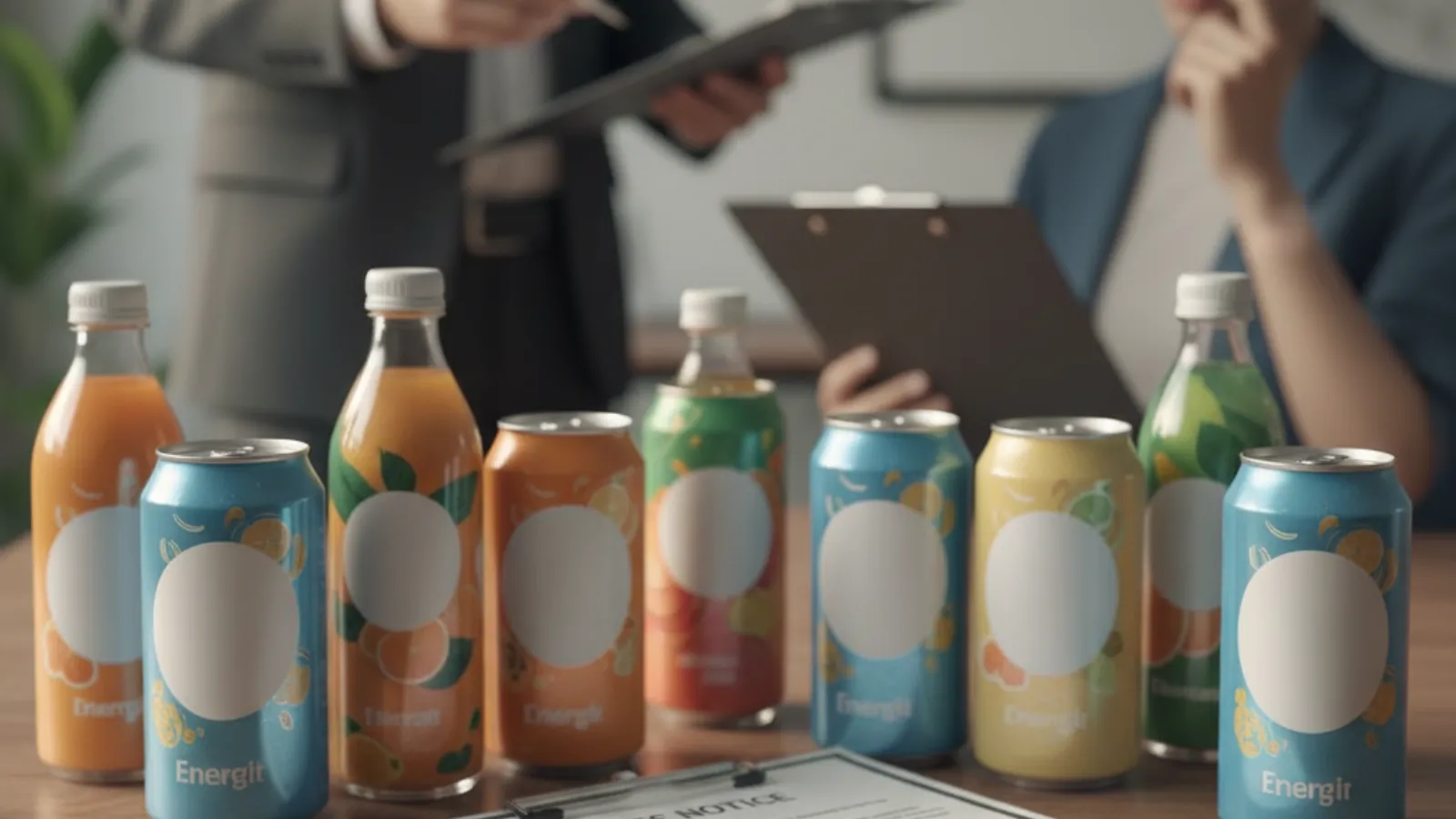
I had this filed as one more label row. Then I looked at the clock. India gave drinks firms 90 days to strip two words off the can.
The Indian food watchdog is the Food Safety and Standards Authority, or FSSAI. On Saturday it said it has issued more than 150 notices to food firms in recent months. They cover misleading adverts, false claims and broken label rules. The watchdog named 13 of the biggest owners in a single public post.
The list reads like a roll call of the trade. Nestle India, PepsiCo, Coca-Cola India and Danone India are on it. So are Mondelez India, Ferrero India, Red Bull India and Monster Energy India. Hell Energy, Abbott India, Diageo, Pernod Ricard and Kenvue follow.
The action runs past the brand owners
FSSAI also sent 12 notices to Amazon and Flipkart. One Amazon warehouse licence was cancelled. More than 30 notices went to food service chains such as KFC, McDonald's, Pizza Hut, Domino's and Costa Coffee. Five Domino's licences were suspended.
That spread matters more than the count. The watchdog is working the whole chain at once. It is hitting the brand owner, the shop, the platform and the kitchen. A firm can fix its own pack and still lose sales where the pack is sold.
The bigger cost is the word itself
In July FSSAI told drinks makers to drop the term energy drink from high caffeine products. Reuters reported that notices went to PepsiCo, Red Bull, Monster Beverage, Reliance and Hell Energy. No Indian standard exists for the term, so the term goes. The firms were given 90 days to change packs.
This is a different order of risk from a fine. A brand can lose the name of a whole drinks type it did not invent. Red Bull built that shelf. Pepsi built the volume under it with Sting from 2017, at 20 rupees a bottle. Euromonitor data cited by Reuters puts Indian sales at 907 million litres last year. It has the market growing about 12.6 per cent a year, faster than the United States or China.
Why the date will not move
The trade asked for a year. On 8 August an official told Reuters the answer is no. States had told FSSAI that current stock can sell through in 60 to 90 days. The watchdog also said firms could not show where their stock was held. That answer cost them the case.
The FSSAI chief, Rajit Punhani, told bosses to go to court if they wanted to fight the order. Some states are not waiting. Rajasthan seized thousands of units of Sting, Campa Energy and Red Bull. The food safety office in Ladakh told Reuters it will seize stock too.
The courts are pulling the same way
On 13 August the Supreme Court faulted FSSAI over its delay on front of pack warning labels. The case covers products high in sugar, salt and fat. The bench said there is heavy pressure from big firms and that the watchdog is giving in to it. The court reads the watchdog as too soft rather than too hard.
Courts do cut both ways here. The Delhi High Court stayed an FSSAI order on Dabur and its 100 per cent claims. FSSAI also pulled an order against a United Spirits site after a legal challenge. So single orders can fall. The direction of travel does not.
What this means for the next two years
India is one of the few big markets still adding real volume for large food and drink groups. In India the words on the pack are now a licence risk. Claims that pass in Europe or the United States can fail here on a rule that exists nowhere else. Brand names, pack claims and shelf language now need a local check before launch rather than after.
Buyers should read this into price. Any Indian drinks asset with a name tied to that shelf carries a live cost. Any brand with a health claim on the front carries a second one. Plan the label before you plan the launch.

Global Aseptic Packaging Market Report 2026
148.4bn litres and 344bn packs in 2025. Aseptic volumes across dairy, dairy alternatives, beverages and food in 39 markets — 2025 actuals and forecasts to 2030. Buy online and receive it within 24 hours.
More information
Global Cheese Database 2026
Production, imports, exports and consumption for 39 cheese types across 48 countries, with actuals through 2025 and forecasts to 2030. Join the waitlist for early access, pre-launch pricing and a free sample country chapter.
Get early accessStrategic Insights
📊 Analytics & Strategic Insight
India is repricing the claim on the front of the pack
The decision most in this industry are avoiding:
👉 The name on the pack is rented, and not owned. Most teams treat a shelf name as their own asset. In India it is granted by a rule, and that rule can move in 90 days.
👉 The legal check sits too late in the launch plan. Most groups test the claim after the pack is signed off. That order is backwards in a market that is still writing its rules.
👉 Stock tracking is now a legal defence. FSSAI refused more time in part because firms could not say where their stock sat. Weak tracking cost the trade nine months of grace.
Here's the full context:
→ 2017: Pepsi launches Sting in India at 20 rupees a bottle, and the high caffeine shelf grows fast.
→ 6 July 2026: The Indian Beverage Association writes to FSSAI, and warns of harm to brands and supply.
→ July 2026: FSSAI gives makers 90 days to drop the term energy drink from high caffeine packs.
→ 8 August 2026: FSSAI refuses to stretch that deadline to a year, and states begin to seize stock.
→ Most recent: On 22 August FSSAI says it has issued over 150 notices, and names 13 major owners.
What this means for food and beverage operators and investors:
✅ India risk is now a brand risk as much as a supply one. The pack, the claim and the shelf name are all in play. Model a repack cost for every Indian line you own.
✅ Global claim libraries need an Indian branch. A claim cleared in Europe or the United States can still fail here. Build the Indian rule set as its own file, and check it first.
✅ Deal price should carry a label clause. Any Indian target with claims on the front of the pack needs a fresh check. Ask for the notice history before you agree a price.
3 moves you can make this week:
1️⃣ List every claim on every Indian pack you sell. Mark the ones backed by a test result or a written rule. Anything unmarked is a live risk.
2️⃣ Find out where your Indian stock sits, by state. That single answer decides how long a change window you get. It also decides your write off.
3️⃣ Draft the plain name now, before you are told to. Test a version of your pack with the disputed word removed. The firms that do this early will keep the shelf space.
Take the Next Step
🧭 Facing a decision like this in your own category?
Describe it in a few lines. Selected enquiries receive an initial strategic assessment: direction, likely scope and indicative investment range.
→ Start a project enquiry
Zenith Consulting
Submit your food & beverage project enquiry.
Share your requirements. If there is a strong fit, we’ll come back with an indicative investment range, project timeline and recommended strategic approach.
Reviewed by Zenith Consulting’s senior food & beverage strategy team.
Related analyses
- Health, Nutrition & Functional
Dreher Adds A 12,000 Carton An Hour Elopak Aseptic Line Into A German Juice Market Down To 1,915 Million Litres
Dreher Group has started filling its own aseptic cartons at Stockach on an Elopak E-PS120AH running up to 12,000 cartons an hour. It joins a German market where Zenith's own data shows aseptic volume falling 2.6% a year and juices and nectars down to 1,915 million litres.
Read analysis → - Health, Nutrition & Functional
SIG Targets 85% Paper In Aseptic Cartons: Aluminium-Free Still Has Enormous Room To Scale
SIG says it is working towards 85% paper content in its aseptic cartons, with polymer and fibre barriers doing the work aluminium used to do. Set against the 344 billion aseptic packs filled worldwide in 2025, the aluminium-free carton is still a rounding error.
Read analysis → - Health, Nutrition & Functional
Saputo Creates A Dairy Ingredients Division: Cheese Plants Are Now Judged On Their Whey
Saputo has split dairy ingredients into its own division under Steve Douglas. US cheese output rose 2.1% in July while whey protein concentrate output fell 2.3%.
Read analysis →
Share it with your peers
Pass this analysis to colleagues who track the food and beverage market.
Zenith Market Intel
Need a specific food or beverage market report?
Tell us which category, region or question would be useful for your team.
Sister Publication
Also follow our Water Dispense Market Intelligence
Category analyses, operator briefings, and investor signals across the global water dispense market.