Lotus Bakeries Bets €500m on Biscoff Plants While Nestlé Shuts a Chocolate Factory
Lotus Bakeries will spend at least €500m on three Biscoff plants by 2030, a sum worth more than a third of its 2025 sales. Weeks earlier Nestlé confirmed it will close a chocolate plant in Hungary, and the split between the two comes down to how many weeks a year a line runs.
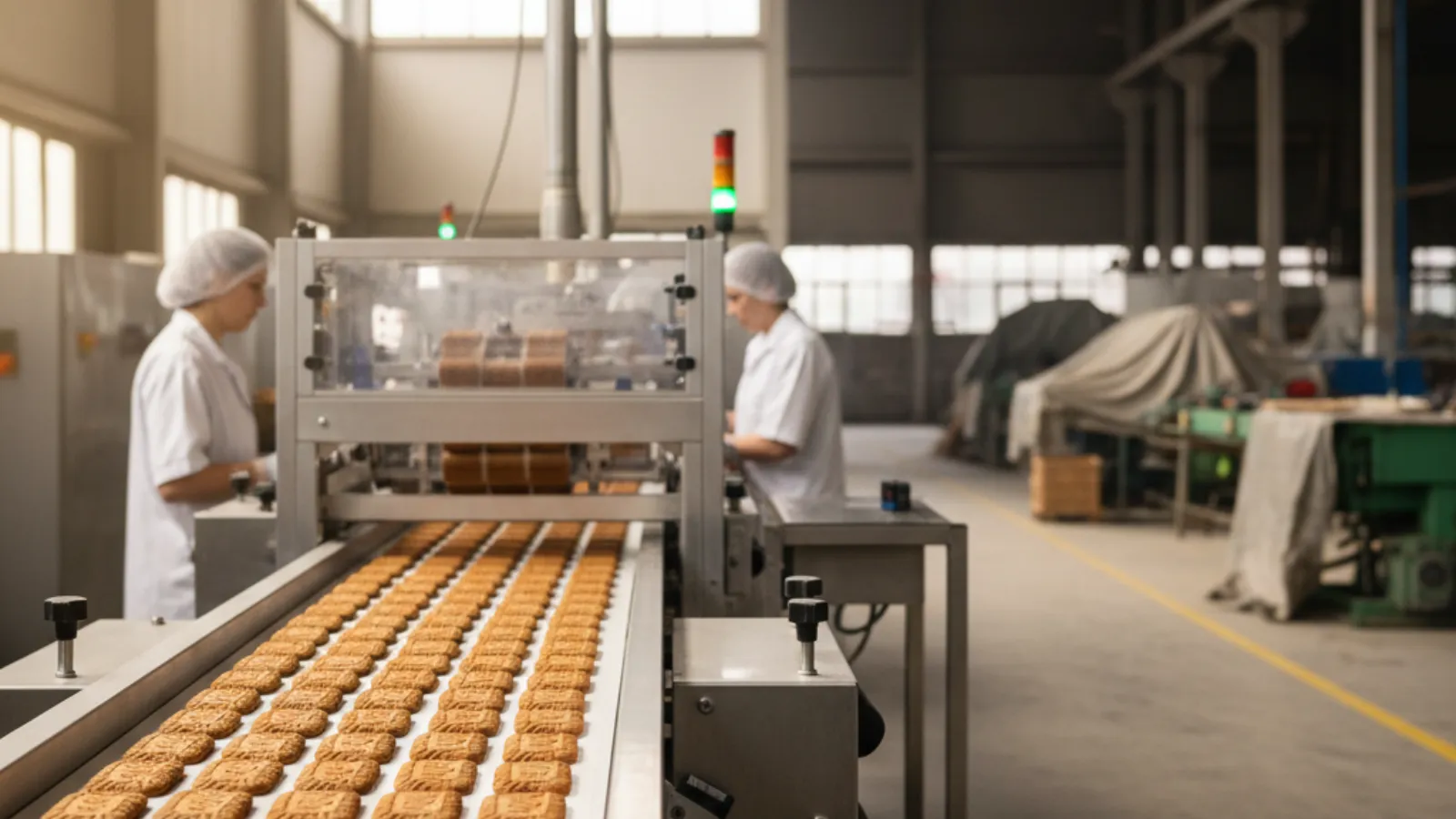
Two plans landed weeks apart. On 21 July, Nestlé said it will close its chocolate plant in Diósgyőr, Hungary, by the end of the year. On 7 August, Lotus Bakeries said it will spend at least €500m on three Biscoff plants by 2030. One firm is shutting a plant. The other is building three.
The Lotus number is large for a firm of its size. €500m is worth more than a third of the group's entire 2025 sales. It is the biggest spend in the firm's history. All of it sits behind one brand.
Price rises do not fill a new plant
Lotus reported first-half 2026 sales of €749.1m, up 14%. Net profit rose 23.5% to €98.1m. Trading profit rose 19.4% to €131m. Biscoff sales and Biscoff volume both grew by more than a fifth.
That second number is what pays for the plants. Most food and drink majors grew this year by charging more while moving fewer packs. Lindt grew on price with volume falling. Mondelez took European pricing negative in the second quarter. Unilever's foods volume fell. You can raise a price in a week. Filling a new line takes years of real demand.
Biscoff is now among the five biggest biscuit brands in the world by shop sales. More than 13 billion were eaten across 70 markets last year. It is over half of everything Lotus sells. In the US it is the fastest-growing brand in both biscuits and spreads. More than one in ten American homes now buys it.
Lotus owns the biscuit and rents the rest
The €500m buys plants for two products only: the biscuit and the spread. Everything else that carries the Biscoff name is made by someone else. Mondelez makes the co-branded bars under Cadbury, Milka and Côte d'Or. This year it added Toblerone, Suchard, Freia and Marabou. Froneri makes the ice cream, now in 13 European markets, with Australia and New Zealand due late this year.
Mondelez also makes and sells Biscoff inside India. That cut out the import cost that had kept the brand a premium niche there. Chief Executive Jan Boone wants to copy that model in Brazil. He calls it "too important a country to remain niche for Biscoff". A family-run Belgian firm is using the world's largest biscuit maker as its plant network.
What the Hungarian plant could not do
The Diósgyőr site made hollow chocolate figures for Smarties, KitKat and Milkybar, and shipped them to more than 20 markets. It was still too small to keep. The site was worth under 3% of Nestlé's Hungarian sales and 0.4% of its output there. It sold hard for a few weeks around Easter and Christmas, then sat quiet.
Trade press has called the closure the first of many. The read is simple. Cocoa, sugar and energy all cost more now. A line that runs a few weeks a year cannot carry its own fixed cost. A line that runs every week can.
The bill and the wait
Lotus has told the market it will spend more than €250m in 2026 and 2027 alone. The new hall in Lembeke, Belgium is being built. Lotus calls that site the largest single-product biscuit plant in Europe. In Thailand, the first new line at Chonburi is due before the end of 2027. The US hall in Mebane, North Carolina only comes online in mid-2028, with full output in 2029.
So Lotus is betting demand holds for three more years while the concrete sets. Two risks sit against that. Own-label biscuit spreads are already on shelf in most European grocers. And Biscoff is sugar, refined flour and palm oil. That puts it in the path of every rule now being written on processed food.
What this sets up
For anyone weighing where to put plant money, the test on show here is worth copying. Lotus sorts its lines by how many weeks a year they run. It builds only the ones it can keep busy. Build what runs all year. Rent the rest.
For buyers and backers, the licensing model is the sharper lesson. Lotus keeps the brand and the two products it makes best. It hands chocolate, ice cream and India to partners whose plants are already standing. Reach arrived without the cost of owning every line that carries the name.
Watch three things from here. Whether Brazil gets the India treatment. Whether own-label spreads slow the volume line before 2029. And whether any other mid-sized brand owner copies the split: own the core, rent the rest.

Global Aseptic Packaging Market Report 2026
148.4bn litres and 344bn packs in 2025. Aseptic volumes across dairy, dairy alternatives, beverages and food in 39 markets — 2025 actuals and forecasts to 2030. Buy online and receive it within 24 hours.
More information
Global Cheese Database 2026
Production, imports, exports and consumption for 39 cheese types across 48 countries, with actuals through 2025 and forecasts to 2030. Join the waitlist for early access, pre-launch pricing and a free sample country chapter.
Get early accessStrategic Insights
📊 Analytics & Strategic Insight
The plant you can keep busy is worth more than the plant you own
The decision most in this industry are avoiding:
👉 Sorting plants by size hides the real problem. A big line that runs twelve weeks a year costs more per pack than a small line that runs fifty.
👉 Few brand owners will say out loud which of their lines sit half idle. That number lives in plant reports and seldom reaches the board pack.
👉 Renting a rival's plant feels like weakness and reads like sense. Lotus hands chocolate and ice cream to Mondelez and Froneri. Its own money goes to the two lines it can keep busy.
Here's the full context:
→ 1932: Jan Boone Senior bakes the first Lotus biscuit in Lembeke, Belgium.
→ June 2024: Lotus and Mondelez sign a deal to put Biscoff inside Cadbury, Milka and Côte d'Or.
→ January 2026: a viral cheesecake recipe pushes UK Biscoff volume up 30% in a single week.
→ 21 July 2026: Nestlé says it will close its Diósgyőr chocolate plant in Hungary by year end.
→ Most recent: on 7 August Lotus puts at least €500m behind three Biscoff plants to 2030. Over €250m lands in 2026 and 2027.
What this means for food and beverage operators and investors:
✅ Volume growth is what pays for new plants. Price-led growth funds a dividend. It will not fill a line.
✅ A brand that travels into other firms' plants grows faster than its own build. Biscoff reached chocolate, ice cream and India without Lotus laying a brick.
✅ Weeks per year is now a closure test. Any site tied to Easter or Christmas alone needs re-pricing. Use today's cocoa and energy cost before the next budget round.
3 moves you can make this week:
1️⃣ Rank every line you own by weeks run last year. Put the bottom quarter on one page beside its fixed cost.
2️⃣ List the aisles your brand already sells into through someone else's plant. If the answer is none, you are paying to build reach a licence could rent.
3️⃣ Price your Easter and Christmas lines at today's cocoa cost. If they only work at last year's cost, decide now rather than in October.
Take the Next Step
🎯 This is the thinking we bring to client projects.
If today's topic touches a decision on your desk this quarter, start the conversation before the window closes.
→ Start the conversation
Zenith Consulting
Submit your food & beverage project enquiry.
Share your requirements. If there is a strong fit, we’ll come back with an indicative investment range, project timeline and recommended strategic approach.
Reviewed by Zenith Consulting’s senior food & beverage strategy team.
Related analyses
- Corporate Strategy & Portfolio
Oji Liquid Pak's USD 110 Million Vietnam Aseptic Carton Plant Adds 8 Billion Packs To A Region Already At 62 Billion
Oji Liquid Pak broke ground on a USD 110 million aseptic carton material plant in Dong Nai, rated at up to 8 billion packs a year from 2028. Zenith puts Vietnam at 10,358.7 million aseptic packs in 2025, and South East Asia already holds about 62 billion packs of documented converting capacity.
Read analysis → - Corporate Strategy & Portfolio
Spain Swaps HDPE Milk Bottles For Aseptic PET: 170 Million Litres Left And Only Three Aseptic PET Dairy Lines
Spanish UHT milk in large HDPE bottles fell from 307 million litres in 2020 to 170 million in 2025, and Zenith's model takes it to 88.5 million by 2030. Aseptic PET is taking the volume, and only three aseptic PET dairy lines have been documented in the country.
Read analysis → - Corporate Strategy & Portfolio
US Parmesan Output Jumps 25.9% While Cheddar Slips: Italian Cheese Takes Four In Five Pounds Of Growth
USDA figures published on 5 October show US Parmesan output up 25.9% in August while cheddar fell 0.9%. Italian types have supplied nearly four in every five pounds of US cheese growth so far in 2026.
Read analysis →
Share it with your peers
Pass this analysis to colleagues who track the food and beverage market.
Zenith Market Intel
Need a specific food or beverage market report?
Tell us which category, region or question would be useful for your team.
Sister Publication
Also follow our Water Dispense Market Intelligence
Category analyses, operator briefings, and investor signals across the global water dispense market.