Bisleri Faces FSSAI Prosecution Over One Goa Bottled Water Sample As India Tests Other Packaged Water Brands
India's food regulator has sanctioned prosecution against Bisleri over one bottled water sample from its Goa plant, and other packaged water brands are now being tested. Bisleri disputes the finding and says its water is safe to drink.
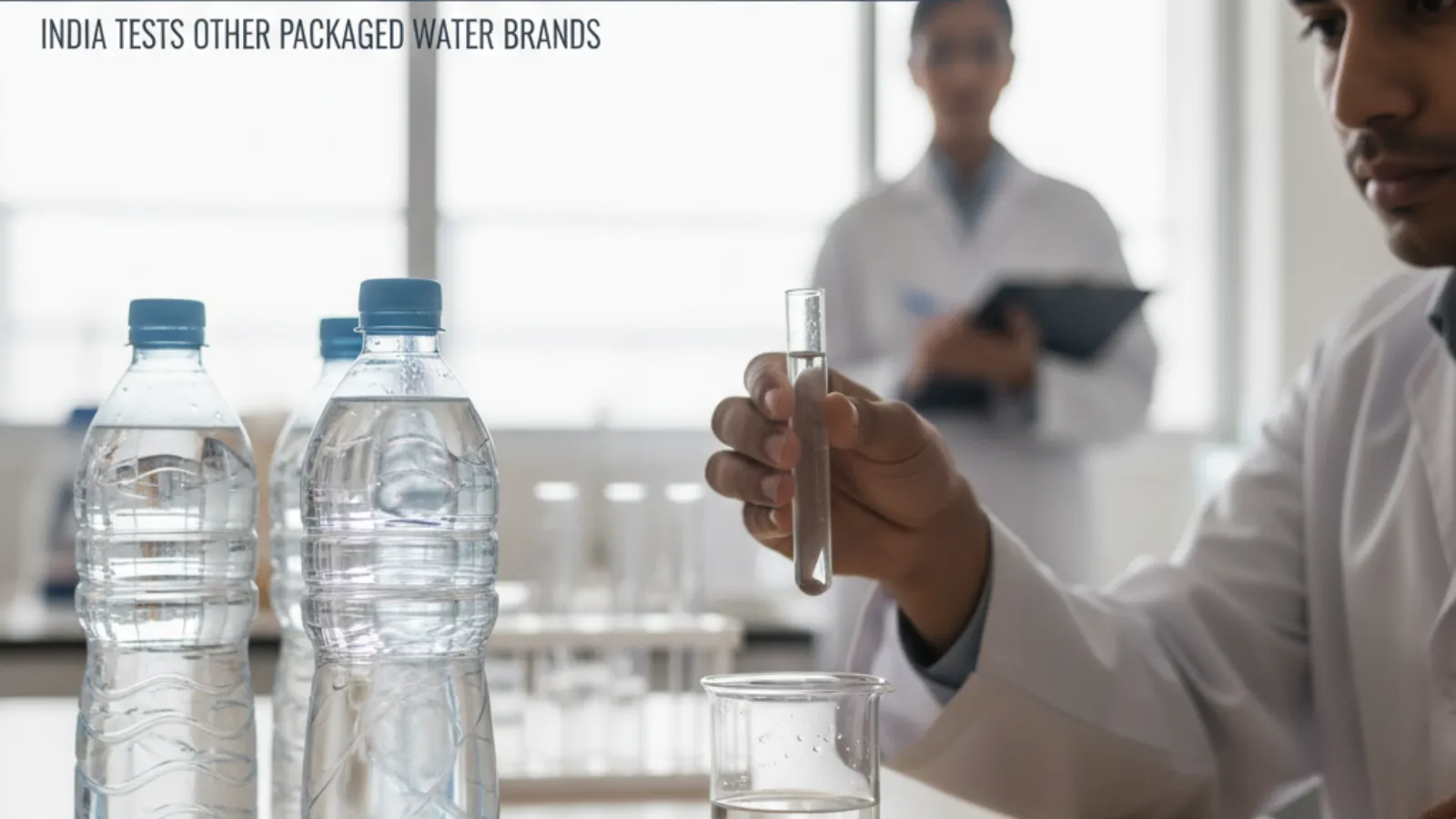
What is one batch worth to a water brand that runs 143 plants? I keep asking that this week. In bottled water, a lab report sets the answer, and that report can come back to you 14 months later.
India's Food Safety and Standards Authority (FSSAI) moved against Bisleri International on Sunday 22 November 2026. It said it had granted sanction to prosecute under the Food Safety and Standards Act, 2006. The case rests on one sample from Bisleri's plant in Goa. The first test put bromate at 12 micrograms per litre, against a limit of 10.
What the regulator says
According to ANI wire reports, FSSAI found the sample outside the bromate limit and declared it unsafe under the Act. A referral lab then also declared it unsafe, this time because it found polynuclear aromatic hydrocarbons (PAHs). The reports read for this article give no bromate figure from the referral lab.
Open Magazine points out that a sanction to prosecute is not a court ruling. The next step now sits with the courts.
What Bisleri says
Bisleri gave its side on Monday 23 November. It says FSSAI took six samples at the Goa plant on 30 September 2025, and five met every standard. Only the sixth, from a September 2025 batch, went over the bromate limit, by 2 micrograms per litre.
The company says it challenged the result on 22 November 2025. It says the referral lab found bromate within the limit but found PAHs. A second FSSAI-approved lab also found bromate within the limit, it says. It sent those results to the FSSAI Western Regional Office in a letter dated 2 February 2026. "We received no further communication from FSSAI after that submission," Bisleri said, as reported by Business Standard. It says it has had no notice of the case and will use the regulatory process. It also points to more than 90 quality tests across a 10-step process.
Why one sample can move a whole brand
Bromate can form when water with natural bromide is disinfected with ozone, Open Magazine explains. That places the cause inside the treatment step, where the bottler has full control.
For a brand with 143 plants, one sample from one site can now set the headline for all of them. Shoppers rarely look at a plant code. They see the brand name. So the cost of a water safety case spreads far wider than the batch.
The timing matters too. The sample was taken in September 2025 and the sanction came in November 2026, about 14 months later. A water firm can close a file in its own records. It can still meet that file again a year later.
The rest of India's packaged water is next
Sources told ANI that samples have been taken from other packaged drinking water brands across India. They are already being tested. Inspections and checks will go on. Asianet Newsable also reports that FSSAI is watching labels that copy the names or look of known water brands.
The checks now reach the whole category, so every bottler in India needs its test files in order now. For lookalike labels, the label itself is now part of the risk.
What this means for the world's packaged water
The stakes are large. Zenith Global Commercial's Global Water Database 2026 puts world plain packaged water at 322.6 billion litres in 2025. Shoppers paid US$211 billion for it. Volume grew 4.5% a year from 2020 to 2025, and the database forecasts 354.7 billion litres by 2030.
Growth at that pace means more plants, more sources and more batches, and each one brings a fresh test result. India now shows how a regulator can respond as that volume climbs. Here the trigger was a gap of 2 micrograms per litre.
What to watch next
Three things will shape the next few months. First, the results of the wider sampling, once FSSAI publishes them. Second, how the court treats Bisleri's retests. Third, whether shops and hotel buyers start to ask water suppliers for batch test records before they list a brand. If the wider tests find more failures, proving safety will cost every bottler in India more.
We are watching how this testing push reshapes India's packaged water market, from national brands to regional bottlers. India is one of the 86 markets in the Global Water Database 2026. It measures plain packaged water, bulk water, Water Plus and premium water separately, with trade and forecasts to 2030.
Going deeper on this market? See the Global Water Database 2026.
Global Water Database 2026
Packaged, bulk, flavoured and premium water in 86 markets (49 on sale now), to 2030.
More informationStrategic Insights
📊 Analytics & Strategic Insight
One sample, one plant, one national brand: India's water safety case raises the cost of proof
The decision most in this industry are avoiding:
👉 Keeping batch test records in a form a court, a regulator or a buyer could read tomorrow.
👉 Checking ozone and bromate control at every plant, down to the smallest site.
👉 Planning for a case that lands 14 months after the sample, when the batch is long gone.
Here's the full context:
→ FSSAI took six samples at Bisleri's Goa plant on 30 September 2025, and five passed.
→ The sixth showed bromate at 12 micrograms per litre against a limit of 10.
→ Bisleri says two later labs found bromate within the limit, while the referral lab found PAHs.
→ World plain packaged water reached 322.6 billion litres in 2025, with 354.7 billion forecast for 2030.
→ Most recent: FSSAI sanctioned prosecution on 22 November 2026. Bisleri disputes the finding and will use the regulatory process.
What this means for water brand owners, bottlers and buyers:
✅ Brand owners: one site can now carry the risk for the whole brand name.
✅ Bottlers: treatment steps such as ozone need records that hold up for more than a year.
✅ Buyers: batch test records are a fair thing to ask any water supplier for.
3 moves you can make this week:
1⃣ Pull the last 12 months of bromate results for every plant and source.
2⃣ Check that retained samples and lab reports can be found within a day.
3⃣ Review any product name or label that sits close to a larger brand.
The data behind this story
💧 Global Water Database 2026
86 country markets in seven regions, with plain packaged water, bulk water, Water Plus and premium water measured separately. Actuals to 2025, forecasts to 2030 and trade from customs records, with 49 markets on sale now.
→ Get the free sample
Zenith Consulting
Submit your food & beverage project enquiry.
Share your requirements. If there is a strong fit, we’ll come back with an indicative investment range, project timeline and recommended strategic approach.
Reviewed by Zenith Consulting’s senior food & beverage strategy team.
Our market reports
All reports and databases- Available now
Global Water Database 2026
Packaged, bulk, flavoured and premium water in 86 markets (49 on sale now), to 2030.
View report  Available now
Global Premium Bottled Water Report 2026
Premium water volume, value and brands, with six country deep dives.
View report Available now
UK Water Drinks Reports 2026
Plain, flavoured and functional water in the UK: companies, brands, own label and forecasts to 2030.
View report Available now
Global Water Dispense Market Reports 2026
Coolers, dispensers and operators across 38 markets, with forecasts to 2030.
View report
Related analyses
- Sustainability, Regulation & Risk
Life Water Puts UK Bottled Water In A Paper Bottle As Pulpex Opens 40 Million Unit Glasgow Plant Ahead Of The Deposit Scheme
Life Water has launched a 500ml still water in a wood fibre bottle made with Pulpex, whose new Glasgow plant can make up to 40 million units a year. Fibre sits outside the materials covered by the UK deposit return scheme, which starts in October 2027 with a flat 20p deposit.
Read analysis → - Corporate Strategy & Portfolio
Suntory Beverage and Food H1 2026: Operating Profit Rose 3% and Fell 5.4% at the Same Time. The Oceania Segment It Created in January Grew 106%
Suntory Beverage and Food reported a 3.0% rise in first-half operating profit. Take the weak yen out and the same figure falls 5.4%, while the Oceania segment the company only carved out on 1 January grew profit 106.2% on a currency-neutral basis.
Read analysis → - M&A, Investment & Valuation
Nestlé Quietly Exited Water in Chile, Too — CCU Just Paid $180M for Full Control
While the market watches the multi-billion-euro Perrier and San Pellegrino auction, Nestlé just walked away from water in Chile with barely a headline. The quiet $180m deal proves its retreat from water is now global, not just European.
Read analysis →
Share it with your peers
Pass this analysis to colleagues who track the food and beverage market.
Zenith Market Intel
Need a specific food or beverage market report?
Tell us which category, region or question would be useful for your team.
Sister Publication
Also follow our Water Dispense Market Intelligence
Category analyses, operator briefings, and investor signals across the global water dispense market.